
 Worksheets
pentathlon Science final
Total questions: 117
Worksheet time: 1hrs 23mins
Which is the best definition of the geocentric model of the Universe?
The model in which the sun is at the center of the universe
The model in which the Earth is at the center of the universe
The model in which the moon is at the center of the universe
The model in which the Milky Way is at the center of the universe
Which is the best definition of the Heliocentric model of the universe?
The model in which the sun is at the center of the universe
The model in which the Earth is at the center of the universe
The model in which the moon is at the center of the universe
The model in which the Milky Way is at the center of the universe
We live in the Milky Way Galaxy.
True
False
Choose All that apply!
Which of the following reasons did ancient people study & observe the stars?
Religious purposes
Calendar
Planting & Harvesting
Navigation
Which is the best definition of astronomy?
The study of astronauts
The study of a boy band from South Korea
The study of celestial objects and phenomena in the universe
Whose model of the universe was accepted as true for 1400 years?
Keppler
Copernicus
Galileo
Ptolemy
Which is probably the oldest science?
Geography
Biology
Astronomy
Chemistry
Who was the first to use a telescope to study space?
Galileo
Copernicus
Kepler
Ptolemy
Which is the best description of the Earth's orbit
Round
Circular
Egg
Elliptical
The Greek word planetes means:
walker
runner
wanderer
floater
The Greek word planetes means:
walker
runner
wanderer
floater
When an object is dropped it is pulled toward ___________ because of ___________
Earth, magnetism
Earth, gravity
Sun, magnetism
Sun, gravity
If a wooden and iron ball, that are the same shape and size, were dropped from the roof of a building, which would hit the ground first?
Iron ball
Wooden ball
Both will hit the ground at the same time
Why did Galileo spend the last 10 years of his life under house arrest?
His clothes were a crime against fashion
He taught that the Earth is flat
His teachings went against the Ptolemaic Model and the Roman Catholic church
There are _____ Laws of Motion.
3
5
7
108
Wave speed is related to
Amplitude and wavelength
Wavelength and amplitude
Frequency and wavelength
Period and frequency
Light is an
A phenomena found only in our solar system
A frequency related to electrons
Wave amplitude
Electromagnetic waves
The speed of light is equal to
9,792,458 m/s.1
299,792,458 m/s.1
299,001,000 m/s.1
399,792,458 m/s.1
Electromagnetic waves can travel through the empty vacuum of space.
True
False
Radio waves and gamma rays are not part of the electromagnetic spectrum.
True
False
The colors of light we see depend on
Energy of light that reach our eyes.
Transparency of light that reach our eyes.
Reflection of light that reach our eyes.
Frequencies of light that reach our eyes.


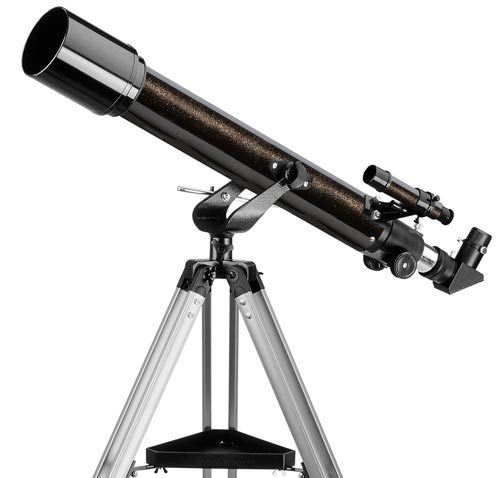
A refracting telescope uses _______ to focus light.
Lenses
Mirrors
Lasers
Water
A refracting telescope uses _______ to focus light.
Lenses
Mirrors
Lasers
Water
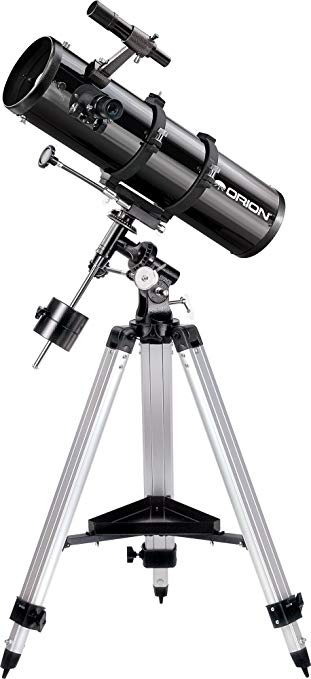
Reflecting telescopes use _______ to focus light.
Lenses
Flat mirrors
Curved Mirrors
A lens and lasers
Reflecting telescopes use _______ to focus light.
Lenses
Flat mirrors
Curved Mirrors
A lens and lasers

What type of telescope is the Hubble Telescope?
Refracting
Cassegrain Reflecting
Prime Focus Reflecting
Newtonian Reflecting
What type of telescope is the Hubble Telescope?
Refracting
Cassegrain Reflecting
Prime Focus Reflecting
Newtonian Reflecting
What shape is Earth's orbit?
circle
ellipse
square
spiral
What shape is Earth's orbit?
circle
ellipse
square
spiral
What is Kepler's 2nd law?
The planets orbit in an ellipse
The plants move faster when they are closer to the sun and slower when they are further from the sun
The farther a planet is from the sun the slower the orbit
(P2 = a3)
What is Kepler's 3rd law?
The planets orbit in an ellipse
The plants move faster when they are closer to the sun and slower when they are further from the sun
The farther a planet is from the sun the slower the orbit
(P2 = a3)

Which of the following is a symbol for wavelength?


Which of the following is a symbol for speed?


Which of the following is the symbol for period?


Which of the following is the symbol for frequency?


Which of the following is most frequently used to find the speed of a wave?


Which of the following is the symbol for the speed of light?


What is the standard unit for measuring frequency?
speed
hertz
oscillation
period
What is the general name for the rising and falling of sea levels in response to the forces exerted by the Moon and Sun?
(a)
Which of the gas giant planets is closest to the Sun?
(a)
Which one of the four basic forces of the universe is most directly involved with maintaining the planets in their orbits?
(a)
Which of the following is the hottest region of planet Earth?
the mantle
the inner core
the outer core
the crust
What molecular substance is believed to be the most basic requirement or signature for life to exist on a planet?
(a)
What planets are able to pass between the Earth and the Sun?
Mars
Mercury
Jupiter
Saturn
Venus
What terrestrial planet rotates in the opposite direction to the planet Earth?
(a)
Consider a star observed just above the horizon in the western sky at dusk. Where would it most likely have been at sunrise that day:
in the same position
just above the horizon in the eastern sky
high in the western sky
high in the southern sky
What is the astronomical term for the bright trail of a meteoroid passing through the atmosphere of the Earth?
(a)
By number, arrange the following 3 choices from the one with the LOWEST temperature to the HIGHEST temperature: 1 ) coldest temperature on Earth; 2) average surface temperature of Saturn; 3) coldest ocean water temperature on Earth (ANSWER IN THIS FORM--1, 2, 3)
(a)
What is the most abundant element in the Sun?
(a)
Spring tides typically coincide with what 2 (TWO) phases of the Moon?
Full Moon
First Quarter
Third Quarter
Crescent Moon
New Moon
What is the name of the atomic process that provides the energy for a star to shine?
(a)
The zodiac is typically considered to be made of how many constellations?
(a)
What element makes up about 24% of the Sun's mass?
Hydrogen
Oxygen
Carbon
Helium
Water


1. Who was one of the first philosophers to suggest that natural phenomena could be explained and understood by humans?
Thales of Miletus
plato
Nicholas Copernicus
1. Who was one of the first philosophers to suggest that natural phenomena could be explained and understood by humans?
Thales of Miletus
plato
Nicholas Copernicus
1. Who was one of the first philosophers to suggest that natural phenomena could be explained and understood by humans?
Thales of Miletus
plato
Nicholas Copernicus
1. Who was one of the first philosophers to suggest that natural phenomena could be explained and understood by humans?
Thales of Miletus
plato
Nicholas Copernicus
What do we call the realization toward the end of the sixteenth century that Earth is not at the center of the universe?
Copernican Revolution
Galileo's Observations
Kepler's Laws
What do we call the realization toward the end of the sixteenth century that Earth is not at the center of the universe?
Copernican Revolution
Galileo's Observations
Kepler's Laws
What do we call the realization toward the end of the sixteenth century that Earth is not at the center of the universe?
Copernican Revolution
Galileo's Observations
Kepler's Laws
What do we call the realization toward the end of the sixteenth century that Earth is not at the center of the universe?
Copernican Revolution
Galileo's Observations
Kepler's Laws
The actual brightness of a star is known as it’s what?
Luminosity
Apparent magnitude
apparent brightness
light
The actual brightness of a star is known as it’s what?
Luminosity
Apparent magnitude
apparent brightness
light
The actual brightness of a star is known as it’s what?
Luminosity
Apparent magnitude
apparent brightness
light
The actual brightness of a star is known as it’s what?
Luminosity
Apparent magnitude
apparent brightness
light
The life cycle of a star is known as what?
stellar evolution
birth life
star life
high evolutionary
The life cycle of a star is known as what?
stellar evolution
birth life
star life
high evolutionary
The life cycle of a star is known as what?
stellar evolution
birth life
star life
high evolutionary
The study of the universe is known as what?
(a)
The study of the universe is known as what?
astrology
Astronomy
Cosmology
Cosmetology
The study of the universe is known as what?
astrology
Astronomy
Cosmology
Cosmetology
Wave speed is related to
Amplitude and wavelength
Wavelength and amplitude
Frequency and wavelength
Period and frequency
Light is
A phenomena found only in our solar system
A frequency related to electrons
Wave amplitude
Electromagnetic waves
The speed of light is equal to
9,792,458 m/s.1
299,792,458 m/s.1
299,001,000 m/s.1
399,792,458 m/s.1
Electromagnetic waves can travel through the empty vacuum of space.
True
False
Radio waves and gamma rays are not part of the electromagnetic spectrum.
True
False
The colors of light we see depend on
Energy of light that reach our eyes.
Transparency of light that reach our eyes.
Reflection of light that reach our eyes.
Frequencies of light that reach our eyes.
Objects having a temperature above absolute zero (0 K) radiate electromagnetic waves, which is known as __________________________.
ultraviolet radiation
magnetic radiation
thermal radiation
constituent particles
A refracting telescope uses _______ to focus light.
Lenses
Mirrors
Lasers
Water
Reflecting telescopes use _______ to focus light.
Lenses
Flat mirrors
Curved Mirrors
A lens and lasers
Reflecting telescopes use _______ to focus light.
Lenses
Flat mirrors
Curved Mirrors
A lens and lasers
A refracting telescope uses _______ to focus light.
Lenses
Mirrors
Lasers
Water
What is Kepler's 2nd law?
The planets orbit in an ellipse
The plants move faster when they are closer to the sun and slower when they are further from the sun
The farther a planet is from the sun the slower the orbit
(P2 = a3)
What shape is Earth's orbit?
circle
ellipse
square
spiral
Wave speed is related to
Amplitude and wavelength
Wavelength and amplitude
Frequency and wavelength
Period and frequency
The speed of light is equal to
9,792,458 m/s.1
299,792,458 m/s.1
299,001,000 m/s.1
399,792,458 m/s.1
The colors of light we see depend on
Energy of light that reach our eyes.
Transparency of light that reach our eyes.
Reflection of light that reach our eyes.
Frequencies of light that reach our eyes.
The colors of the visible light spectrum can be remembered by using the acronym,
ROY G BIV
LAZIC
ROY B GIV
CO2
Even though light is sometimes described as being a specific color, color is not actually a property of any electromagnetic wave. In fact, color is a(n) ____________________.
illusion
physiological experience
indescribable phenomenon
gamma wave
Light that is made up of a mixture of all colors in the visible spectrum would appear to be...
black
blue
white
a rainbow
Which scientists first used a prism to demonstrate that white light was made up of all the colors of the electromagnetic spectrum in the 1660's?
Rene Descartes
Albert Einstein
James Maxwell
Isaac Newton
A prism can be used to...
separate visible light into colors
make a beam of light brighter
measure the speed of light
make UV light visible
99% of the electromagnetic waves that the Sun emits can be found in which wave frequencies?
Radio, microwave, and infrared
visible, ultraviolet, and x-rays
infrared, visible, and ultraviolet
ultraviolet, x-ray, and gamma ray
What is excitation?
The process of an electron gaining energy and moving to a higher energy level
The model of a hydrogen atom proposed by Niels Bohr in 1913. He proposed that electrons orbit the nucleus of an atom at fixed energy levels
Energy levels that are higher than the ground state
The set of emission lines produced by a collection of excited atoms unique to each element
What tool can be used to view emission spectra?
A spectroscope
A telescope
Microwave transponder
A Stethoscope
What is spectroscopy?
The process of analyzing spectral lines ("fingerprints" of elements) to identify the chemical makeup of an excited sample (widely used since late 1800s)
Elements with more electrons (higher atomic number)
What tool can be used to view emission spectra?
Something you don't ever want to get!!!
Who came up with the modified system of spectral classes from 1911 - 1915?
Annie J. Cannon
Anne Franks
Annie Luft
Anne Edwards
What is apparent brightness?
The way a star appears in the sky from Earth
The actual amount of energy a star emits into space each second
Light
What is the Hertzsprung-Russell (H-R) Diagram?
A graph of luminosity (absolute magnitude) vs. temperature for stars. The main sequence (diagonal band containing about 90 percent of stars) shows that typically hot stars tend to be more luminous (bright) and cool stars tend to be less luminous (faint)
The visible surface of the sun (photo = "light", around 10,000 degrees F, 500 km thick < 0.1% of radius)
The zone where light is absorbed and re-emitted at lower energies
A sudden, explosive outburst of radiation from all parts of the spectrum and high-velocity particles from the Sun (A single one can release as much as energy as the world uses in 100,000 years)

