wayground logo

Free Printable Worksheets

Font size

S
M
L
XL
Worksheets

Mid-Year Review

Total questions: 112

Worksheet time: 3hrs 7mins

Name
Class
Date
1.
A possible explanation to a problem that has not yet been tested. 
a)
data
b)
theory
c)
hypothesis
d)
fact
2.
What step does every scientific experiment begin with?
a)
hypothesis
b)
question/problem
c)
procedures
d)
conclusion
3.

What is an observation?

a)

A scientific statement based on ideas

b)

Using your senses to notice what is going on around you

c)

To be unaware of your surroundings

d)

The question that you want an answer to.

4.
This is the last step in the scientific method
a)
Draw a conclusion
b)
Record your data as results
c)
Share what you have learned with others
d)
Collaborate with others
5.
Should experiments be repeated over and over to see if the results are the same each time?
a)
yes
b)
no
6.
Oxygen is the most common gas in the atmosphere.
a)
True
b)
False
c)
Both True and False
d)
Neither True nor False
7.

Most of the atmosphere is composed of the following gas

a)

nitrogen

b)

oxygen

c)

carbon dioxide

d)

argon

e)

flatulence

8.
The atmosphere is 21%
a)
nitrogen
b)
oxygen
c)
argon
d)
flatulence
9.

The stratosphere is located between

a)

thermosphere and mesosphere

b)

core and mantle

c)

troposphere and mesosphere

d)

exosphere and mesosphere

e)

your head and Uranus

10.
The ozone layer
a)
is green and purple
b)
absorbs dangerous solar radiation
c)
smells like sulphur
d)
is made of carbon dioxide
11.
The ozone layer occurs in the 
a)
troposphere
b)
thermosphere
c)
stratosphere
d)
exosphere
12.

In this layer of Earth's atmosphere, hydrogen and helium are the primary gases and are only present at extremely low densities. What is this layer of the atmosphere called?

a)

exosphere

b)

ionosphere

c)

mesosphere

d)

thermosphere

13.

Most clouds appear here, mainly because 99% of the water vapor in the atmosphere is found in the

a)

mesosphere

b)

stratosphere

c)

thermosphere

d)

troposphere

14.
As you go higher in the troposphere, the temperature _______________.
a)
decreases
b)
increases
c)
stays the same
d)
gets very hot
15.
This is the layer where most commercial jet airliners fly.
a)
Troposphere
b)
Stratosphere
c)
Mesosphere
d)
Thermosphere
16.
The higher you go, the air becomes _____ _____.
a)
More dense
b)
Less dense 
17.
This is the layer where meteors, or shooting stars, burn up.
a)
Troposphere
b)
Stratosphere
c)
Mesosphere
d)
Thermosphere
18.
What happens to the density (thickness)/air pressure of the air as you increase in altitude?
a)
density increases
b)
density decreases
c)
density stays the same
d)
density disappears
19.
In which layer of the atmosphere would you find the top of Mount Everest?
a)
Troposphere
b)
Stratosphere
c)
Mesosphere
d)
Thermosphere
20.

What would happen to Earth's temperatures if there were not atmosphere.

a)

Nothing it would just stay the same

b)

At night it would be fridged and in the day it would be scorching

c)

At night it would be hot and in the day it would be cold

d)

It would be cold both day and night.

21.
A severe storm that involves strong winds and forms over warm water is:
a)
tornado
b)
thunderstorm
c)
hurricane
d)
blizzard
22.
A severe storm which involves a funnel cloud forming from a cumulonimbus cloud:
a)
hurricane
b)
tornado
c)
thunderstorm
d)
blizzard
23.
This severe weather involves lightning, rain, and forms from a cumulonimbus cloud.
a)
thunderstorm
b)
tornado
c)
hurricane
d)
blizzard
24.
This weather tool measures wind speed 
a)
thermometer
b)
barometer
c)
anemometer
d)
psychrometer
25.
Which weather tool measures air pressure?
a)
thermometer
b)
barometer
c)
anemometer
d)
psychrometer
26.
Humidity is the...
a)
Amount of Water Vapor in the Air
b)
Amount of Wind in the Air
c)
Amount of Precipitation in the Air
d)
Amount of Pressure in the Air
27.
Warm air near the Earth’s surface rises and then cools and drops, this creates a _________________ in the atmosphere.
a)
run-off
b)
Greenhouse Effect
c)
convection current
d)
water cylce
28.
Because the earth is spinning on its axis, the global winds appear to curve. This is known as the __________ ________.
a)
Coriolis Effect
b)
Greenhouse Effect
c)
Climate Effect
d)
Atmosphere Effect
29.
What kind of weather is usually associated with a high pressure system?
a)
Sunny weather
b)
Precipitation (rain, snow, etc.)
30.
In what direction do winds always blow?
a)
From areas of high pressure to areas of low pressure
b)
From areas of low pressure to areas of high pressure
31.
What type of cloud looks like cotton and is in the lower altitudes?
a)
Cumulus
b)
Stratus
c)
Cirrus
32.

Where do warm ocean currents come from

a)

the poles

b)

near the land

c)

the equator

d)

middle of the oceans

33.

What city will experience decreasing temperatures in the next day?

a)

Denver

b)

El Paso

c)

Memphis

d)

Los Angeles

34.

What city is most likely going to see temperatures rise?

a)

San Jose

b)

El Paso

c)

Jacksonville

d)

Chicago

35.

What does this symbol represent?

a)

Cold Front

b)

Warm Front

c)

Stationary Front

d)

Occluded Front

36.

What does this symbol represent?

a)

Cold Front

b)

Warm Front

c)

Stationary Front

d)

Occluded Front

37.

What does this symbol represent?

a)

Cold Front

b)

Warm Front

c)

Stationary Front

d)

Occluded Front

38.

What does this symbol represent?

a)

Cold Front

b)

Warm Front

c)

Stationary Front

d)

Occluded Front

39.

Warm Fronts bring

a)

rain followed by cool dry air

b)

hurricanes

c)

rain followed by hot humid air

d)

fair weather

40.

A cold front leads with -

a)

a quick left and then a right!

b)

stormy weather and follows with dry, cooler weather

c)

humid rain and updrafts

d)

lightning and thunder- go Thor! Woohoo!

41.

Generally speaking, the jet stream tends to push weather across the US -

a)

from left to right

b)

right to left

c)

always upwards

d)

always down

42.
What part of the water cycle does this picture show?
a)
condensation
b)
precipitation
c)
evaporation
43.
Which is the opposite of condensation?
a)
runoff
b)
evaporation
c)
precipitation
d)
transpiration
44.
Which best explains why runoff is important?
a)
It returns water to other locations on Earth
b)
It increases the chance of flooding
c)
It makes evaporation occur faster
d)
It increases condensation
45.
What is it called when plants give off water vapor as a waste product?
a)
condensation
b)
evaporation
c)
sublimation
d)
transpiration
46.
When water _________, dew forms.
a)
Melts
b)
Evaporates
c)
Condenses
d)
Precipitates
47.
What is the energy source for the water cycle?
a)
the sun
b)
the earth
c)
water
d)
the moon
48.

Which way is the wind blowing in this scenario?

a)

from the north

b)

toward the north

c)

from the west

d)

toward the west

49.

Which way is the wind blowing in this scenario?

a)

from the southeast

b)

toward the southeast

c)

from the southwest

d)

toward the southwest

50.

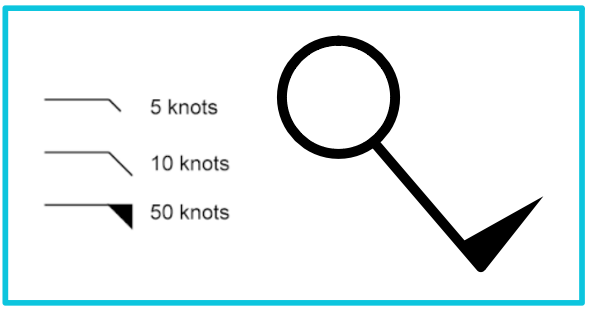
What speed is represented by a triangle?

a)

5 knots

b)

10 knots

c)

50 knots

51.

What percent cloud cover is shown here?

a)

0.1 = 10% (or less)

b)

0.2-0.3 or 20-30%

c)

0.6 = 60%

d)

0.7-0.8 or 70-80%

52.

What does this part of the station symbol indicate?

a)

present weather

b)

air pressure

c)

temperature

d)

wind speed

53.
What can humans do to reduce the effects of acid rain?
a)
Develop Alternate Energy Sources (Solar Power, Wind Energy)
b)
Use Less Energy
c)
Stop Burning Fossil Fuels
d)
All of the Answers are Correct
54.

Which of the following is an adverse health effect from air pollution?

a)

allergic reactions

b)

bronchial inflammation

c)

eye and lung irritants

d)

All of these are correct

55.
Greenhouses gases
a)
Absorb and radiate heat
b)
Destroy the ozone layer
c)
Cause respiratory problems
d)
Create smog
56.
Increase in which gas is primarily responsible for increased global warming?
a)
Carbon dioxide
b)
Water vapor
c)
Methane
d)
Nitric oxides
57.
What does this graph represent?
a)
Constant Speed
b)
Acceleration
c)
Not moving
58.
How long did it take this object to travel 10 m?
a)
0 s
b)
10 s
c)
15 s
d)
20 s
59.
At 60 seconds, how far had this object traveled? 
a)
0 m
b)
10 m
c)
20 m
d)
40 m
60.
What does this graph represent?
a)
Constant speed
b)
Acceleration
c)
Not moving
61.
Which runner won the race?
a)
A
b)
B
c)
C
62.
Which runner had a head start?
a)
A
b)
B
c)
C
63.

What is happening at C?

a)

Stationary

b)

Accelerating

c)

Constant motion

64.

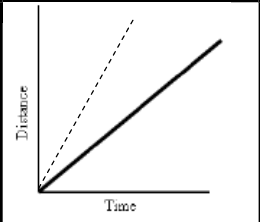
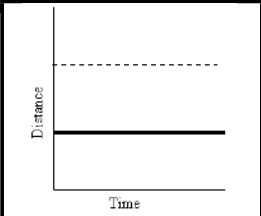
Which graph below shows 2 runners moving at the same speed?

a)
b)
c)
d)
65.

Speed = _______________

a)

Distance + time

b)

Distance – time

c)

Distance x time

d)

Distance / time

66.

This occurs when an object speeds up, slows down, or changes direction.

a)

Speed

b)

Velocity

c)

Acceleration

67.

Another way to explain the speed and direction of a object would be to describe it’s ________

a)

Speed

b)

Velocity

c)

Acceleration

68.
Avery likes to walk 30 feet in 10 seconds. What is her speed?
a)
3 feet/sec
b)
6 feet/sec
c)
10 feet/sec
d)
2 feet/sec
69.
If you slow down on your bicycle, you accelerate.
a)
TRUE
b)
FALSE
70.

What is this?

"This airplane is traveling at 500 mph, West"

a)

Speed

b)

Velocity

c)

Acceleration

71.
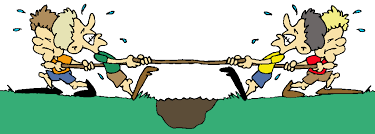
If these teams are pulling with the same amount of force what will happen?
a)
The boy in blue will win.
b)
They will not move at all.
c)
The boy in red will win.
d)
Both will fall down.
72.

If the sum of the forces equates to zero, they are considered as _____________.

a)

net force

b)

combined

c)

unbalanced

d)

balanced

73.

It is defined as forces that are not equal in magnitude.

a)

Unbalanced Forces

b)

Forces

c)

Balanced Forces

d)

Friction

74.

Use the picture as reference. If the force of the girl pushing is 30N, and the force of the boy who is also pushing is 30N, what is the net force?

a)

0N

b)

60N

c)

900N

d)

1N

75.

Use the picture as reference. If the force of the girl pushing is 20N, and the boy who is also pushing is 15N, what is the net force?

a)

5N

b)

300N

c)

35N

d)

1.33N

76.

If you apply an unbalanced force to an object at rest, what will happen to that object?

a)

the object will remain at rest.

b)

the object will move.

c)

The object will stay.

d)

None of the above.

77.

What causes on object so slow down while sliding on a surface?

a)

friction

b)

inertia

c)

momentum

d)

force

78.

Without air resistance objects drop,

a)

at the same time

b)

faster depending on mass

c)

depends on the object

d)

there will be no gravity

79.
What law is best described by inertia?
a)
1st
b)
2nd
c)
3rd
d)
law of conservation of mass
80.

What law is best described

a)

1st

b)

2nd

c)

3rd

d)

law of motion

81.

What law is best described

A magician pulls a tablecloth out from under dishes and glasses on a table without disturbing them.

a)

Newton's 1st Law

b)

Newton's 2nd Law

c)

Newton's 3rd Law

82.
What Unit do we Measure Force in? 
a)
Newtons
b)
Joules
c)
Force
d)
Kilograms
83.
With unbalanced forces, the object will move in the direction that the _______ force is being applied.
a)
larger 
b)
smaller 
c)
equal 
d)
less
84.
Newton's third law states that any action will have a(n) _______ and ______ reaction
a)
Equal and similar
b)
Equal and opposite
c)
Equal and different
d)
Greater and opposite
85.
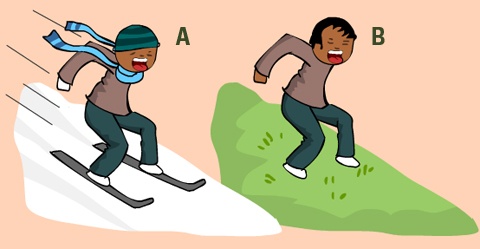
Why is it harder for the boy in Image B to get down the hill?
a)
Motion
b)
Friction
c)
Work
d)
Displacement
86.
At which point is potential energy greatest
a)
W
b)
X
c)
Y
d)
Z
87.
It takes more force to accelerate the iron man on the left than the iron man on the right because the iron man on the left has more mass. This best describes
a)
Newton's first law, the law of inertia
b)
Newton's second law, the law of acceleration
c)
Newton's third law, the law of action reaction 
d)
The law of universal gravitation
88.
What is the attractive force that exists between all objects that have mass?
a)
Weight
b)
Mass 
c)
Gravity
d)
Viscosity
89.

Which law of motion says that you must push or pull objects harder if they have more mass?

a)

1st

b)

2nd

c)

3rd

d)

4th

90.

A 20 kg bike accelerates at 10 m/s2. what was the force

F = m x a

a)

25 Newtons

b)

20 Newtons

c)

200 Newtons

d)

10 Newtons

91.

The ability to do work (move) is called...

a)

Matter

b)

Energy

c)

Weight

d)

Force

92.

True or false: Energy cannot change from one type to another.

a)

True

b)

False

93.

A plant turns thermal energy from the sun into chemical energy during photosynthesis. This is an example of a(n)...

a)

Energy transformation

b)

Matter transformation

c)

Energy change

d)

Physical Change

94.

Which of the following is an example of thermal energy?

a)

A light bulb

b)

The movement of a car

c)

The digestion of food

d)

Heat from a fire

95.

Energy from the sun is called...

a)

Conduction

b)

Rays

c)

Radiation

d)

Heat

96.

Faster moving atoms and molecules are associated with...

a)

Low thermal energy (cooler)

b)

High thermal energy (hotter)

97.

True or False: Energy can be created.

a)

True

b)

False

98.

Which has more gravitational energy?

a)

A snowboarder at the top of a mountain

b)

A person laying on the beach

99.

Energy that is stored is called...

a)

Kinetic Energy

b)

Potential Energy

c)

Mechanical Energy

d)

Thermal Energy

100.

Which has the most kinetic energy?

a)

A caught baseball

b)

A turtle swimming

c)

A parked car

101.

Type of energy?

a)

Electrical

b)

Chemical

c)

Mechanical

d)

Nuclear

e)

Thermal

102.

Type of energy?

a)

Electrical

b)

Chemical

c)

Mechanical

d)

Nuclear

e)

Thermal

103.

Type of energy?

a)

Electrical

b)

Chemical

c)

Mechanical

d)

Nuclear

e)

Thermal

104.

Type of energy?

a)

Electrical

b)

Chemical

c)

Mechanical

d)

Nuclear

e)

Thermal

105.

Which two images show electric energy transforming into radiant and thermal energy?

a)
b)
c)
d)
106.

Which image shows chemical energy transforming into radiant and thermal energy?

a)
b)
c)
d)
107.
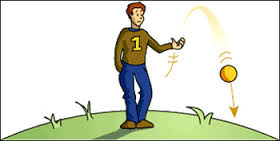
What kind of energy is in a rock at the edge of a cliff?
a)
Potential
b)
Kinetic
c)
Both potential and kinetic energy
d)
none of the above
108.
What kind of energy is in a person climbing a ladder?
a)
Potential
b)
Kinetic
c)
Both
109.
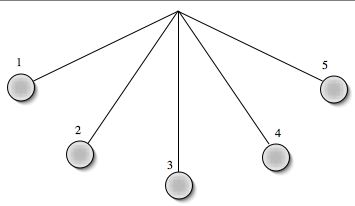
When a pendulum swings, at which point is potential energy at its greatest?
a)
1
b)
2
c)
3
d)
4
110.
When a pendulum swings, at which point is kinetic energy highest?
a)
1
b)
2
c)
3
d)
4
111.
Which object on the shelf has the greatest potential energy?
a)
the red vase on the second shelf
b)
the blue vase on the top shelf
c)
the white box on the bottom shelf
112.
These passengers are just starting their descent. What is happening?
a)
potential energy is changing to kinetic energy
b)
  kinetic energy is changing to potential energy