
 Worksheets
Physical Science Semester 2 Review
Total questions: 108
Worksheet time: 2hrs 35mins
Stars are formed from big clouds of gas and dust is known as:
dust cloud
space fog
neutron clouds
nebulae
The main force acting on a nebula is:
thermal expansion
singularities
gravity
microscopic adhesion
A star is born when:
nuclear fusion starts
a nebula becomes a protostar
gases in a nebula condense
hydrogen is used up in fusion processes
The two forces battling it out for the stability of a star are gravitational forces and:
singularity expansion
chemical bonding forces
tidal currents
thermal forces (heat) through convection
A star that has ignited and has used up all of the hydrogen is called:
Neutron Star
White Dwarfs
Red Giants
Black Holes
When the core of a Red Giant collapses it becomes a:
White Dwarf
Supernova
Red Supergiant
Black Hole
When a massive star begins to cool and expand it is known as a:
Black Dwarf
Red Giant
Red Supergiant
White Dwarf
When the core of a Red Supergiant collapses, a bright event occurs, known as:
white dwarf
supernova
big bang
black hole
After a supernova, the core can collapse into a neutron star, or if massive enough it can become a:
Black Hole
White Dwarf
Red Supergiant
Black Dwarf
When a Red Giant's outer atmosphere drifts away it is now known as:
planetary cloud
White dwarf cloud
planetary nebula
expanding nebula
One possible outcome that is left after a supernova is a super dense core called a:
Neutron Star
White Dwarf
Red Giant
Black Dwarf
A black hole is black because:
there is nothing in it
it is too small to see
it is inherently evil
even light cannot escape its gravity
Our sun is currently in what star stage?
Protostar
Nebula
Main Sequence
Red Giant

Main sequence stars are made primarily of which elements?
Hydrogen only
Helium and Carbon
Carbon and Iron
Hydrogen and Helium
A star that has begun nuclear fusion will last for:
millions or even billions of years
a few thousand years
as long as the universe survives
forever
When a nebula condenses and takes on a shape it is called:
a red supergiant
a black hole
a white dwarf
a protostar
The stable and longest lasting period of a star’s life cycle is called:
The birth of a star
Nebula
Neutron star
Main Sequence
What fuel do main sequence stars use?
Oxygen
Hydrogen
Carbon
Iron
Neutron stars that emit radiowaves are called:
Nebula
Pulsars
Galaxys
Planets

If greenhouse gases increase and build up in our atmosphere, what happens?
They trap more heat and global temperatures rise.
They trap more heat and global temperatures decrease.
They trap less heat and global temperatures rise.
They trap less heat and global temperatures decrease.

What percentage of the Sun's energy is reflected back into space?
100%
About 50%
About 30%
It depends on the weather.

The energy coming in to from the sun minus the energy being radiated out is known as
the greenhouse effect
global warming
Earth's energy budget
the electromagnetic spectrum

Which of the following is NOT a greenhouse gas?
H2O
CH4
CO2
O2
When solar energy hits the earth
it can be reflected by light colored surfaces like ice
it can be absorbed by light colored surfaces by ice
it can be reflected by dark colored surfaces like asphalt
it cannot affect processes that occur on earth
Heat is radiated back to space from earth as
visible light
ultraviolet radiation
gamma radiation
infrared radiation
The wavelengths of electromagnetic energy that can be seen by humans is known as
ultrared radiation
visible light
ultraviolet radiation
infrared radiation

According to the diagram, what can happen when solar energy hits clouds in Earth's atmosphere?
it can be reflected or absorbed
it can only be absorbed
it can only be reflected
it is neither reflected nor absorbed

The range of wavelengths of radiation(including infrared, visible light, and ultraviolet) is known as
Earth's energy budget
solar flares
the greenhouse effect
the electromagnetic spectrum
Which type of solar energy has the longest wavelength?
ultraviolet radiation
they all have the same wavelengths
visible light
infrared radiation

The sun transfers energy to Earth by radiation
True
False
Visible light is
the light you can see from the sun
this is where most of the warmth that you feel from the sun comes from
higher-energy radiation that can harm life
Infrared Light is
the light you can see from the sun
this is where most of the warmth that you feel from the sun comes from
higher-energy radiation that can harm life
Ultraviolet light is
the light you can see from the sun
this is where most of the warmth that you feel from the sun comes from
higher-energy radiation that can harm life
Pick ALL the energy sources that can be traced back to the sun.
water
wind
fossil fuels
sun
geothermal
What 2 things can disturb the Earth's energy budget?
decrease in greenhouse gases
increase in polar ice caps
increase in greenhouse gases
decrease in polar ice caps

What amount of incoming solar energy is absorbed by Earth's surface?
23%
51%
49%
15%
Which of the following greenhouse gases enters our atmosphere through evaporation?
water
carbon dioxide
methane
ozone
Which statement is true?
The galaxies are moving toward us.
The galaxies are moving away from us.
The universe remains static or unchanged in motion.
None of the above
Light emitted from a star or galaxy can be separated into a band of colors, called a ________.
Red Shift
Wave Length
Spectrum
Microwave
Which elements are most
abundant in the visible
universe?
Hydrogen and Carbon
Carbon and Helium
Hydrogen and Oxygen
Hydrogen and Helium
How does Cosmic Microwave Background Radiation support the Big BangTheory?
Microwaves are found everywhere in the universe.
Microwaves occurred at the time of the Big Bang
Microwaves are useful in our everyday lives
Only A & B
How does the abundance of hydrogen and helium support the Big Bang Theory.
Hydrogen and helium are elements on the Periodic Table
Hydrogen and helium are in the same ratio throughout the universe.
Hydrogen and helium have many current uses today
The Cosmic Background Radiation is:
the remaining energy from the big bang.
incredibly hot.
visible to the human eye.
only located in certain places in the universe.
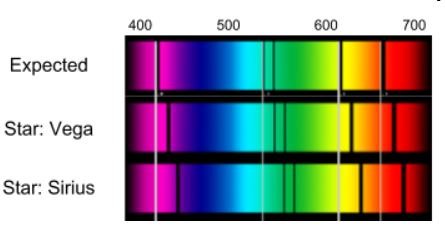
In relation to us, most galaxies are…
Moving toward us
Moving away from us
Not moving


What direction is the star moving in this image?
Left
Right
Up
Down
Items that can easily degrade by natural processes
BIODEGRADABLE
BIOMASS
REDUCE
RECYCLABLE
Any significant change in measures of climate, such as temperature lasting for an extended period of a decade or longer.
BIOTECHNOLOGY
CLIMATE CHANGE
CONVECTION
COMPOST
A natural fuel (coal, oil, or gas) formed in the geological past from the remains of living organisms.
FUEL CELL
WIND ENERGY
SOLAR ENERGY
FOSSIL FUEL
Energy stored in the earth in the form of heat.
GEOTHERMAL
SOLAR ENERGY
WIND ENERGY
NUCLEAR ENERGY
The use of flowing water from waterfalls and dams to produce electricity.
HYDRO & TIDAL POWER
SOLAR ENERGY
WIND ENERGY
NUCLEAR ENERGY
Energy stored in the nucleus of an atom.
HYDRO & TIDAL POWER
SOLAR ENERGY
WIND ENERGY
NUCLEAR ENERGY
To decrease the amount of products purchased or produced with the intent of minimizing waste
REDUCE
POLLUTION
RECYCLE
CONSUMER
The process of making new products from materials that were used in another product.
REDUCE
POLLUTION
RECYCLE
CONSUMER
A contaminant to the environment, especially human-made waste.
REDUCE
POLLUTION
RECYCLE
CONSUMER
A person or household that purchases goods or services.
REDUCE
POLLUTION
RECYCLE
CONSUMER
Plant materials and animal waste used especially as a source of fuel.
BIODEGRADABLE
BIOMASS
REDUCE
RECYCLABLE
The ratio of the useful energy delivered by a dynamic system to the energy supplied to it.
BIODEGRADABLE
BIOMASS
REDUCE
EFFICIENCY
Energy from the sun.
HYDRO & TIDAL POWER
SOLAR ENERGY
WIND ENERGY
NUCLEAR ENERGY
Energy derived from wind by means of windmills or wind turbines.
HYDRO & TIDAL POWER
SOLAR ENERGY
WIND ENERGY
NUCLEAR ENERGY
Device that combines hydrogen and oxygen and produces electricity in the process
FUEL CELL
SOLAR ENERGY
WIND ENERGY
NUCLEAR ENERGY
Printing on both sides of the paper helps to ________ paper waste.
REDUCE
REUSE
RECYCLE
Using an old jar to store items in the kitchen is an example of what?
REDUCE
REUSE
RECYCLE
Taking old cans and bottles to the bottle return is an example of...
REDUCE
REUSE
RECYCLE
Which type of energy produces Carbon Dioxide, which can be harmful to our planet and cause pollution?
Solar Energy
Wind Energy
Fossil Fuels (Coal, oil, and gas)
Nuclear Energy
A resource that can be replaced when needed.
Fossil Fuels
Nonrenewable Energy
Exhaustible Energy
Renewable Energy
Which wavelength is about the size of a baseball?
Radio waves
Infrared
Ultraviolet
X-Rays
Which wavelength is about the size of a typed period?
Radiowaves
Microwaves
Ultraviolet
X-Rays
Which has a wavelength about the size of a water molecule?
Radiowaves
Microwaves
Ultraviolet
X-rays
Which wavelengths can be the size of a soccer field?
Radio waves
Microwaves
Infrared
Ultraviolet
Which wavelength can humans see?
Microwaves
Radio waves
Visible light
Gamma rays
What kind of wavelength does radar use?
Radio waves
Microwaves
Ultraviolet
X-Rays
Which wavelength do x-ray machines use?
Radio
Microwave
Ultraviolet
X-rays
Which has the longest wavelength?
Gamma Rays
Visible Light
Microwaves
Radiowaves
Which has the highest frequency?
Gamma Rays
Visible Light
Microwaves
Radiowaves
Which has a longer wavelength?
Red
Orange
Blue
Violet
Which has a lower frequency?
Red
Orange
Blue
Violet
Which has a shorter wavelength?
Red
Orange
Blue
Violet
Which has a higher frequency?
Red
Orange
Blue
Violet
Which of the following is true?
A long wavelength means a low frequency
A long wavelength means a high frequency
All of the electromagnetic spectrum has the same wavelength
A long wavelength means high energy
Which electromagnetic waves carry more energy?
If it has a long wavelength
If it has a short wavelength
If it has a low frequency
They all carry the same amount of energy



