
 Worksheets
Unit Review - Chemistry Part 2
Total questions: 115
Worksheet time: 6hrs 45mins
1 .) The atoms of a certain element each contain 10 protons and 8 valence electron.
Which statement correctly identifies this element and describes its chemical reactivity?
A The element is Neon, and it is highly reactive.
B The element is fluorine, and it is not very reactive.
C The element is Neon, and it is not very reactive.
D The element is fluorine, and it is highly reactive.
2.) Which types of elements have a full outer shell of Valence Electrons?
F Metals
G Noble Gases
H Metalloids
J Non-Metals
3.) How many protons are contained in the nucleus of a Fluorine atom?
A 18
B 9
C 36
D 40

4.) How are the three elements above organized on the periodic table?
F Niobium and Cobalt are in the same period.
G Cobalt and Scandium are in the same period.
H Cobalt and Scandium are in the same group.
J Niobium and Cobalt are in the same group.
5.) How many valence electrons are in an atom of each element in Group 14 in the
periodic table?
14
4
2
6
6.) Which of the following lists all the elements that are present in a molecule of
potassium carbonate, Ca₃(PO₄)₂ ?
F carbon and oxygen
G phosphate and calcium
H calcium, phosphorus, and oxygen
J potassium, carbon, and oxygen
7.) The formula for baking soda is given.
KMnO₄
This formula indicates that the most basic unit of baking soda contains —
A 1 magnesium atom, 1 potassium atom, and 3 oxygen atoms
B 1 potassium atom, 1 magnesium atom, and 4 oxygen atoms atom
C 1 potassium atom, 1 helium atom, and 1 oxygen atom
D 1 carbon atom, 1 helium atom, 1 calcium atom, and 3 oxygen atoms
10.) Which diagram correctly shows the charges of the particles in a neutral beryllium
atom?


How is the atomic mass of an element determined?
subtracting the protons and the average number of electrons
subtracting the protons and the average number of neutrons
adding the protons and the average number of neutrons
adding the protons and the average number of electrons

What is the atomic number of this atom?
2
4
6
none of the above

How many valence electrons does this atom have?
1
2
3
4
Which of the following statements about valence electrons is true?
determine the charge of an atom
determine the atomic mass of an atom
determine which elements are likely to join into compounds with one another.
determine the period on the periodic table where you will find an element.

The elements along the staircase on the periodic table are called:
metals
nonmetals
metalloids
noble gases
How many valence electrons are the first 20 elements on the periodic table trying to reach in their outer shells?
1
2
5
8
What determines the reactivity - or ability to form compounds -- of an element?
Size of its nucleus
Number of total electrons
Number of valence electrons
Number of shells

Changes in a material's state of matter -- solid-liquid-gas -- is an example of a:
physical change
chemical change

What subatomic particle has a negative charge and is found outside of the nucleus?
Electron
Proton
Nucleus
Neutron

Which subatomic particle has a positive charge and is found inside the nucleus?
Electron
Proton
Neutron
Nucleus

Which subatomic particle has a neutral charge and is found inside the nucleus?
Electrons
Protons
Neutrons
Nucleus

What is the smallest unit of matter that still has the properties of an element?
Atom
Proton
Neutron
Electron

The value representing the number of protons in an element is called the:
Atomic Mass
Mass Number
Valence Electrons
Atomic Number

Arrangement of elements organized by atomic number
Electron Cloud
Periodic Table
Electron Configuration
None of these

How many protons does Helium (He) have?
1
2
3
4
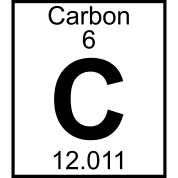

Which subatomic particles contribute the most to the mass of an atom?
Protons, Neutrons, Electrons
Protons only
Protons and Electrons
Protons and Neutrons

How many electrons does a sodium atom have?
23
11
12
34
How many electrons can the first shell of any element hold?
1
2
4
8
How many electrons can the 2nd energy level of any element hold?
1
2
4
8

a row on the Periodic Table of Elements
family
period
row
isotope
The vertical columns of the periodic table are called...
Periods
Families
Chemical Symbols
Groups


Group 2, Period 3
Sodium
Beryllium
Magnesium
Calcium

Group 18, Period 4
Krypton
Argon
Radon
Xenon
What is water (H2O)?
Element
Compound
Mixture
What is table salt (NaCl)?
Element
Compound
Mixture
What is salt water?
Element
Compound
Mixture
What is air?
Element
Compound
Mixture

What is a compound?
A substance that is made up of one type of atom and can't be reduced to simpler substances.
A substance made of two or more different atoms chemically bonded to one another. They can only be destroyed by chemical processes.
A material containing two or more elements or compounds that are in close contact and are mixed in any proportion. They can be separated by physical means.

What is an element?
A substance that is made up of one type of atom and can't be reduced to simpler substances.
A substance made of two or more different atoms chemically bonded to one another. They can only be destroyed by chemical processes.
A material containing two or more elements or compounds that are in close contact and are mixed in any proportion. They can be separated by physical means.
True or False: A compound like water has different physical properties to the elements that it is formed from.
True
False
This number tells the number of atoms present.
2H2O
How many Hydrogen atoms are present in this chemical formula?
2
4
1
10
2H2O
How many Oxygen atoms are present in this chemical formula?
2
4
1
5
2H2O
How many H2O molecules are present in this chemical formula?
1
4
2
8
Mass, relative density, solubility, color, texture, state of matter, conductivity, are all examples of:
Physical states of matter
Chemical states of matter
Physical properties of matter.
Chemical properties of matter.
Which of the following is a chemical property of matter?
Magnetism
Size
Color
Reactivity with water
What are the reactants in the following chemical reaction:
2Mg + O2 ---> 2MgO
Mg and O
MgO
Mg and MgO
O and MgO
How many iron (Ag) atoms are reactants in this equation?
4Ag + 3O2 → 2Ag2O
4
2
3
0
In the following chemical reaction, methane and oxygen would be:
methane + oxygen turns into carbon dioxide + water
reactants
products
neutrals
energizers

What does b represent?
Proton
Neutron
Electron
What does c represent?
Proton
Neutron
Electron

What is the atomic mass of this element?
20
60
40
41

What is the symbol of this element?
Calcium
P
Ca
C
protons
negative charge, nucleus
positive charge, shells
positive charge , nucleus
neutral charge, nucleus
neutrons
no charge, shells
positive charge, nucleus
neutral, no charge, nucleus
negative charge, shells
electrons
no charge, nucleus
positive charge, nucleus
negative charge, shells
negative charge, nucleus

What is the number of protons that the element in this image contain?
14
7
15
18
True or False? Neutrons have a negative charge
True
False

What is the atomic number of this element?
20
60
40
41
An electron is
positively charged
neutral
negatively charged
atomic number is
the number of protons
the number of electrons
the number of neutrons
the location of an atom on the periodic table
Atomic Mass is the number of
protons and neutrons in the nucleus of an atom
protons and electrons in the nucleus of an atom
neutrons and electrons in the nucleus of an atom
Conservation of mass means
all the atoms present before a chemical reaction are not present after
atoms present before chemical reactions are present after
new substances and new elements are formed in a chemical reaction
An elements is
a substance that cannot be split into simpler substances
a substance that can be split into simpler substances
A molecule is
a singular particle of a particular element
another name for an element
2 or more atoms that are combined
which of the statements on physical changes are correct
A physical change cannot be reversed
A physical change is a change in state
A physical change is a change in form
A physical change is where new substances are formed
Signs of a chemical change include;
change of colour, change of temperature, precipitate (solid) formed, gas released.
change of colour, reversing back to original form, precipitate (solid) formed, gas released.
Water is the product of the reactants:
oxygen and water
oxygen and carbon
hydrogen and oxygen
The type of reaction that releases energy as heat is called
endothermic
exothermic
respiration
photosynthesis
which of the following are the characteristics of a chemical reaction (choose multiple answers)
change of state
change of colour
change of precipitation
formation of precipitation
change of smell
when a substance does not undergo a chemical reaction is known as a chemical change
true
false
the chemical reactions which proceed with the release _________ are called _______________________________
heat energy , endothermic reaction
heat energy , exothermic reaction
light energy , endothermic reaction
light energy , exothermic reaction
on which side are the reactants written
left hand side
right hand side
middle
nowhere
a chemical equation that represents a chemical reaction briefly in words is called chemical equation
true
false
cant tell
none


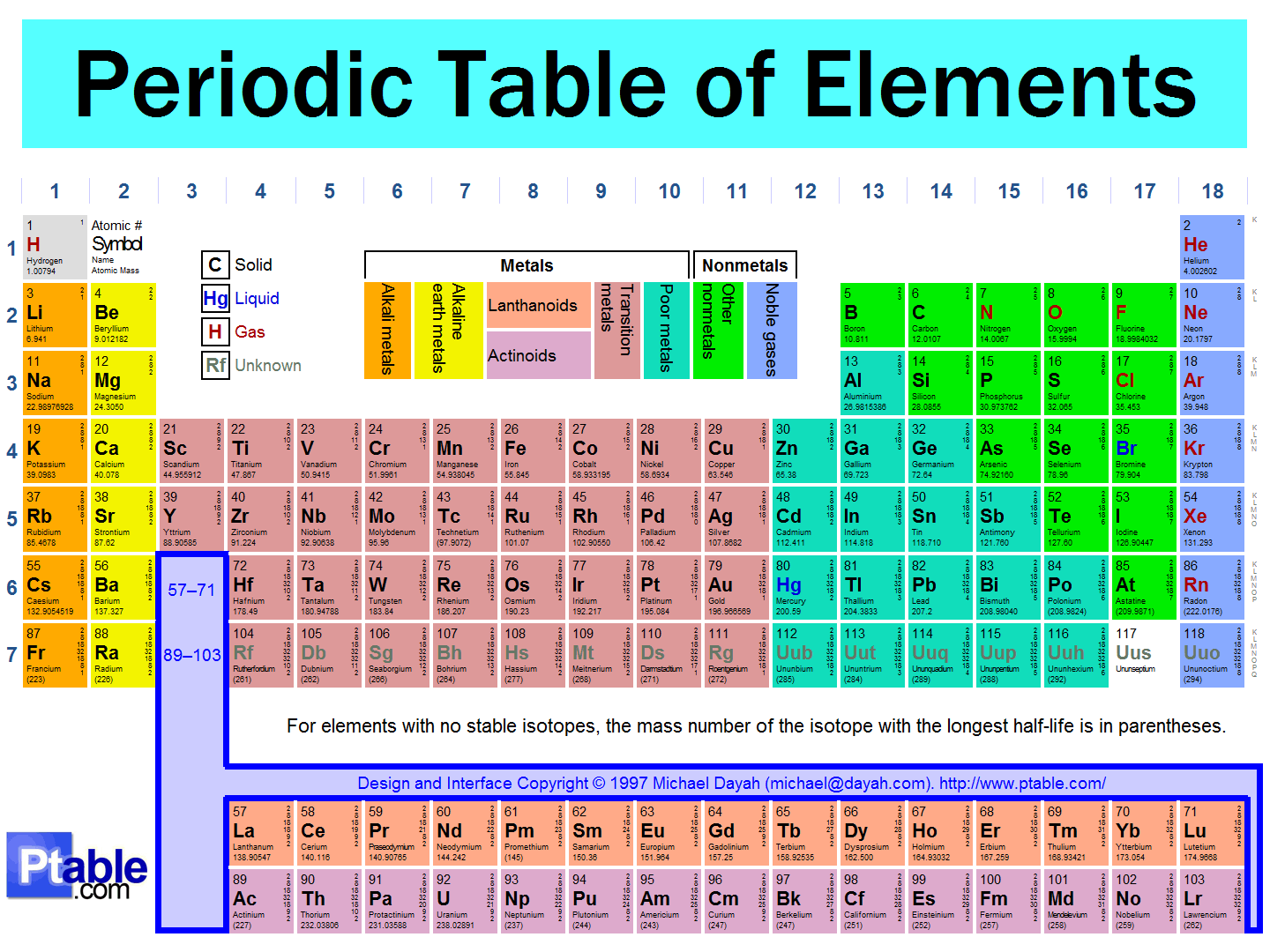
The vertical (up and down) columns in the Periodic Table are called
groups
towers
periods
atomic numbers
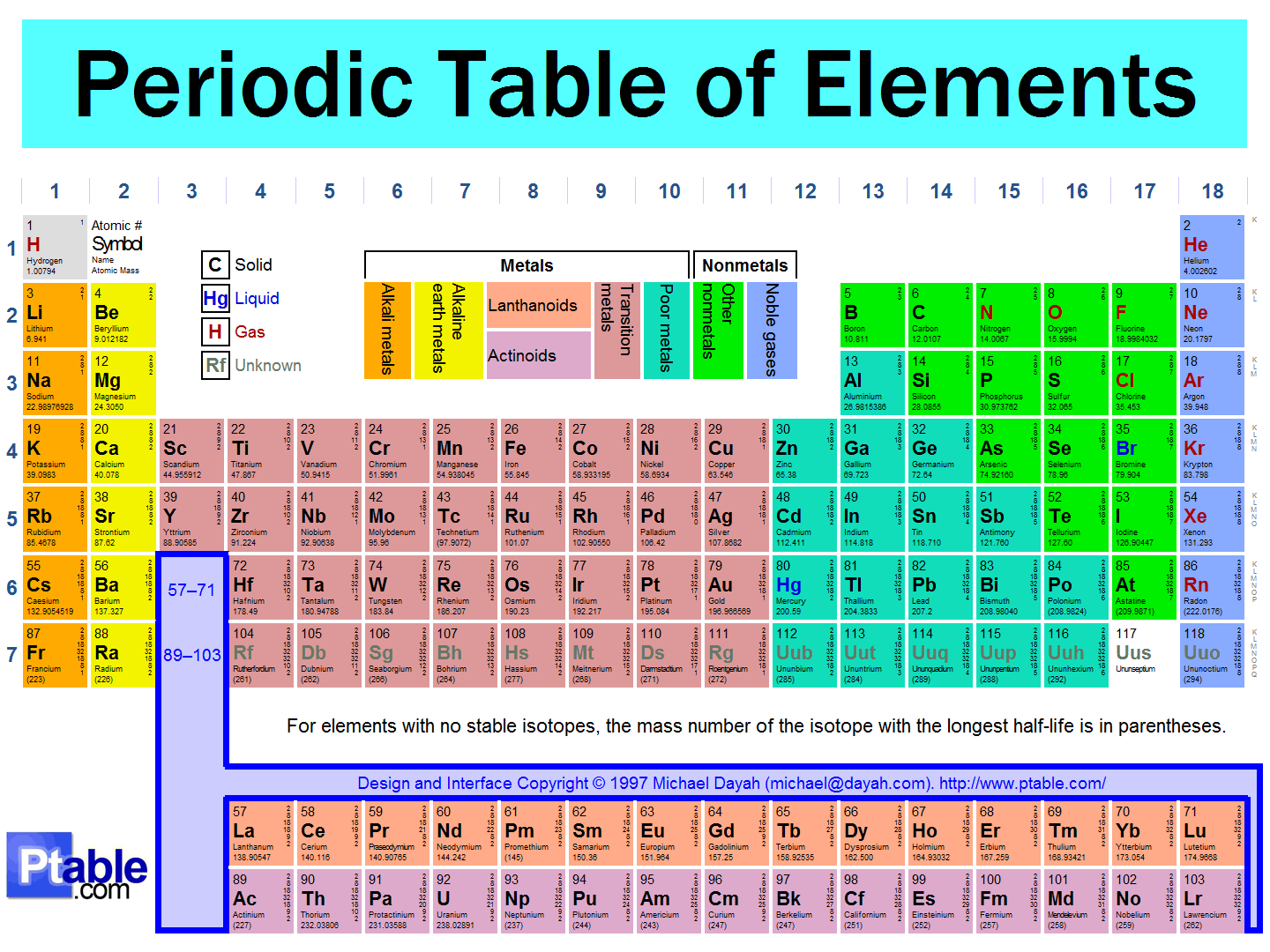
The horizontal (side to side) rows in the Periodic Table are called
groups
families
periods
atomic numbers
What are the three main groups of the periodic table?
groups
metal
nonmetals
metalloids
periods

Which of the following elements is a non-metal in group 14?
Carbon (C)
Silicon (Si)
Tin (Sn)
Lead (Pb)

Which two elements are in the same period?
boron (B) and lithium (Li)
beryllium (Be) and calcium (Ca)
phosphorus (P) and oxygen(O)
boron (B) and phosphorus (P)

