Worksheets
BENCHMARK I REVIEW
Total questions: 115
Worksheet time: 2hrs 39mins
The endocrine system works with which system to send chemical messages to other parts of the body?
muscular
integumentary
circulatory
nervous
The (a) serves as the cell's boundary from its environment?
Which phrase best describes the function of mitochondria?
Located in the cytoplasm
Bacteria-sized organelle
Converts energy for cell use
Contains a folded inner membrane
Which cell organelle stores DNA?
Cell wall
Cell membrane
Vacuole
Nucleus
The purpose of the cell wall is to-
regulate what goes into and out of a cell
control the functions of a cell
convert energy from food into energy for a cell
provide structure for a cell

What is the function of a nerve cell?
Carry oxygen from the lungs to the body
Carry nerve impulses around your body
To carry the father's genetic information
Carries the mother's genetic information

What type of cell is this?
red blood cell
white blood cell
nerve cell
egg cell
Which statement is a part of the cell theory?
all cells come from preexisting cells
humans are multicellular
all life comes from spontaneous generation
all cells are unicellular
Who concluded that cells come from pre-existing cells?
Schwann
Hooke
Virchow
Einstein
Who concluded that plants are made of cells?
Schleiden
Vircow
Hooke
none of the choices
Who was a co-founder of the cell theory and stated animals are made of cells?
Hooke
Schleiden
Schwann
Janssen
Which of the following is an example of an external stimulus?
hours of sunlight
body temperature
amount of oxygen in the blood
carbon dioxide concentration in cells
Which of the following is an example of an internal stimulus?
body temperature
sunlight
day length
gravity
The (a) system functions in the body like the cell membrane does in a cell.
What are the two main processes carried out by the excretory system?
A. Absorbing needed nutrients and getting rid of the excess
B. Separating and eliminating wastes from the body
C. Maintaining weight and regulating temperature
D. Controlling the amount of water in the body and eliminating salt
What is one of the main functions of the endocrine system?
A. To provide support for different tissues
B. To coordinate the actions of its muscles
C. To control the coordination of gas exchange
D. To control the secretion of hormones
Which systems are responsible for removing carbon dioxide from the body? Select two correct answers.
A. The endocrine system
B. The circulatory system
C. The muscular system
D. The respiratory system
E. The integumentary system

The main function of this system is to —
F. control reproduction
G. transport oxygen
H. produce hormones
J. remove waste
What is the main function of the circulatory system?
A . To distribute blood throughout the body
B. To remove excess and waste materials from the body
C. To secrete hormones in different areas of the body
D. To coordinate the actions of the body
Select the best answer for the main organs of the Skeletal System.
Bones, Cartilage, Ligament
Cartilage, Lung, Bones
Ligament, Muscle, Blood Vessels
Trachea, Bones, Muscle
Which of the following is not a main function of the muscular system?
A . To attach to bones and help the body move
B. To protect the body's internal organs
C. To control the flow of blood into and out of the heart
D. To produce mucus to lubricate the body's joints

Based on the information in the table, which of the following is the main function of the endocrine system?
A . Balancing body chemicals and wastes
B. Regulating the body's processes
C. Helping the heart and lungs function
D. Aiding in the growth of bones and muscles

This system allows movement of body parts.
muscular
reproductive
respiratory
skeletal

This system takes in oxygen and gets rid of carbon dioxide from the body
excretory
digestive
endocrine
respiratory

This system moves blood throughout the body with the heart
cardiovascular
respiratory
excretory
endocrine
This system makes chemical messages with hormones
integumentary
nervous
excretory
endocrine

This system is the protective covering of the body which includes skin, hair and nails
digestive
excretory
integumentary
nervous

The system that gets rid of the body's wastes
circulatory
endocrine
muscular
excretory

This system breaks down food into nutrients to be used for the body
cardiovascular
digestive
nervous
endocrine

This system collects information and responds to it by sending electrical messages. The brain is the center of this system.
nervous
endocrine
reproductive
muscular
Heredity is....
The passing of traits from parent to offspring
What I get from grandpa when he goes back to King Kai
A hidden trait
The strongest trait
BB
Recessive
Bb
Dominant
bb
Dominant
A dominant trait is....
A trait that always comes out
A trait that is always hidden
A mutation
An angry gene
A recessive trait is
A trait that always hides from the dominant trait
A trait that always beats the dominant trait
A trait that only happens in mom's side of the family
None of these
Gerry and his wife both have blue eyes, which is a recessive trait. Which is true about their baby?
He's adopted
The baby will not inherit their traits
The baby will be blue eyed
The baby will have brown hair
A flower garden has 300 flowers, and 250 of them are purple flowers, and the other 50 are white flowers. Which of the following is true?
He doesn't have enough pollen spreaders
The purple flowers are dominant
The white flowers will eventually overpower the purple
He is using a soil that helps boost his plant growth rate
True or false: A recessive trait is a trait that comes out very often in large families
True
False
True or false: You inherit 75% of your genes from mom, 25% from dad
True
False
We use letters to describe genes: Blue Eyes = (bb)
These letters are called:
Heredity
Alleles
Dominant Genes
RR is:
Homozygous Dominant
Heterozygous
Homozygous Recessive
Select the recessive traits:
Brown Hair (HH)
Brown Eyes (Bb)
Blue Eyes (bb)
Dimples (Dd)
No Hitchhikers Thumb (hh)

R - Red dominant Flower
r - purple recessive flower
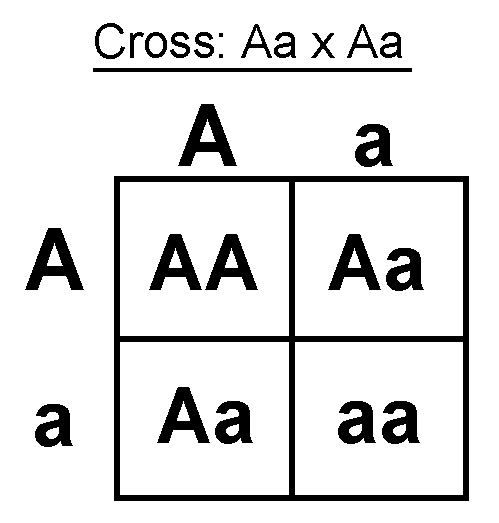
How many purple flowers are there in this Punnett square?
4
3
2
1

B - Brown eye dominant
b - blue eye recessive
how many blue-eyed off spring are in this Punnett square?
4
2
0
5
Atom
Molecule
Macromolecule
Organelle
Cell
Cell
Tissue
Organ
Organ System
Organism

Chloroplast
Plant Cell
Animal Cell
Both, Plant & Animal Cell

Ribosome
Plant Cell
Animal Cell
Both, Plant & Animal Cell
Cell Membrane
regulates what goes into and out of the cell
Cell Wall
gives structure to plant cells
Chloroplast
site of photosynthesis in plant cells
Mitochondrion
converts energy from food into energy a cell can use
Nucleus
contains genetic material and controls the use of genes; found in eukaryotic cells

Cell Wall
Plant Cell
Animal Cell
Both, Plant & Animal Cell

Cell Membrane
Plant Cell
Animal Cell
Both, Plant & Animal Cell
Cell Wall
Plant Cell
Nucleus
Plant & Animal Cell
Plant Cells
Chloroplast
Plant & Animal Cells
Cytoplasm

Asexual reproduction requires
Two parents
Only one parent

Types of asexual reproduction include...
Binary fission, sexual, parthogenesis
Budding, fragmentation, binary fission, parthogenesis
Genesis, binary fission, budding, fragmentation
Budding, nuclear fission, fragmentation, parthogenesis

New clonal polyps develop on, then break off their parent and eventually form new colonies, is an example of which type of asexual reproduction...
Vegetative
Binary fission
Fragmentation
Parthenogenesis
Budding

Asexual reproduction results in offspring that are...
genetically different
genetically identical

Which of the following is not an example of asexual reproduction?
An underground stem that grows along, sending up new plants at intervals.
Yeast cells budding, then splitting into new cells.
Stems run along above ground and send down roots and shoots at intervals.
A sperm and an egg cell fusing to form a zygote.


This organelle is the control center of the cell.


This organelle is a jelly-like substance which flows inside the cell.

Arteries, veins, and capillaries are the ____________ in the circulatory system.
tissues
mitochondria
vessels
cells
What is a small section of DNA which is the genetic code for a characteristic?
Gene
Chromosome
Genome
Base
What do we call someone who does not have a genetic condition but could pass it to their offspring?
Heredity
Communicable
Inherited
Carrier

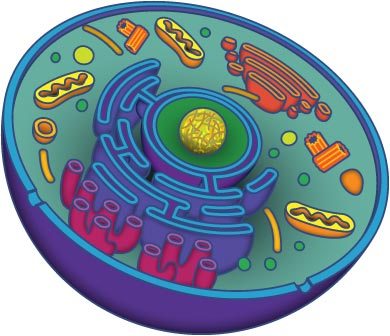
The nervous system is most like which cell organelle?
nucleus
golgi body
lysosome
mitochondria

What type of cell is pictured above?
Plant Cell
Animal Cell

gives the cell ENERGY
mitochondria
vacuole
cytoplasm
ribosomes

turns SUNLIGHT into food for PLANTS
cell wall
chloroplasts
lysosome
endoplasmic reticulum

allows nutrients/waste IN and OUT of cell
endoplasmic reticulum
cell membrane
nucleus
cell wall

CONTROLS all the functions of the cell
nucleus
mitochondria
cytoplasm
golgi bodies

STORAGE of food, water, and waste
lysosome
ribosome
cell wall
vacuole

gives STRUCTURE and PROTECTION in PLANT cell
cell membrane
cell wall
chloroplasts
cytoplasm

This is what we call all the different parts of cells.
organelles
cytoplasm
endoplasmic reticulum (ER)
nucleus
this organelle makes ATP.
chloroplast
mitochondria
ribosome
nucleolus
The lysosome is most like the (a) system of the human body, because it allows waste to be transported outside of the cell.
A, G, T, and C are all ______________.
Organelles
Nucleotides
Match the following base pairs.
A
T
G
C
T
A
A__________ is a feature of an individual passed from parents to children
sense
habitat
trait
Dominant alleles will show their effect on the phenotype when they are present.
True
False
Recessive traits are always shown in an organism's offspring.
True
False
The mitochondria of a cell is most like the ____________ body system.
nervous
integumentary
digestive
endocrine
The (a) system includes the thyroid gland, adrenals, and pancreas.

The diagram shows a typical animal cell. What is the function of the structure X?
Controls the activities of the cell
Control what enters and leaves the cell
Contains the genetic information of the cell
stores food
Which structure found in cells contains genes and chromosomes?
Cytoplasm
Cell Membrane
Nucleus
Vacuole

5. X is...
(a)

6. Y (a) ?

10. What is the name of the process above?
Excretion
Exhale
Inhale
Diffusion
Bones produce__________.
ligaments
blood cells
tendons
cartilage
What are the functions of the circulatory system? (Select All That Apply)
Carry waste away from all body cells
Responsible for breathing within the lungs
Maintain homeostasis with electrical signals
Carry nutrients to all body cells
What are the parts of the Circulatory System? (Select All That Apply)
Heart
Lungs
Blood vessels
Blood
Changing the structure of a gene caused by deletion, insertion, or rearrangement of larger sections of genes or chromosomes.
Trait
Mutation
Gene Therapy
Genetic engineering
Made up of segments of DNA and are passed from parent to child.
Protein
Trait
Genome
Gene
The membrane-enclosed organelle within a cell that contains the chromosomes
Ribosome
Nucleus
DNA
Mitochondria
Form a double helix carrying genetic instructions for the development, functioning, growth and reproduction of all known organisms.
Chromosome
Nucleus
DNA
Gene
Molecules that carry out many functions in cells and are made up of smaller parts called amino acids. They also have functions that affect the organism’s traits
Adanine
Protein
Cytosine
Thymine
The rungs of the DNA are composed of?
Nitrogen bases or nucleotides
phosphates
sugar
genes
Our DNA is composed of nucleotides that pair together; adenine, guanine, thymine, and cytosine. Adenine always pairs with _________.
Guanine
Thymine
Cytosine
Adenine
A type of reproduction in which the genetic materials from two different cells combine, producing an offspring
Asexual Reproduction
Uniform Organism
Diverse Organism
Sexual Reproduction
One parent: organism produces offspring without fertilization
Sexual Reproduction
Asexual Reproduction
Diverse organism
Which organelle is known as the "garbage truck" of the cell?
lysosome
chloroplast
vacuole
Golgi apparatus
What is the energy source made by mitochondria?
RNA
DNA
ABC
ATP

In the punnett square, what is the probability for white fur?
Dd
tt

In the punnett square below, what belongs in the missing square