wayground logo

Free Printable Worksheets

Font size

S
M
L
XL
Worksheets

Quarter 2 Comp Post Test Review

Total questions: 112

Worksheet time: 2hrs 39mins

Name
Class
Date
1.
The type of plate boundary where two plates come together is a .....
a)
Convergent Boundary
b)
Divergent Boundary
c)
Transform Boundary
d)
Plate Boundary
2.
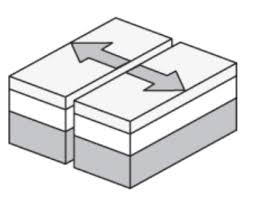
What type of event will occur at this boundary?
a)
Earthquake
b)
Volcano Eruption
c)
Tornado
d)
Mountain Building
3.
A divergent boundary occurs when plates ....
a)
Pull apart
b)
Come together
c)
Slide past each other
d)
subducting
4.

Which of the following is evidence to support the theory of plate tectonics? (Multiple Answers)

a)

Fossils

b)

Mountains

c)

Glaciers

d)

Sand Erosion

5.
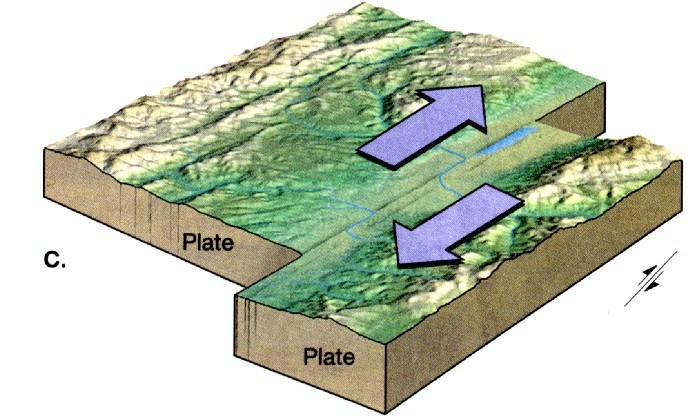
What type of plate boundary is this?
a)
Transform
b)
Convergent
c)
Divergent
d)
Plate
6.
Mountains are created when....
a)
Two continental plates collide
b)
Two oceanic plates pull apart
c)
An Oceanic plate subducts under a Continental Plate
d)
Two continental plates pull apart
7.
Which of these layers is ALL solid iron and nickle?
a)
inner core
b)
outer core
c)
lithosphere
d)
mesosphere
8.

Which of the following is where one plate slides under another plate?

a)

submarine zone

b)

divergence zone

c)

subduction zone

d)

lower zone

9.
Associated with transform boundaries.
a)
Volcanoes
b)
mountains
c)
trenches
d)
earthquakes
10.
Name the boundary
a)
convergent boundary
b)
divergent boundary
c)
transform boundary
d)
sergent boundary
11.
Which type of rock results from melting and cooling of magma?
a)
Igneous
b)
Metamorphic
c)
Sedimentary
d)
Extrusive
12.
Which type of rock forms from extreme heat and pressure?
a)
Igneous
b)
Sedimentary
c)
Organic
d)
Metamorphic
13.
A metamorphic rock changes into an igneous rock by what two processes?
a)
Melting and cooling
b)
Extreme heat and pressure
c)
Compaction and cementation
d)
Weathering and erosion
14.
Wind, water, and ice breaking down rock is called
a)
Erosion
b)
Deposition
c)
Compaction
d)
Weathering
15.
What are the 3 major types of rocks?
a)
Igneous, Metamorphic, Sedimentary
b)
Metamorphic, Igneous, Cementation
c)
Brown, Red, Gray
d)
Streak, Hardness, Breakage
16.
In order for a metamorphic rock to form, _______ is needed.
a)
Pressure
b)
Heat 
c)
Heat and Pressure
d)
Weathering
17.
What is small pieces of rock material?
a)
grain
b)
lava 
c)
magma
d)
sediment
18.

What is molten or liquid rock material that is deep beneath the Earth's surface?

a)

grain

b)

lava

c)

magma

d)

rock

19.
Rock that forms when sediment from older rocks get pressed and cemented together.
a)
Sedimentary Rock
b)
Metamorphic Rock
c)
Igneous Rock
20.
The process by which igneous rocks are formed...
a)
heat and pressure
b)
melting and cooling
c)
weathering and erosion
21.
The process by which metamorphic rocks are formed...
a)
heat and pressure
b)
erosion and deposition
c)
melting and cooling
22.
Which type of rock results from melting and cooling of magma?
a)
Igneous
b)
Metamorphic
c)
Sedimentary
d)
Extrusive
23.
Which type of rock forms from extreme heat and pressure?
a)
Igneous
b)
Sedimentary
c)
Organic
d)
Metamorphic
24.
A metamorphic rock changes into an igneous rock by what two processes?
a)
Melting and cooling
b)
Extreme heat and pressure
c)
Compaction and cementation
d)
Weathering and erosion
25.
Wind, water, and ice breaking down rock is called
a)
Erosion
b)
Deposition
c)
Compaction
d)
Weathering
26.

What is the process of moving sediments from location to another?

a)

Deposition

b)

Erosion

c)

Weathering

d)

Compaction

27.
The process of breaking up Earth's surface into sediment is called...
a)
sediment
b)
erosion
c)
weathering
d)
deposition 
28.
The process that breaks down rocks and other materials on Earth's surface is called
a)
weathering
b)
erosion
c)
soil conservation
d)
decomposition
29.

Sand Dunes are mainly created by the process of -

a)

deposition

b)

weathering

c)

waves

d)

erosion

30.

Dunes form in any place where there is a lot of sand and winds, such as in a desert. However, Florida does not have any deserts. What formed Florida’s dunes?

a)

sediment from mountains.

b)

sediment carried by rivers

c)

sand blown behind rocky cliffs

d)

sand carried to beaches

31.

This layer of Earth is liquid Iron and Nickel

a)

Outer Core

b)

Mantle

c)

Inner Core

d)

Crust

32.
What is the name of the layer that contains the uppermost mantle and crust
a)
Asthenosphere
b)
Mesosphere
c)
Lithosphere
d)
Transosphere
33.
This layer of Earth is the thickest part
a)
crust
b)
outer core
c)
mantle
d)
inner core
34.
What are the two types of crust
a)
continental and oceanic
b)
ocean and upper
c)
lower and upper
d)
pizza and subway
35.

Which crust is thicker

a)

ocean

b)

continental

36.
If you traveled from the center of Earth to the surface, the pressure would...
a)
increase
b)
decrease
c)
stay the same
d)
unsure
37.
Which layer of the earth is under the highest pressure?
a)
Crust
b)
Mantle
c)
Outer Core
d)
Inner Core
38.
The liquid portion at the center of the Earth.
a)
Asthenosphere
b)
Inner Core
c)
Outer Core
d)
Lithosphere
39.
What observation can we make about Earth’s lithosphere AND asthenosphere?
a)
The asthenosphere floats on top of the lithosphere.
b)
The crust and the core make up the lithosphere.
c)
The crust and mantle make up the asthenosphere. 
d)
The lithosphere floats on top of the asthenosphere
40.
Which layer of Earth is the thinnest? 
a)
Crust
b)
Mantle
c)
Inner Core
d)
Outer Core
41.

EM waves always____________

a)

travel at the same speed

b)

have the same energy

c)

have the same wavelength

d)

have the same frequency

42.

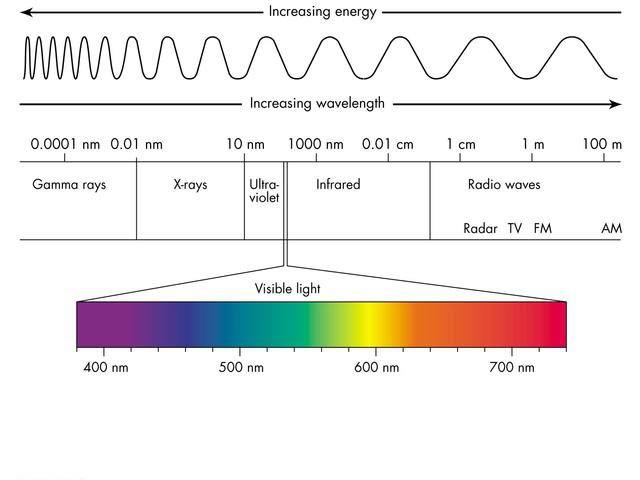
In the image, the EM spectrum decreases from left to right in________________.

a)

Wavelength

b)

Frequency

c)

Amplitude

d)

Speed

43.

In the EM spectrum, ________ decreases as energy increases.

a)

Frequency

b)

Hertz

c)

Amplitude

d)

Wavelength

44.
Cell phones use_____________waves.
a)
Microwaves
b)
Gamma
c)
XRays
d)
Radio 
45.
________________ are waves used by cops to test the speed of your car with RADAR.
a)
Ultraviolet
b)
Infrared
c)
Radio
d)
Microwaves
46.

Infrared waves are used in__________________.

a)

Radio Towers

b)

Cellphones

c)

Heat Lamps

d)

Tanning Beds

47.

______waves cause you to get sunburnt.

a)

Infrared

b)

Visible

c)

Gamma

d)

Ultraviolet

48.

Some cancer can be treated with_______________waves by killing cancer cells.

a)

Ultraviolet

b)

Radio

c)

Infrared

d)

Gamma

49.
EM waves________________travel through space.
a)
Never
b)
Cannot
c)
Can
d)
Wish they could
50.
The blue section of the wave is measuring _________________.
a)
wavelength
b)
crest
c)
trough
d)
amplitude 
51.
The acronym (letters) used to remember visible light is____________
a)
KTPERRY
b)
ROYGBIV
c)
DOGPOUND
d)
ROMERO
52.
_____________________light is the only type of EM wave detected by the human eye.
a)
Red
b)
Gamma
c)
Microwave
d)
Visible
53.
The orange line is measuring the _________________________.
a)
wavelength
b)
amplitude
c)
crest
d)
trough
54.
Sound waves are NOT___________________________.
a)
EM Waves
b)
Waves
c)
Mechanical Waves
d)
Compression
55.
______ waves are vibrations in electrical and magnetic fields. 
a)
Sound
b)
Mechanical
c)
Electromagnetic
d)
Compression
56.
EM waves ________ a medium.
a)
require
b)
don't require
c)
can have
d)
sometimes have
57.
EM waves _______ travel the same speed in a vacuum. 
a)
never
b)
sometimes
c)
always
d)
can
58.

Wavelengths on the low energy side of the EM spectrum are __________.

a)

long

b)

short

c)

average

59.

Wavelengths on the high energy side of the EM spectrum are ______________.

a)

short

b)

long

c)

average

60.
_____ have the longest wavelengths and lowest frequencies of all electromagnetic waves.
a)
microwaves
b)
radio waves
c)
gamma rays
d)
ultraviolet
61.
This wave also means "below red."
a)
microwaves
b)
infrared
c)
gamma ray
d)
X-Ray
62.
The shortest wavelength in visible light is______.
a)
violet
b)
red
c)
blue
d)
yellow
63.
This type of EM wave can cause skin cancer. 
a)
microwaves
b)
ultraviolet ray
c)
radio
d)
infrared
64.
This wave has the second highest frequency on the spectrum. 
a)
microwaves
b)
visible light
c)
x-rays
d)
gamma ray
65.
Airport security is an example of _________.
a)
infrared rays
b)
radio waves
c)
x-rays
d)
gamma rays
66.
_______ carry the greatest amount of energy. 
a)
x-rays
b)
gamma rays
c)
infrared rays
d)
visible light
67.
Nuclear weapons are examples of __________. 
a)
x-rays
b)
ultraviolet rays
c)
gamma rays
d)
infrared rays
68.
All electromagnetic waves have _________ wavelengths and ________ frequencies.
a)
different, similar
b)
different, different
c)
similar, similar
d)
similar, different
69.
The higher the frequency the ______ the energy. 
a)
higher
b)
lower
c)
neither, stays the same
70.
EM waves with wavelengths between those of infrared and ultraviolet waves are _______.
a)
microwaves
b)
visible light
c)
x-rays
d)
gamma rays
71.
This type of EM wave shows a break in bones.
a)
gamma ray
b)
x-ray
c)
brokenometer
d)
radio wave
72.
Which type of EM wave has the highest frequency? 
a)
gamma ray
b)
radio waves
c)
microwaves
d)
infrared rays
73.
________ is an EM wave that has the LEAST energy.
a)
radio
b)
gamma rays
c)
microwaves
d)
visible light
74.
For waves in any medium, as the wavelength decreases, what happens to the frequency?
a)
It also decrease
b)
It stays the same
c)
It increases
75.
How much of the electromagnetic spectrum is made up of visible light?
a)
only a small portion
b)
a very l;arge portion
c)
about half
76.
Which of the following has wavelengths longer than microwaves?
a)
Infrared waves
b)
Radio waves
c)
Visible light
77.
Which of the following has frequencies higher than ultraviolet rays?
a)
visible light
b)
infrared rays
c)
x-rays
78.

What is the correct order of the visible light spectrum starting with the longer wavelength?

a)

Red, yellow, orange, blue, violet, indigo

b)

Violet, indigo, blue, green, yellow, orange, red

c)

Green, yellow, blue, indigo, red, orange

d)

Red, orange, yellow, green, blue, indigo, violet

79.

Shorter Waves have ____Energy,Longer Waves___Energy?

a)

Lower,Higher

b)

Higher,Lower

80.

The only form of light we can see

a)

ultraviolet light

b)

visible light

c)

infrared light

d)

gamma rays

81.
Scientists use radioactive decay to measure...
a)
relative time
b)
absolute time
c)
half-lives
d)
time of day
82.
The length of time required for half of the radioactive atoms in a sample to decay is its...
a)
era
b)
age
c)
half-life
d)
eon
83.
How does absolute age differ from relative age?
a)
only absolute dating indicates which rock is older than another
b)
only absolute dating finds the age in years
c)
only relative dating finds the age in years
84.
Radiometric dating is possible because the rates of decay of radioactive isotopes _____.
a)
change over time
b)
change from place to place
c)
are constant
d)
vary widely
85.
If the half-life of a radioactive group of atoms is 100 years, then how old is the rock if there have been two half-lives?
a)
25 years
b)
200 years
c)
400 years
d)
800 years
86.
According to the law of superposition, which layer is the youngest?
a)
A
b)
B
c)
C
87.

States that younger rocks lie above older rocks if the layers have not been disturbed

a)

superposition

b)

cross-cutting

c)

unconformity

d)

uniformitarianism

88.
Geologists use radioactive dating to determine THE ABSOLUTE AGE OF ROCKS.
a)
True
b)
False
89.
An element that has broken down and released particles and energy is said to be _______________.
a)
radioactive
b)
subatomic
90.
_______________is the method of determining the absolute ages of rocks.
a)
radioactive dating
b)
carbon-14 dating
91.
Some ELEMENTS can decay over time.
a)
True
b)
False
92.
Most elements DO NOT change.
a)
True
b)
False
93.
Scientists use radioactive decay to measure...
a)
relative time
b)
absolute time
c)
half-lives
d)
time of day
94.
The original element that undergoes radioactive decay is known as the...
a)
daughter element
b)
half-life
c)
parent element
d)
carbon-14
95.
States that younger rocks lie above older rocks if the layers have not been disturbed
a)
Law of crosscutting
b)
Law of superposition
c)
Relative Dating
d)
Unconformity
96.
According to the law of superposition, the oldest fossils are found 
a)
At the top of the rock layers
b)
Near the bottom of the rock layers
c)
In the middle of the rock layers
d)
Somewhat near the surface
97.
Which rock layer in the diagram seems to be the oldest?
a)
F
b)
E
c)
B
d)
A
98.
According to the law of superposition, which layer is the youngest?
a)
A
b)
B
c)
C
99.
Which type of dating method can be used on rock layers by applying the Law of Superposition?
a)
relative dating
b)
absolute dating
c)
radioactive dating
d)
radiometric dating
100.
The Law of Superposition states that younger rocks lie _________ older ones.
a)
above
b)
below
c)
mixed within
d)
all the time to
101.
Which letter indicates an igneous intrusion?
a)
A
b)
C
c)
D
d)
E
102.
A is older than layer C
a)
TRUE
b)
FALSE
103.
Relative dating determines the...
a)
precise age of fossils
b)
age of fossils compared to others
c)
climate fossils survived in
d)
movement of continents
104.
Index fossils help determine relative age through correlating rock layers.
a)
True
b)
False
105.
How do geologists use relative dating?
a)
Placing rocks in order from youngest to oldest
b)
Placing rocks in order by minerals they contain
c)
Classifying rocks by different textures
d)
Classifying rocks by different isotopes
106.
Which fossil is relatively the oldest?
a)
Trilobite
b)
Ammonite
c)
Crinoid
d)
Gastropod
107.
Which of the following does the law of superposition tell scientists?
a)
Absolute age
b)
Relative age
c)
Exact age
d)
All of the answer choices
108.
Which of the following orders the rock layers accurately from youngest to oldest?
a)
1, 2, 3, 4, 5
b)
5, 4, 3, 2, 1
c)
2, 3, 4, 5, 1
d)
1, 2, 3, 5, 4
109.
Which rock layer in the diagram seems to be the oldest?
a)
F
b)
E
c)
B
d)
A
110.
According to the law of superposition, the oldest fossils are found 
a)
At the top of the rock layers
b)
Near the bottom of the rock layers
c)
In the middle of the rock layers
d)
Somewhat near the surface
111.
According to the law of superposition, which layer is the youngest?
a)
A
b)
B
c)
C
112.

Look at the diagram, what layer did animal E first show up in?

a)

Layers #4

b)

Layers #5

c)

Layers #6

d)

Layers #8