wayground logo

Free Printable Worksheets

Font size

S
M
L
XL
Worksheets

Energy and Heat Transfer

Total questions: 112

Worksheet time: 4hrs 44mins

Name
Class
Date
1.

The total energy of all the particles in a substance is called

a)

temperature

b)

thermal energy

c)

degrees

d)

mass

2.

The movement of thermal energy from a warmer object to a cooler object is called

a)

heat

b)

temperatur

c)

motion

d)

momentum

3.

Heat transfer occurs

a)

in many directions

b)

both from warm objects to colder ones and from cold objects to warmer ones

c)

only from warm objects to colder ones

d)

only from cold objects to warmer ones

4.

A measure of the average kinetic energy of the individual particles in an object is called

a)

thermal energy

b)

conduction

c)

convection

d)

temperature

5.
What happens to particles as they heat up?
a)
They slow down
b)
Nothing
c)
They don't move
d)
They speed up
6.
What happens to particles as they cool down?
a)
They slow down
b)
Nothing
c)
They don't move
d)
They speed up
7.
As you touch a hot stove the heat transfers -
a)
from your hand to the stove
b)
from the stove to your hand
c)
It doesn't transfer
8.
Hot objects begin to cool as-
a)
cooler air is transferred to the hot object.
b)
thermal energy in the object is transferred to the surrounding air.
c)
atoms in the object react with the oxygen in the air.
d)
thermal energy in the object cancels out energy in the air
9.
Which sentence explains why a cold metal spoon placed in a pot of boiling water becomes hot?
a)
Thermal energy is transferred from the spoon to the water.
b)
Thermal energy is transferred from the water to the spoon.
c)
Thermal energy in the water is transformed into kinetic energy in the spoon.
d)
Thermal energy in the spoon is transformed into kinetic energy in the water.
10.

Which particles are moving fastest?

a)

Particles in ice.

b)

Particles in boiling water.

c)

Particles in water from the sink.

d)

Particles in steam.

11.
Molecular motion _________ when temperature is increased.
a)
Increases
b)
Decreases
12.
LT3: If two objects have different temperatures, heat will flow from the warmer object to the cooler one UNTIL ____________
a)
one reaches a temperature of zero
b)
they both have an equal temperature
c)
one runs out of energy
13.
LT4: Heat is transferred by _________, convection, and radiation.
a)
thermal energy 
b)
waves
c)
conduction
d)
radiant energy
14.
LT4: When heat is transferred by the movement of currents within a fluid it is called 
a)
conduction
b)
convection
c)
radiation
15.
LT4: the transfer of energy by electro-magnetic waves is called
a)
conduction
b)
convection
c)
radiation
16.
LT4: Identify the heat transfer occurring in this picture
a)
conduction
b)
convection
c)
radiation
17.
LT4: Identify the heat transfer happening in this image
a)
conduction
b)
convection
c)
radiation
18.
LT5: A material that conducts heat well is called a
a)
conductor 
b)
insulator 
19.
LT5: A material that does not conduct heat well is called 
a)
conductor (ex. spoon, metals)
b)
insulator (ex. wood, wool, straw, paper)
20.
LT5: This is an example of a(n)
a)
conductor of heat
b)
insulator
21.
LT5: This is an example of a(n): 
a)
conductor of heat
b)
insulator
22.
The amount of heat required to raise the temperature of one gram of a substance by one degree Celsius is ________
a)
Heat energy
b)
Specific heat
c)
convection
d)
thermal energy
23.

Walking on the hot sand on a beach

a)

Conduction

b)

Convection

c)

Radiation

24.

A Ceiling fan forcing the warm air downward.

a)

Conduction

b)

Convection

c)

Radiation

25.

Feeling heat from a campfire

a)

Conduction

b)

Convection

c)

Radiation

26.

Chocolate candy melting in your hand.

a)

Conduction

b)

Convection

c)

Radiation

27.

Air in the atmosphere rising and falling

a)

Conduction

b)

Convection

c)

Radiation

28.

Heat from the sun warming a swimming pool

a)

Conduction

b)

Convection

c)

Radiation

29.

Unscrewing a light bulb while it's still hot

a)

Conduction

b)

Convection

c)

Radiation

30.

Heat from the hood of a car when you touch it

a)

Conduction

b)

Convection

c)

Radiation

31.

Feeling the heat from a stove burner without touching it

a)

Conduction

b)

Convection

c)

Radiation

32.

Boiling water moving in a circular motion

a)

Conduction

b)

Convection

c)

Radiation

33.

Energy that is transferred in waves or particles

a)

Conduction

b)

Convection

c)

Radiation

34.

Energy that is transferred by direct contact

a)

Conduction

b)

Convection

c)

Radiation

35.

Energy that is transferred through a fluid where hot rises and cold sinks

a)

Conduction

b)

Convection

c)

Radiation

36.
Jill notices that her skin gets burned when she sits out in the sun. What best explains why this happens?
a)
The soil is convecting heat into the air.
b)
The heat from the sun is being conducted to the Earth.
c)
The heat from the sun is radiating down to Earth’s surface.
37.
Which describes what can happen as a result of radiation?
a)
A piece of wood burns in a fire.
b)
A shirt is hot after having been ironed.
c)
A can of soup is heated in a pot on a stove.
d)
A car’s inside temperature rises to over 100 degrees on a sunny day.
38.
Which is the best example of heat transfer by convection?
a)
frying bacon in a pan
b)
sea breeze at the beach
c)
melting ice in your hand
d)
burning your finger on the stove
39.
Which best explains why a hot air balloon floats?
a)
The heated air expands to fill the balloon. The air in the balloon is now lighter than the surrounding air, causing the balloon to rise.
b)
The heated air expands to fill the balloon. The air in the balloon is now heavier than the surrounding air, causing the balloon to rise.
c)
The heated air contracts to fill the balloon. The air in the balloon is now denser than the surrounding air, causing the balloon to rise.
d)
The heated air contracts to fill the balloon. The air in the balloon is now lighter than the surrounding air, causing the balloon to rise.
40.
A student places a cup of cold water on a counter in a hot room.   After a short time, the student notices that the water in the cup is no longer cold.  Which best explains why the water in the cup is no longer cold?
a)
The coldness of the water transferred to the air, making the water in the cup warmer.
b)
The coldness of the water was conducted to the cup, making the water in the cup warmer.
c)
The heat from the air transferred to the water in the cup, making the water in the cup warmer.
d)
The heat from the air caused the cold water in the cup to condense, making the water warmer.
41.
Which material would be the best choice for a cooking tool to be used when grilling food over a fire?
a)
plastic
b)
metal
c)
paper
d)
wood
42.
A cooler made from which materials would be best to use to keep food cold?
a)
plastic
b)
paper
c)
wood
43.
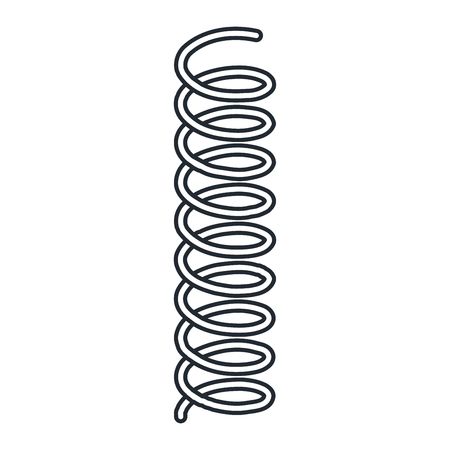
Which type of energy increases when you compress a spring?
a)
elastic potential energy
b)
kinetic energy
c)
radiant energy
d)
sound energy
44.

Energy stored because of gravity is called:

a)

Gravitational Potential Energy

b)

Kinetic Energy

c)

Mechanical Advantage

d)

Chemical Energy

45.

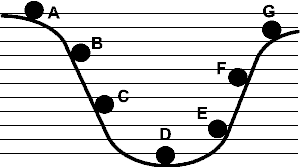
At which point does the ball has the greatest gravitational potential energy (GPE)?

a)

A

b)

G

c)

D

d)

C

e)

G

46.

Which would have the LEAST gravitational potential energy (GPE)?

a)

A ball sitting on the ground

b)

Moon viewed from the Earth

c)

An airplane flying 30,000 feet above the ground

d)

A rock sitting on top of Mt. Everest

47.

How could you increase the gravitational potential energy of an object without changing its mass and gravity?

a)

Make the object larger

b)

Lower the object towards the ground

c)

Raise the object farther off the ground

d)

Allow the object to roll on the ground

48.

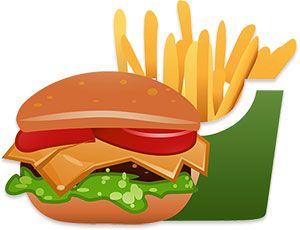
Which picture is NOT an example of Chemical PE?
a)
b)
c)
d)
49.

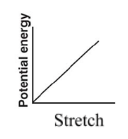
What potential energy is this graph representing?

a)

Electric

b)

Elastic

c)

Magnetic

d)

Gravitational

50.
Energy due to motion is ____________ energy. 
a)
Potential 
b)
Energy
c)
Kinetic
d)
Friction
51.
The faster an object moves, the ________ kinetic energy it has. 
a)
more
b)
less
c)
none of the above
d)
all of the above 
52.
__________ is stored energy. 
a)
Potential
b)
Kinetic
c)
None of the above 
d)
All of the above 
53.
Gravitational potential energy depends on the ________ and ________ of the object. 
a)
Height and mass
b)
Friction and movement
c)
Mass and Movement
d)
Height and Friction 
54.
What kind of energy is in a rock at the edge of a cliff?
a)
Potential
b)
Kinetic
55.
What kind of energy is in a moving skateboard?
a)
Potential
b)
Kinetic
56.
What kind of energy is in a person climbing a ladder?
a)
Potential
b)
Kinetic
c)
Both
57.
What kind of energy is in a waving hand?
a)
Potential
b)
Kinetic
58.
What kind of energy is in a stretched rubber band?
a)
Potential
b)
Kinetic
59.
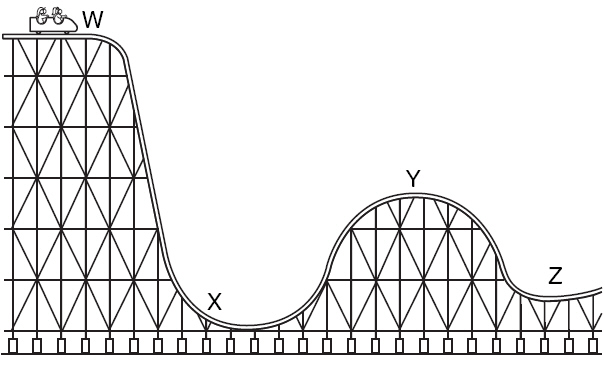
At which point is potential energy greatest?
a)
W
b)
X
c)
Y
d)
Z
60.
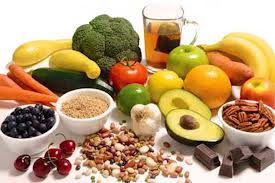
Food has _________ energy. 
a)
Potential 
b)
Kinetic 
c)
None of the above 
d)
All of the above 
61.
Where would a person have to be located to have the minimum gravitational potential energy?
a)
up on the roof
b)
down in the basement
c)
in the middle
d)
outside
62.
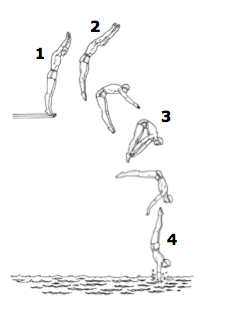
2. The diagram to the right represents a diver’s motion from the top of a high diving board into a pool of water. At what point does the diver have the greatest kinetic energy and the least potential energy?
a)
1
b)
2
c)
3
d)
4
63.

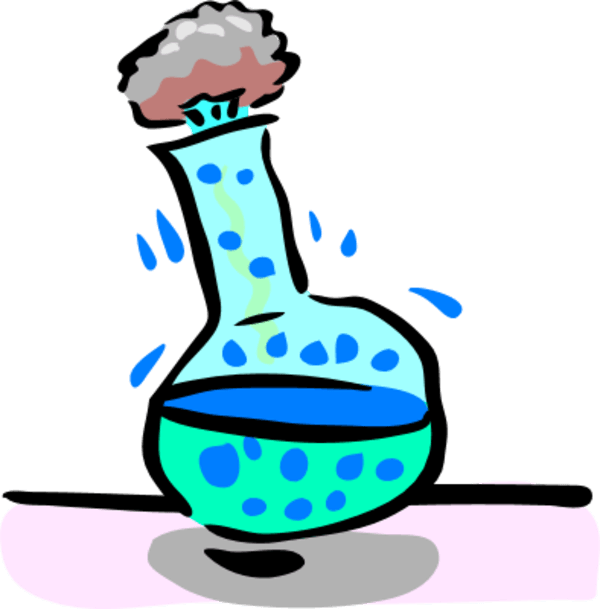
What kind of energy is represented in the picture?

a)

Thermal

b)

Chemical

c)

Sound

d)

Kinetic

64.

Kinetic energy is...

a)

energy carried in ultraviolet waves

b)

energy stored in food

c)

energy in motion

d)

energy from splitting an atom

65.

What two factors affect an object's kinetic energy?

a)

area and volume

b)

mass and weight

c)

weight and height

d)

mass and speed

66.

Where would this tossed baseball have the least amount of kinetic energy?

a)

point W

b)

point X

c)

point y

d)

point z

67.

Mass and speed both affect the amount of kinetic energy an object has, but ____________ has a greater effect.

a)

mass

b)

speed

c)

volume

d)

weight

68.

Increasing an object's mass will increase its kinetic energy.

a)

true

b)

false

69.

If all objects are moving as the exact same speed, which would have the greatest kinetic energy?

a)

tennis ball

b)

football

c)

notebook

d)

box of 20 textbooks

70.
Select the temperature in °C
a)
30°C
b)
100°C
c)
90°C
d)
40°C
71.
Select the temperature in °C
a)
50°C
b)
10°C
c)
20°C
d)
60°C
72.
Look at the thermometer. Select the activities that you can do at this temperature in °F
a)
Beach and Swimming
b)
Picnic and Swimming
c)
Ice Skate and Play in snow
d)
Beach and Flying a Kite
73.
Look at the activity. Select the temperature it would most likely be in °F
a)
20°F
b)
70°F
c)
60°F
d)
80°F
74.
Look at the activity. Select the temperature it would most likely be in °F
a)
30°F
b)
80°F
c)
50°F
d)
40°F
75.
This happens to water at 0 degrees Celsius.
a)
Boils
b)
Freezes
c)
Heats
d)
All of them
76.
This happens to water at 100 degrees Celsius.
a)
Boils
b)
Freezes
c)
Heats
d)
All of them
77.
The absolute coldest anything can get.
In Celsius it's at 273 degrees. Or 0 degrees Kelvin.
a)
Absolute cold
b)
Kelvin
c)
Absolute zero
d)
I don't know
78.
A flow movement where warmer air gets cools off and cooler air warms up. 
a)
Current
b)
Convection current
c)
Conduction current
d)
All of them
79.
The faster molecules move, 
a)
the higher the temperature
b)
the less temperature
c)
the same temperature
d)
I don't know
80.
The slower molecules move, 
a)
the higher the temperature
b)
the less temperature
c)
the same temperature
d)
I don't know
81.
Boiling water has more temperature than cold water because...
a)
its molecules are moving MORE
b)
its molecules are moving LESS
c)
it has more molecules
d)
I don't know
82.
Temperature at which ALL molecules stop moving. 
a)
100ºC
b)
Absolute zero
c)
0ºC
d)
32ºF
83.
The handle of a frying pan is often coated in rubber because rubber provides...
a)
Heat insulation
b)
Heat conduction
c)
A low melting point
d)
A nonstick surface
84.
Is iron a conductor or insulator?
a)
Conductor
b)
Insulator
85.
Which of the following is NOT an insulator?
a)
Wool
b)
Plastic
c)
Copper
d)
Styrofoam
86.
What is NOT an example of an insulator in the kitchen?
a)
An oven mitt
b)
Pots and pans
c)
A wooden spoon
d)
A plastic measuring cup
87.
A great conductor of energy is:
a)
wood
b)
plastic
c)
metal
d)
cloth
88.
Conductors are materials that...
a)
Allow heat to pass through
b)
Stop heat from passing through
c)
Allow cold to pass through
d)
Stop cold from passing through
89.
Gloves help keep your hands warm in winter because:
a)
They are conductors of heat.
b)
They are fuzzy.
c)
They are conductors of electrical energy.
d)
They are insulators.
90.
Thermal energy travels...
a)
Hot to cold
b)
Cold to hot
c)
Inside to outside
d)
Outside to inside
91.
Which would probably keep an ice cream cone from melting?
a)
An ice cream cone
b)
A styrofoam cup
c)
A plastic cup
92.
Gloves help keep your hands warm in winter because:
a)
They are conductors of heat.
b)
They are fuzzy.
c)
They are conductors of electrical energy.
d)
They are insulators.
93.
What is the BEST example of an insulator?
a)
A plastic toy
b)
A wooden table
c)
A styrofoam cup
d)
A metal roof
94.
Why should oven gloves be made from materials which are good thermal insulators?
a)
Oven gloves made from good thermal insulators will be more comfortable
b)
Oven gloves made from good thermal insulators will keep the food hot
c)
Oven gloves made from good thermal insulators will protect hands from being burned
d)
Good thermal insulators will keep the oven hot
95.

Which type of heat transfer is shown?

a)

convection

b)

conduction

c)

radiation

d)

hot air balloon

96.

After holding an ice pack against his skin for 20 minutes, the man notices the ice pack is melting. Why is this happening?

a)

radiation - the ice pack is now all melted

b)

conduction - body heat transferred to the cold ice pack

c)

convection - the water in the ice pack flowed in a circle pattern

d)

conduction - heat came from the bigger object to the smaller

97.

If this drink is sitting outside on a hot, sunny day, name two reason why the drink won't stay cold.

a)

radiation - from the sun is heating the glass

b)

conduction - the table beneath the glass is heating

c)

convection - the air is moving in a circle pattern around

d)

conduction - the straw is heating up

98.

If you were going to use this pan to cook, what do you notice could be a problem?

a)

it is made of metal, a good conductor

b)

the handles are all metal and will be HOT

c)

the sides are all metal and will be HOT

d)

there is no food in the pan to cook

99.

What is the BEST reason cooking pots are made out of the materials aluminum, copper, and sometimes glass?

a)

They are able to stop the flow of heat.

b)

They are good conductors of heat.

c)

They keep the same amount of heat.

d)

They are good insulators of heat.

100.

What is the intended purpose of a heat lamp at a fast food restaurant?

a)

To help staff see where the food is

b)

To let customers choose their food

c)

To use electricity

d)

To keep food warm

101.

Thermal energy is the __________ _________ energy of moving particles

a)

total potential

b)

average potential

c)

average kinetic

d)

total kinetic

102.

Temperature is the __________ _________ energy of moving particles

a)

average potential

b)

average kinetic

c)

total potential

d)

total kinetic

103.

Objects with MORE MASS have______________

a)

lower potential energy

b)

lower number of atoms

c)

higher thermal energy

d)

higher temperature

104.

Cold things often have a _________ kinetic energy because_______

a)

lower; particles are moving around less

b)

lower; particles are moving around more

c)

higher; particles are moving around the same

d)

higher; particles do not move

105.

For objects that have the SAME mass, which object will have a HIGHER thermal energy?

a)

the object with the higher temperature

b)

the object with the lower temperature

c)

the objects will have the same temperature

d)

the objects have no temperature

106.

Which will have the HIGHEST thermal energy?

a)

Hot cup of tea

b)

Cold bathtub water

c)

Huge lake

d)

Warm bowl of soup

107.

Which will have the LOWEST thermal energy?

a)

Large mug of hot coffee

b)

Baby bottle with warm milk

c)

Gatorade jug of cold Gatorade

d)

Large frozen puddle

108.

Energy is the ability to do __________

a)

bonds

b)

work

c)

atoms

d)

molecules

109.

Law of Conservation of Mass says...

a)

Energy is always created and destroyed

b)

Energy is only in hot things

c)

Energy can be destroyed easily

d)

Energy cannot be created or destroyed

110.

Dribbling a basketball is an example of

a)

potential energy

b)

stored energy

c)

temperature

d)

kinetic energy

111.

As temperature increases, molecules _____________

a)

move slower

b)

move the same

c)

move faster

d)

stop moving

112.

What happens to the molecules inside bridges when temperature increases? Why are there joints in the structure?

a)

Molecules move more, joints prevent them from hitting each other

b)

Molecules move less, they shrink in size

c)

Molecules move more, joints allow them room to expand without breaking bridge

d)

Molecules are not affected by temperature