
 Worksheets
7th Term 1 and term 2
Total questions: 101
Worksheet time: 1hrs 12mins
Myra was given a mixture to separate by physical processes. What is the mixture?
Pure Substance
Glucose
Element
Mixture
A science teacher, Ms. Smith, is conducting an experiment to demonstrate different types of mixtures. She prepares a mixture that is NOT evenly distributed. What is this type of mixture called?
Compounded
Homogenous
Heterogenous
Salty


All students in the class are learning about the basic building blocks of matter. According to their teacher, all matter is made up of .....
Compounds
Atoms
Molecules
Sunshine
A science teacher asked the class to identify a homogeneous mixture of particles so small that they can not be seen with a microscope and that will never settle to the bottom of their container. What is the correct answer?
colloid
solution
suspension
tyndall effect

If Navya changes a substance into a new substance...
Partial Change
Physical Change
Chemical Change
Freezing
Which of the following is an example of a physical change?
Sampanyasri changing her hairstyle
Aanya baking a cake
Garg digesting lunch
Ice melting
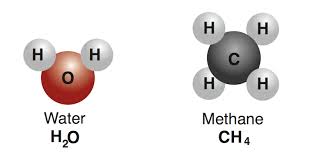
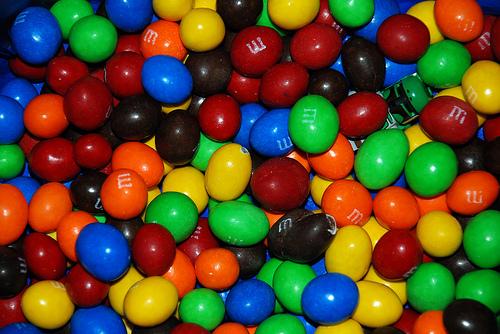
A real-world scenario where a Singh is commonly found is in a fruit salad, which is made of 2 or more substances that are together in the same place, but their atoms are not chemically bonded.
chemical bond
mixture
molecule
atom
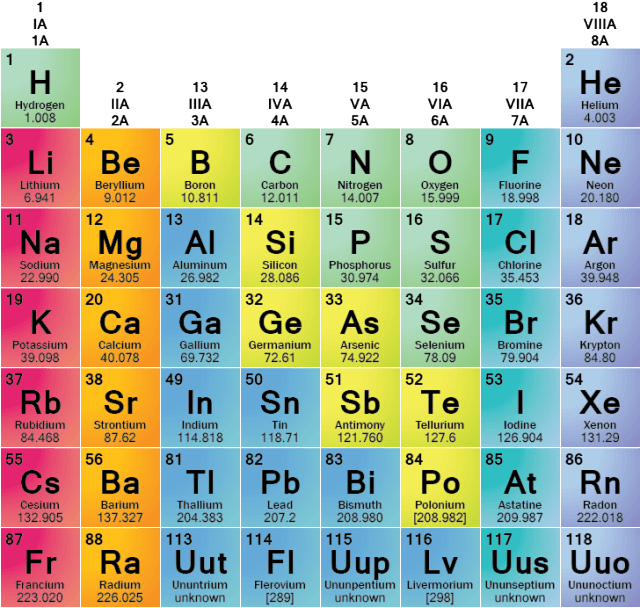
Physical or chemical change?
When Nandini bakes a cookie dough into cookies, is it a physical change or a chemical change?
physical change
chemical change
Define a Chemical Property in the context of a science experiment
A property which depends on the objects size or matter.
A property of matter not involving in its manifestation a chemical change
A property or behavior of a substance which undergoes a chemical change or reaction.
A property which makes the object smell or taste different.
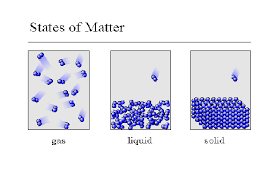
At a science fair, Misra conducted an experiment to study the behavior of particles in different objects. She observed that at higher temperatures,
particles in an object have less energy
particles in an object move faster
a gas contracts
During a science experiment, Singh was asked to determine the number of electrons in a sodium atom. How many electrons does a sodium atom have?
23
11
12
34
Charisha, Deshwal, Sampanyasri, Saanvi, and Garg were studying the properties of an element. The mass number of an element that has 18 protons, 18 electrons, and 19 neutrons is _____.
12.5
13
25
37
What is the correct number of subatomic particles of a phosphorous atom with a mass of 31?
p# - 15, n# = 15, e# = 15
p# - 15, n# = 16, e# = 15
p# - 15, n# = 15, e# = 16
p# - 16, n# = 15, e# = 15
What is the mass number of a nickel atom with 28 protons, 31 neutrons, and 28 electrons?
31
28
59
87
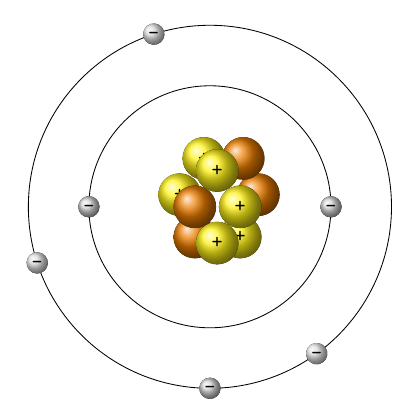
How many electrons does the atom of a particular element have?
2
4
6
10
Who among the following created the Planetary Model of the atom?
Bohr
Dalton
Rutherford
Chadwick
Who discovered the electron within the atom?
Thomson
Chadwick
Schrodinger & Heisenberg
Dalton
Which of the following elements is the only one with no neutrons in its nucleus?
Oxygen
Helium
Hydrogen
Lithium
What do the following properties describe in the context of metals? : shiny, ductile, good conductor, high melting point
metal
nonmetal
metalloid
During a science experiment, Deshwal observed that when the alkali metals react with water, which gas is released?
hydrogen
oxygen
hydroxide
carbon dioxide
What happens to the reactivity of the alkali metals as you move down the group?
increases
decreases
Which of the following is TRUE about an isotope?
same number of protons and neutrons
same number of protons but different number of neutrons
same atomic mass but different atomic number
neutron and electron numbers are the same

In a nuclear power plant, the technicians are discussing the order of most to least penetrating radiation. What is the correct order?
Alpha , Beta, Gamma
Beta , Gamma , Alpha
Gamma, Beta, Alpha
Gamma, Alpha, Beta
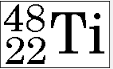

According to Arrhenius, which ion does acid generate in water?
H+
OH_
Cl-
F_
Which of the following reaction produces a base?
Reaction between metal and oxygen
Reaction between a metal oxide and water
Reaction between an acid and a base
Heating of metal carbonates
Which of the given compounds is commonly used in baking and has the formula NaHCO3?
Vinegar
washing soda
Caustic Soda
baking soda
In a chemistry experiment, Aman observed that HCl gas changes the colour of the litmus paper.
True
False
Choose the correct option regarding the statements given below:
Statement 1: Kathrine always wears a red dress on Mondays.
Statement 2: Misra always wears a blue dress on Fridays.
Statement 3: Vihaan always wears a green dress on Wednesdays.
Statement 4: Garg always wears a yellow dress on Saturdays.
Misra and Vihaan always wear their favorite colors on the specified days
Kathrine and Vihaan always wear their favorite colors on the specified days
Kathrine and Misra always wear their favorite colors on the specified days
Misra and Kathrine always wear their favorite colors on the specified days
During a chemistry class experiment, Vihaan, Garg, and Maggu were asked to identify the weakest acid among the following options. Which one of the following is the weakest acid?
HF
HCl
HBr
HI
Analyze the reaction given below and identify the salt formed.FeO (aq) + HCl (aq)→Salt + H2O (l)
FeO
FeCl2
Fe2O3
FeSO4
When Singh, Shrivats, Nandini, Shatanya, and Aman sit around a campfire, they feel the warmth from the fire. This type of reaction occurs when a substance absorbs thermal energy from its surroundings.
endothermic
exothermic
decomposition
synthesis
Which chemical turns blue litmus paper red when exposed to an acidic solution?
Acid
Base
What is the name of the acid King of chemicals?
Hydrochloride acid
Sulfuric acid
Nitric acid
Carbonic acid
What is the common name of CaSO4 2H2O in the construction industry?
Epsom Salt
Blue vitrol
Gypsum
Plaster of Paris
Chemical formula of the disinfectant used in Daksh's house.
CaOCl2
CaCl2
CaSO4
Ca(OH)2
During a dental check-up, Dr. Smith asked the students about the composition of tooth enamel. What is tooth enamel made up of?
calcium phosphate
calcium carbonate
calcium oxide
potassium
In a chemistry class, Maggu asked her teacher, 'What is ignition temperature?' The teacher explained that it is the lowest temperature at which a substance catches fire without the need for an external flame or spark. What is ignition temperature?
Lowest temperature at catch fire
Higher temperature at catch fire
Any temperature
1000 C
In a real-world scenario, which type of fuel would have the highest calorific value?
Zero
Low
Moderate
High
During a candle making workshop, Navya was observing the different zones of a candle flame. She noticed that the least hot zone of a candle flame is
non-lumious zone
luminous
dark zone
blue zone at the base of the wick
matchstick catch fire?
By rubbing a matchstick against a rough surface
By attaining the ignition temperature
None of the above
all of the above
Unburnt carbon particles causes
Stomach infection
Respiratory problems
Brain infections
Throat problems
When magnesium ribbon burnt it produce
Magnesium hydroxide
Magnesium oxide
Magnesium chloride
Magnesium sulphate
Which one of the following is combustible?
Iron nail
Glass
Stone pieces
Paper
Which of the following is inflammable Substances?
Petrol
Wood
Paper
Straw
Fire extinguisher-
Raise up temperature of fuel
Bring down the temperature of fuel
Cut off the supply of air
None of these

he picture below shows two cases in which a person is trying to burn the paper cup. In case 1, the cup has water in it and in case 2, it is empty and dry. Identify in which of the cases the paper will burn.
Case 1
case 2
Both case 1 and case 2
D. The paper doesn’t burn in both the cases.
What colours are the outer zone of the flame? (Pick two)
Colourless
Blue
Red
Orange

What does this hazard symbol warn of?
The substance is explosive
The substance burns easily
The substance supplies oxygen to fires
The substance puts out fires
Why should you not add water on burning oil?
It makes the fire explode and spread.
It puts the fire out too quickly
Water does not put out fires
It takes too long to put out the fire
Which one of the following is fuel of our body?
Petrol
Diesel
Water
Food
How are you feeling today?
Happy/Joyful
Bored
Angry
Worried
Sad

What was on the spoon after it was passed over the flame?
oxygen
there is no spoon
fire
water

Which candle's flame went out fastest?
medium
largest
smallest
The products of an acid - metal reaction are:
carbon dioxide + water
salt + hydrogen
salt + water
salt + carbon dioxide + water
The products of an acid - metal carbonate reaction are:
carbon dioxide + water
salt + hydrogen
salt + water
salt + carbon dioxide + water
The products of the combustion of a fuel are:
carbon dioxide + water
salt + hydrogen
salt + water
salt + carbon dioxide + water
A reaction that breaks down a larger molecule into smaller molecules.
corrosion
combustion
decomposition
neutralisation
The positive gas test result for a lit splint in hydrogen is:
a squeaky pop
the flame will reignite
the flame will extinguish
no change
The positive gas test result for a lit splint in carbon dioxide is:
a squeaky pop
the flame will reignite
the flame will extinguish
no change
The positive gas test result for a glowing splint in oxygen is:
a squeaky pop
the flame will reignite
the flame will extinguish
no change
Which acid is used to produce the salt copper sulphate?
hydrochloric acid
sulphuric acid
nitric acid
acetic acid
Which acid is used to produce the salt magnesium nitrate?
hydrochloric acid
sulphuric acid
nitric acid
acetic acid
Coal burns with__________
Flame
Only Glow
Both flame & glow
None of these
Combustion is a ____________
Physical process
Chemical process
Both of these processes
None of these
There are following zones of flame
Two
Four
Three
No zone
The substance which have very low ignition temperature will
Catch fire easily
Will not catch fire
Catch fire after sometime
None of these
Burning of charcoal in room will produce
Carbon dioxide
Nitrogen dioxide
Carbon monoxide
All of these
The amount of heat energy produced on complete combustion of 1 kg of fuel is called
Calorific value
Significant value
Heat value
Internal value
Substance that does not burn in air is
Sand
Kerosene
Wood
Diesel
Which zone represent the partial (half) combustion in candle flame
Outer zone
Middle zone
Inner zone
Lower zone
The acronym for putting out a fire using a fire extinguisher is PASS . What does PASS stands for
Pull, aim, squeeze, spread
Pul, accuracy, squeeze, spread
Pin, aim, squeeze, sweep
Pull, aim, squeeze, sweep

A Class 'A' fire is composed of_____fuels?
Liquids
Solids
Gasses
Metals

Smoke contains the following components
Nuclear, Chemicals and Mechanical sources of heat
Zinc, Magnesium, sulfur, copper and hydrogen
Particles of carbon monoxide, carbon dioxide, sulfur dioxide and cyanide
Cheshire cats, caterpillars and white rabbits
Fire has changed over time
true
false
both
neither
Smoke contains the following components
Nuclear, Chemicals and Mechanical sources of heat
Zinc, Magnesium, sulfur, copper and hydrogen
Particles of carbon monoxide, carbon dioxide, sulfur dioxide and cyanide
Cheshire cats, caterpillars and white rabbits

A class 'C' fire can be additionally dangerous because it involves...?
low level of hydrogen
electricity
combustible liquids
inserts

Dry powder extinguishers _______ the chain reaction process
convert
speed up
interrupt
alter

Fire sprinklers do not react to smoke
true
false
both, true and false
What is required for photosynthesis?
sugar and oxygen
carbon dioxide and oxygen
sugar and water
carbon dioxide and water


Metal oxides are
Basic
Acidic
Neutral
None of the above
More reactive metal displaces less reactive metal from its salt solution is known as
Combination reaction
Displacement reaction
Neutral reaction
None of the above
Colour of iron sulphate is
Blue
Green
Black
None of the above

