wayground logo

Free Printable Worksheets

Font size

S
M
L
XL
Worksheets

The Electron

Total questions: 45

Worksheet time: 48mins

Name
Class
Date
1.
How many electrons can the first energy level hold?
a)
1
b)
2
c)
8
d)
0
2.
What atom matches this electron configuration?
1s22s22p63s23p64s23d10
a)
Zinc
b)
Copper
c)
Nickel
d)
Germanium
3.
What electron configuration matches an oxygen atom?
a)
1s22s22p63s2, 3p64s23d104p5
b)
1s22s22p4
c)
1s22s22p6
d)
1s22s22p63s23p64s23d1
4.
Electrons occupy orbitals of lowest energy first is part of what electron configuration rule?
a)
Hund’s Rule
b)
Aufbau Principle
c)
Pauli Exclusion Principle
5.

What does Pauli exclusion principle state ?

a)

states that each electron occupies the lowest energy orbital available

b)

states that -no two electrons in the same orbital can have the same spin

c)

states that single electrons electrons with the same spin must occupy each-energy orbital before additional electrons with opposite spins can occupy the same orbitals

6.
Anions are _______ that form ____________ ions and __________ electrons.
a)
nonmetals, positive, lose
b)
nonmetals, negative, gain
c)
metals, positive, gain
d)
metals, positive, lose
7.
Which element is pictured?
a)
neon
b)
fluorine
c)
magnesium
d)
argon
8.
What atom matches this electron configuration?
[Xe] 6s2 4f14 5d9
a)
Mercury
b)
Gold
c)
Platinum
d)
Thallium
9.
What noble gas should be used to write the shorthand configuration for Te?
a)
Ar
b)
Kr
c)
Xe
d)
Sb
10.
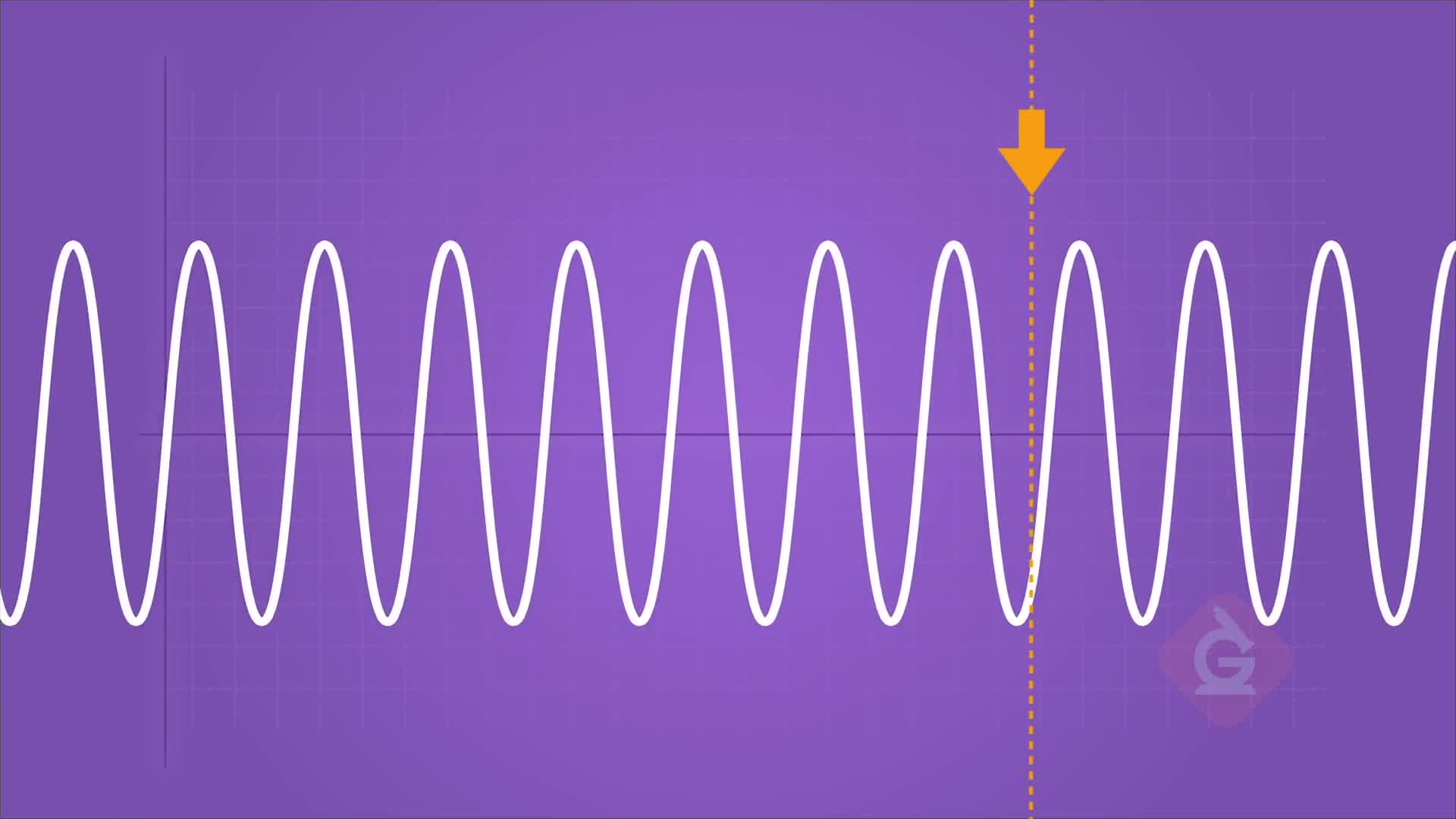
The energy of waves _______ as the wavelength gets shorter.
a)
increases
b)
decreases
c)
stays the same
11.
Which electromagnetic waves have the highest frequencies and the shortest wavelengths?
a)
microwaves
b)
visible light
c)
gamma rays
12.
A wave with a large wavelength will have a ______ frequency and _____ energy
a)
high, low
b)
high, high
c)
low, high
d)
low, low
13.
Light is emitted when electrons ...
a)
jump from high to low 
b)
jump from low to high 
c)
either of these
d)
none of these
14.

The line with the shortest wavelength is produced in the hydrogen spectrum when electron moves

a)

from n=2 to n=1

b)

rom n=4 to n=1

c)

from n=3 to n=1

d)

from n=4 to n=3

15.

State whether true or false.

Every element has its own unique atomic spectra.

a)

True

b)

False

16.

Line emission spectra is produced from atoms when

a)

electrons release energy as they move to their excited state.

b)

electrons absorb energy as they move to their excited state.

c)

electrons release energy as they return to the ground state.

d)

electrons absorb energy as they return to the ground state.

17.

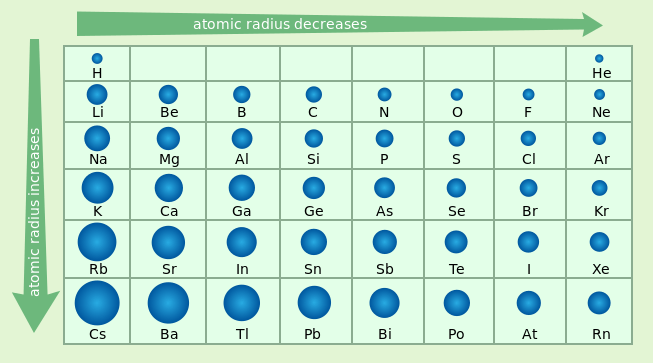
Which element in Period 2 has the greatest atomic radius?

a)

Be

b)

C

c)

Na

d)

Li

18.

Of the halogens, which has the smallest electronegativity?

a)

F

b)

Cl

c)

At

d)

Ne

19.

Which alkali metal is the least reactive?

a)

Li

b)

Na

c)

H

d)

Fr

20.
As you move down the periodic table atoms get bigger.  This is because ____________.
a)
The atoms have more mass.
b)
The atoms have more protons.
c)
The atoms have more energy levels
d)
The atoms have more nuetrons
21.
As you move across the periodic table atoms tend to get smaller because, ______________.
a)
the atoms have more mass.
b)
the atoms have less mass
c)
the atoms have more protons.
d)
the atoms have less electrons.
22.
Ionization energy is...
a)
the energy required to add an electron to a specific atom
b)
how much energy it takes to remove an electron from an atom
c)
the energy required to shield the outer electrons from the nucleus
d)
a measure of the ability of an atom to attract electrons
23.
Which of the following will have a lower ionization energy than Scandium (Sc)?
a)
Helium (He)
b)
Titanium (Ti)
c)
Calcium (Ca)
d)
Magnesium (Mg)
24.
Electronegativity is...
a)
how good an atom is at attracting electrons
b)
the ability of an atom to lose electrons
c)
the energy required to remove an electron from a specific atom
d)
how easy it is to make friends. 
25.
Atoms that have a high electronegativity, _______________.
a)
give up their electrons more easily.
b)
hold on to their electrons more tightly.
c)
have more electron shells.
26.
Which statement correctly and completely identifies a trend?
a)
Atomic radius decreases across a period and increases down a group.
b)
Electronegativity decreases across a period and decreases down a group.
c)
Ionization energy increases across a period and increases down a group.
d)
Ionic radius increases across a period and increases down a group.
27.
Francium (Fr) has the lowest ionization energy in Group 1 because - 
a)
it has the smallest number of valence electrons
b)
it has the greatest atomic mass
c)
it has the greatest number of protons, so it attracts its electrons the strongest
d)
its 1 valence electron is very far from the nucleus, so little energy is needed to remove it
28.
Which of the following electron configurations represents the most chemically stable atom?
a)
[Ne] 3s1
b)
[Ne] 3s2 3p3
c)
[Ne] 3s2 3p6
d)
[Ar] 4s2 3d6
29.
Which is larger:
P or P-3
a)
P
b)
P-3
c)
both are same size
30.

Which of these is a distinguishing property for the noble gases?

a)

Soft - can cut with a plastic knife

b)

Unreactive - don't give or receive electrons

c)

Shiny - exhibits luster

d)

Poor conductors of electricity

31.

Which of these is a distinguishing property for the alkali metals?

a)

Soft - can cut with a plastic knife

b)

Unreactive - don't give or receive electrons

c)

Shiny - exhibits luster

d)

Poor conductors of electricity

32.

Which of these is a distinguishing property for the nonmetals?

a)

Soft - can cut with a plastic knife

b)

Unreactive - don't give or receive electrons

c)

Shiny - exhibits luster

d)

Poor conductors of electricity

33.

An unknown element is observed to be shiny, malleable, ductile, and is found to conduct heat and electricity very well. What group might this element fall into?

a)

Alkali metals

b)

Alkali earth metals

c)

Transition metals

d)

Non-metals

34.

Select which of these are properties of non-metals

a)

Good conductors of heat & electricity

b)

Colorful

c)

Form anions (negative charges)

d)

Soft

e)

Varying physical states at room temp

35.

The shaded elements shown here are the...

a)

transition metals

b)

non-metals

c)

alkali earth metals

d)

alkali metals

36.
What are the rows of the Periodic Table of Elements called?
a)
Columns
b)
Groups
c)
Periods
d)
Lines
37.
The numbered row of the Periodic Table of Elements tells you how many _________ an element has.
a)
neutrons
b)
protons
c)
atoms
d)
energy levels
38.
What are the columns of the Periodic Table of Elements called?
a)
Columns
b)
Groups
c)
Periods
d)
Lines
39.
The __________ tells you how many protons an element has.
a)
atomic number
b)
atomic mass
c)
energy levels
d)
electrons
40.

Why do elements in a group share similar properties?

a)

They have the same number of orbitals

b)

They have the same number of valence electrons

c)

They have the same number of protons

d)

They have the same number of electrons

41.

When Mg becomes an ion, what happens?

a)

It loses 2 electrons and becomes larger

b)

It gains 2 electrons and becomes larger

c)

It loses 2 electrons and becomes smaller

d)

It gains 2 electrons and becomes smaller

42.

What color of light has the least amount of energy?

a)

Green

b)

Violet

c)

Yellow

d)

Red

43.

Put the following elements in order of increasing Electronegativity:

Cl, Ca, W, Ne, Al

a)

Ca, W, Al, Cl, Ne

b)

Ca, W, Ne, Cl, Al

c)

Ne, Ca, W, Al, Cl

d)

Cl, Al, W, Ne, Ca

44.

Four gas spectra are given. What gases are in the unknown mixture?

a)

Gas B & Gas D

b)

Gas C & Gas B

c)

Gas A & Gas D

d)

Gas D & Gas C

45.

Which element(s) is/are found in the star's spectra below?

a)

Hydrogen only

b)

Hydrogen & Helium

c)

Calcium only

d)

Hydrogen & Calcium