
 Worksheets
WATER
Total questions: 38
Worksheet time: 23mins

Water is a what type of resource?
renewable resource
non-renewable resource
continuous resource
Why is fresh water a limited resource?
It isn't because it is a renewable resource
97% of water is in the oceans and too salty to drink.
Only 2.5% is drinkable and is stored in icecaps, rivers, and lakes.


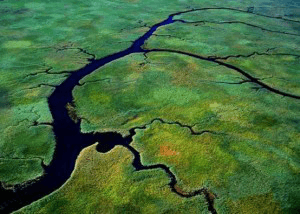
A stream or river that joins the main river is:
A tributary
A confluence
The mouth
A Canyon

The point at which two rivers or streams meet is called:
A tributary
A coincidence
A confluence
A delta
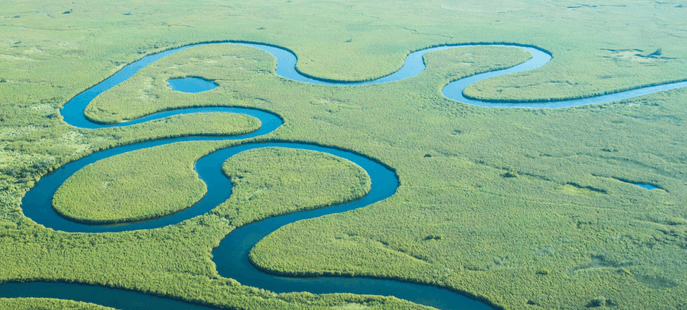
Meanders are what type of feature?
A steep bank
Turbulent water
Winding curve shapes
A U shaped lake

Which statements below are true about the source of a river? (more than one correct answer)
Found in
The start of a river
A stream or spring often found in the mountains/highland
Deposits sediment forming large deltas

What river feature does this image show?
Meander
Oxbow Lake
Tributary
Headwaters
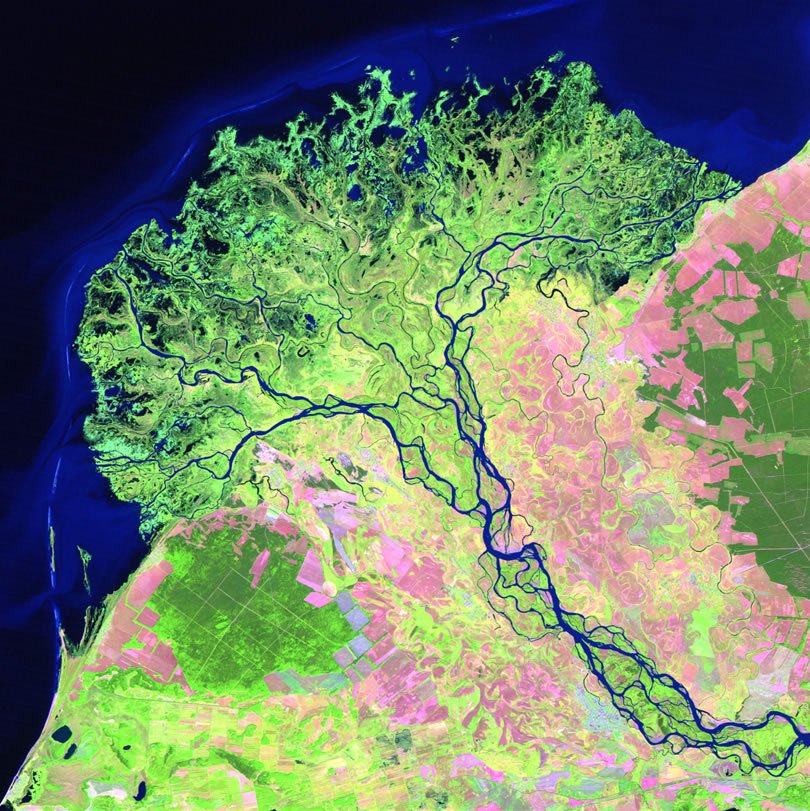

What is the name of the point where a river ends & empties into another river or large body of water?
Tributary
Water Shed
Confluence
Mouth

Deposition is when ...
Sediments and materials are moved along the river.
Sediments and materials are dropped along the river.
Sediments and materials are suspended in the water.
Sediments and materials are move into the ocean.

Which of these is not an example of using a river for a 'source'?
Used for drinking water
Used to irrigate crops
Used to generate hydroelectricity
Used to dispose of industrial pollution (dumping)
Why is the river Ganges significant to the Indian people?
It is a major tourist attraction.
It is a major transport route through the country
It is a spiritual place where sins are cleansed.
It has no significance at all.
The pollution of the Ganges has been caused by which factors?
Agriculture
Cities
Industries
Agriculture, Cities and Industries.
Where does the River Ganges emerge (begin)?
Bay of Bangal
Western Himalayas
Eastern Himalayas
Nepal.
Which other countries share the Ganges River Basin?
Nepal, Afghanistan, Pakistan
Nepal, China and Bangladesh
Afghanistan, Pakistan, China
The main garbage found in polluted rivers is?
(a)
A ________________ is the starting point of the river.
source
triutaries
mouth
drainage basin
Which is NOT a source of rivers?
natural spring
melted ice and snow
rain water
volcano
What is a river?
water that flows all the time in basin
a natural flowing watercourse, usually freshwater, flowing towards an ocean, sea, lake or another river.
a continuous body of salt water that covers more than 70 percent of the Earth's surface.
Falling water from mountains
Rivers are polluted by the following things.
Oxygen and carbon dioxide
chemical waste from factories.
Untreated sewage from homes, schools and factories.
THE GANGA RIVER FINISH IN THE
BAY OF CÁDIZ
BAY OF BENGAL
BEY OF BENGAL
I AM NOT SO SURE
CORPSES AND ASHES ARE THROWN INTO THE GANGA RIVER TO REACH THE WORLD OF THE ANCESTORS.
TRUE
FALSE
THE PLAN TO PROTECT THE GANGA RIVER WAS A FAILURE BECAUSE OF...
CORRUPTION
LACK OF SUPPORT FROM RELIGIOUS AUTHORITIES
POOR ENVIRONMENTAL PLANING
THERE HASN´T BEEN A PLAN TO PROTECT THE GANGA
THE MOST POLLUTED RIVER IN THE WORLD IS (a)

