
 Worksheets
Earth's Place in the Universe Review
Total questions: 50
Worksheet time: 39mins
Gravity is responsible for the . . .
sun rotating around the planets
sun revolving around the planets
planets revolving around the sun
What is rotation?
potato chips
to go around another object.
to spin on an axis and causes day and night
What is revolution?
to go around another object
to spin on an axis
baked potato
The ___________ the planet is from the sun, the ____________ it takes to go around the sun.
closer, shorter
farther, shorter
farther, longer
closer, longer
List the order of the planets, starting form the sun.
Mercury, Venus, Earth, Mars, Jupiter, Saturn, Uranus, Neptune
Mercury, Venus, Earth, Mars, Saturn, Jupiter, Neptune, Uranus
Neptune, Uranus, Saturn, Jupiter, Mars, Earth, Venus, Mercury
How does the mass of an object effect the gravitational attraction of an object?
The smaller the mass of the object the greater the gravitational force.
The mass of the object has no effect on the gravitational force
The greater the mass of the object the less the gravitational force.
The greater the mass of the object the greater the gravitational force.


The above picture is an example of revolution on your solar system
The above picture is an example of rotation in our solar system
If you used a golf ball, baseball and a basketball to represent the Earth, Mercury and the Sun. Which ball would represent each planet?
Mercury = basketball, Earth = golfball, Sun = baseball
Mercury = golfball, Earth = basketball, Sun = baseball
Mercury = baseball, Earth = basketball, Sun = golfball
Mercury = golfball, Earth = baseball, Sun = basketball

Earth rotates on its axis every...
24 hrs
once per month
Once per year

Which describes why summer days are longer?
The Earth is tilted towards the sun in the Summer
The sun's temperature increase in the summer
the changes in shape the Moon goes through in a month as seen from Earth
rotation
revolution
Moon phase
axis
Which is bigger? The universe or galaxy.
Universe
Solar System
galaxy

Astronomical calendars have been in existence for thousands of years. For our ancient ancestors, time was measured by the number of Moons that had passed from a certain period, and by the shadows that the Sun and Moon cast. When one celestial body in space casts a shadow on another one, an eclipse occurs.
Which of the following statements explains why we see a different amount of the moon’s surface as it revolves around the Earth?
The amount of the moon’s surface that we see depends upon the position of the Earth relative to the moon.
The amount of the moon’s surface that we see depends upon the position of the Earth relative to the other planets.
The amount of the moon’s surface that we see depends upon the movement of the Earth around the sun.
The amount of the moon’s surface that we see depends upon the relative positions of the sun and the moon.
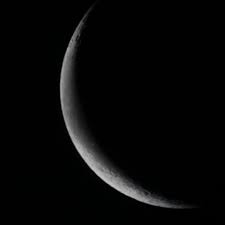
Name the moon phase
waning crescent
waxing crescent
waning gibbous
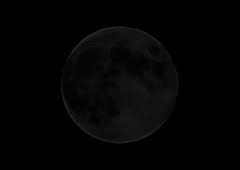
Name the moon phase
First Quarter
Last Quarter
New Moon
Full Moon
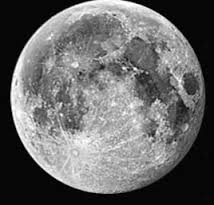
Name the moon phase
First Quarter
Last Quarter
New Moon
Full Moon
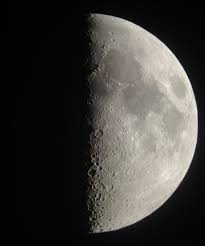
Name the moon phase
First Quarter
Last Quarter
Full Moon

Name the phase of the moon for letter f
Waning Gibbous
Waxing Gibbous
Waning Crescent
What is the correct alignment needed for a SPRING tide to occur?
Sun, Earth, Moon
Earth, Sun, Moon
Sun, Moon, Earth
What causes tides?
Gravity of the Earth
Gravity of the Moon
Wind from the Earth
Wind from the Moon
A neap tide occurs during which two lunar phases?
Full Mooon and New Moon
Waxing Crescent and Waning Crescent
1st Quarter and 3rd Quarter
A spring tide occurs during which two lunar phases?
New Moon and Full Moon
Waxing Crescent and Waning Crescent
1st Quarter and 3rd Quarter

What is a high tide?
Sea pulled TOWARD the moon where Earth is CLOSEST to the moon
Sea pulled AWAY from the moon where Earth is FARTHEST to the moon
Sea pulled AWAY from the moon where Earth is CLOSEST to the moon

Wha type of tide would this arrangement of earth-moon-sun create?
neap tide
spring tide

What type of tides would this arrangement of earth-moon-sun create?
neap tide
spring tide
List the order of the planets, starting form the sun.
Mercury, Venus, Earth, Mars, Jupiter, Saturn, Uranus, Neptune
Mercury, Venus, Earth, Mars, Saturn, Jupiter, Neptune, Uranus, Pluto
Neptune, Uranus, Saturn, Jupiter, Mars, Earth, Venus, Mercury


When the moon passes between the earth and the sun, this results in a.....
Waxing moon
lunar eclipse
solar eclipse

Earth’s axis is tilted.
false
true

How do the seasons happen?
Earth's distance away from the sun
Earth's distance towards the sun
Earth's tilted axis
Which of the following best describes the tilt of the earth when it is summer in the southern hemisphere?
The northern hemisphere is tilted toward the sun
The northern hemisphere is tilted away from the sun
The norther hemisphere is tilted neither toward or away from the sun

The earth is a tilted planet. What is the degree of tilt?
Approximately 25 degrees
Exactly 25 degrees
about 23.5 degrees
Which of the following best describes equinoxes?
The earth is tilted neither toward or away from the sun
The norther hemisphere is tilted toward the sun
The southern hemisphere is tilted toward the sun
What does the earth's tilt cause?
The seasons
Day and Night
What is the shape of the earth's orbit around the sun?
Circular
Elliptical (slightly oval)
Variable and changes with the seasons (no particular shape)

Why does the area around the equator stay the same temperature all year?
The equator rotates slower than the poles.
The equator remains the same distance from the sun.
The equator always receives direct sunlight.

In winter, the axis of the earth is pointed away or toward the sun?
towards
up
away

What happens when the area in which you live tilts away from the sun?
It is summer.
It is spring.
It is winter.
It is fall.
How long does it take the earth to revolve once around the sun?
12 hours
24 hours
365.25 days
Which season has the least amount of daylight in the Northern Hemisphere?
Winter
Spring
Summer

Because Earth needs 365,25 days to complete one rotation, this number got formulated to create one additional day that makes in every 4 years we have 366 days. These year is known as ...
lunar year
solar year
new year
leap year

