
 Worksheets
Science grade 6
Total questions: 48
Worksheet time: 32mins
Two or more items that are mixed together is called
A mixture
A Sieve
Compost
Solvent
1. Which is not belong to group
Decantation
Sieving
Precipitation
Filtration
How to separate pebbles and water?
Decantation
Filtration
Evaporation
Sieving
How to separate salt and water?
Decantation
Filtration
Evaporation
Sieving
How to separate cooked noodles and water?
Decantation
Filtration
Evaporation
Sieving
How to separate meat and sauce?
Decantation
Filtration
Evaporation
Sieivng
How to separate oil and water?
Decantation
Distillation
Magnetic Attraction
Sieving
How to separate sugar and water?
Decantation
Distillation
Filtration
Evaporation
How to separate tea leaves and tea liquid?
Decantation
Evaporation
Sieving
Magnetic Attraction
How to separate coffee beans and coffee liquid?
Distillation
Filtration
Evaporation
Sieving
Which of the following is a benefit of separating mixtures?
Woods
Water
Essential Oils
Plants
Filtration is a common method of separating an insoluble solid from a liquid.
True or False?

In filtration, what is the part that remains in the filter paper called?

Evaporation is good for separating a mixture (solution) of a soluble solid and a solvent.
True or False?


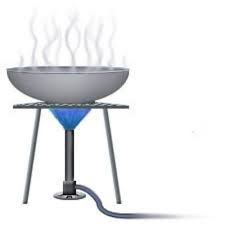
Name the separation technique shown in the diagram.
evaporation
distillation
filtration

This method is used to separate metals from non metals.
use of magnet
physical manipulation
sieving
chromatography

What mixture could you use this tool to best separate that mixture?
Sugar and Salt
Sand and rocks
Apples and grapes
How to separate needles and toothpicks?
Decantation
Distillation
Magnetic Attraction
Sieving
Chemical changes...
Always form a new substance.
May change shape or size.
May absorb or release heat.
May change colour, produce odor, create sound, release gas or produce light.
Can often be undone.
Physical Changes...
Do not form a new substance.
May change shape or size.
May absorb or release heat.
May change state of matter.
Can often be undone.
Leaves in autumn undergo a chemical change.
TRUE
FALSE
Fireworks exploding in the sky undergo a physical change.
TRUE
FALSE
Choose the answers that respond to a physical change.
Burning wood.
Chopping wood.
Melting ice.
Rotten bananas.
Choose the answers that respond to a chemical change.
Fireworks.
Cutting fabric to make a dress.
Making a cake.
Chopping onions.
Mixing and dissolving are examples of reversible change.
TRUE
FALSE
Rusting is an irreversible change.
TRUE
FALSE
Tick the three main things you need to start a fire.
An extinguisher.
A fuel.
Oxygen.
Ignition.
When talking about fire extinguishers, the acronym PASS means...
Pass - Aim - Sweep - See
Push - Aid - Spray - See
Pull - Aim - Spray - Sweep
Is melting a reversible change?
Yes
No
Which of the following is an IRREVERSIBLE change?
Freezing
Burning
Condensing
Evaporating
True or false: Dissolving is a reversible change. The solid (solute) and liquid (solvent) can be separated.
TRUE
FALSE
Which of these are irreversible changes?
Salt dissolved in water.
Plaster of Paris dissolved in water.
Wood that has been burnt.
An egg that has been boiled.
Which of these changes are reversible?
Sand mixed in water.
Rice mixed in sand.
potato that has been baked.
An effervescent tablet (e.g. Alka-Seltzer®) dissolved in water.
Which description best describes what happens when a material is burnt?
The process is reversible.
The process is irreversible: the original material is destroyed to
produce new
The material being burnt disappears.
The material being burnt always turns completely into a
gas.
Which of these are examples of how materials can change? (Select all that apply)
State
Colour
Shape
Bubble
Name
When ice melts, this is an example of a material changing...
State
Colour
Shape
Bubble
Which of the following is an example of material changing shape?
Mixing salt in water
Snapping a stick
Mixing vinegar and baking powder
Bleaching material
We can mix salt or sugar in water. This is an example of which type of change?
State
Colour
Shape
Bubble
Dissolve
When a material can change states and then change back again we say that is process is....
Irreversible
Reversible
Changing
Permanent
When a material changes states and then can't change back again we say that this process is....
Irreversible
Reversible
Changing
Temporary
When we snap a stick it is an example of a change in shape. This change is ...
Reversible
Irreversible
An accident
Fixable
When applying bleach to fabric the change is an example of a change in state.
True
False

