Wayground logo

Free Printable Worksheets

Font size

S
M
L
XL
Worksheets

Variation & Population Ecology DB024

Total questions: 40

Worksheet time: 26mins

Name
Class
Date
1.
Which one of the following shows continuous variation?
a)
Blood group
b)
Height
c)
Male or female
d)
Tongue rolling
2.
Which one of the following shows discontinuous variation?
a)
Eye colour
b)
Height
c)
Strength
d)
Weight
3.
What type of graph do we use for discontinuous variation?
a)
A bell-shape
b)
Bar chart
c)
Line graph
d)
Scatter Graph
4.
What shape graph do you see for many examples of continuous variation?
a)
A straight line downwards
b)
A straight line upwards
c)
A bell-shape
d)
A flat line
5.

Student eye colour could be considered what type of data

a)

Discontinuous

b)

Independent

c)

Continuous

d)

Colours

6.
Differences between members of the same species are called
a)
predators
b)
traits
c)
selections
d)
variations
7.
Which of the following is an example of Inherited variation?
a)
Eye colour
b)
Blood type
c)
Skin colour
d)
All of the above
8.

Characteristics are usually said to be

a)

Inherited Or Environmental

b)

Environmental Or Genetic

c)

Environmental Or Predetermined

d)

Inherited or Exposed

9.

Which of the following statements is correct about continuous variation?

a)

An example is blood group

b)

It is influenced by genetic and environmental factors

c)

It is a qualitative variation

d)

The characteristics in this variation fall into distinct categories
10.
Which feature of a bird is controlled only by inherited genes?
a)
diet 
b)
habitat
c)
beak shape
d)
life span
11.
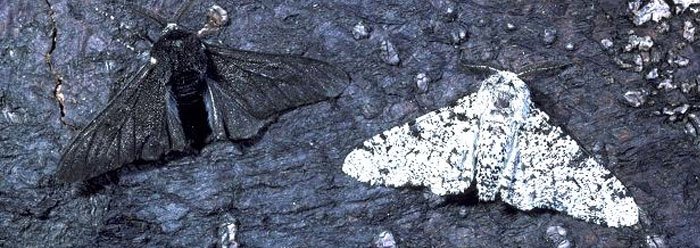
Why do peppered moths tend to be the same color as the trees on which they live?
a)
The coloring goes along with tasting like the tree. 
b)
It keeps the moth the same temperature as the tree. 
c)
It makes the moths faster than the birds
d)
It makes the moths harder to see.
12.
Which of these is an example of natural selection?
a)
The largest animal in a population will have more opportunities for reproduction.
b)
Several species of organisms work together so that they all succeed.
c)
One species takes all the resources in an environment leaving none for others.
d)
Organism that are best suited to an environment tend to survive and reproduce more often.
13.

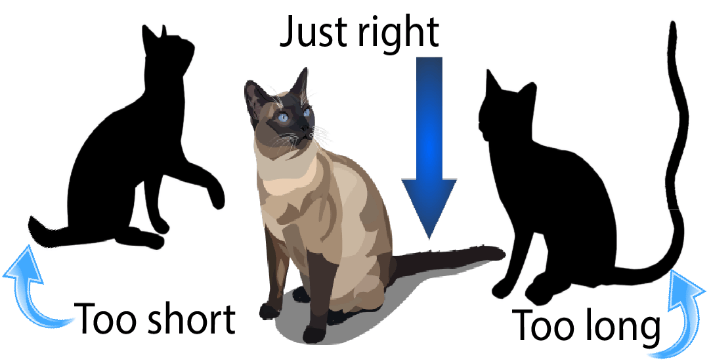
Average phenotypes are favored in the environment, while extremes have lower survival rates.

a)

seasonal selection

b)

distruptive selection

c)

directional selection

d)

stabilizing selection

14.
What is the advantage of having different shaped beaks?
a)
To look different from other species.
b)
To be able to eat the food readily available in the environment.
c)
To protect itself against predators.
d)
To protect itself against prey.
15.
The ability of an organism to survive and reproduce is known as...
a)
Adaptation
b)
Trait
c)
Fitness
d)
Variation
16.
What type of selection is depicted in the picture? 
a)
stabilizing 
b)
directional 
c)
disruptive 
d)
the answer is not here
17.
If finches with large beaks and finches with small beaks increase in a population while finches with average sized beaks decreases, which pattern of natural selection has occurred?
a)
Directional selection
b)
Disruptive selection 
c)
Stabilizing selection
18.
The trees these moths used to live on were white, but have been covered in soot from coal factories. Which moth will be more successful in this environment?
a)
Dark moth
b)
Light moth
c)
Both will be equally successful
d)
Neither will be successful
19.

what is artificial selection (also called selective breeding) ?

a)

the process by which humans choose a plant or animal to breed based on specific traits

b)

the process whereby organisms better adapt to their environment tend to survive and produce more offspring.

c)

characteristics that are passed to you from your parents

d)

a body part or feature or behavior that helps a living thing survive and function better in its environment

20.

What are the importance of artificial selection?

a)

Produce good breed of livestock & pets

b)

Animals are bred to do a particular job

c)

Produce higher yield of food

d)

Produce higher quality of food

21.

Which of the following best represents inbreeding?

a)

removing DNA from an organism

b)

changing traits based on environment

c)

crossing 2 similiar animals

d)

crossing 2 different animals

22.

What is Inbreeding

a)

When two closely related animals are bred together

b)

When two none related animals are bred together

c)

When animals are allowed to chose their own mates

d)

When humans choose which animals will mate together

23.
Farmers often make observations about the traits of their plants as they practice selective breeding.  A farmer might practice selective breeding to produce corn plants that
a)
use more water
b)
all look the same
c)
are resistant to disease
d)
can grow human proteins
24.
During natural selection, the organisms with the best adaptations..
a)
survive better in their environment
b)
have higher fitness
c)
pass down their traits more often
d)
All of these are correct
25.

Outbreeding leads to the following EXCEPT

a)

Increase heterozygous genotypes

b)

More susceptible to disease

c)

Increase genetic variation

d)

Hybrid are genetically superior than parents

26.
Which of the following is NOT an example of Prezygotic Reproductive Isolation?
a)
Geographic
b)
Behavioral
c)
Low Hybrid Viability
d)
Gametic
27.
Do prezygotic isolating mechanisms occur:
a)
before the zygote
b)
after the zygote
c)
at the same time as the zygote
d)
none of these
28.
Which of the following is NOT part of the Biological Species Concept?
a)
Must meet in nature & have gene flow
b)
Must be able to reproduce & share a gene pool
c)
Offspring must be sterile
d)
Offspring must be fertile
29.
The term for the formation of new and distinct species over the course of evolution is...
a)
speciation
b)
biological species concept
c)
reproductive barrier
d)
natural selection
30.
What is a species? 
a)
A group of organisms that can mate with each other and produce fertile offspring. 
b)
A group of organisms that can mate and produce offspring even if those offspring are infertile.
c)
A group of organisms that genetically are very different from each other. 
d)
Indivual organisms that live in the same environment. 
31.
a)
The image shows analogous structures.
b)
The image shows convergent evolution.
c)
The image shows adaptive radiation. 
d)
The image shows organisms that are not closely related.
32.
Genetic drift is change in the allele frequency of a population due to...
a)
random chance
b)
natural selection
c)
non-random mating (sexual selection)
d)
artificial selection
33.
 Genetic Drift is more likely to happen in... 
a)
aquatic populations
b)
small populations
c)
terrestrial populations
d)
older populations
34.

Term for when chromosomes are formed when 2 species hybridize

a)

autoploidy

b)

allopolyploidy

35.

If the morphology of two species' genitalia prevents them from mating, the isolation barrier is:

a)

Gametic isolation

b)

Mechanical isolation

c)

Reduced hybrid fertility

d)

Behavioral isolation

36.

Differences in environmental influences .....

a)

is NOT heritable

b)

produce different phenotypes between individuals that has the same genotype

c)

causes continuous variation

d)

produce same phenotypes between individuals that has the same genotype

37.

Inherited traits are controlled by

a)

nucleus

b)

chromosomes

c)

genes

d)

cells

38.

Which of the following is NOT a source of genetic diversity?

a)

mutation

b)

segregation of homologs

c)

independent assortment of homologous pairs

d)

mitosis

39.

Traits that are influenced by genetic & environmental factors include all of the following except:

a)

Height, weight

b)

Hair color

c)

Eye color

d)

Biological sex, blood type

40.
Traits that are passed along through generations of family members include which of these?
a)
eye color
b)
hair color
c)
nose shape
d)
all of the above