
 Worksheets
Worms - Platyhelminthes and Nematoda
Total questions: 26
Worksheet time: 33mins
What structures do tapeworms have for attaching themselves to the intestinal lining of their host? (multiple answers possible)
suckers
pharynx
hooks
silk glands
Which structure is used by a planarian for feeding?
cilia
scolex
sucker disc
pharynx

This type of flatworm (pictured) is free-living in freshwater and marine environments.
sheep liver fluke
planarian
hookworm
tapeworm
How does a tapeworm get its nutrition?
Through its mouth and complex digestive system.
Absorbs food in the host's intestine directly through its skin.
What type of symmetry do all worms have?
bilateral
radial
asymmetry
spherical

The image shows which type of worm?
fluke
flatworm
roundworm
segmented worm

Which of the following are true of worms in Phylum Nematoda? (multiple answers possible)
they are very flat
they have a two-way, incomplete digestive system
they are hermaphrodites
they move with thrashing, snake-like movements
A single organism that has both testes and ovaries is called _____________________ .
hermaphroditic
dioecious
heterotrophic
homozygous

The extendable throat of a planarian is the _____________ .
intestine
acetabulum
pharynx
gizzard

To which phylum does a planarian belong?
Cnidaria
Platyhelminthes
Nematoda
Annelida

Which of the following are true of worms? (multiple answers possible)
they are unicellular
they are vertebrates
they have long, narrow bodies
they have bilateral symmetry

An organism in which the sexes are separate (i.e. different male and females organisms) is _________________ .
autotrophic
dioecious
hermaphroditic
invertebrate

Which worm phylum includes planarians, tapeworms, and flukes?
Platyhelminthes
Nematoda
Onychophora
Annelida

Which worm is pictured?
dog tapeworm
planarian
earthworm
Chinese liver fluke
Which name best describes an organism that lives in or on another and feeds from that organism's tissues or fluids?
decomposer
host
parasite
scavenger

The two eyespots of a planarian are _________________ .
posterior
ventral
anterior
lateral

Which of the following are true of this marine flatworm? (multiple answers possible)
It belongs to Phylum Platyhelminthes
It has a complete, one-way digestive tract
It has male and female reproductive organs
It has a round body with pointed ends

Planarian flatworms can reproduce by pulling themselves apart followed by ___________ .
binary fission
budding
forming gametes
regeneration

The nerve cords of a planarian run along the belly and are therefore __________ .
unilateral
anterior
ventral
dorsal

Who was first to observe microscopic nematodes from pond water in 1680?
Gregor Mendel
Matthias Schleidin
Antoni van Leeuwenhoek
Charles Darwin
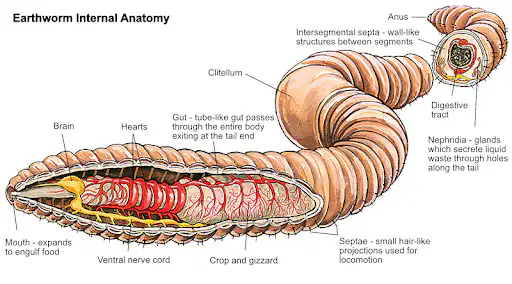
Worms have what level of biological organization?
cells
tissues
organs
organ systems
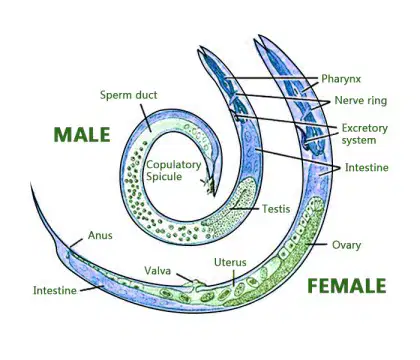
Nematodes are said to be dioecious and therefore _______ .
are active during the daytime
reproduce asexually
have separate male and female worms
live within a host organism
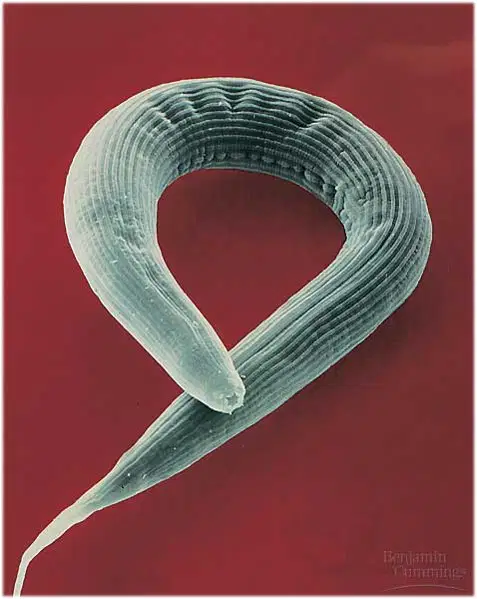
Some soil nematodes feed on bacteria, yeasts, and algae. They are therefore ____________ .
free-living
parasitic
mutualistic
hermaphroditic
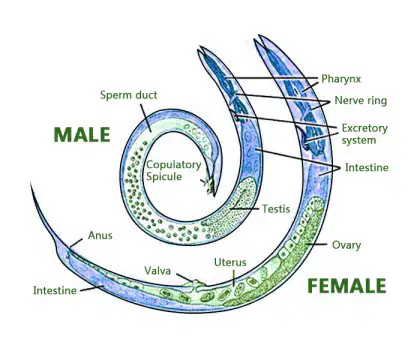
The pictured worms belong to Phylum __________ .
Nemertea
Nematoda
Platyhelminthes
Annelida
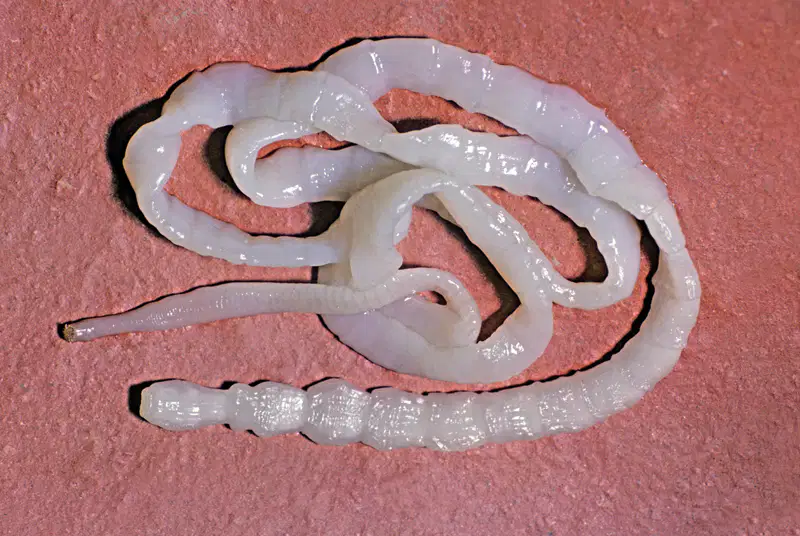
The pictured worm belongs to Phylum ____________ .
Platyhelminthes
Nematoda
Annelida
Sipuncula
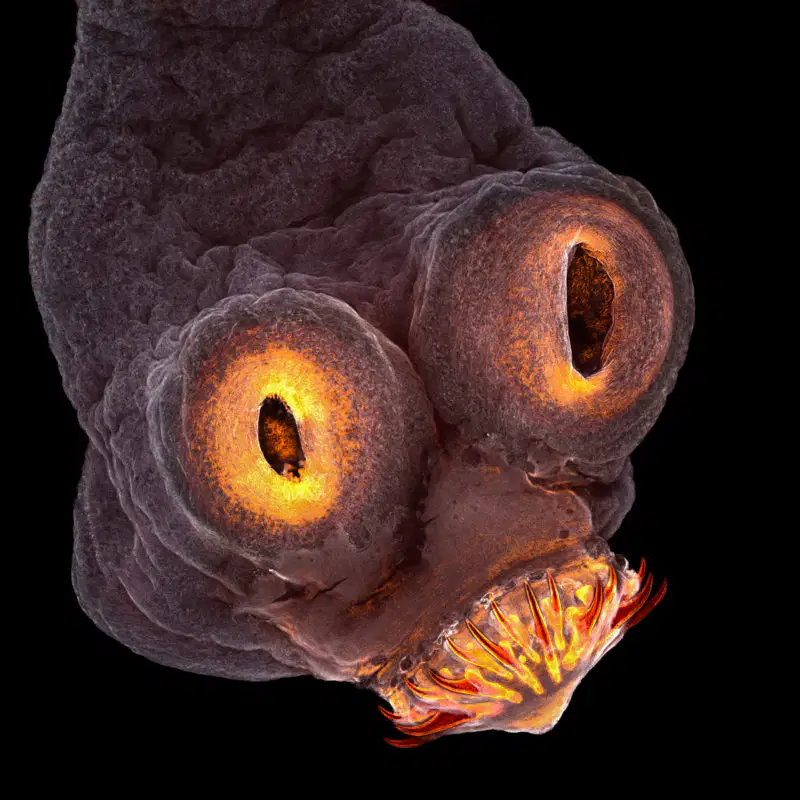
The frightening looking suckers and hooks on the heads of tapeworms make them effective _________ .
herbivores
parasites
pollinators
decomposers

