
Font size
 Worksheets
Test 3 Spring 2021 PHY
Total questions: 78
Worksheet time: 3615secs


III. Heat waves appear in the air above the log
IV. Light is emitted where there are flames.
V. Ashes form from the logs.
Which of Phillip’s observations are conclusive evidence that the burning log undergoes chemical changes and not just a physical change?
What part of the scientific method is illustrated in Step B?
A student noticed that when a dog is cut, the dog periodically licks its wounds. Usually, after a few days, the wound begins to heal without ever showing signs of infection.
The following steps outline the student’s line of reasoning
A. I wonder why the dog's wound doesn’t become infected?
B. The dog’s saliva must prevent the growth of infection-causing bacteria.
C. I’ll obtain a bacterial culture and grow the same kind of bacteria in two identical culture dishes. Once the bacteria start growing, I’ll add dog saliva to only one of the dishes and leave the other alone. I’ll cover both dishes. Then I’ll observe what happens each day for a week.
D. Even after adding the dog saliva to one of the dishes, the bacteria continued to grow in both dishes over the course of the week. However, the bacteria in the treated dish grew more slowly than the bacteria in the untreated dish.
E. I think I'll try something else. I’ll start with two identical culture dishes, as before, and use the same kind of bacteria in each dish, but this time I’ll create one dish with dog saliva before I add the bacteria. I’ll observe what happens each day for a week.
Conclusion
Data
Hypothesis(claim)
Problem
Why were both dishes covered?
A student noticed that when a dog is cut, the dog periodically licks its wounds. Usually, after a few days, the wound begins to heal without ever showing signs of infection.
The following steps outline the student’s line of reasoning
A. I wonder why the dog's wound doesn’t become infected?
B. The dog’s saliva must prevent the growth of infection-causing bacteria.
C. I’ll obtain a bacterial culture and grow the same kind of bacteria in two identical culture dishes. Once the bacteria start growing, I’ll add dog saliva to only one of the dishes and leave the other alone. I’ll cover both dishes. Then I’ll observe what happens each day for a week.
D. Even after adding the dog saliva to one of the dishes, the bacteria continued to grow in both dishes over the course of the week. However, the bacteria in the treated dish grew more slowly than the bacteria in the untreated dish.
E. I think I'll try something else. I’ll start with two identical culture dishes, as before, and use the same kind of bacteria in each dish, but this time I’ll create one dish with dog saliva before I add the bacteria. I’ll observe what happens each day for a week.
To avoid the spread of the infection
To avoid contamination (other bateria getting on the dishes)
To compare the growth
All of the answers are correct
What is the dependent variable (response you are looking for) in this experient?
A student noticed that when a dog is cut, the dog periodically licks its wounds. Usually, after a few days, the wound begins to heal without ever showing signs of infection.
The following steps outline the student’s line of reasoning
A. I wonder why the dog's wound doesn’t become infected?
B. The dog’s saliva must prevent the growth of infection-causing bacteria.
C. I’ll obtain a bacterial culture and grow the same kind of bacteria in two identical culture dishes. Once the bacteria start growing, I’ll add dog saliva to only one of the dishes and leave the other alone. I’ll cover both dishes. Then I’ll observe what happens each day for a week.
D. Even after adding the dog saliva to one of the dishes, the bacteria continued to grow in both dishes over the course of the week. However, the bacteria in the treated dish grew more slowly than the bacteria in the untreated dish.
E. I think I'll try something else. I’ll start with two identical culture dishes, as before, and use the same kind of bacteria in each dish, but this time I’ll create one dish with dog saliva before I add the bacteria. I’ll observe what happens each day for a week.
Dog saliva
Bacterial growth
Culture Dish
Dog's wond
What is the Independent variable (Variable you can change) in this experient?
A student noticed that when a dog is cut, the dog periodically licks its wounds. Usually, after a few days, the wound begins to heal without ever showing signs of infection.
The following steps outline the student’s line of reasoning
A. I wonder why the dog's wound doesn’t become infected?
B. The dog’s saliva must prevent the growth of infection-causing bacteria.
C. I’ll obtain a bacterial culture and grow the same kind of bacteria in two identical culture dishes. Once the bacteria start growing, I’ll add dog saliva to only one of the dishes and leave the other alone. I’ll cover both dishes. Then I’ll observe what happens each day for a week.
D. Even after adding the dog saliva to one of the dishes, the bacteria continued to grow in both dishes over the course of the week. However, the bacteria in the treated dish grew more slowly than the bacteria in the untreated dish.
E. I think I'll try something else. I’ll start with two identical culture dishes, as before, and use the same kind of bacteria in each dish, but this time I’ll create one dish with dog saliva before I add the bacteria. I’ll observe what happens each day for a week.
Dog saliva
Bacterial growth
Culture Dish
Dog's wond
What is the Control Group in the following experiment?
A student noticed that when a dog is cut, the dog periodically licks its wounds. Usually, after a few days, the wound begins to heal without ever showing signs of infection.
The following steps outline the student’s line of reasoning
A. I wonder why the dog's wound doesn’t become infected?
B. The dog’s saliva must prevent the growth of infection-causing bacteria.
C. I’ll obtain a bacterial culture and grow the same kind of bacteria in two identical culture dishes. Once the bacteria start growing, I’ll add dog saliva to only one of the dishes and leave the other alone. I’ll cover both dishes. Then I’ll observe what happens each day for a week.
D. Even after adding the dog saliva to one of the dishes, the bacteria continued to grow in both dishes over the course of the week. However, the bacteria in the treated dish grew more slowly than the bacteria in the untreated dish.
E. I think I'll try something else. I’ll start with two identical culture dishes, as before, and use the same kind of bacteria in each dish, but this time I’ll create one dish with dog saliva before I add the bacteria. I’ll observe what happens each day for a week.
Dog saliva
Bacterial growth
Culture Dish without saliva
Culture dish with slaiva
According to the conclusion, of the following experiment, the hypothesis can be described as being?
A student noticed that when a dog is cut, the dog periodically licks its wounds. Usually, after a few days, the wound begins to heal without ever showing signs of infection.
The following steps outline the student’s line of reasoning
A. I wonder why the dog's wound doesn’t become infected?
B. The dog’s saliva must prevent the growth of infection-causing bacteria.
C. I’ll obtain a bacterial culture and grow the same kind of bacteria in two identical culture dishes. Once the bacteria start growing, I’ll add dog saliva to only one of the dishes and leave the other alone. I’ll cover both dishes. Then I’ll observe what happens each day for a week.
D. Even after adding the dog saliva to one of the dishes, the bacteria continued to grow in both dishes over the course of the week. However, the bacteria in the treated dish grew more slowly than the bacteria in the untreated dish.
E. I think I'll try something else. I’ll start with two identical culture dishes, as before, and use the same kind of bacteria in each dish, but this time I’ll create one dish with dog saliva before I add the bacteria. I’ll observe what happens each day for a week.
Valid (supported)
Invalid (unspuported)
Pending
Descriptive
In the following experiment, what would be the Independent variable? (Variable you change)
-One tank of goldfish is fed the normal amount which is once per day;
-a second tank is fed twice a day, and a third tank is fed four times a day during a six-week study.
-The fishes’ body fat is recorded daily.
- All of the tanks are the same size, have the same amount of water and are the same temperature. The fish are all fed Fish Food Tropicana.
Fish body fat
Fish food
Group of fish fed the Normal Amount
Groups of fish fed more than the normal amount
In the following experiment, what would be the Dependent variable? (response your looking for)
-One tank of goldfish is fed the normal amount which is once per day;
-a second tank is fed twice a day, and a third tank is fed four times a day during a six-week study.
-The fishes’ body fat is recorded daily.
- All of the tanks are the same size, have the same amount of water and are the same temperature. The fish are all fed Fish Food Tropicana.
Fish body fat
Fish food
Group of fish fed the Normal Amount
Groups of fish fed more than the normal amount
In the following experiment, what would be the Control Group?
-One tank of goldfish is fed the normal amount which is once per day;
-a second tank is fed twice a day, and a third tank is fed four times a day during a six-week study.
-The fishes’ body fat is recorded daily.
- All of the tanks are the same size, have the same amount of water and are the same temperature. The fish are all fed Fish Food Tropicana.
Fish body fat
Fish food
Group of fish fed the Normal Amount
Groups of fish fed more than the normal amount
In the following experiment, what would be the Experimental Group?
-One tank of goldfish is fed the normal amount which is once per day;
-a second tank is fed twice a day, and a third tank is fed four times a day during a six-week study.
-The fishes’ body fat is recorded daily.
- All of the tanks are the same size, have the same amount of water and are the same temperature. The fish are all fed Fish Food Tropicana.
Fish body fat
Fish food
Group of fish fed the Normal Amount
Groups of fish fed more than the normal amount
In the following experiment, what would be the constant variables? (choose all that apply)
-One tank of goldfish is fed the normal amount which is once per day;
-a second tank is fed twice a day, and a third tank is fed four times a day during a six-week study.
-The fishes’ body fat is recorded daily.
- All of the tanks are the same size, have the same amount of water and are the same temperature. The fish are all fed Fish Food Tropicana.
Fish body fat
Fish food brand
Group of fish fed the Normal Amount
Size of fish and tank environment
Temperature of water
______ research is usually based on numerical measurements.
Ethical
Descriptive
Quantiative
Metric
The responsive condition being observed or measured in an experiment:
Dependent
Independent
Control
Hypothesis


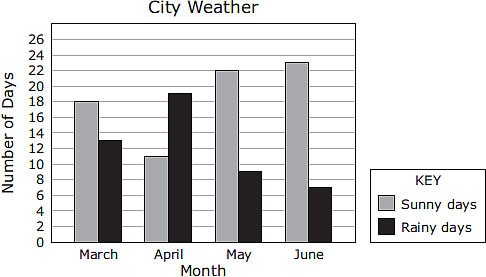
Based on the graph,how many more sunny days than rainy days did this city have during the months of April, May, and June?
This state of matter takes ONLY the shape of its container.
liquid
gas
solid
A variety of elements and compounds that are not chemically combined is called a
mixture
element
compound
pure substance


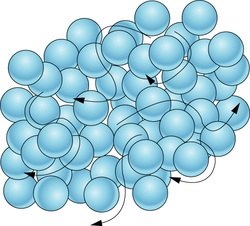
What state of matter does this picture show?
Solid
Liquid
Gas
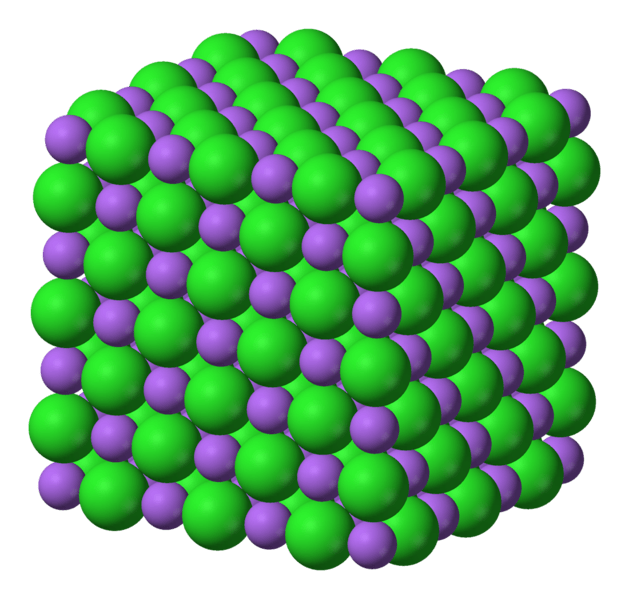
Which state of matter does this picture show?
Solid
Liquid
Gas
What is the best definition of temperature?
How hot or cold something is
A measure of how fast the molecules are moving in a substance
How hot or cold something feels to a person

What is happening in this picture of water boiling?
Molecules are speeding up
Molecules are slowing down

What is happening in this picture of this lake freezing?
Molecules are speeding up
Molecules are slowing down
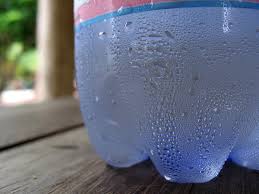
What is happening to the outside of this water bottle?
Molecules are speeding up
Molecules are slowing down

This water is changing from a liquid to a gas via _______.
vaporization
boiling
evaporation
condensation

Suppose you pour a glass of ice water and set it on the kitchen table. After a few minutes, the outside of the glass will be covered with drops of water. Why did this happen?
Oxygen in the air cooled and condensed onto the cold glass.
Water vapor in the air cooled and condensed onto the cold glass.
Water vapor in the air cooled and evaporated onto the cold glass.
Water seeped through pores in the glass.
Alex noticed that a metal door that sticks on hot days does not stick when it cools off at night. This is because the metal contracts as it cools. The reason for this is that, as the metal cools, the atoms
become smaller and take up less space.
slow down and move closer together.
merge together to form fewer atoms.
speed up and move farther apart.
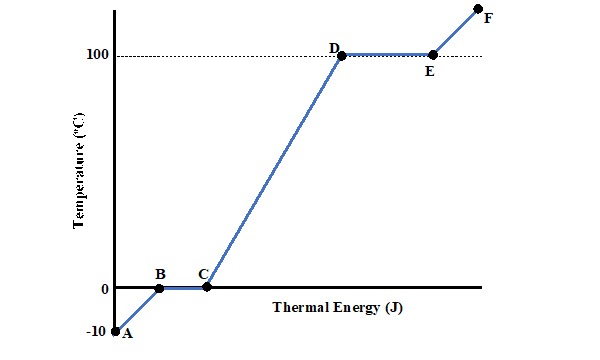
Between which two points is the solid cooling?
A <---- B
B <----> C
C <---- D
D <----> E
E <---- F
Between which two points is the gas heating up?
A ----> B
B <---- C
C ----> D
D ----> E
E ----> F
Between which two points is the gas condensing?
A <---- B
B <---- C
C <---- D
D <---- E
E <---- F
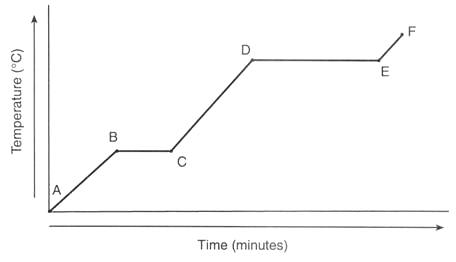


What is happening to the particles in the substance between points A and B?
Melting
Freezing
Speeding Up
Slowing Down

Where on the graph are phase changes taking place?
1
2
3
4
5

