
 Worksheets
physical disabilties
Total questions: 48
Worksheet time: 23mins
Which of the following symptoms would lead to a diagnosis of parkinson's disease
Tremor
Rigidity
Postural instability
All of the above
What causes parkinson's
Sensory neuron death
Motor neurones apathy
Decreased acetylcholine
Loss of dopamine producing cells
Which of the following is an early symptom of parkinson's disease
Speech changes
Tiredness
Mood swings
All of the above
What is the age range for onset of parkinson's disease
0-12
13-28
29-45
55-69
Changes to levels of _____ and _____ have key roles in parkinson's disease
Dopamine,acetylcholine
Serotonin,acetylcholine
Dopamine,melatonin
Dopamin,serotonin
Which of the following symptoms would lead to a diagnosis of Parkinson disease?
Tremor
Rigidity
Postural instability
All of the above
what is spastic cerebral palsy
the muscles are stiff and tight making it difficult to move and reducing the range of movement that's possible
when a person has balance and co-ordination problems, resulting in shaky or clumsy movements and sometimes tremors
or none of the above
when a person has balance and co-ordination problems this is?
mixed cerebral palsy
ataxic cerebral palsy
spastic cerebral palsy
Which of the following words accurately describes cerebral palsy?
Inherited
Non progressive
Contagious
Curable
For kids with cerebral palsy, physical therapy:
Can permanently cure their condition
Isn't much help at all
Prevents their symptoms from spreading
Can help manage their symptoms
Degenerative changes in the spine or vertebrae
scoliosis
osteoporosis
chondritis
spondylosis
The most popular intervention for clubfoot is...........
Illizarov surgery
chemotherapy
physiotherapy
Ponsetti
Physiotherapy
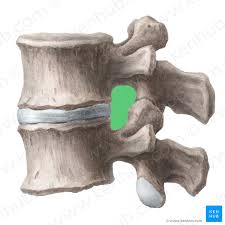
The green portion is? Where the spinal nerve roots exit the spinal cord/column.
Vertebral Foramen
Foramen
Intervertebral Foramen
Hole in vertebra

What curves are located in the thoracic spine?
Lordosis
Kyphosis
Scoliosis
How many cervical VERTEBRAE are there and how many cervical NERVE ROOTS are there?
6, 10
7, 8
12, 12
7, 7
None are correct
DNa analysis in Muscular Dystrophy demonstrates a deletion or duplication in the dystrophin gene
False
True
Most patients with Muscular Dystrophy become immobile before the age 13 years and usually die before 25 years
False
True
What is a treatment for Muscular Dystrophy?
Physical Therapy
Antibiotics
speech Therapy
Feeding the ducks
Which among the following is called brittle bone disease?
osteomalacia
osteoporosis
osteosarcoma
osteogenesis imperfecta
Colour change in the sclera can be the first symptom indicating.........................
spina bifida
osteogenesis imperfecta
muscular dystrophy
multiple sclerosis
In Guillain-Barré syndrome, which of the following pathologic changes develop in the peripheral nerves?
Inflammation
Increased ability to transmit nerve impulses
Demyelination
Edema
Which therapy is the best option to treat those with Ankylosing Spondylitis?
Ultrasound
Heat
Exercise Therapy
TENS / IFC
Which of the following are Red Flags for Ankylosing Spondylitis? Select all those that apply
Difficulty Bending Anteriorly/Posteriorly/Laterally
Pain that worsens with sleep
Chronic pain / stiffness of lower back / pelvic region
Rib cage pain while exhaling
What is NOT a contributing factor to the development of Osteoporosis?
Being Physical Active
Family History
A diet low in Calcium and Vitamin D
Excess Sodium and Caffeine intake
decline in estrogen
Who is more likely to develop Osteoporosis?
Men
Women
The intake of ............................. is restricted in patients with Gout
carbohydrate
protein
calcium
vitamin D
Which among the following is a common cause of physical disability in chronic smokers?
Weil's disease
Buerger's disease
Raynaud's disease
Parkinsons disease

Which parts of the body can leprosy affect?
The teeth
The finger nails
The hair
The nerves, skin, eye, and the lining of the nose (nasal mucosa).

Which bacteria causes leprosy?
mycrobacterium leprae
mañana leprae
leprycorn bacteria
penicillin

Who discovered the causative agency of leprosy?
EH Armauer Hansen
Ms. Rameizl
Ms. Zuleta
Armadillo Hansen
A device that replaces the function of the musculoskeletal system of a missing limb is a
pylon
prosthesis
bionic
robot
What are the requirements that the prosthesis must meet?
to aesthetics, reduction of energy expenditure, greater stability
better stability and aesthetics
saving energy costs and improving walking

The most advanced prosthetics use electrical signals from the brain to move the prosthetic device
True
False
What is the socket’s function?
The function of the socket is a part of the prosthesis, it attaches to the shank and foot during bench alignment.
The function of the socket is provided comfort to during walking and sitting
The function of the socket is to transfer the body weight comfortably through the prosthesis to the ground.
The function of the socket is depended on different types of socket design.
What are the special considerations when you make prosthesis to child patient?
Child has to come back often for refitting of the prosthesis as they grow.
It is best for them to have a check-up every three months.
They will need to have new limbs fitted more often than adults, so the cost of the components should be considered carefully.
All of above are the answers
Which sentence is incorrect?
In general, everybody has slightly different way of walking, these similar ways are called “normal” gait.
We need to understand the normal way of walking before we can recognize what is abnormal.
It is ok to align or fit a prosthesis or orthosis without understanding what is normal
All of above are incorrect
The treatment of tuberculosis takes about ____________.
3 to 5 years
6 to 9 months
10 to 12 months
2 to 3 years
Many countries have started to use the __________________ vaccine in order to stop the development of active tuberculosis.
Bacillus Calmette-Guérin
Flu
Varicella
MMR
Muscle response or electrical activity in response to a nerve's stimulation of the muscles........
ECG
EMG
EEG
TENS
Treadmill walking is advised for patients with Parkinson's disease
true
false
not advisable
The distal end of the limb left after amputation is called.........
limb
stump
prosthesis
orthosis
The most common type of fracture among children is.................
complete fracture
open fracture
comminuted fracture
greenstick fracture
The abnorality in the structure of the cerebral blood vessel can lead to bleeding
shunt
aneurysm
thrombus
embolus

