
Font size
 Worksheets
From Microorganisms to Plants Unit Part 2
Total questions: 74
Worksheet time: 43mins
Basidiomycetes produce
zygospores
basidiospores
ascospores
mariospores
The term that is used for the mode of nutrition in yeast, mushroom and bread-mold is
autotrophic
parasitic
saprophytic
symbiotic
The male reproduction organ in bryophtes is called as ... and will produce ... as its gametes
Antheridium, ovum
Archegonium, spores
Archegonium, spermatozoid
Antheridium, spermatozoid
Alternation of generations in plants refers to the alternation of
diploid and haploid stages
male and female stages
meiotic and mitotic stages
spore and seed stages
Archaea are known as "extremophiles" because
they can live in very deep water
they can live in really hot water
they can live in really salty water
all answers are correct
I am single celled. I am prokaryotic. I have a cell wall that's not made of peptidoglycan. I also live in very extreme conditions. Which domain do I belong in?
Bacteria
Archea
Eukarya
All answers listed below are true about bacteria except
all are prokaryotes
all are harmful
all are unicellular
they do not have nucleus
What is the function of cotyledon?
proctect the seed
small holes that enable water and air to enter the seed
stores food
embryo that develops into root
Which of the following is the unique characteristics for Kingdom Plantae
cell wall consist of peptidoplycan
carbohydrate storage is glycogen
has alternation of generation
motile
Mosses and liverworts are called non-vascular plant because
they lack motile sperm
they lack seed
they lack vascular tissue
they lack true roots, stems and leaves
The haploid form of the life cycle of a plant, characterized by ‘alternation of generation’ is called
seed
embryo
sporophyte
gametophyte

How does an amoeba move?
It uses cilia.
It uses a flagellum.
It uses pseudopods.
It cannot move.


Type of plant that is usually taller (longer) and has vascular tissue (xylem and phloem) that provides support
vascular plant
nonvascular plant
xylem
phloem
Examples of these plants include mosses, liverworts, and other plants with no xylem or phloem
dicot
vascular plant
monocot
nonvascular plant

Specific type of plant tissue that transports food (sugar) made in the leaves to the entire plant
vascular plant
nonvascular plant
xylem
phloem
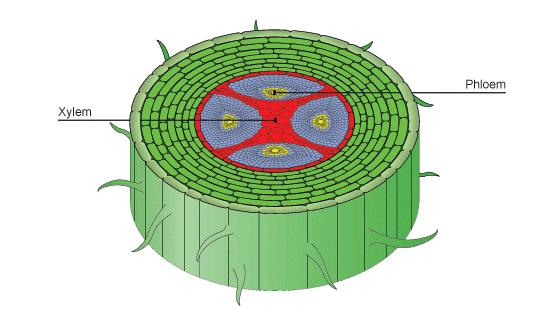
Specific type of plant tissue that transports water and minerals from the roots, through the stems, to leaves
vascular plant
nonvascular plant
xylem
phloem
Gravitropism is....
The process of a plant responding to touch
The process of a plant responding to light
The process of a plant responding to gravity
The process of a plant responding to water

When plants grow in towards the light, this is called:
Phototropism
Geotropism
Germination
Thigmotropism
The response of an organism to seasonal changes in day length is...
Short day plants
Photosynthesis
Photoperiodism
Evaporation
Molecule that responsible in regulating light stimulus is:
Transcription factor
Promoter
Cytochrome
Phytochrome
What is the tropism where plants respond to external stimulus of touch?
geotropism
phototropism
thigotropism
none of the above
The flexibility in plants is due to this kind of simple permanent tissues.
chlorenchyma
aerenchyma
collenchyma
parenchyma
This tissue makes the plant hard and stiff.
Collenchyma
Epidermis
sclerenchyma
collenchyma
Parenchymatous tissues generally perform the function of __________________.
giving flexibility to leaves
storing food
Xylem and phloem are examples of
epidermal tissue
connective tissue
protective tissue
vascular tissue
Which of the following is an undifferentiated embryonic tissue found in the active growth regions of plants such as tips of roots and stems?
Parenchyma tissue
Collenchyma tissue
Meristematic tissue
Permanent tissue
Elements which are transported throughout plants are called
Inorganic
sieve elements
key elements
phloem elements
ATP and protein is supplied to companion cells via
sieve tubes
porous wall
cell wall
vascular tissue

Recall which of the following form part of the phloem.
Sieve-tube elements
Trachieds
Vessels
Companion cells
Xylem contributes to the mechanical strength of plants because of the presence of __________________
Suberin
Lignin
Large lumen
cross walls
Which of the following tissues whose role is to protect and cover the plant?
Dermal tissue
Epidurial tissue
Ground tissue
Vascular tissue
Tissue in a plant that is neither vascular nor dermal is
Vascular tissue
Ground tissue
Filler tissue
Dermal tissue
An underground stem from which new leaves and roots grow is a(n)
conifer
green algae
rhizome
leaf
If a plant is considered non-vascular, what does it have?
Stems
Leaves
Rhizoids
Roots

Name the structure labelled B that contains the spores
Stolon
Sporangium
Sporangiophore
Apophysis
type of plant that has vascular tissues, such as a seed plant or flowering plant
angiosperm
bryophyte
gymnosperm
tracheophyte
process in sexual reproduction in which male and female reproductive cells join to form a new cell
asexual reproduction
fertilization
sexual reproduction
tissue
vascular plant
tracheophyte
sporangium
bryophyte
gametophyte
What is the correct term for the large section of the leaf where photosynthesis occurs?
Leaf Blade
Petiole
Node
Leaf
The ______ of a stem is the region of developing tissues where new leaves and stems form.
Internode
Node
Base
Bud
The flattened part of a leaf is called a
Node
Bud
Blade
Petiole
Leaf stem
midrib
epidermis
petiole
margin
simple leaf
Which type of mesophyll is loosely packed with many air spaces?
palisade
spongy
epidermal
Which of the following is an example of COHESION?
water sticking to water
water sticking to glass
oil sticking to plastic
hydrogen sticking to oxygen
Water sticks well to many materials. What term relates to this property of water?
cohesion
adhesion
density
surface tension
Capillary Action
The property of water that allows ice to float on the surface of liquid water
The property of water that allows it to dissolve polar substances
When water molecules stick to other surfaces
The property of water that allows water to move up a thin tube (or the stem of a plant) by itself
Some part of plant is called as source is due to the process of
Cellular respiration
Photosynthesis
Transpiration
Photorespiration
In the pressure flow hypothesis, sucrose is loading into the sieve tube by
osmosis
passive transport
active transport
diffusion
In the pressure flow hypothesis of translocation, what causes the pressure?
Root pressure
The osmotic uptake of water by sieve tubes at the source
The accumulation of minerals and water by the stele in the root
The osmotic uptake of water by the sieve tubes of the sink
The pressure flow model for phloem translocation states..
that sink strength drives transport in the pholem
that transport in treachery elements is pressure dependent
the water potential gradient in the sieve elements drives transport
the pressure gradient between the sieve elements at the source and the sink drives phloem transport
Promotes seed dormancy
abscisic acid
auxin
cytokinins
gibberellin
ethylene
Stimulates cell division
abscisic acid
auxin
cytokinins
gibberellin
ethylene
Causes apical dominance
abscisic acid
auxin
cytokinins
gibberellin
ethylene
Promotes cell elongation
abscisic acid
auxin
cytokinins
gibberellin
ethylene
What happens when you place an over ripe banana in a fruit bowl with other fruit?
Nothing will happen
The other fruit will grow in size
Ethylene gas will cause the fruit to grow mold
Ethylene gas will cause the other fruit to ripen
The role of all plant hormones is to
suppress plant growth.
regulate plant functions.
delay fruit ripening
shorten plant cells.
A lysogenic virus causes cancer by
Irritating the cell
Altering the host cell's DNA
Convincing the cell's owner to start smoking
Delivering a small piece of uranium to the host cell

