
NEW
Font size
 Worksheets
AP Euro - Unit 8
Total questions: 49
Worksheet time: 24mins
The strong and vibrant leader of the Bolshevik Revolution was
V. I. Lenin
Josef Stalin
Leon Trotsky
Alexander Kerensky
Which of the following is NOT a cause of WWI?
Isolationism
Empires
Militarization
Nationalism
Which organization was created after WWI to bring about peace and reduce the need for alliances?
United Nations
League of Nations
Berlin Conference
Concert of Europe
As a result of WWI, Eastern Europe
Became subject to the new Russian communist state.
Quickly overtook Western Europe economically.
Sunk into widespread anarchy and chaos.
Witnessed the emergence of many new nation states.
What did the Russian Revolution happen during?
World War One
Industrial Revolution
The Civil War
The Enlightenment
The Bolsheviks later renamed themselves what?
The Communist Party
The Fascist Party
The Socialist Party
The Democratic Party
What issues were going on in Russia during this?
Food Shortages
Involvement in War
Unhappiness With The Government
All of the above were issues going on
Who came up with communism?
Adam Smith
John Locke
Thomas Hobbes
Karl Marx
What did Russia become known as after this?
Soviet Union
Austria Hungary
Czechoslovakia
Ukraine
During the civil war following the Russian Revolution, who did the Red Army represent?
Communists
Non-Communists
During the civil war following the Russian Revolution, who did the White Army represent?
Communists
Non-Communists
Why did czars resist modernization?
They wanted to maintain power
They wanted the best for their people
They wanted to give their money away
They wanted citizens to become prosperous
What is the name for Russian labor camps created by Lenin?
Gulags
Internment
Guantanamo
Leavenworth
What was the end result of the Russian Revolution?
Russia became a direct democracy
Russia would become a communist nation
Russia would become a theocracy
Russia would go back to an absolute monarchy
This treaty pulled Russia out of WWI?
Treaty of Versailles
Treaty of Greenville
Treaty of Brest-Litovsk
Treaty of Moscow
Who were the Bolsheviks?
Communist Revolutionaries
Secret Police Members
Members of Parliament
Soldiers in White Army
What was the name of the acts against the Jewish population?
Nazism
Anti-Jewish
Pro-Holocaustism
Antisemitism
As a young man, Hitler moved to Vienna to pursue his dream in what career?
Engineer
Artist
Military
Construction
Hitler joined the German army and fought during what war?
Boxer Rebellion
Franco-Prussian War
Spanish Civil War
World War I
Which of the following helped Adolf Hitler to rise to power in Germany?
Poor economic conditions following World War I
The Treaty of Versailles
Loss of land and prestige from losing World War I
All of the Above
Hitler rose to power as the leader of what political party?
Democratic
Nazi
Republican
Laborist
What two countries were Germany's main two allies during World War II?
Russia and Austria
Italy and Japan
France and the United Kingdom
China and Spain
What is the name given to Hitler's killing of 6 million Jewish people during World War II?
The Gestapo
The Blitz
The Great Terror
The Holocaust
How did Adolf Hitler die?
He was poisoned by one of his generals
He committed suicide
. He died when his bunker exploded during battle
He escaped to South America and died of old age
What was Hitler's war tactics called?
The Blitzkrieg
The Great Terror
The Gustapo
The Blitz
When did Hitler invade Poland ?
1936
1937
1938
1939
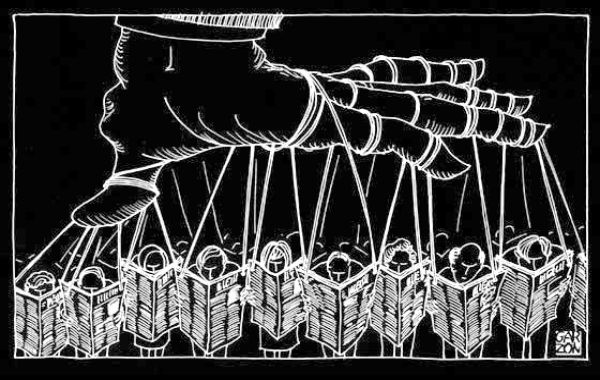


____________ is a type of government where the state is more important than the individual.
Communism
Democracy
Fascism
Stalinism
At the outset of WWII, the Empire of Japan was led by its very powerful military. The leader of the military was _____________.
Eisenhower
Rommel
Tojo
Stalin
Joseph Stalin
Japan, Militarism
Italy, Facism
Soviet Union, Communism
Nazism, Germany
Adolf Hitler
Japan, Militarism
Italy, Facism
Soviet Union, Communism
Nazism, Germany
Who was the first totalitarian leader to rise to power in Europe?
Benito Musolini
Joseph Stalin
Adolf Hitler
Vladimir Lenin

