wayground logo

Free Printable Worksheets

Font size

S
M
L
XL
Worksheets

MARCH MADNESS GAME

Total questions: 108

Worksheet time: 3hrs 43mins

Name
Class
Date
1.

__________is heat transfer or movement by direct contact and usually is through solids.


conduction or convection

a)

Conduction

b)

Convection

2.

In convection currents, cold air rises and hot air sinks.


True or false

a)

true

b)

false

3.
What is the definition of RADIATION
a)
 hot liquid or air that  expands, becomes less dense, and rises or becomes more dense, and sinks.
b)
When heat is transferred from objects like rays of light or electromagnetically.
c)
When heat transfers from objects that are touching.
d)
When heat transfers through the heater or AC in your house.
4.

Why does the Earth experience unequal heating?

a)

The oceans are not equally distributed around the Earth.

b)

The Earth's revolution brings it closer to the Sun at certain points during the year.

c)

The Earth's axis is tilted.

d)

The atmosphere is not equally distributed around the Earth.

5.
Why is the Equator warmest?
a)
Because it is closest to the sun.
b)
Because it receives the most direct sunlight
c)
Because no clouds form here.
d)
Because it is far from the sun
6.
Earth does a complete revolution every _______
a)
10 years
b)
12 hours
c)
24 hours
d)
365 days
7.
The earth rotates every
a)
24 hours
b)
15 hours
c)
365 days
d)
hour
8.
How long does it take for the moon to go through all moon phases
a)
day
b)
week
c)
month
d)
year
9.
What does the tilt of the earth cause?
a)
heating
b)
Seasons
c)
Atmosphere
d)
Years
10.
What causes day and night cycles?
a)
mars
b)
seasons
c)
earths rotation
d)
moon phases
11.

The Earth tilts at ______

a)

90°

b)

23.5°

c)

56.2°

d)

24°

12.

What is the term used to describe the motion of the Earth around the Sun?

a)

Resolution

b)

Rotation

c)

Revolution

d)

Round

13.

Which of the following best describes the tilt of the earth when it is summer in the southern hemisphere?

a)

The northern hemisphere is tilted toward the sun

b)

The northern hemisphere is tilted away from the sun

c)

The southern hemisphere is tilted toward the sun

d)

The southern hemisphere is tilted away from the sun

14.

What season is it in the Northern Hemisphere when it is fall in the Southern Hemisphere?

a)

Winter

b)

Spring

c)

Summer

d)

Fall

15.

What happens when the area in which you live tilts away from the sun?

a)

It is winter

b)

It is summer

c)

It is spring

d)

It is fall

16.

The path Earth follows revolving around the Sun is called ________

a)

Orbit

b)

Axis

c)

Equator

d)

Prime meridian

17.

Which moon phase is shown in this diagram?

a)

new moon

b)

first quarter

c)

full moon

d)

3rd quarter

18.
What phase is this?
a)
Waning Gibbous Moon
b)
Waxing Gibbous Moon
c)
Waning Crescent Moon
d)
Waxing Crescent Moon
19.

What phase is this?

a)

First Quarter Moon

b)

Third Quarter Moon

c)

Waxing Gibbous Moon

d)

Waning Gibbous Moon

20.

Name the phase of the moon for letter a

a)

First Quarter

b)

Third Quarter

c)

Waxing Gibbous

d)

Waning Gibbous

21.
Name the phase of the moon for letter f
a)
Waning Gibbous
b)
Waxing Gibbous
c)
Waning Crescent
d)
Waxing Crescent
22.
What is illuminating the Moon?
a)
Nuclear Fusion
b)
Sunlight
c)
Mirrors
d)
Flood Lights
23.
What type of eclipse occurs when the moon blocks the sun's light and cast a shadow on earth?
a)
solar
b)
lunar
24.
What type of eclipse occurs when the earth's shadow is cast on a full moon?
a)
solar
b)
lunar
25.
What type of eclipse is this?
a)
Solar eclipse
b)
Lunar eclipse
26.
What type of eclipse is this?
a)
Solar Eclipse
b)
Lunar Eclipse
27.

Gravity is less on the Moon than on the Earth because:

a)

the Moon is smaller than the Earth.

b)

the Moon has a bigger mass than the Earth.

c)

the Moon is bigger than the Earth.

d)

the Moon has less mass than the Earth.

28.

The planets stay in their orbits around the Sun because of:

a)

the gravity pull from the Moon.

b)

the gravity pull from the Sun.

c)

magnetism.

d)

the gravity pull from the Earth.

29.

A satellite is:

a)

anything that orbits a planet.

b)

anything that orbits the Sun.

c)

something man-made that orbits the Earth.

d)

a machine that sends TV programmes.

30.

What does the gravity of the moon effect on Earth?

a)

Tides

b)

Day

c)

Night

d)

Wind

31.

Which is the smallest planet?

a)

Mars

b)

Venus

c)

Neptune

d)

Mercury

32.

Which is the biggest planet?

a)

Jupiter

b)

Neptune

c)

Saturn

d)

Uranus

33.

Which is the farthest planet to the Sun?

a)

Uranus

b)

Neptune

c)

Saturn

d)

Jupiter

34.

Which is the closest planet to the Sun?

a)

Earth

b)

Mars

c)

Mercury

d)

Venus

35.

How many planets are there in our Solar System?

a)

7

b)

8

c)

9

d)

10

36.
There is one star in our solar system.
a)
True
b)
False
37.
What is the difference between the inner planets and the outer planets?
a)
The outer planets are smaller than the inner planets 
b)
The inner planets are smaller than the outer planets
c)
The outer planets have more rocks than the inner planets
d)
the inner planets are heavier than  the outer planets
38.
Venus is called Earth's twin because they are about the same size
a)
True 
b)
False
39.
The inner planets are called terrestrial planets because they are composed of
a)
water
b)
gas
c)
frozen surfaces
d)
rocks
40.
Which planet is the largest?
a)
Mercury
b)
Venus
c)
Earth
d)
Mars
41.
Put the planets in order from the sun.
a)
Mercury, Venus, Mars Earth, Jupiter, Saturn, Uranus, Neptune, Pluto
b)
Mercury, Venus, Earth, Mars, Jupiter, Sarturn, Neptune, Uranus, Pluto
c)
Mercury, Venus, Earth, Mars, Jupiter, Sarturn,  Uranus, Neptune,Pluto
d)
Mercury, Venus, Earth, Mars, Sarturn, Jupiter, Neptune, Uranus, Pluto
42.
Mountains form from ...
a)
plates sliding past one another
b)
collision of plates
c)
plates moving away from each other
43.
Which of the following is where one plate slides under another plate?
a)
submarine zone
b)
divergence zone
c)
subduction zone
d)
lower zone
44.
The area around the pacific plate where boundaries form is called...
a)
death ring
b)
fire zone
c)
ring of fire
d)
zone of fire
45.
What happens to temperature as you go deeper in the Earth?
a)
decreases
b)
increases
c)
fluctuates
d)
remains the same
46.
What is represented by the picture? 
a)
Sea-floor spreading
b)
Pangea
c)
How the continents are arranged today
d)
Volcanoes
47.

South America and Africa look to fit together like a puzzle

a)

does not support the theory of Pangaea

b)

does support the theory of Pangaea

48.

The hardened remains of a living thing that died long ago.

a)

fossil

b)

extinct

c)

endangered

d)

minerals

49.

Which type of rock are most fossils found?

a)

sedimentary rock

b)

metamorphic rock

c)

igneous rock

d)

fossils

50.
The outside layer of the earth is called ______________________.
a)
core
b)
crust
c)
mantle
d)
outer core
51.
The huge pieces of the earth's crust are called ____________________________. 
a)
crust
b)
plates
c)
directions
d)
seismos
52.
The epicenter of an earthquake is
a)
The point below the surface where rock begins to break and the first motion occurs
b)
The seismic station closest to the earthquake
c)
The place where the greatest damage occurs
d)
The point on the surface directly above the focus
53.
The Richter scale measures:
a)
the amount of radon gas released
b)
the movement of plates
c)
the strength of an earthquake
d)
the weight of tectonic plates
54.
Liquefaction is when...
a)
the soil behaves like liquid
b)
the ground becomes liquid
c)
magma rises to the surface
d)
buildings are damaged, crumbling like liquid
55.
volcano that has erupted in the last 2000 years but not recently is known as....
a)
Dormant
b)
Active
c)
Extinct
d)
Angry
56.
Volcanoes that have recently erupted are known as:
a)
Extinct Volcano
b)
Dormant Volcano
c)
Active Volcano
d)
What's a volcano?
57.
Volcanoes that have not erupted for at least 10,000 years are described as...
a)
Sleeping
b)
Dormant
c)
Active
d)
Extinct
58.
What is Magma when it reaches the surface of Earth?
a)
Lava
b)
Mafic Magma
c)
Felsic Magma
d)
None of these
59.
What is it called when plants give off water vapor as a waste product?
a)
condensation
b)
evaporation
c)
sublimation
d)
transpiration
60.
During which stage do clouds form?
a)
condensation
b)
evaporation
c)
precipitation
61.
Which stages does liquid water from the ocean turn into water vapor?
a)
condesantion
b)
evaporation
c)
precipitation
d)
run off
62.
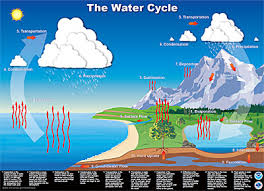
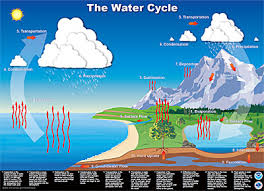
Which stage does the #3 show in the diagram?
a)
condensation
b)
evaporation
c)
precipitation
d)
run off
63.

What converts nitrogen gas into a usable form for plants and animals?

a)

bacteria

b)

rain

c)

fungi

d)

car exhaust

64.

The process in which nitrogen circulates and is recycled is called

a)

The nitrogen cycle

b)

The carbon cycle

c)

The water cycle

d)

The phosphorus cycle

65.

Which fossil would make the best index fossil?

a)

Beetle

b)

Flower

c)

Frog

d)

Fish

66.

Use relative age dating to put the rock layers in correct order from oldest to youngest.

a)

B, D, A, E, C

b)

C, E, D, A, B

c)

A, C, E, D, B

d)

C, E, D, B, A

67.

Which is the youngest rock layer?

a)

Siltstone

b)

Conglomerate

c)

Mudstone

d)

Limestone

68.

Which rock layer is oldest from Site 1?

a)

G

b)

B

c)

A

d)

E

69.

Which of the fossils is the oldest?

a)

Dinosaur

b)

Bird

c)

Shell

d)

Ammonite

70.

Which scenario is most likely to produce the biggest crater size?

a)

A styrofoam ball dropped from 50 cm.

b)

A heavy marble dropped from 50 cm.

c)

A feather dropped from 50 cm.

d)

A light plastic egg dropped from 50 cm.

71.
What is it called when two oceanic plates move apart and new crust is formed?
a)
crustal integrating
b)
sea-floor spreading
72.
The climate is... 
a)
The typical state of the atmosphere over a long period of time. 
b)
The state of the atmosphere at a particular time. 
73.
The weather is...
a)
The typical state of the atmosphere in a long period of time.
b)
The state of the atmosphere at a particular time. 
74.
An instrument used to measure the amount of rainfall
a)
barometer
b)
thermometer
c)
rain guage
d)
wind sock
75.
A force applied by the weight of air
a)
cold front
b)
air pressure
c)
barometer
d)
humidity
76.
the amount of water vapor in the air
a)
warm front
b)
precipitation
c)
humidity
d)
air pressure
77.
An instrument used to measure how hot or cold something is
a)
barometer
b)
thermometer
c)
wind sock
d)
rain guage
78.
Rain, snow sleet, or hail that falls from the clouds in the sky
a)
humidity
b)
liquid
c)
precipitation
d)
weather
79.
Average weather conditions of a region year after year
a)
weather
b)
season
c)
cold front
d)
climate
80.
The location where warm air mass is replacing a cooler air mass
a)
cold front
b)
warm front
c)
icy front
d)
storm front
81.
The location where cold air mass is replacing a warm air mass
a)
storm front
b)
hot front
c)
warm front
d)
cold front
82.

A _________ can from when a rapidly spinning column of low pressure air, called a funnel cloud touches the ground.

a)

thunderstorm

b)

hurricane

c)

tornado

83.

A _____________ is a large, rotating low-pressure system that forms over the warm waters of oceans near the equator.

a)

tornado

b)

hurricane

c)

thunderstorm

d)

flooding

84.

Winds are generated when air flows from a high pressure area into a ____.

a)

region of intense moisture

b)

cold front

c)

low pressure area

d)

storm that is already in progress

85.

Thunderstorms form along a cold front

a)

True

b)

False

86.

The calm area in the center of a hurricane is called the _____.

a)

draft

b)

funnel

c)

eye

d)

squall

87.

These storms produce the Earth's most powerful winds

a)

thunderstorms

b)

hurricanes

c)

tornadoes

88.

The most dangerous aspect of a hurricane that comes ashore is the ________.

a)

storm surge

b)

eye wall

c)

wind speed

d)

rainfall

89.

Hurricanes can produce tornadoes

a)

True

b)

False

90.

About 75% of the world's tornadoes happen in the United States during Springs and early Summer when cold, dry from Canada meets warm, moist air from the Gulf of Mexico. This relatively flat part of the country is known as ________________.

a)

Tornado Paradise

b)

Thunderstorm Lane

c)

Tornado Alley

d)

Hurricane Row

91.

Thunderstorms, hurricanes, and tornadoes form at __________ pressure systems, where you have warm (typically moist/humid) air quickly rising.

a)

low

b)

high

92.

A funnel cloud and a tornado are the same.

a)

True

b)

False

93.
________is the instrument used to measure air pressure.
a)
barometer
b)
thermometer
c)
mercury
d)
watch
94.
Low pressure will usually bring what kind of weather?
a)
Sunny
b)
Calm
c)
Stormy
95.
High pressure will usually bring what kind of weather?
a)
clear and dry
b)
cloudy and wet
96.
Based on the information in the table, in which city will it most likely rain?
a)
City W
b)
City X
c)
 City Y
d)
City Z
97.
Which is the best indicator that precipitation is on the way?
a)
low pressure
b)
low humidity
c)
low temperature
98.
What type of air pressure is present?
a)
High 
b)
Low
99.

Which is the process that breaks up rock on Earth’s surface?

a)

deposition

b)

melting

c)

compaction

d)

weathering

100.

The process by which metamorphic rock changes to igneous rock begins with

a)

melting

b)

erosion

c)

deposition

d)

crystallization

101.
Cooling & crystalization produce
a)
igneous rocks
b)
metamorphic rocks
c)
sedimentary rocks
102.
What are the 3 major types of rocks?
a)
Igneous, Metamorphic, Sedimentary
b)
Metamorphic, Igneous, Cementation
c)
magma, lava, crystals
103.

The process by which metamorphic rocks are formed...

a)

heat (not enough to melt completely) and pressure

b)

erosion and deposition

c)

melting and cooling

104.
The name rock is given when it is broken down into smaller pieces.
a)
texture
b)
weathering
c)
sediment
d)
erosion
105.

what is the rock cycle.

a)

molten rock that is stored underground.

b)

rock material that forms where rocks are broken down into smaller pieces.

c)

a process that changes one type of rock into another type of rock.

106.
This rock started as molten magma. What type of rock is this?
a)
Sedimentary
b)
Igneous
c)
Metamorphic
107.
The process when rocks break into smaller pieces due to exposure to natural elements is called
a)
erosion
b)
weathering
c)
sediments
108.
The process of breaking up Earth's surface into sediment is called...
a)
sediment
b)
erosion
c)
weathering
d)
deposition