
 Worksheets
Chemistry Revision paper 2
Total questions: 66
Worksheet time: 3585secs
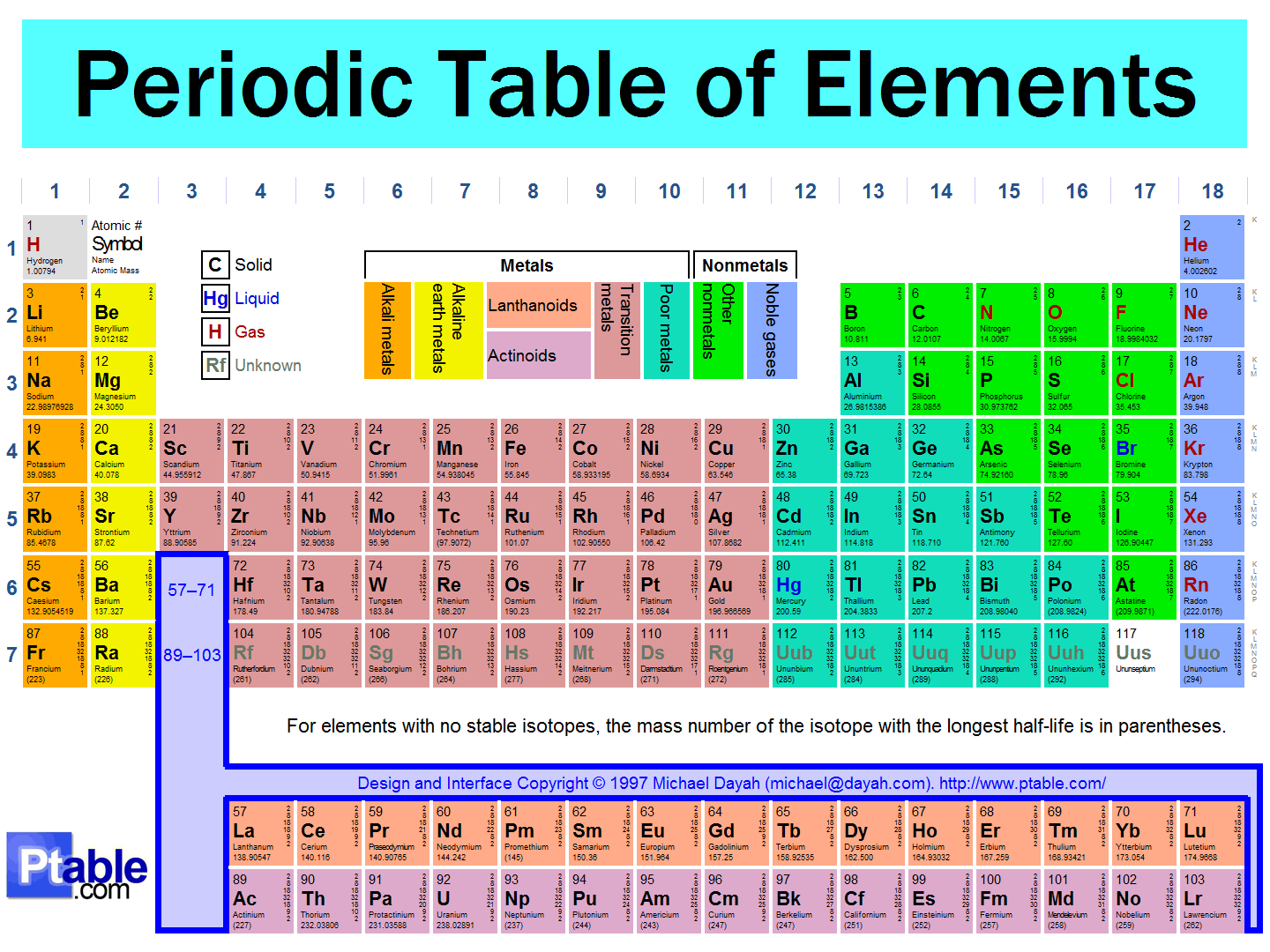


What does the group number on the periodic table tell you?
The number of electrons
The number of protons in the nucleus
The number of electron shells
The number of electrons in the outer shell

What does the period number on the periodic table tell you?
The number of electrons in the outer shell
The number of electrons
The number of electron shells
The number of neutrons in the nucleus

What is the chemical symbol for sodium?
Na
So
NaCl
S

True or False? Neutrons have a negative charge
True
False

Atoms have no electric charge because they...
have an equal number of charged and non charged particles
have neutrons in their nuclei
have an equal number of electrons and protons
have an equal number of neutrons and protons

Most of the mass in an atom is concentrated in the...
electrons
nucleus
protons
empty space

What does the nucleus consist of?
Protons + Electrons
Neutrons + Electrons
Atoms
Protons + Neutrons

Isotopes are the atoms of the same element with the same number of.............. but different number of............
electrons/neutrons
neutrons/protons
protons/neutrons
electrons/protons

Elements contain only one type of atoms.
True
False

What is a pure substance made of two or more elements that are chemically combined called?
A. element
B. compound
C. mixture
D. solution

What is the electronic configuration for this atom?
2.7.2
2.8.1
2.8.2
2.8.3

When an atom loses an electron, it becomes a:
positive ion
negative ion
neutral ion
neutral atom

Elements in Group 1 lose one electron to form ions with a _________________ charge.
1+
2+
0
1-

Nitrogen will ____ electrons to become stable (hint: nitrogen is in group 5).
gain 1
lose 1
gain 3
lose 3

NaCl
ionic bonding
covalent bonding

What two types of atoms make a covalent bond?
2 Non-metals
1 Non-metal and 1 Metal
2 Metals
2 Noble Gases

What is the mass number of magnesium?
2
4
12
24

Which alkali metal is most reactive out of the following?
lithium
potassium
sodium

How many electrons do the alkali metals have in their outer shell? (hint: alkali metals are in group 1)
1
2
8
7

What happens to the reactivity of the alkali metals as you move down the group?
increases
decreases

Which gas is released when the alkali metals react with water?
hydrogen
oxygen
hydroxide
carbon dioxide

Which of the "Halogens" is found in liquid state at room temperature?
Flourine
Astatine
Iodine
Bromine

Which of the "Halogens" has yellowish green color?
Chlorine
Bromine
Flourine
Iodine

The laboratory test for oxygen is that
it relights a glowing splint
it relights a burning splint
it changes lime water to milky
it makes a glowing splint go out

Bleaches damp litmus paper
Chlorine
Oxygen
Hydrogen
Water

Turns limewater milky
Hydrogen
Oxygen
Ammonia
Carbon dioxide

Makes a squeaky pop sound when lit
Hydrogen
Oxygen
Chlorine
Ammonia

Crude oil is a a mixture of hydrocarbons
True
False

What is the electron configuration of the ion that this atom would form?
2,8,2
2,8,1
2,8
2,8,8


What type of elements will form an ionic bond?
Metal + Metal
Non-metal + Non-metal
Metal + Non-metal
None of the above

What does this hazard sign represent?
Corrosive
Toxic
Oxidising
Health hazard

What does this hazard sign represent?
Explosive
Harmful
Toxic
Dangerous for the environment

What does this hazard sign represent?
Oxidising
Corrosive
Health hazard
Dangerous for the environment

What does this hazard sign represents?
Toxic
Harmful
Dangerous for the environment
Health hazard

What does this hazard sign represent?
Oxidising
Explosive
Flammable
Compressed gas

What does this hazard sign represent?
Harmful
Toxic
Flammable
Corrosive

What is the percentage of oxygen in Earth's atmosphere?
1%
21%
78%
90%

This gas makes up 78% of the atmosphere
oxygen
nitrogen
ozone
carbon dioxide

A temperature increase causes the particles ......
to slow down
move faster
collide higher
in the right order

In an exothermic reaction, heat is ...
taken in
given out

What is the rate of reaction?
How fast a reaction is
How big a reaction is
How loud a reaction is
How much gas a reaction produces

Located on the left side of the reaction
reactants
products
Which of these pieces of equipment is beaker?


Which piece of equipment should you use to measure out liquids?


I would like to heat a beaker of water over a Bunsen burner flame, I will need...
A tripod, gauze and heatproof mat
Retort stand, heatproof mat and clamp
Nothing else, I'll hold the beaker in my hand.
I can hold the beaker in the flame using tongs.

What protects the eyes from flying objects or chemical splashes?
lab apron
balance
eye dropper
goggles

What is a device used to measure temperature changes?
Temperature
Thermometer
Weather
Measurer

What would be the best choice to move a VERY LITTLE amount of a liquid?
Beaker
Pipette
Bucket
Triple Beam Balance

Which symbol shows a chemical reaction has occured?
A
B
C
D

Identify the product(s) in this word equation
Sodium
Sodium chloride
Sodium and Chlorine
Sodium and sodium chloride

The new substances formed in a chemical reaction are called
Reactants
Atoms
Products
Reagents

What are the reactants in this word equation?
Carbon dioxide and oxygen
Carbon dioxide and water
Oxygen and glucose
Oxygen and water

In this chemical reaction zinc is a...
Product
Reactant
Neither

Magneisum reacts with oxygen to form magnesium oxide. The correct word equation is...
A
B
C
D

Magnesium + ________ --> magnesium oxide
What is missing?
Hydrogen
Sulphur
Oxygen
Oxide

Sodium reacts with chlorine to produce sodium chloride. Choose the correct word equation.
sodium chloride → chlorine + sodium
sodium + carbon dioxide → sodium carbonate
sodium + chlorine → sodium chloride

What state of matter is this substance?
solid
liquid
gas
aqueous

Which of the following symbols represents a compound?
Co
Br
Fe
CO
When a substance is split with electricity it is called
electrolysis
distillation
crystallisation
evaporation
iron + copper sulfate --> copper +
iron chloride
iron nitrate
iron sulfate
iron oxide
iron + copper sulfate --> copper + iron sulfate
This reaction happens because:
iron is more reactive than copper
iron is heavier than copper
iron is less reactive than copper
iron is lighter than copper

