
 Worksheets
Fossils and Geologic Time Scale
Total questions: 39
Worksheet time: 40mins
Finding the age of a rock based on comparing the amounts of unstable, radioactive particles to stable particles in a sample is called:
radiometric dating
relative dating
In which time period are we currently living?
Precambrian Time
Paleozoic Era
Mesozoic Era
Cenozoic Era
The Principle of ______ states that geologic processes that happened in the past can be explained by current geologic processes.
climate
fossil
ice core
trace fossil
Uniformitarianism
_____________ are the trace or remains of an organism that lived long ago.
climate
Fossils
Ice core
Trace fossil
Uniformitarianism
The __________ of and area describes the weather conditions in the area over a long period of time.
climate
Fossils
ice core
trace fossil
Uniformitarianism
Scientists can drill down into ice caps to collect a long cylinder of ice, called an _______________.
climate
Fossils
ice core
trace fossil
Uniformitarianism


In which kind of rock do we usually find a fossil?
sedimentary rock
igneous rock
metamorphic rock
magma rock


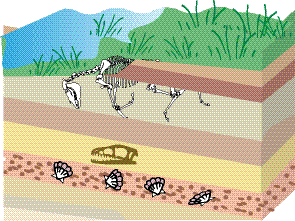
Which statement is true about the fossil record?
It provides evidence for history of life on Earth
It is a record of all living things
It shows how our climate has remained the same over time
It does not support the theory of evolution
Describes a group of living things that are no longer living.
fossil
extinct
endangered
dinosaur
The hardened remains of a living thing that died long ago.
fossil
extinct
endangered
minerals
Why are there more animal fossils than plant fossils?
Animals are smaller than plants.
Plants have harder bodies than animals.
Plans have softer bodies than animals.
Animals eat plants.
Which type of fossil would look just like the body part of a once-living thing?
mineral
footprint
cast
petrified wood
Which is an imprint fossil?
bone
a cast
an animal track
amber fossil
Which type of rock are most fossils found?
sedimentary rock
metamorphic rock
igneous rock
fossils

An animal has sharp, pointy teeth, what can we infer about this animal?
The animal lived in the water
The animal lived near the beach.
The animal is a carnivore.
The animal only ate plants.
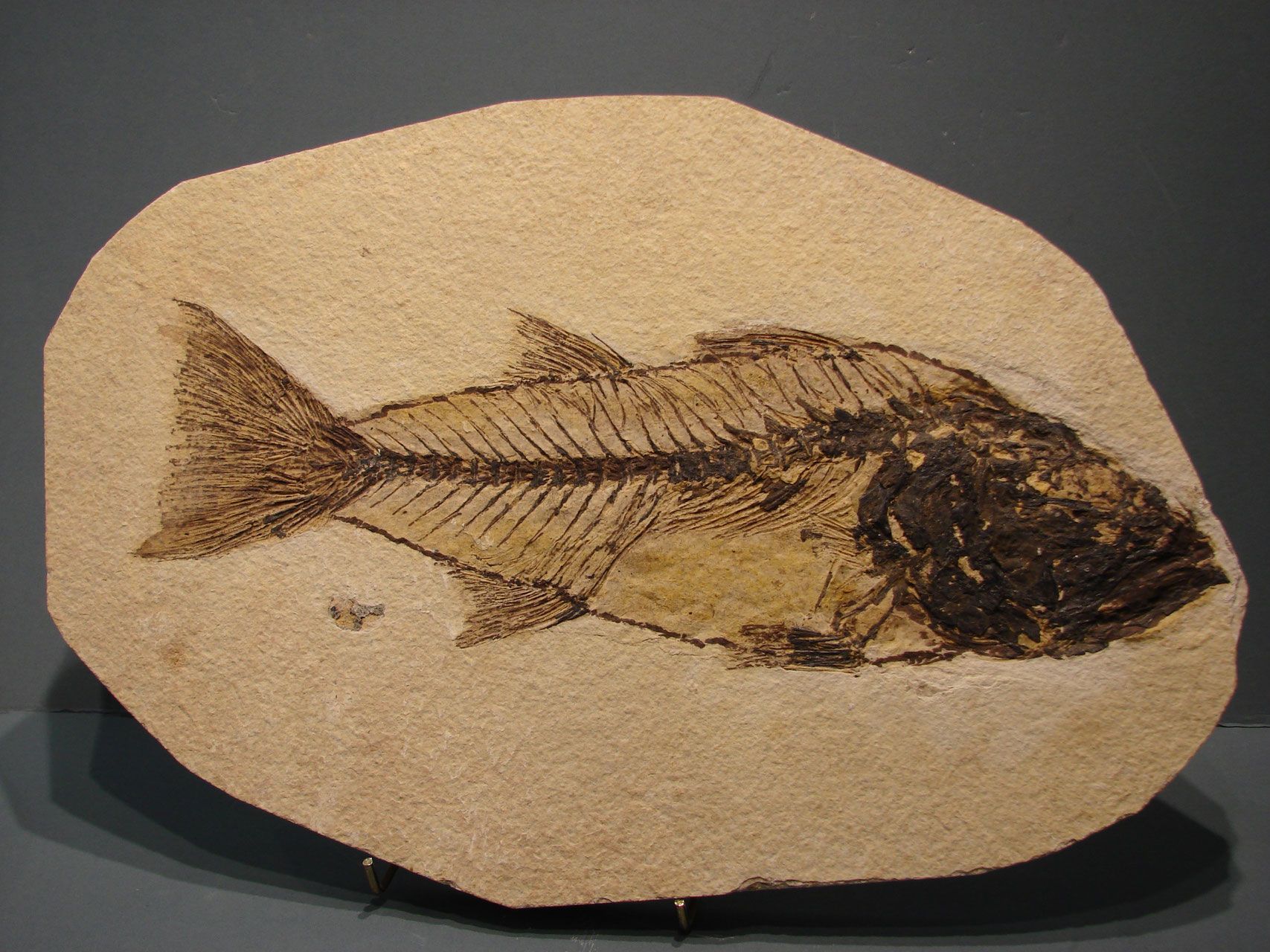
If a scientist found a fish fossil in the desert, what can they infer?
An animal ate the fish.
The water covered the area long ago.
Today's fish looks the same
The fish is endangered.
How are an elephant and a mammoth alike?
They are both endangered.
They are both extinct.
They both have tusks.
They both live in a warm climate.
What statement is true about fossils?
All living organisms leave behind fossils.
Fossils show that camels never change.
Some living things have not really changed in millions of years.
Plant fossils have never changed.
Which of these animals is extinct?
Camel
Rhino
Red Panda
Saber-toothed cat
What replaces the wood of a once-living thing to form petrified wood?
amber
cast
mold
minerals

This type of fossil is tree sap hardened and replaced by minerals.
Petrified wood
Imprint
Amber
Mold

What can we infer about animals with dull teeth?
They ate other animals.
They ate only plants.
They ate nothing.
They only ate fish.
The idea that conditions on Earth change in quick, violent events...
catastrophism
uniformitarianism
The idea that geologic processes occurring today have occurred in the past...
catastrophism
uniformitarianism
How do fossils form?
An organisms is rapidly buried. The sediments and minerals replace the tissues.
An organism is buried slowly. Only bones can become fossils
Which is a mold?
the impression left by an organism
a copy of the organism, like a statue

