wayground logo

Free Printable Worksheets

Font size

S
M
L
XL
Worksheets

DNA with mutations 2022

Total questions: 109

Worksheet time: 3hrs 35mins
Name
Class
Date
1.
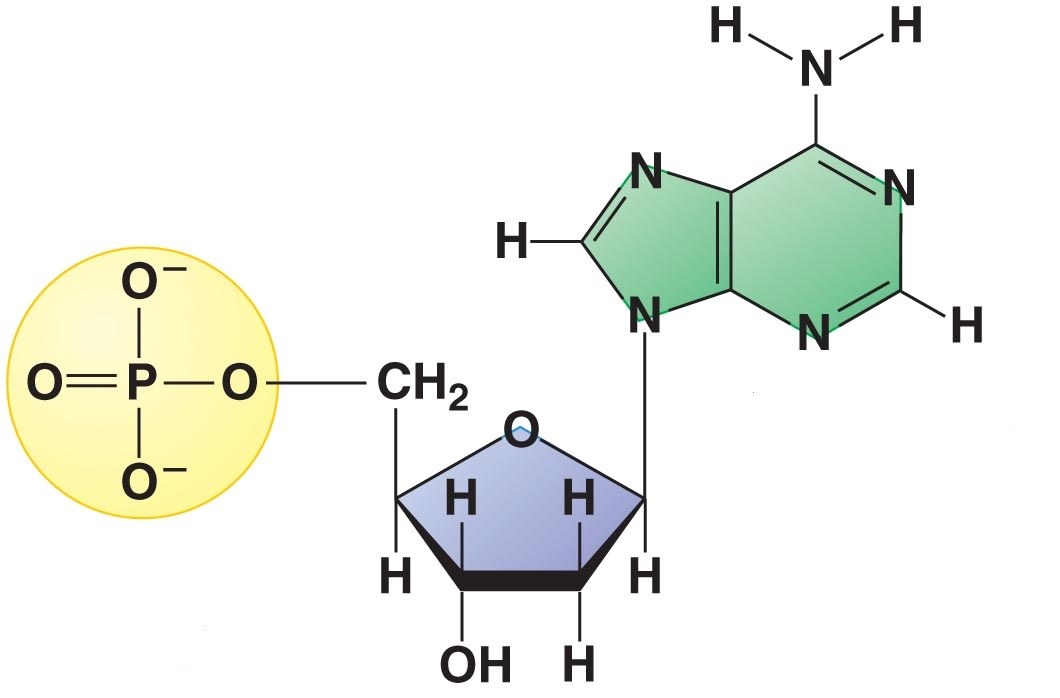
What are the nucleotides made of?
a)
Sugar, Phosphate, nitrogen base
b)
Phosphate, Adenine, nitrogen base
c)
Thymine, Adenine, Cytomine
d)
Phosphate, Nitrogen, Adenine
2.
Adenine bonds with ______________.
a)
Guanine
b)
Thymine
c)
Cytosine
d)
Adenine
3.
Guanine bonds with ______________.
a)
Adenine
b)
Guanine
c)
Cytosine
d)
Thymine
4.
Why is DNA important?
a)
it is very small and very complicated
b)
it's in everything
c)
it serves as the blueprint for traits of all living things
d)
because we eat it every day for energy
5.
What are the 4 nitrogen bases?
a)
adenine, thymine, cytoplasm, and guanine
b)
adenine, thymine cytosine, and guanine
c)
adenine, thymine, cytosine, and gylcerol
d)
adenine, thymine, cytosine, and glucose
6.
Which sequence of DNA bases would pair with this partial strand
ATG TGA CAG
a)
ATG TGA CAG
b)
TAC ACT GTC
c)
GTA AGT GAC
d)
CAT TCA CTG
7.

In eukaryotes, which organelle is DNA usually found in?

a)

cell membrane

b)

vacuole

c)

chloroplast

d)

nucleus

8.
Which shows the correct complementary base pairing for DNA?
a)
C-A, T-G
b)
A-G, C-T
c)
C-G, U-A
d)
T-A, G-C
9.
What does DNA stand for?
a)
Deoxyribonucleic acid
b)
Denitrogenous acid
c)
Deribonucleic acid
d)
Diribonucleic acid
10.
The building block of nucleic acids are nucleotides.  Nucleotides are composed of a sugar, a phosphate group, and a _________________ base.
a)
oxygen
b)
hydrogen
c)
nitrogen
d)
carbon
11.
The sugar in DNA is ?
a)
sucrose
b)
glucose
c)
deoxyribose
d)
fructose
12.
Which of the following monomers are repeatedly joined together to form a strand of DNA?
a)
amino acids
b)
nucleotides
c)
fatty acids
d)
polysaccharides
13.
What determines the code, or information, of a DNA molecule?
a)
the shape (structure) of the nitrogen bases
b)
the order (sequence) of the nitrogen bases
c)
the color of the nitrogen bases
d)
the frequency (number) of nitrogen bases
14.
Which 2 molecules form the sides (backbone) of the DNA ladder?
a)
deoxyribose sugar and adenine
b)
deoxyribose sugar and a hydrogen bond
c)
deoxyribose sugar and the nucleus
d)
deoxyribose sugar and phosphate
15.
The two strands of nitrogenous bases in DNA are joined by which type of bond?
a)
polar bonds
b)
ionic bonds
c)
covalent bonds
d)
hydrogen bonds
16.
The drawing shows the structure of what molecule?
a)
A DNA molecule
b)
A lipid molecule
c)
A carbohydrate molecule
d)
A protein molecule
17.
X outlines a(n) ___________.
a)
amino acid
b)
nitrogen base 
c)
nucleotide
d)
nitrogen base pair
18.
Identify #2.
a)
nitrogen base
b)
phosphate group
c)
deoxyribose sugar
d)
nucleotide
19.
A long chain of amino acids is a/an
a)
protein
b)
nucleic acid
c)
tRNA
d)
mRNA
20.
If a DNA molecule consists of 29% Guanine, how much cytosine will it contain?
a)
29%
b)
58%
c)
21%
d)
I have no idea.
21.
The shape of the DNA molecule is a double __________________?
a)
"S"
b)
helix
c)
rope
d)
curve
22.
When DNA makes a copy of itself, the new strands are identical or different?
a)
identical
b)
different
23.
What kind of information does DNA carry?
a)
genetic
b)
nuclear
c)
cell structure
d)
it doesn't carry any info
24.

DNA makes a copy of itself in a process called ________________________________?

a)

translation

b)

replication

c)

transcription

d)

division

25.
What are the building blocks for DNA?
a)
carbohydrates
b)
nucleotides
c)
lipids
d)
proteins
26.
Traits that are passed from generation to generation are called ____________________
a)
Excited Traits
b)
Inherited Traits
c)
Inclined Traits
d)
Special Traits
27.
_____________________ carries information for inherited traits.
a)
DNA
b)
FBI
c)
RNA
d)
CBS
28.
A nucleotide is made up of three parts:  which of these is not one of those parts?
a)
sugar
b)
phosphate
c)
amino acids
d)
base
29.
A strand of DNA that looks like a twisted ladder is called a _____________________
a)
triple twist
b)
corkscrew
c)
double helix
d)
chain reaction
30.
__________________________ are proteins that are made from many sub units.
a)
Nucleic Acids
b)
Armor
c)
Sugars
d)
Amino Acids
31.
__________________ is a change in the nucleotide base sequence of DNA.
a)
switch
b)
eraser
c)
creation
d)
mutation
32.
What does DNA do?
a)
a.  It carries genetic codes from parents to offspring.
b)
a.  It carries oxygen from the lungs to the body.
c)
a.  It tells you who you are.
d)
a.  It defines the organism.
33.
The rules of DNA pairing states that Adenine (A) always pairs up with
a)
Thymine
b)
Cytosine
c)
Adenine
d)
Guanine
34.
The rules of DNA pairing states that Cytosine (C) always pairs up with
a)
Thymine
b)
Cytosine
c)
Adenine
d)
Guanine
35.
The sequence of bases forms the
a)
Genetic Code
b)
DNA base pair
c)
Double Helix
d)
Paired bases
36.
What holds the DNA bases together?
a)
Hydrogen bonds
b)
DNA bases
c)
Double Helix
d)
Paired bases
37.
How many hydrogen bonds do C and G have between them?
a)
1
b)
2
c)
3
d)
4
38.
What does DNA stand for?
a)
Deoxyribonucleic acid
b)
Denitrogenous acid
c)
Deribonucleic acid
d)
Diribonucleic acid
39.
In a molecule of double-stranded DNA, the amount of Adenine present is always equal to the amount of
a)
cytosine
b)
guanine
c)
thymine
d)
uracil
40.
Which organelle is DNA usually found in?
a)
cell membrane
b)
vacuole
c)
ribosome
d)
nucleus
41.
Guanine bonds with ______________.
a)
Adenine
b)
Guanine
c)
Cytosine
d)
Thymine
42.
What determines the code, or information, of a DNA molecule?
a)
the shape (structure) of the nitrogen bases
b)
the order (sequence) of the nitrogen bases
c)
the color of the nitrogen bases
d)
the frequency (number) of nitrogen bases
43.
Which 2 molecules form the sides (backbone) of the DNA ladder?
a)
deoxyribose sugar and adenine
b)
deoxyribose sugar and a hydrogen bond
c)
deoxyribose sugar and the nucleus
d)
deoxyribose sugar and phosphate
44.
What will the matching sequence be on a strand that reads AAGCTAT?
a)
AACGATA
b)
TTCGTTA
c)
CCTGATA
d)
TTCGATA
45.
DNA codes for...
a)
bases
b)
proteins
c)
amino acids
d)
phosphates
46.
Name this structure
a)
double helix
b)
nucelotide
c)
twisted ladder
d)
hydrogen bond
47.
Which series is arranged in order from largest to smallest in size?
a)
gene, chromosome, nucleus, cell, DNA, nucleotide
b)
cell, nucleus, chromosome, DNA, gene, nucleotide
c)
nucleotide, chromosome, cell, DNA, nucleus
d)
cell, DNA, gene, nucleotide, nucleus, chromosome
48.

How many chromosomes do human cells have?

a)

46

b)

23

c)

2

d)

44

49.
What is a gene?
a)
A bundle (like a hot dog bun) that the DNA is packed into
b)
something inside the nucleus
c)
a piece of DNA
d)
all of your DNA
50.

Bundled up, organized DNA is called a

a)

gene

b)

trait

c)

chromosome

d)

nucleotide

51.

One strand of DNA has how many nucleotides

a)

millions

b)

about 20

c)

billions

d)

thousands

52.

Hydrogen bonds occur:

a)

on the ribbon (between the sugar)

b)

between the bases

c)

only between A & T

d)

only between G & C

53.

What is this a picture of?

a)

nucleotide

b)

DNA strand

c)

chromosome

d)

gene

54.

Label the picture in order:

a)

phosphate ; sugar ; base

b)

phosphate ; base ; sugar

c)

base ; sugar ; phosphate

d)

base ; phosphate ; sugar

55.
What determines the code, or information, of a DNA molecule?
a)
the shape (structure) of the nitrogen bases
b)
the order (sequence) of the nitrogen bases
c)
the color of the nitrogen bases
d)
the frequency (number) of nitrogen bases
56.

A process in which DNA has the unique ability to make an exact copy of itself.

a)

Replication

b)

Translation

c)

Transcription

d)

Protein Synthesis

57.
The drawing shows the structure of what molecule?
a)
A DNA molecule
b)
A lipid molecule
c)
A carbohydrate molecule
d)
A protein molecule
58.
What are the three components of a nucleotide?
a)
sugar, hydrogen, nitrogen base
b)
sugar, oxygen, nitrogen base
c)
sugar, phosphate, nitrogen base
d)
sugar, phosphate, protein
59.
Who was given credit for determining the shape of DNA? 
a)
Avery
b)
Watson and Darwin
c)
Watson and Crick
d)
Franklin and Crick
60.
What process is shown in the diagram?
a)
replication
b)
transcription
c)
mitosis
d)
translation
61.
X outlines a(n) ___________.
a)
amino acid
b)
nitrogen base 
c)
nucleotide
d)
nitrogen base pair
62.

Differences in traits such as hair texture are determined by differences in-

a)

the location of sugar groups in DNA

b)

the sequence of nucleotides in DNA

c)

the number of nitrogenous bases in DNA

d)

the molecules attached to the phosphate in DNA

63.

Which part of the DNA is responsible for the direct coding of specific traits in an organism?

a)

the # of hydrogen bonds

b)

the # of carbons in the DNA

c)

the sequence of nucleotide bases in the DNA molecule

d)

the sequence of phosphates along each DNA strand

64.

Which statement is true, based on the picture below?

a)

The model is inaccurate because the base pairs are incorrect

b)

The model is accurate because it contains correctly paired bases.

c)

The model accurate because it shows each splitting to form a double helix

d)

The model is inaccurate because some typical bases in DNA are missing

65.

What strand of DNA matches

a)
b)
c)
d)
66.

How is information for a certain protein carried on the DNA?

a)

As a sequence of nucleotides

b)

In the double-helix shape of the condensed chromosome

c)

In the ratio of adenines to thymines

d)

As a pattern of phosphates and sugars

67.

Which of these models of a DNA strand shows bases that are complementary to the DNA model above?

a)
b)
c)
d)
68.

The sequence of bases in the DNA is most important for which of the following?

a)

Providing the instructions for the traits of an organism

b)

Preventing mutations from occurring during DNA replication

c)

Allowing the DNA to have the shape necessary for the replication

d)

Helping form the sugar-phosphate backbone of DNA molecules

69.

Characteristics such as widow's peak or attached earlobes are determined by the genetic code. What components of DNA are referred to as the genetic code?

a)

Phosphate groups

b)

Nitrogenous bases

c)

Deoxyribose sugars

d)

Hydrogen bonds

70.

How does DNA in cells determine an organism's complex traits?

a)

DNA contains codes for proteins, which are necessary for the growth and functioning of an organism

b)

DNA separates into long single strands that make up each part of an organism

c)

DNA produces the energy an organism needs to grow

d)

DNA folds into the nucleus of each of the cells organism

71.

Which components bond with adenine in a section of DNA?

a)

1, 3, 5, AND 6

b)

3 AND 5

c)

2 AND 4

d)

3,4,7 AND 8

72.

What #'s represent the genetic code?

a)

1,2,3,4

b)

5,6,7,8

c)

1,3,5,7

d)

2,4,6,8

73.
Which organelle is DNA usually found in?
a)
cell membrane
b)
vacuole
c)
chloroplast
d)
nucleus
74.
DNA replication results in two DNA molecules,
a)
each one with two original strands
b)
each one with two new strands
c)
each one with one new strand and one original strand
d)
one with two new strands and the other with two original strands
75.
order of replication
a)
3, 2, 1, 4
b)
2, 1, 4, 3
c)
2, 3, 1, 4
d)
3, 4, 1, 2
76.
Which of the following would result in a frameshift mutation?
a)
Insertions only
b)
Substitution only
c)
Deletion only
d)
Insertions and Deletions
77.
DNA molecule segment is : TTACGCAAG
The mutated DNA segment is TTCGCAAG. This is an example of ___ mutation.
a)
Substitution
b)
Deletion
c)
Insertion
d)
Inversion
78.
mRNA is read in chunks of three, called...
a)
quadralets
b)
anticodons
c)
codons
d)
capsids
79.
What is a Gene?
a)
A segment of RNA that encodes for a protein
b)
A chromosome
c)
A segment of DNA that encodes for a protein
d)
Your genome
80.
Normal-
GAG-CTC-GAC-AGA
Mutant
GAG CTC-CAC-AGA
a)
no mutation
b)
substitution
c)
insertion
d)
deletion
81.
What mutation has occurred here? 
T-G-A-C-C-A
T-G-A-G-C-A
a)
Substitution
b)
Deletion
c)
Insertion
d)
Frameshift 
82.
Original: ATC CAT
Mutation: ATC GCAT
What mutation occurred?
a)
deletion
b)
insertion
c)
silent
d)
transverse
83.
Are all mutations bad?
a)
Yes
b)
No
84.
Original: A A U U G G C C
Mutated: A U U U G G C C
What kind of mutation occurred?
a)
Substitution
b)
Addition
c)
Deletion
d)
Frameshift
85.
What are the three types of mutation? 
a)
Insertion, Deletion, Subsitution
b)
Deletion, Newstion, Subsitution 
c)
Newstion, Deletion, Insertion 
d)
Insertion, Newstion, Substitution 
86.
Normal-
GAG-CTC-GAC-AGA
Mutant
GAG CTC-CAC-AGA
a)
no mutation
b)
substitution
c)
insertion
d)
deletion
87.
DNA molecule segment is : TTACGCAAG
The mutated DNA segment is TTCGCAAG. This is an example of ___ mutation.
a)
Substitution
b)
Deletion
c)
Insertion
d)
Inversion
88.
What do hurtful mutations do? 
a)
Decrease chances of survival 
b)
Increases changes of survival 
c)
Decreases likelihood of developing cancer
d)
Increases likelihood of developing cancer
89.
What do helpful mutations do? 
a)
Increases chances of survival 
b)
Decreases changes of survival 
c)
Increases chances of developing cancer
d)
Decreases skills
90.
Which of the following is an example of a hurtful mutation? 
a)
Developing cancer
b)
Makes the organism faster
c)
Makes the organism a predator 
d)
Develops sharp claws
91.
Which of the following is an example of a helpful mutation? 
a)
Develops speed 
b)
Decreases speed
c)
Increases weight gain 
d)
Develops no camflauge 
92.
What is the definition of DNA mutation? 
a)
The original DNA strand
b)
The strand with four pairs 
c)
A change in the DNA strand
d)
The strand in a double helix 
93.
What mutation has occurred here? 
T-G-A-C-C-A
T-G-A-G-C-A
a)
Substitution
b)
Deletion
c)
Insertion
d)
Frameshift 
94.
DNA molecule segment is : TTACGCAAG
The mutated DNA segment is TTCGCAAG. This is an example of ___ mutation.
a)
Substitution
b)
Deletion
c)
Insertion
d)
Inversion
95.
DNA molecule segment is : TTACGCAAG
The mutated DNA segment is TTCGCAAG. This is an example of ___ mutation.
a)
Substitution
b)
Deletion
c)
Insertion
d)
Inversion
96.
Normal-
GAG-CTC-GAC-AGA
Mutant
GAG CTC-CAC-AGA
a)
no mutation
b)
substitution
c)
insertion
d)
deletion
97.
Original: ATC CAT
Mutation: ATC GCAT
What mutation occurred?
a)
deletion
b)
insertion
c)
silent
d)
transverse
98.
Original: A A U U G G C C
Mutated: A U U U G G C C
What kind of mutation occurred?
a)
Substitution
b)
Addition
c)
Deletion
d)
Frameshift
99.
Which of the following does not cause mutations?
a)
X-rays
b)
Chemicals we smoke or eat
c)
Drinking water
d)
Tanning
100.
What is a Gene?
a)
A segment of RNA that encodes for a protein
b)
A chromosome
c)
A segment of DNA that encodes for a protein
d)
Your genome
101.
In a molecule of double-stranded DNA, the amount of Adenine present is always equal to the amount of
a)
cytosine
b)
guanine
c)
thymine
d)
uracil
102.
What is shown in the diagram shown?
a)
DAN
b)
RAN
c)
DNA
d)
RNA
103.
Any change in the sequence of DNA is...
a)
transgenic shift
b)
Single Genotype
c)
Monohybrid Trait
d)
Mutation
104.
Identify the SUBSTITUTION mutation from the following DNA sequence: 
ATG CCA AAT
a)
ATG TCA AAT
b)
ATG CCT AAA T
c)
ATC CA  AT
d)
ATG CCA AAT
105.
Identify the DELETION mutation from the following DNA sequence: 
ATG CCA AAT
a)
ATG TCA AAT
b)
ATG CCT AAA T
c)
ATC CA  AT
d)
ATG CCA AAT
106.
Original: ATC CAT
Mutation: ATC GCAT
What mutation occurred?
a)
deletion
b)
insertion
c)
silent
d)
transverse
107.
Which organelle is DNA usually found in?
a)
cell membrane
b)
vacuole
c)
chloroplast
d)
nucleus
108.
DNA molecule segment is : TTACGCAAG
The mutated DNA segment is TTCGCAAG. This is an example of ___ mutation.

a)
Substitution
b)
Deletion
c)
Insertion
d)
Inversion
109.
DNA molecule segment is : TTACGCAAG
The mutated DNA segment is TTCGCAAG. This is an example of ___ mutation.
a)
Substitution
b)
Deletion
c)
Insertion
d)
Inversion