wayground logo

Free Printable Worksheets

Font size

S
M
L
XL
Worksheets

Unit 8 Review

Total questions: 57

Worksheet time: 43mins

Name
Class
Date
1.

An object that orbits the Sun, has a spherical shape, and has mass greater than the mass of other objects near it is a(n)

a)

star

b)

planet

c)

asteroid

d)

comet

2.

What keeps planets in orbit around the Sun?

a)

the Sun's mass

b)

the Sun's period of rotation

c)

the Sun's gravitational force

d)

the Sun's color

3.

All the inner planets

a)

have at least one moon.

b)

have thick atmospheres.

c)

are rocky and have a solid outer layer.

d)

are large.

4.

All the outer planets are made mostly of

a)

water ice.

b)

metal and rock.

c)

gas and liquid around the solid core.

d)

a rocky surface.

5.

Which planet is the solar system's largest?

a)

Jupiter

b)

Saturn

c)

Neptune

d)

Uranus

6.

Which planet has a sideways axis rotation?

a)

Jupiter

b)

Saturn

c)

Uranus

d)

Mercury

7.

Which planet is the hottest?

a)

Mercury

b)

Earth

c)

Jupiter

d)

Venus

8.

The majority of asteroids are found in a belt located between which two planets?

a)

Earth and Mars

b)

Mars and Venus

c)

Mars and Jupiter

d)

Jupiter and Saturn

9.

The force of gravitational attraction between the Sun and Venus could be increased by reducing which of the following?

a)

The distance between the Sun and Venus

b)

the period of rotation of the Sun

c)

The mass of the Sun and Venus

d)

The speed of the orbit of Venus

10.

Which of the following is a complete list of the inner planets?

a)

Venus, Earth, Mars, and Jupiter

b)

Mercury, Venus, Earth, and Mars

c)

Jupiter, Saturn, Uranus, and Neptune

d)

Mercury, Venus, Earth, and Jupiter

11.

As the mass of objects increases, gravity

a)

increases

b)

decreases

c)

stays the same

12.

As the mass of objects decreases, gravity

a)

increases

b)

decreases

c)

stays the same

13.

As the distance between objects decreases, gravity

a)

increases

b)

decreases

c)

stays the same

14.

As the distance between objects increases, gravity

a)

increases

b)

decreases

c)

stays the same

15.

outermost planet in our solar system

a)

Neptune

b)

Saturn

c)

Jupiter

d)

Uranus

16.

called the "red planet" because of its iron-right soil

a)

Mercury

b)

Venus

c)

Jupiter

d)

Mars

17.
Gravity is the force objects put on each other because of their ______.
a)
Mass
b)
Friendliness
c)
Acceleration
d)
Speed
18.
An example of a gravitational interaction is that the Earth. . . 
a)
orbits the Sun.
b)
orbits the moon.
19.
A person weighs _____ on the moon than they do on Earth. 
a)
less
b)
more
c)
the same
20.
A person weighs _____ on the Earth than they do on the Moon. 
a)
less
b)
more
c)
the same
21.
A person would weigh more on Jupiter than on the Earth because . . .
a)
Jupiter has more mass, and therefore more gravity
b)
Jupiter has less mass, and therefore more gravity
c)
Jupiter has more mass, and therefore less gravity
d)
Jupiter has less mass and therefore less gravity
22.
Mercury has ______ gravity than Earth.
a)
less
b)
more
c)
the same
23.

What is the order of the outer planets from the sun?

a)

Mercury, Venus, Earth, Mars

b)

Jupiter, Saturn, Uranus, Neptune

c)

Neptune, Jupiter, Saturn, Uranus

d)

Uranus, Saturn, Jupiter, Neptune

24.

What is the order of the inner planets from the sun?

a)

Mercury, Venus, Earth, Mars

b)

Jupiter, Venus, Earth, Mars

c)

Mars, Venus, Mercury, Earth

d)

Uranus, Saturn, Jupiter, Neptune

25.
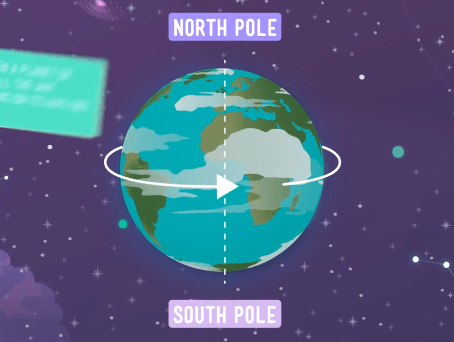
The spinning movement of the Earth about its axis is called the Earth's _____
a)
revolution
b)
rotation
c)
precession
d)
orbit
26.
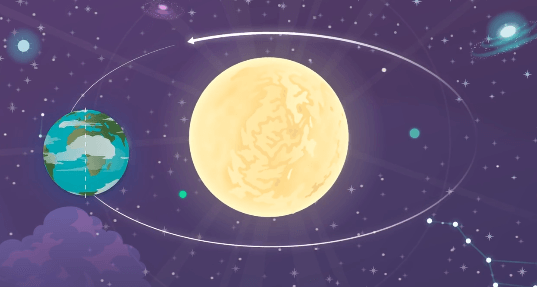
The movement of the Earth around the Sun is called its _____
a)
revolution
b)
rotation
c)
precession
d)
gyration
27.
What motion of the Earth takes 365 days?
a)
Rotation
b)
Tilting 
c)
Revolution
d)
Spinning
28.
Rotation of the earth takes
a)
One day
b)
One year
c)
One summer
d)
One winter
29.
Planets that are closer to the sun
a)
take more time to orbit
b)
take less time to orbit
30.
The spinning of an object on its axis is called______
a)
orbit
b)
rotation
c)
revolution
d)
tide
31.
Day and night is caused by the _____________ of earth on its axis.
a)
revolution
b)
orbit
c)
rotation
32.

How would you describe the orbits?

a)

Moving.

b)

Nearly circular.

c)

Revolving around each other.

33.

How is revolution related to an orbit?

a)

Revolution is the same as rotation.

b)

It revolves around an object.

c)

An orbit is the path that an object takes during a revolution.

34.

What can you tell about the length of the orbits?

a)

The closer a planet is to the sun, the longer its orbit is.

b)

The farther a planet is from the sun, the shorter its orbit is.

c)

The farther a planet is from the sun, the longer its orbit is.

35.
The first satellite launched into space by Russia 
a)
Space Suit
b)
Sputnik
c)
ISS
d)
Astronaut
36.
A person who is trained for traveling in space
a)
Astronaut 
b)
Sputnik
c)
Light-year
d)
Satellite
37.
Used to fly astronauts into space 
a)
Space Shuttle
b)
Space suit 
c)
Neil Armstrong & Buzz Aldrin
d)
light- year 
38.
The first people to walk on the moon. Landed in 1969
a)
spacecraft 
b)
ISS 
c)
Astronaut 
d)
Neil Armstrong & Buzz Aldrin
39.
Has no people on it, used to gather information
a)
spaceprobe
b)
Space Shuttle
c)
spacecraft
d)
launch-pad
40.
orbits a planet, sends waves to and from Earth
a)
satellite
b)
spaceprobe
c)
launch-pad 
d)
light-year 
41.

Which President decided that the US should enter the space race?

a)

President Obama

b)

President Washington

c)

President Kennedy

d)

President Nixon

42.
Instrument that travels into the solar system, gathers information and sends it back to Earth
a)
Space shuttle
b)
Rocket
c)
Space ship
d)
Space probe
43.
Long term research laboratory in space, constructed with resources from 15 different nations.
a)
Space Shuttle
b)
Space Probe
c)
Satellite
d)
International Space Station
44.
Reusable spacecraft that transports astronauts, satellites, and other materials to and from space.
a)
Space ship
b)
Space shuttle
c)
Voyager 1
d)
Space station
45.
What is the ISS?
a)
International Student Services
b)
Inside Sun Secrets
c)
International Space Station
d)
Iraq Space Services
46.
When was the final/last space shuttle launched? STS-135
a)
2001
b)
2011
c)
2016
d)
hasn't happened
47.
Which country launched the first artificial satellite?
a)
USSR/Soviet Union
b)
USA
c)
Canada
d)
Japan
48.
Why would animals be sent to space before humans?
a)
Because they are much cuter
b)
Because they can withstand more force
c)
To test for safety
d)
Because they didn't have to pay them
49.
Instrument that travels into the solar system, gathers information and sends it back to Earth
a)
Space shuttle
b)
Rocket
c)
Space ship
d)
Space probe
50.

the moon orbiting the earth is an example of:

a)

natural satellite

b)

artificial satellite

51.
Which happened first? First humans in space or first moon probe launched?
a)
first humans in space
b)
first moon probe launched
c)
happened same time
d)
neither happened
52.
An artificial satellite is a spacecraft that _____________.
a)
completes only one orbit
b)
is built by humans and orbits another object in space
c)
travels outward into the solar system
d)
orbits beyond the orbit of the moon
53.
Who was the First Person in space?
a)
Yuri A. Gargarin
b)
Neil Armstrong
c)
Buzz Aldrin
d)
Alan B. Sheppard
54.
Who and When was the first American to go into space?
a)
Yuri A. Gargarin - 1961
b)
Alan B. Sheppard - 1961
c)
John Glenn - 1962
d)
Neil Armstrong - 1969
55.
Who became the first American to orbit the Earth?
a)
Yuri A. Gargarin
b)
Alan B. Sheppard
c)
John Glenn
d)
Neil Armstrong
56.
What year was the first landing on the moon?
a)
1957
b)
1961
c)
1962
d)
1969
57.
What was the first mission to land on the moon?
a)
Apollo 1
b)
Apollo 11
c)
Apollo 13
d)
Apollo 17