wayground logo

Free Printable Worksheets

Font size

S
M
L
XL
Worksheets

Chem Unit 1 Review

Total questions: 41

Worksheet time: 34mins

Name
Class
Date
1.

Matter is anything that has:

a)

mass

b)

volume

c)

mass and volume

d)

substance

2.
Why does ice float?
a)
Liquid water is less dense than solid water.
b)
Solid water is less dense than liquid water.
c)
Gaseous water is less dense than solid water.
d)
Liquid water is less dense than gaseous water.
3.
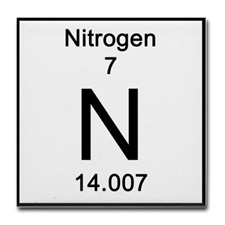
What is the number of protons that the element in this image contain?
a)
14
b)
7
c)
15
d)
18
4.
The central region of an atom where its neutrons and protons are is its _______.
a)
Nucleus 
b)
Electron cloud
c)
Core 
d)
Center 
5.
The particles that are found in the nucleus of an atom are _____.
a)
Neutrons and electrons
b)
Electrons only
c)
Protons and neutrons
d)
Protons and electrons
6.

What does the 1.00794 stand for?

a)

Hydrogen

b)

atomic number

c)

atomic mass

d)

atomic explosion

7.
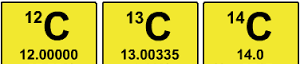
What do these isotopes of carbon all have in common?
a)
neutrons & mass number
b)
atomic number and neutrons
c)
atomic number and electrons
d)
protons, atomic number, and mass number
8.
In a correctly written symbol what would be located in the "A" position?
a)
number of neutrons
b)
atomic number
c)
number of electrons 
d)
mass number
9.
How many neutrons does the isotope below have?     89 36Kr
a)
53
b)
36
c)
89
d)
125
10.

What is the name of group number 1?

a)

halogens

b)

noble gases

c)

alkali metals

d)

alkaline earth metals

11.

What is the name of group number 2?

a)

transition metals

b)

halogens

c)

metaloids

d)

alkaline earth metals

12.

Metals (select all that apply)

a)

are found on the right side of the periodic table.

b)

are found on the left side of the periodic table.

c)

are good conductors of heat and electricity.

d)

are brittle.

e)

are malleable and ductile.

13.

Nonmetals (select all that apply)

a)

are found on the right side of the periodic table.

b)

are found on the left side of the periodic table.

c)

are good conductors of heat and electricity.

d)

are brittle.

e)

can be solid, liquids, or gases at room temperature.

14.
Which group of the periodic table is composed of inert (not reactive)  gases?
a)
alkali metals
b)
alkaline earth metals
c)
halogens
d)
noble gases
15.
Elements which are shiny, conduct electricity and heat are called
a)
metal
b)
nonmetal
c)
metalloid
d)
nonexistent
16.
The simplest substance is..?
a)
Carbon
b)
An element
c)
Water
d)
A simple compound 
17.

Which state of matter has definite shape and definite volume?

a)

Solid

b)

Liquid

c)

Gas

d)

Arkansas

18.

Which state of matter has indefinite shape and definite volume?

a)

Solid

b)

Liquid

c)

Gas

d)

Alaska

19.

Which state of matter has indefinite shape and indefinite volume?

a)

Solid

b)

Liquid

c)

Gas

d)

Idaho

20.

What describes temperature?

a)

The average kinetic energy of the particles

b)

The total kinetic energy of the particles

c)

The transfer of kinetic energy from one substance to another

d)

The average of the beat, rhymes, and punchlines in a freestyle.

21.

What describes heat?

a)

The average kinetic energy of the particles

b)

The total kinetic energy of the particles

c)

The transfer of kinetic energy from one substance to another

d)

The average of the beat, rhymes, and punchlines in a freestyle.

22.

At what point is the substance solid?

a)

1

b)

2

c)

3

d)

4

e)

5

23.

At what point is the substance liquid?

a)

1

b)

2

c)

3

d)

4

e)

5

24.

At what point is the substance gas?

a)

1

b)

2

c)

3

d)

4

e)

5

25.

At what point is the substance melting or freezing?

a)

1

b)

2

c)

3

d)

4

e)

5

26.

At what point is the substance vaporizing or condensing?

a)

1

b)

2

c)

3

d)

4

e)

5

27.
Which element is pictured?
a)
neon
b)
fluorine
c)
magnesium
d)
argon
28.
Which element is depicted from this orbital diagram
a)
Fluorine
b)
Neon
c)
Chlorine
d)
Argon
29.
This orbital diagram represents:  
a)
C
b)
B
c)
N
d)
O
30.
What is incorrect about this orbital diagram?
a)
Both arrows in the 2p box should be pointing up
b)
There is nothing incorrect with this diagram
c)
In the 2p box there should only be 1 electron in the first 2p box and one in the 2nd 2p box
d)
All the arrows should be pointing up.
31.

What atom matches this electron configuration?

1s22s22p63s23p64s23d10

a)

zinc

b)

copper

c)

nickel

d)

germanium

32.
What electron configuration matches an oxygen atom?
a)
1s22s22p63s2, 3p64s23d104p5
b)
1s22s22p4
c)
1s22s22p6
d)
1s22s22p63s23p64s23d1
33.
How many electrons can the first energy level hold?
a)
1
b)
2
c)
8
d)
0
34.
Light behaves like both a particle and a ______.
a)
Mass
b)
Wave
c)
Current
35.
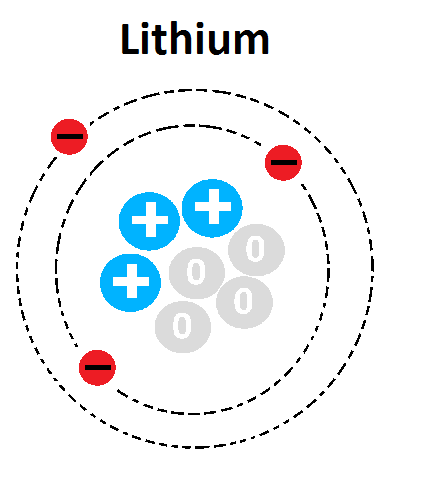
What is the name of this element?
a)
Helium
b)
Hydrogen
c)
Argon
d)
Silver
36.
What is the name of this element?
a)
Lithium
b)
Boron
c)
Carbon
d)
Neon
37.
What is the mass number of this atom?
a)
1
b)
3
c)
4
d)
7
38.
What is the atomic number of this atom?
a)
2
b)
4
c)
6
d)
none of the above
39.
What group does this element belong to?
a)
Group 1: Alkali metals
b)
Group 18: Noble Gases
c)
Group 2: Alkaline-Earth Metals
d)
Group 17: Halogens
40.
How many valence electrons?
a)
2
b)
3
c)
5
d)
10
41.
What's a valence electron?
a)
electrons in the second energy level
b)
electrons in the outermost energy level
c)
the atomic number
d)
electrons in the first level