
 Worksheets
BIODIVERSITY
Total questions: 130
Worksheet time: 2hrs 48mins
What does the root "bio" mean...
living
nonliving
toxic
variety
What does the root "diversity" mean...
living
nonliving
toxic
variety
(a) is the variety of living things in the world.

How do biodiversity and stability work together?
The lower the biodiversity the greater the stability of an ecosystem.
The higher the biodiversity, the less stable the ecosystem
The higher the biodiversity, the greater the stability of the ecosystem.
Biodiversity has nothing to do with ecosystem stability.


Which ecosystem is more likely to survive a change in the environment?
One with High biodiversity
One with Low biodiversity

Which shows more biodiversity Image A or Image B. Why?
Image B is more biodiverse, because shows more different species than image A.
Image A is more biodiverse, because shows a greater number of organisms that image B
Both images show the same biodiversity

In this food web example you can see that rain forests have many producers consumer and predators. How would you describe the rain forest biome?
It has high biodiversity
It has low biodiversity.

Define genetic diversity
a variety of genes and traits within a species
a variety of ecosystems in a given area
system made up of all the living and nonliving things in a given area
a variety of species in an ecosystem
Which statement best describes an example of high biodiversity?
A pond ecosystem is populated by a single species of frogs
A state park that includes multiple forest and freshwater ecosystems with many different species of fish, birds and frogs in a variety of colors
A desert ecosystem is populated by organ pipe cacti, camels, and armadillo lizards
The level of biodiversity that involves a variety of habitats is _____ diversity.
ecosystem
population
genetic
species
Why is biodiversity important to ecosystems?
It helps populations adapt to ecological changes.
It increases at each level of the food chain.
Which ecosystem below has the HIGHEST biodiversity?


What are the 3 types of biodiversity (SELECT 3)
Genetic
Species
Ecosystem
Size
Biotic
The more different types of organisms and the more relationships that can occur between organisms the greater the...
Species Diversity
Genetic Diversity
Ecosystem Diversity
Greater ____________________ means there are more habitats to support different types of organisms.
Ecosystem Diversity
Species Diversity
Genetic Diversity
Things of value that ecosystems provide for free are called ___________________.
ecosystem services
ecosystem diversity
food services
species diversity
The greater the ____________________, the more likely a species is to survive changes to their environment
Genetic Diversity
Species Diversity
Ecosystem Diversity
Define species diversity
a variety of genes and traits within a species
a variety of ecosystems in a given area
system made up of all the living and nonliving things in a given area
a variety of species in an ecosystem
Biodiversity, aka biological diversity, usually refers to
the same species in a general location
the number of different species in a given area
the number of animal species in a given area
the number of plant species in a given area
A population is
a group of similar species in different areas
a group of the same species in the same geographic area.
a group of several species in the same geographic area
a group of several species along with their abiotic factors in a small area.
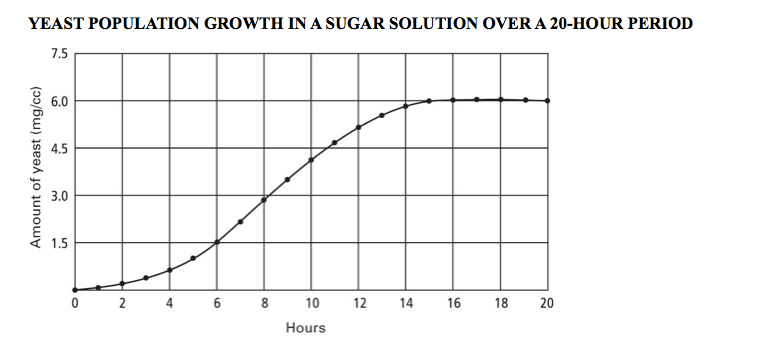
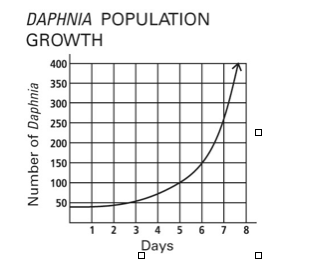
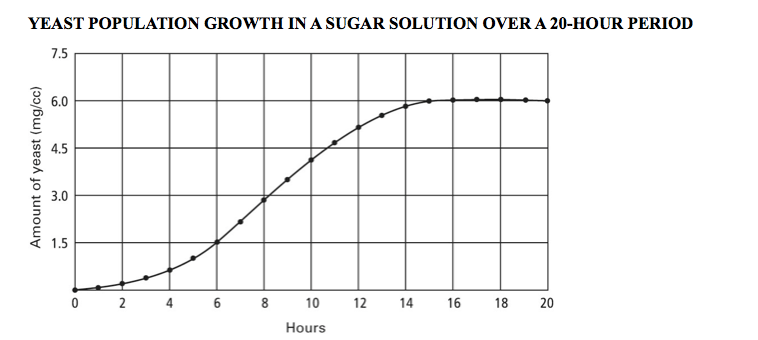

When a population has reached carrying capacity
Births & Immigration are equal to Death & emigration
Births & Immigration are less than Death & emigration
Births & Immigration are greater than Death & emigration
Births are exponential

Estimate the carrying capacity.
100 deer
80 deer
60 deer
40 deer
What does the term carrying capacity describe?
The maximum number of birth rates for a population.
The ability of a population to accept new immigrants.
The ratio of birth rates to death rates in a population.
The population size that the environment can sustain.
Identify which image below is showing a population:


The lionfish is a venomous fish found primarily in the Red Sea and the Indian Ocean. In the 1990s, lionfish were accidentally released into the Atlantic Ocean, where they found abundant resources and favorable environmental conditions. Which of the following scenarios is most likely to result in the lionfish having a major impact on the communities into which they were introduced?
With no natural predators, the lionfish population will become very large.
Some native species of invertebrates will develop a resistance to lionfish venom.
Random mating will allow the lionfish population to reach Hardy-Weinberg equilibrium.
A virus that specifically infects lionfish will become more prevalent.
There is strong evidence that two species of
cliff-dwelling birds have nested in the same
environment and fed in the same water for
thousands of years, with each having stable
population sizes. Based on this information,
which of the following statements is the best
conclusion?
The two birds compete for food.
One species will displace the other.
The two birds have different ecological niches that allow coexistence.
One species eats a more diverse diet than the other does.
An organisms population growth is shaped by its reproductive pattern. Which combination of traits characterizes a rapid life history pattern (r-species)?
short life span, produces many offspring, small body size
short life span, live in more stable environments, small body size
long life span, produces many offspring, grows into adults slowly
long life span, large body size, grows into adults slowly

What factor describes when populations decrease because animals are moving out of a population?
Emigration
Limiting Factors
Immigration
Exponential Growth
High biodiversity removes the predators and parasites in the ecosystem and makes it safer.
True
False
High biodiversity ensures that organisms from different species are able to mate and create new species.
True
False
High biodiversity in an ecosystem makes it less likely that an individual animal or a plant will get a disease.
True
False
High biodiversity helps an organism change its body so it can adapt and survive in the environment.
True
False
High biodiversity makes the food web more complex and better able to support the most species, even if some populations decrease.
True
False
High biodiversity ensures that many different ecological niches (jobs, roles) are filled, which helps the ecosystem function well.
True
False
High biodiversity makes it more likely that the ecosystem will be able to keep functioning after a disturbance, such as disease or natural disaster.
True
False
High biodiversity makes an ecosystem more sustainable because the food web is stronger and organisms perform a wider variety of functions.
True
False
A stable ecosystem typically has high biodiversity.
True
False
High biodiversity is a sign of a healthy ecosystem.
True
False

Abiotic is non-living


Which biome is more biodiverse?
Desert
Grassland
Tundra
Rainforest
Image "B" shows more biodiversity than image "A". Why?
Because "B" shows more different species than image "A"
Because image "B" has less different species than "A"
"A" has a greater number of same species plants so this statement is wrong.
Both images show the same biodiversity

Food Web B is an example of...
Low biodiversity and low sustainability. If the producer dies then all the food web will suffer.
High biodiversity and high sustainability. If an organism is removed the food web will continue with no effect.

Biodiversity is important to keep an area (biome) healthy. In this example "Food Web A" is sustainable. Why is sustainability important for an ecosystem in "Food Web A".
If one organism is removed the food web can still operate (work) with little or no negative effect.
If an organism is removed the food web will collapse and will affect the environment.

High biodiversity makes it more likely that the ecosystem will be able to keep functioning after a disturbance, such as disease or natural disaster.
True
False
High biodiversity is a sign of a healthy ecosystem.
True
False

Define biodiversity
variety of life in Earth's land, freshwater, and marine ecosystems
variety of ecosystems in a given area
the number of different species in a given area and the number of individuals of each species that are present
the variation of genes within a species or population in a given area
Define genetic diversity
variation of genes within a species or population in a given area
variety of ecosystems in a given area
system made up of all the living and nonliving things in a given area
disturbance in the environment conditions that cause genetic changes to occur in organisms
Define species diversity
both the number of different species and individuals of each species in a given area
variation of genes within a species or population in a given area
variety of ecosystems that are in a given area
changes in an ecosystem that affect of the organisms interact with one another
Define ecosystem stability
a healthy ecosystem with factors that stay mostly stable
a healthy ecosystem with factors that fluctuate between great and terrible
an unhealthy ecosystem with factors that stay mostly stable
an unhealthy ecosystem with factors that fluctuate between great and terrible
Which statement best describes an example of low species diversity?
A population of frogs has a wide variety of skin colors
A marsh ecosystem is covered by a single species of cattail bulrushes
A state park includes multiple forest, wetland, and freshwater ecosystems
Which statement best describes an example of high species diversity?
A pond ecosystem is populated by a single species of frogs
A state park includes multiple forest and freshwater ecosystems with many different species of fish, frogs, and birds
A desert ecosystem is populated only by organ pipe cacti, camels, and armadillo lizards
Define mutualism
symbiotic relationship where both organisms benefit from interaction
symbiotic relationship where one organism benefits and the other is harmed from interaction
symbiotic relationship where one organism benefits and the other is neither harmed nor benefited
Define commensalism
symbiotic relationship where one organism benefits and the other is neither harmed nor benefited
symbiotic relationship where both organisms benefit from interaction
symbiotic relationship where one organism benefits and one organism is harmed
Define parasitism
symbiotic relationship where one organism is harmed and one is benefited
symbiotic relationship where both organisms benefit from interaction
symbiotic relationship where one organism benefits and one organism is harmed
Define competition
symbiotic relationship where both organisms benefit from interaction
when two or more individuals or populations try to use the same limited resources
variation of genes within an ecosystem in a given area
variety of life among Earth's land, freshwater, and marine ecosystems
What two groups often exhibit ecological competition?
individuals and populations
populations and communities
communities and ecosystems
organisms and biospheres
Competition between different populations may result in ______.
fewer resources for some populations
fewer resources for some ecosystems
more resources for some populations
more resources for some ecosystems
What can biodiversity influence within an ecosystem?
how well the ecosystem recovers from a disturbance
how well the ecosystem grows after rain
how poorly the ecosystem responds to a drought
Which example represents a mutualism symbiotic relationship?
alligator and plover bird
flea and dog
remora fish and shark
Which example represents a commensalism symbiotic relationship?
remora fish and shark
flea and dog
alligator and plover bird
Which example represents a parasitic symbiotic relationship?
flea and dog
remora fish and shark
alligator and plover bird
What will and abundance of resources often result in for an ecosystem?
growth of individuals and populations
grown of biosphere
decline of individuals and populations
decline of biosphere
Which represents an example of a limited abiotic resource?
low oxygen levels in a pond that can affect fish populations
fungi destroying fruit of a banana tree of which insects feed on
Which represents an example of a limited biotic resource?
low oxygen levels in a pond that can affect fish populations
fungi destroying fruit of a banana tree of which insects feed on
Biodiversity, aka biological diversity, usually refers to
the same species in a general location
the number of different species in a given area
the number of animal species in a given area
the number of plant species in a given area
Species that are clearly critical to the functioning of an ecosystem are known as
biodiversity
keystone species
main species
native species
A species that is likely to become extinct if protective measures are not taken immediately is known as
threatened species
endemic species
keystone species
endangered species
An exotic species is
a species that is not native to a particular region
a newly discovered species in a particular region
a genetically modified species in a particular region
a species that is native to a particular region
a species that is not native to a particular region and has no natural predators and little competition
consumer species
producer species
invasive species
adapted species
An endemic species is
exotic and found everywhere
exotic and found only in certain regions
native and found only in a limited area
native and found everywhere
Succession that occurs in areas that previously didn't support life, such as on rocks or ice
tangential succession
primary succession
secondary succession
quaternary succession
A population is
a group of similar species in different areas
a group of the same species in the same geographic area.
a group of several species in the same geographic area
a group of several species along with their abiotic factors in a small area.
A community is
Several different populations scattered across several states.
Several different organisms in the same geographic area
One type of organism in the same geographic area
Several different populations in the same geographic area
What is the variety of ecosystems that are present in the biosphere?
species diversity
genetic diversity
ecosystem diversity
biodiversity


The Convention on International Trade in Endangered Species of Wild Fauna and Flora (CITES) and the Convention on Biological Diversity are examples of
organizations that promote poaching.
international organisation on climate change.
international treaties to protect biodiversity.
laws to increase the number of species

Biologists put extra effort into protecting these because they contain ~60% of the world's species
National parks
Biodiversity Hotspots
Tropical rainforests
Conservation stations

Programs that breed animals in captivity then release them to the wild are called...
IUCN red list
Captive conservation
Captive Breeding Programs
Catch and Release Programs

The species that plays a critical role in maintaining the ecosystem structure is?
Flagship species
Umbrella species
Keystone Species
Leading species

A place that stores seeds to preserve their genes for the future is called...
Botanical preserve
Plant depository
Seed bank
Herbarium


A charismatic, often cute and cuddly flagship species may be used to promote human connection, but what are the disadvantages of such species?
They can be made into cuddly toys for marketing
Humans may be in conflict with them eg Tigers eat people
They may become extinct and so the conservation work would stop
They become popular within the public
They take priority even if they are not important to the ecosystem
Protecting areas to promote sustainable development for the good of future generations and the right of individuals or species to exist is its...
Ecological value
Economic value
Aesthetic value
Ethical value

Which would be a violation of the CITES treaty?
hunting wild turkeys
polluting lakes
selling tiger skins
clearing rain forests
How can the reintroduction of wolves into Yellowstone National Park change the path of the rivers?
The wolves changed the behavior of the elk, so they no longer gathered in the valleys near the water, causing erosion. The river banks began to grow more vegetation, which stabilized their banks.
The wolves dug big holes, causing the river to turn into a pond.
The wolves tore through paths along the river causing erosion and making the river wider.
The wolves had nothing to do with the path of the river.

What is a keystone species?
A species that helps to hold an ecosystem together
A species that lives in or around rocks
Keys and stones have nothing to do with ecology
A keystone isn't a living thing, it's just a stone
What are examples of Flagship species? Select all that apply.
Panda
Tiger
Python
Polar Bear
Who publishes the Red Data Book
International Union for conservation of nature
International Union for Nature Conservation
International Union of Nature Conservation
What was the act created by the government to protect flora and fauna ?
Wildlife ( Protection) Act
Wildlife Protection act
Wildlife act
a species at risk, but are not yet extinct , what is it called as ?
endangered
exotic
endemic
extinct
The variety of life in the world or in a particular habitat or ecosystem
biodiversity
demography
carrying capacity
poaching

