
Font size
 Worksheets
EOC Review 4
Total questions: 53
Worksheet time: 1hrs 13mins

Mutations are important because they bring about
death of the organism in which they develop
genetic variation needed for a population to evolve
benefits for the individual, not for the population
Hardey-Weinberg equilibrium within a population

Why has antibiotic resistance evolved in bacteria?
Bacteria reproduce quickly
Bacteria with a resistance to the antibiotic, passed that trait to offspring
Bacteria that are resistant reproduce faster than non resistant strains
Bacteria exposed to antibiotics develop a resistance to them

Genetic drift is change in the allele frequency of a population due to...
random chance
natural selection
non-random mating (sexual selection)
artificial selection
A(n)________ is a measure of how common a certain allele is in a population.
Allele Frequency
Gene Pool
Genotypical Number
Genetic Drift
A small group of squirrels gets separates them from the rest of the population due to a large flood. These squirrels, now confined to this new island, begin to start a new population. This is an example of which of the following?
Founder effect
Bottleneck effect
Natural Selection
Gene Flow
The exchange of genes between two populations.
Genetic Drift
Founder Effect
Gene Flow
Genetic Recombination
This is a pattern of natural selection where one extreme form of a trait is more advantageous than the average or the opposite extreme; as a result, this trait in the population tends to evolve towards that one extreme
Directional selection
Disruptive selection
Stabilizing selection
Forward selection
This is a pattern of natural selection in which the average (or intermediate) form of a trait is the most advantageous, and so a population evolves away from the extremes and toward the average
Disruptive selection
Directional selection
Stabilizing selection
Middle selection


Similar structures with different purposes found in different species are known as _____
vestigial structures
DNA
homologous structures
the fossil record

The picture shows a/an ___________
homologous structure
vestigial structure
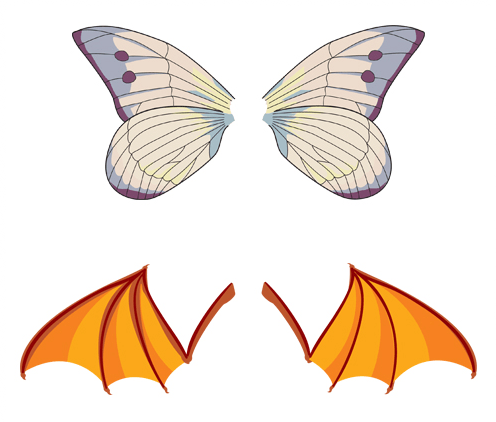
What is this an example of?
Homologous structure
Analogous structure
Vestigial organs
Functional adaption
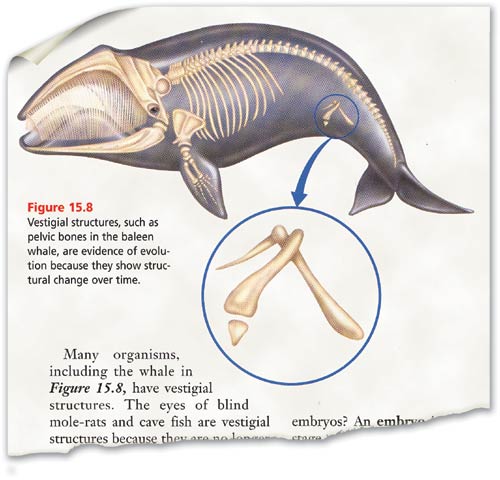
What conclusion can you draw from the fact that many modern whale species have vestigial pelvic and leg bones?
The ancestors of whales may have been land mammals
Whales could walk if they wanted to
Whales are preparing to evolve into land animals
Someday whales will be able to walk and will have legs

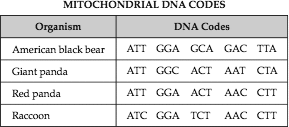
What conclusions can be made based on this table shown?
the American black bear and the giant panda are most closely related
the giant panda and the red panda are most closely related
the red panda and the racoon are the most closely related
the giant panda and the racoon are most closely related
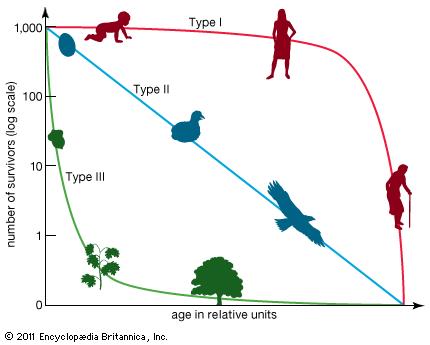
The mortality rate of organisms following a type I survivorship curve is __________.
fairly constant throughout life
higher in post-reproductive years
lower after the organisms become established
unrelated to age
What type of factor has an increasing impact as the population size increases?
density-independent
density-dependent
cohort effect
survivorship factor
Which of the following are examples of a density independent factors?
forest fire
seasonal cycles
storms
disease
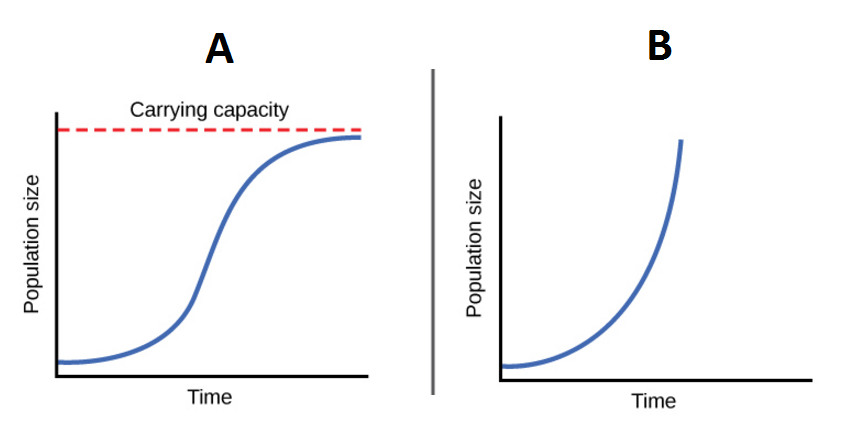
What type of growth model is shown in image A?
Exponential
Logistic
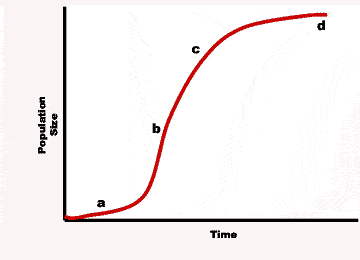
What point on the graph represents carrying capacity?
a
b
c
d


What type of respiration requires oxygen?
Aerobic
Anaerobic
1. What is chlorophyll and how does it help plants?
A.Chlorophyll is a pigment that absorbs light energy and makes glucose.
B.Chlorophyll is a protein that changes shape in the presence of sunlight.
C.Chlorophyll is a receptor that binds carbon dioxide when energized by light
D.Chlorophyll is an enzyme that catalyzes the production of glucose when exposed to light.
Which process is considered to be a part of the carbon cycle?
precipitation
metamorphosis
condensation
photosynthesis
Which statement accurately describes an interaction between plants and animals?
Animals release CO2, required for photosynthesis.
Animals release O2, required for plant survival.
Plants provide humans with atmospheric nitrogen.
Plants provide humans with CO2 for respiration.
Which of the following statements is true
The products of photosynthesis are the reactants of cellular respiration.
The products of photosynthesis are not necessary for respiration to occur.
The reactants of photosynthesis are also the reactants of cellular respiration.
The products of photosynthesis are also the products of cellular respiration.
Choose the producer.
rock
tree
cow
bird

Look at the diagram of the food web. The arrows means “eaten by.”
What will happen if the number of snakes goes down?
The owl will eat the grass
The number of frogs will go down
The hawk and owl will have less food
The number of mice and grasshoppers will go up.

What happens to the amount of available energy in the pyramid as it moves up through the different levels?
it increases
it decreases
it remains the same
it decreases, then increases
Primary succession occurs in an area that has:
soil
no soil
some soil
none of these
___ are the first organisms to colonize an area and begin the process of ecological succession.
foundational organisms
introductory organisms
primary organisms
pioneer species
What is an example of an area that is likely to undergo primary succession?
Glaciers melt and leave exposed rock
Plants die from drought and decompose
Land is bulldozed and soil remains
What is the main difference between primary and secondary ecological succession?
Primary begins WITHOUT soil; Secondary begins WITH soil
Primary is the first state and secondary is the second stage
Primary builds plant community; secondary builds animal community
Primary begins WITH soil; Secondary begins WITHOUT soil
Which is faster: Primary or Secondary Succession?
Primary Succession
Secondary Succession
Both Take The Same Amount of Time



