wayground logo

Free Printable Worksheets

NEW

Font size

S
M
L
XL
Worksheets

Interim Assessment #3 Review

Total questions: 45

Worksheet time: 25mins

Name
Class
Date
1.
What is the name of this element?
a)
Helium
b)
Hydrogen
c)
Argon
d)
Silver
2.
What is the name of this element?
a)
Lithium
b)
Boron
c)
Carbon
d)
Neon
3.

UP and DOWN columns on the periodic table are

a)

groups

b)

periods

4.

SIDE TO SIDE rows on the periodic table are

a)

groups

b)

periods

5.

Which element is located in Period 4 & Group 11?

a)

Vanadium

b)

Cadmium

c)

Copper

d)

Rhodium

6.

Which element is located in Period 5 & Group 3?

a)

Yttrium

b)

Scandium

c)

Lanthanum

d)

Magnesium

7.
Using the picture, what is the volume of the ball?
a)
10 mL
b)
20 mL
c)
180 mL
d)
100 mL
8.
What metal do you have if you have a mass of 225 g and a volume of 21.4 cm3?
a)
Zinc- 7.13 g/cm3
b)
Copper- 8.96 g/cm3
c)
Silver- 10.5 g/cm3
d)
Mercury- 13.55 g/cm3
9.
An object's volume was determined through water displacement.  The starting height of the water was 58 mL and the ending height was 65 mL.  What is the density of the object if it has a mass of 47.5 g?
a)
0.39 g/cm3
b)
6.79 g/cm3
c)
67.86 g/cm3
d)
0.15 g/cm3
10.
What is the formula for density?
a)
density = mass x volume
b)
density = mass / volume
c)
density = mass + volume
d)
density = mass - volume
11.
A train travels 25 km in .5 hrs. How fast is the train going?
a)
25 miles/hr
b)
5 miles/hr
c)
125 km/hr
d)
50 km/hr
12.
A car travels 30 miles/hr for 3 hours, calculate the distance it will travel
a)
90 miles
b)
10 miles
c)
600 miles
d)
90 km
13.
A speed boat travels 200 miles at a speed of 20 miles/hr. How much time will it take to travel the 200 miles?
a)
10 hrs
b)
10 miles
c)
400 hrs
d)
100 km
14.

Dr. Barkley drives his speed boat 22 km at 45 km/hr, how long will it take him to go the 22 km?

a)

48 hrs

b)

0.48 hrs

c)

990 hrs

d)

45 min

15.
Element or Compound?
H2O
a)
Element
b)
Compound
16.
Element or Compound?
Au
a)
Element
b)
Compound
17.
Which of the following is not a compound?
a)
HCl
b)
Cl
c)
NaCl
d)
CO2
18.

Is this an example of a compound or element?

a)

element

b)

compound

19.
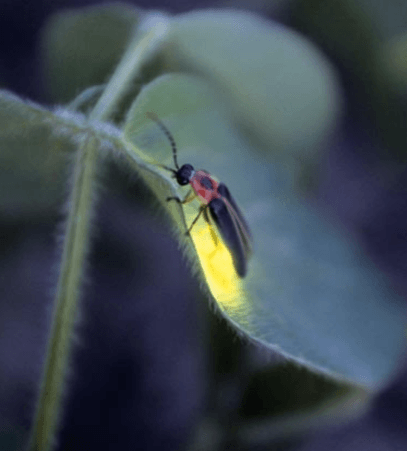
Is a firefly lighting up a physical or chemical change?
a)
Physical
b)
Chemical
20.
Is water melting a physical or chemical change?
a)
Physical
b)
Chemical
21.
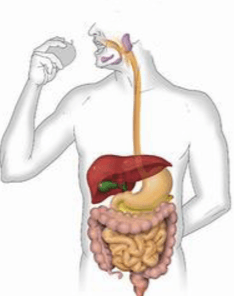
Is digesting your food a physical or chemical change?
a)
Physical
b)
Chemical
22.
When baking soda and vinegar mix it creates a bubbly mess. Is this a chemical or physical change?
a)
Physical
b)
Chemical
23.

Is chewing your food a physical or chemical change?

a)

Physical

b)

Chemical

24.

A solid formed in a chemical reaction between two liquids

a)

Reactant

b)

Precipitate

c)

Exothermic reaction

d)

Endothermic reaction

25.
Which of these grouping of elements could have the characteristic of brittle?
a)
Metal
b)
Nonmetal
26.
Iron is a good conductor, malleable and magnetic. What type of element is Iron? 
a)
Metal
b)
Nonmetal
c)
Metalloid
d)
Pretty
27.
Silicon is a semiconductor and has properties of both metals and nonmetals. What type of element is Silicon? 
a)
Metal
b)
Nonmetal
c)
Metalloid
d)
Pretty
28.
Which element is a metalloid?
a)
Titanium
b)
Selenium
c)
Potassium
d)
Polonium
29.

The nucleus of an atom contains which subatomic particles?

a)

protons and electrons

b)

protons and neutrons

c)

electrons and neutrons

d)

protons, electrons, and neutrons

30.
Particles in an atom that are neutral and have no charge are 
a)
negatrons 
b)
electrons 
c)
neutrons 
d)
protons 
31.

Which subatomic particle is counted to determine the type of element the atom represents?

a)

proton

b)

neutron

c)

electron

d)

boron

32.
The atomic number is equal to _.
a)
the number of protons and electrons
b)
the number of neutrons only
c)
the total number of protons and neutrons
d)
the number of protons neutrons and electrons
33.
The atomic mass is equal to _.
a)
the number of protons only
b)
the number of neutrons only
c)
the total number of protons and neutrons
d)
the number of protons, neutrons, and electrons.
34.

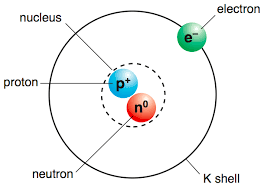
Which subatomic particle does the YELLOW(-) circle represent?

a)

proton

b)

neutron

c)

electron

d)

nucleus

35.
Which subatomic particles contribute the most to the mass of an atom?
a)
Protons, Neutrons, Electrons
b)
Protons only
c)
Protons and Electrons
d)
Protons and Neutrons
36.

6.15: Which of these is not a property of noble gases?

a)

Colourless

b)

Odourless

c)

Flammable

d)

Gas at room temperature

37.
Potential energy is __________ energy. 
a)
motion 
b)
moving
c)
slow
d)
stored
38.
The higher up you are waiting to fall, the more ____________ energy you have. 
a)
kinetic 
b)
potential 
c)
movement 
d)
air 
39.
At which point is potential energy greatest?
a)
W
b)
X
c)
Y
d)
Z
40.
Energy due to motion is ____________ energy. 
a)
Potential 
b)
Energy
c)
Kinetic
d)
Friction
41.
At which point is kinetic energy greatest? 
a)
W
b)
X
c)
Y
d)
Z
42.
Which graph is would represent a decrease in speed?
a)
Graph A
b)
Graph B
c)
Graph C
d)
The object is not decreasing in speed in any of these graphs
43.
What is happening at C?
a)
Stationary
b)
Accelerating
c)
Fast steady speed; moving away from the starting position
d)
Slower steady speed; moving away from the starting position
44.

True or false: The longer you fall, the faster you fall due to gravity.

a)

True

b)

False

45.

Simple machines work by increasing the ____________ and decreasing the ____________ to complete the same amount of work.

a)

Energy Force

b)

Force Energy

c)

Distance Force

d)

Force Distance