wayground logo

Free Printable Worksheets

Font size

S
M
L
XL
Worksheets

Unit 13 Review

Total questions: 79

Worksheet time: 59mins

Name
Class
Date
1.
Sound is produced when something ______________
a)
Vibrates
b)
Moves through empty space
2.
High Amplitude =__________________
a)
Louder sounds
b)
Quieter Sounds
3.
Low Amplitude = ______________
a)
Quieter Sounds
b)
Louder sounds
4.
Low frequency = _______ Pitch
a)
Low
b)
High
5.
High frequency = _______ Pitch
a)
High
b)
Low
6.
In General Sound waves travel the slowest in __________
a)
solid
b)
liquid
c)
Gas
d)
Plasma
7.
In General Sound waves travel the fastest in __________
a)
solid
b)
liquid
c)
Gas
d)
plasma
8.
Which wavelength would have the highest pitch like a flute or whistle?
a)
High Frequency Wavelength
b)
Low frequency Wavelength
9.
Which Wave produced the loudest sound?
a)
high Amplitude
b)
low Amplitude
10.
A sound is loud or soft depending on its ____________
a)
Amplitude
b)
Frequency
11.
A sounds high or low pitch depends on the waves ______________
a)
frequency
b)
amplitude
12.

The speed of sound in air is 340 m/s. The frequency of the sound waves generated by my voice is 720 Hz. Calculate the wavelength of sound of my voice.

a)

380 m

b)

0.472 m

c)

2.11 m

d)

244,800

e)

none of these are correct

13.

A sound wave has a wavelength of 200 m and a frequency of 6 Hz. What is its speed?

a)

1200 m/s

b)

12,280 m/s

c)

0.0031 m/s

d)

1993.8 m/s

14.
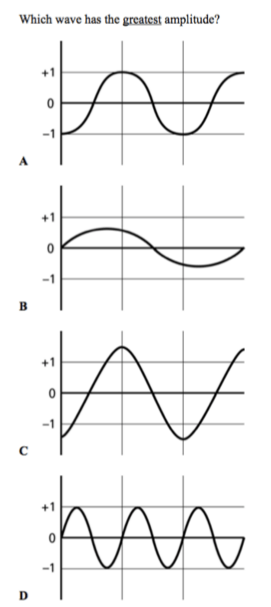
Which wave has the greatest amplitude?
a)
A
b)
B
c)
C
d)
D
15.
The pitch of a sound is most closely related to the
a)
frequency  of the sound waves
b)
distance from the sound source
c)
medium through which the sound travels
d)
intensity of the sound
16.
How loud or soft a sound is, is related to the _____________ of the wave
a)
amplitude
b)
frequency
c)
wave length
d)
rest position
17.
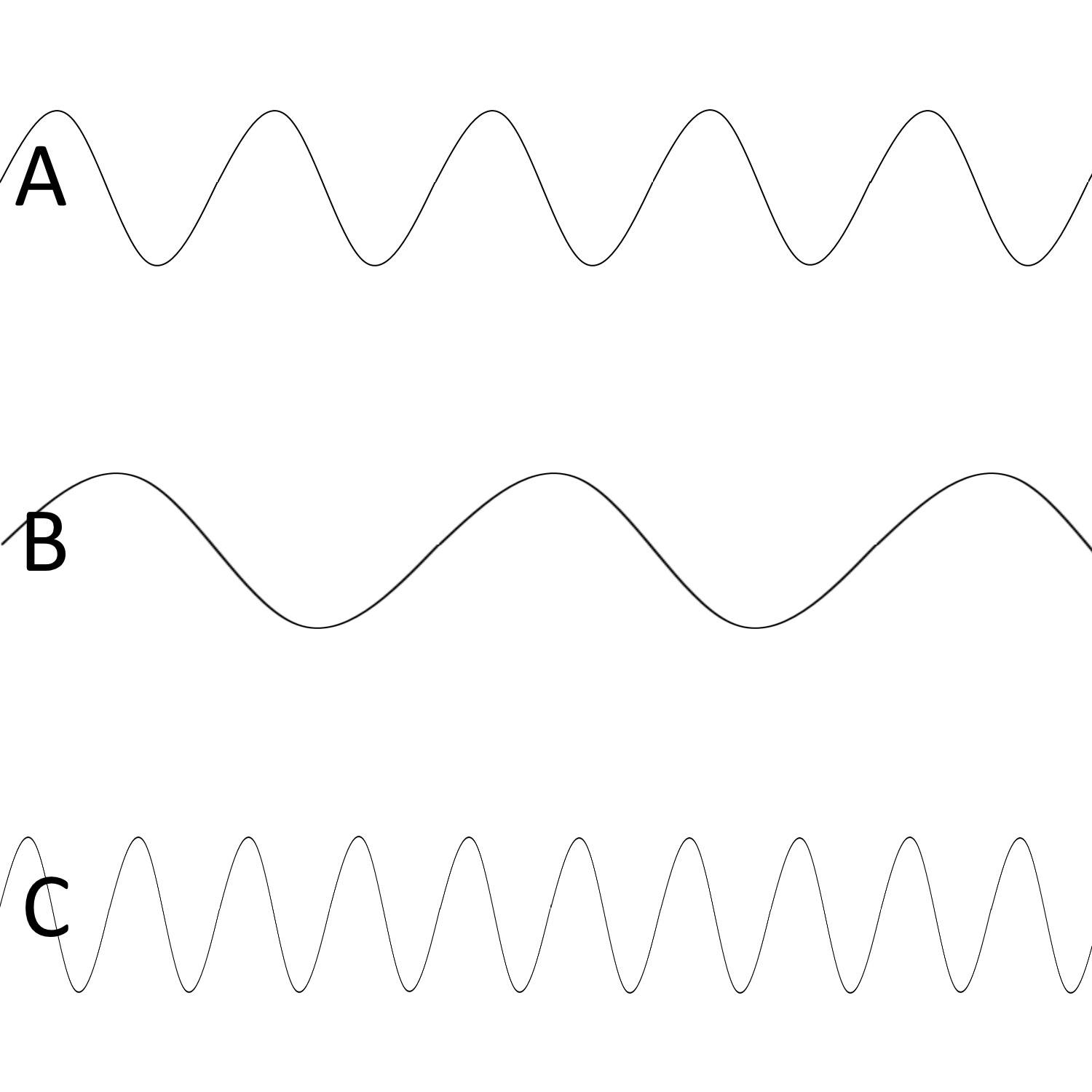
Which wave has the largest wavelength?
a)
A
b)
B
c)
C
d)
None (same wavelength)
18.

Which wave has the highest frequency?

a)

A

b)

B

c)

C

d)

None (same frequency)

e)

none of these are correct

19.

Waves that have vibrations that move perpendicular to the direction the wave are called:

a)

Electromagnetic Spectrum

b)

Transverse Waves

c)

Medium

d)

Light Waves

20.
Sound waves are...
a)
cool
b)
not cool
c)
transverse waves
d)
longitudinal waves
21.
Waves that require a medium are called 
a)
mechanical waves
b)
transverse waves
c)
light waves
d)
gamma rays
22.
Which type of wave is pictured here?
a)
Longitudinal
b)
Transverse
c)
Light 
d)
Electromagnetic
23.

What is "Beats"?

a)

The regular pulsing of pitch of a sound which is heard when 2 sources produce sounds of slightly different frequency.

b)

The regular pulsing of loudness of a sound which is heard when 2 sources produce sounds of slightly different frequency.

c)

The regular pulsing of a sound giving a characteristic tone / timbre which is heard when 2 sources produce sounds of slightly different frequency.

d)

The regular pulsing of loudness of a sound which is heard when 2 sources produce sounds of the same frequency.

24.

Calculate the beat frequency if a 400 Hz and a 397 Hz sound are heard by Quinn.

a)

1 Hz

b)

2 Hz

c)

3 Hz

d)

4 Hz

25.

If someone is standing to the left of this wave, they would hear a ______ pitch than someone standing to the right of it.

a)

uglier

b)

prettier

c)

higher

d)

lower

26.

If you are standing in front of this car, the wavelengths nearest you would have a _______ frequency

a)

quieter

b)

louder

c)

higher

d)

lower

27.

Which BEST describes this sound?

a)

Starts low pitch and quiet and gets higher pitch and loud

b)

Starts high pitch and quiet and get lower pitch and loud

c)

Starts low pitch and loud and gets higher pitch and quiet

d)

Starts low pitch and quiet and gets higher pitch

28.

Of the 4 waves, which is low pitch and quiet?

a)

red

b)

yellow

c)

green

d)

blue

29.
A reflected sound wave
a)
frequency
b)
pitch
c)
echo
d)
rarefaction
30.
As the fire truck approached Mary, the pitch of the siren got higher. Once the fire truck passed and moved away, the siren's pitch got lower. This change in pitch is because of a change in the sound wave's
a)
concussion. 
b)
amplitude. 
c)
reflection.
d)
frequency. 
31.

The speed of sound depends on these two things:

a)

The type of medium and the temperature of the medium

b)

Speed of the medium and temperature of the medium

c)

Temperature of the medium and sound of the medium

d)

None of the above

32.

Sound waves that are beyond the range of human ear are known as ----

a)

Infrasonic waves

b)

Ultrasonic waves

33.
A disturbance that travels through a medium as a longitudinal wave
a)
sound
b)
wavelength
c)
pitch
d)
frequency
34.
Material (matter) through which a wave travels
a)
medium
b)
Doppler Effect
c)
sound
d)
pitch
35.
How high or low a sound is; depends on the frequency (greater frequency= higher pitch)
a)
pitch
b)
frequency
c)
sound
d)
medium
36.
A wave in which the vibration is in the same direction as that in which the wave is traveling; sound waves
a)
longitudinal wave
b)
ocean wave
c)
transverse wave
d)
mechanical wave
37.

Sound is made when a source of energy forces the matter to

a)

Vibrate

b)

Move

c)

Stay still

38.

Sound waves CANNOT travel through which of these:

a)

Paper

b)

Milk

c)

Outer space

39.

The amount of energy a sound wave carries per second through a unit of area is its

a)

Pitch

b)

Intensity

c)

Loudness

40.

The _______ of a wave increases with increased energy.

a)

Wave length

b)

Amplitude

41.

Loudness of waves is measured in

a)

Hertz

b)

Decibels

c)

Watts

42.

Frequency of waves is measured in

a)

Hertz

b)

Decibels

c)

Watts

43.

High frequency sounds have _______ pitch

a)

HIgh

b)

Low

44.

Hearing above 20000 Hz is considered

a)

infrasonic

b)

supersonic

c)

ultrasonic

d)

sonic the hedgehog

45.

Which row correctly describes light waves?

a)

A

b)

B

c)

C

d)

D

46.
A certain photon of light has a wavelength of 4.22x10⁻⁷nm. What is the frequency? (v=c/λ)
a)
7.11x10¹⁴ Hz
b)
7.11Hz
c)
1.41x10⁻¹⁵
d)
-1.41x10¹⁵
47.
A wave with a large wavelength will have a ______ frequency and _____ energy
a)
high, low
b)
high, high
c)
low, high
d)
low, low
48.
Select the correct order of waves on the EMS 
a)
Radio, Micro, Infra, Visible, Ultra, X-ray, Gamma
b)
Gamma, X-ray, Ultra, Vis, Infra, Micro, Radio
c)
Vis, Micro, Infra, Ultra, X-ray, Gamma, Radio
d)
Micro, Radio, Vis, Infra, Ultra, X-ray, Gamma
49.
Which has the LONGEST wavelength and, therefore, the lowest frequency/energy
a)
Gamma Rays
b)
Radio Waves
c)
Visible Light
d)
Infrared rays
50.
Which has the SHORTEST wavelength and, therefore, the highest frequency/most energy
a)
Radio waves
b)
Ultraviolet Rays
c)
Gamma Rays
d)
X-rays
51.
Which section of the spectrum is the ONLY one we can see?
a)
X-rays
b)
Visible Light
c)
Gamma Rays
d)
Ultraviolet Rays
52.
As the frequency of an electromagnetic wave increases, the amount of energy in that wave...
a)
increases.
b)
decreases.
c)
stays the same.
53.
What is a photon?
a)
When radiation burst through electric waves
b)
The emission of electrons from a metal caused by light striking the metal
c)
The rate at which a waves energy flows through a given unit of area.
d)
packets of electromagnetic energy
54.
Light behaves like both a particle and a ______.
a)
Mass
b)
Wave
c)
Current
55.
Certain blue lights have a frequencey of 6.91x10¹⁴Hz. What is the wavelength? (λ=c/v)
a)
4.34x10²¹
b)
4.34x10⁻²¹
c)
4.34x10⁻⁷
d)
2.07x10²³
56.

Which of the following has the longest wavelength?

a)

microwaves

b)

UV rays

c)

Infrared

d)

Gamma rays

57.

Which of the following has the most energy?

a)

Red

b)

Blue

c)

Green

d)

Yellow

58.

Which of the following has the most energy?

a)

X-rays

b)

The color green

c)

Microwaves

d)

Infrared

59.

Which of the following has the shortest wavelength?

a)

Infrared

b)

The color Indigo

c)

Infrared

d)

TV

60.

Which of the following has the least amount of energy?

a)

UV rays

b)

The color yellow

c)

Radio waves

d)

Gamma rays

61.

Which of the following would have the highest frequency?

a)

Gamma rays

b)

The color red

c)

X-rays

d)

UV rays

62.
True or false: as you move along the spectrum, radio to gamma waves, the wavelengths decrease in size (get smaller)
a)
true
b)
false
63.
Select the correct order of waves on the EMS from the longest wavelength to the shortest wavelength
a)
Radio, Micro, Infra, Visible, Ultra, X-ray, Gamma
b)
Gamma, X-ray, Ultra, Vis, Infra, Micro, Radio
c)
Vis, Micro, Infra, Ultra, X-ray, Gamma, Radio
d)
Micro, Radio, Vis, Infra, Ultra, X-ray, Gamma
64.
Which has the LONGEST wavelength and, therefore, the lowest frequency/energy
a)
Gamma Rays
b)
Radio Waves
c)
Visible Light
d)
Infrared rays
65.
Which section of the spectrum is the ONLY one we can see?
a)
X-rays
b)
Visible Light
c)
Gamma Rays
d)
Ultraviolet Rays
66.
How are electromagnetic waves different from other waves? 
a)
They have very short wavelengths 
b)
They transmit energy instead of matter 
c)
They can travel through empty space
d)
They can change direction by reflection 
67.
As the frequency of an electromagnetic wave increases, the amount of energy in that wave...
a)
increases.
b)
decreases.
c)
stays the same.
68.
High frequency waves have _________ wavelengths.
a)
varying
b)
long
c)
the same
d)
short
69.
What are electromagnetic waves?
a)
sound waves
b)
electric & magnetic fields (energy) that travel through empty space very quickly
c)
Someone's name
d)
things like longitudinal waves
70.

What are the parts of a longitudinal wave? Select Two from the choice below

a)

compression

b)

crest

c)

rarefaction

d)

trough

71.

It is the entire range of wavelengths or frequencies of electromagnetic radiation

a)

electromagnetic waves

b)

electromagnetic spectrum

c)

electromagnetic collection

72.

To calculate the frequency of an electromagnetic wave, you need to know the speed of the wave and its

a)

wavelength.

b)

intensity.

c)

refraction.

d)

amplitude.

73.

An electromagnetic wave in a vacuum has a wavelength of 0.07m. What is its frequency?

a)

f= 3.0x 10^8 m/s

b)

f= 3.0x 10^9Hz

c)

f=4.3x 10^9Hz

d)

f=4.3x 10^8m/s

74.

Light acts like

a)

a wave.

b)

a particle.

c)

Both a wave and a particle

d)

neither a wave nor a particle.

75.

Which of the following occurs as light travels farther from its source?

a)

Far from the source, photons come together in a small area.

b)

The intensity of light increases as photons move away from the source.

c)

The source gives off less light as photons move away from it.

d)

Far from the source, photons spread over a larger area.
76.

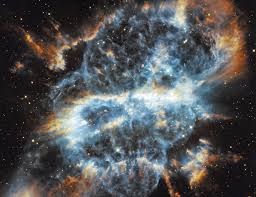
How are Electromagnetic waves different from Mechanical waves?

a)

EM waves have very short wavelengths

b)

EM waves transmit energy instead of matter

c)

EM waves can travel through the vacuum of space (without particles)

d)

EM waves can change direction by reflection
77.

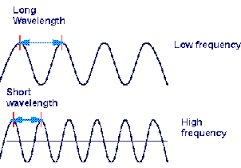
Wavelength and Frequency are related in that...

a)

they are always the same

b)

when one increases, the other decreases (inversely proportional)

c)

there is no correlation

d)

they both vary in an irregular pattern

78.

Put the visible light colors in order from SHORTEST wavelength (highest frequency) to longest wavelength (lowest frequency)

a)

Violet, Indigo, Blue, Green, Orange, Yellow, Red

b)

Red, Yellow, Green, Orange, Violet, Blue, Indigo

c)

Red, Orange, Yellow, Green, Blue, Indigo, Violet

79.

All electromagnetic waves are...

a)

transverse waves and have the same frequency

b)

transverse waves and have the same speed

c)

mechanical waves and have the same wavelength

d)

longitudinal waves and have the same energy