wayground logo

Free Printable Worksheets

NEW

Font size

S
M
L
XL
Worksheets

Energy Review (entire unit)

Total questions: 77

Worksheet time: 1hrs 17mins

Name
Class
Date
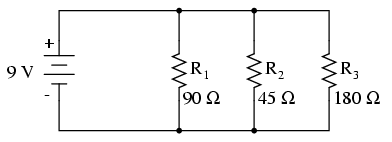
1.
This is an example of a _______ circuit
a)
open
b)
series
c)
parallel
d)
square
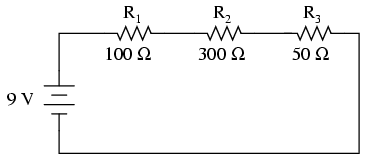
2.
This is an example of a ______ circuit
a)
Series
b)
Parallel
c)
Open
d)
Dihexihedral
3.
The total resistance in this circuit is 
a)
100 ohms
b)
450 ohms
c)
400 ohms
d)
30 ohms
4.
As resistors are added in series to a circuit, the total resistance will...
a)
increase
b)
decrease
c)
stay the same
5.
As the resistance of a circuit increases, the current will...
a)
increase
b)
decrease
c)
stay the same
6.
In a parallel circuit which of the following is the same value throughout the circuit?
a)
Voltage
b)
Current
c)
Resistance
d)
Charge
7.
A series circuit has how many pathways for the electrons to flow?
a)
Two
b)
One
c)
Many
d)
Zero
8.
What is one problem with using a series circuit? 
a)
It has a lot of series. 
b)
If one light goes down, they all go down! 
c)
It doesn't work properly.
d)
There are no problems. 
9.
What is a benefit of using a parallel circuit?  
a)
It gets confusing.
b)
There are no problems.
c)
If one light goes out, it does not affect the others. 
d)
If one light goes out, they all go out. 
10.
An ammeter is a device that can be used to measure
a)
Current
b)
Voltage
c)
Resistance
d)
Power
11.

When light bends as it passes from one material to another it is ____________

a)

reflecting

b)

refracting

c)

absorbing

d)

making a shadow

12.

An object that allows all light to pass through it is ______.

a)

transparent

b)

translucent

c)

opaque

d)

convex

13.

Loudness decreases as we move __________ an object

a)

toward

b)

away from

14.

Objects that do not let light through are called __________.

a)

concave

b)

transparent

c)

translucent

d)

opaque

15.

Light ___________ when it hits an object and bounces off.

a)

refracts

b)

reflects

c)

absorbs

d)

echoes

16.

Light travels in a ___________ path

a)

straight

b)

wavy

17.

The process of soaking up or taking in light without reflecting it is called ______________.

a)

transpiration

b)

refraction

c)

reflection

d)

absorption

18.

________________ is how loud a sound is.

a)

Volume

b)

Pitch

c)

Frequency

d)

Energy

19.
How are light and sound ALIKE?
a)
Both travel as rays
b)
Both can vary in pitch
c)
Both depend on vibrations in air
d)
Both are forms of energy that travel as waves
20.
a)
reflection
b)
refraction
21.
Back and forth movement in air bouncing off molecules
a)
vibration
b)
sound
c)
amplify
d)
pitch
22.
Which of the following statements BEST describes visible light?
a)
Light is an electromagnetic wave of a single frequency that makes up a small part of the electromagnetic spectrum.
b)
Light is an electromagnetic wave of a single frequency that makes up most of the electromagnetic spectrum.
c)
Light includes a range of electromagnetic waves that make up a small part of the electromagnetic spectrum.
d)
Light includes a range of electromagnetic waves that make up most of the electromagnetic spectrum.
23.
Visible light is which type of wave?
a)
seismic
b)
mechanical
c)
longitudinal
d)
electromagnetic
24.

The _______ is a measurement of how long a wave is (Point B to Point F)

a)

Compression

b)

Wavelength

c)

Amplitude

d)

Reflection

25.

The amplitude of a wave is measured by measuring

a)

The distance between the middle line and the peak OR trough point

b)

The distance between the peak and the trough point

c)

The distance between two random points

d)

The wavelength and the peak

26.

Which type of waves are used in broadcasting?

a)

X-rays

b)

Infrared rays

c)

Radio Waves

d)

Gamma Rays

27.

This T-shirt absorbs or reflects al of the colors of the rainbow?

a)

Absorbs

b)

Reflects

28.

Which Electromagnetic waves help doctors detect a broken bone inside your body?

a)

UV light

b)

Gamma ray

c)

X ray

29.

A leaf is green because

a)

All colors are reflected except green

b)

The light is not part of the EM

c)

All colors are absorbed except green

d)

The sun light shining on the leaf is green

30.

Frequency is defined as

a)

the number of waves that pass over a specific time

b)

the number of waves that pass through a prism

c)

the number of waves of a soundwave

d)

the distance between the middle line to the peak point of a wave

31.

Light bends when is

a)

refracted

b)

reflected

c)

absorbed

d)

sent

32.

A longitudinal wave that can only travel through matter

a)

Light

b)

Gamma Ray

c)

Sound

d)

Microwave

33.

Light travels in

a)

compression waves

b)

straight lines

c)

curved lines

d)

mechanical energy

34.

Doppler Effect is described as......

a)

An observed change in frequency of a wave when the source or observer is moving

b)

an observed change in frequency of a wave when the source or observer is standing still

c)

the use of reflected sound waves to find objects

d)

a wave that can travel through empty space or matter and consists of changing electric and magnetic fields
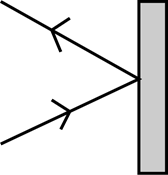
35.
The illustration shows a light ray striking an object.
In the illustration, the light ray striking the object is-
a)
absorbed
b)
stopped
c)
reflected
d)
refracted
36.

The top of the wave is the

a)

Amplitude

b)

Wavelength

c)

Crest

d)

Trough

37.

The height of the wave from the equilibrium to the crest

a)

Amplitude

b)

Wavelength

c)

Crest

d)

Trough

38.

The bottom of the wave is called the

a)

Amplitude

b)

Wavelength

c)

Crest

d)

Trough

39.

The length of one complete wave

a)

Amplitude

b)

Wavelength

c)

Crest

d)

Trough

40.

Frequency is

a)

How many waves are in a cycle

b)

The length of the wave

c)

How long it takes for one wave to pass

d)

The speed of the wave

41.

A wave bending through a medium

a)

Refraction

b)

Reflection

c)

Diffraction

d)

Resonance

42.

When the crest of wave one meets the trough of wave two, you get-

a)

Constructive interference

b)

Destructive interference

c)

Diffraction

d)

Simple Harmonic Motion

43.

What does the following represent?

a)

Reflection

b)

Diffraction

c)

Resonance

d)

Doppler

44.

What does the following represent?

a)

Reflection

b)

Refraction

c)

Diffraction

d)

Doppler

45.
True or false: as you move along the spectrum, radio to gamma waves, the wavelengths decrease in size (get smaller)
a)
true
b)
false
46.
A wave with a large wavelength will have a ______ frequency and _____ energy
a)
high, low
b)
high, high
c)
low, high
d)
low, low
47.
Select the correct order of waves on the EMS from the longest wavelength to the shortest wavelength
a)
Radio, Micro, Infra, Visible, Ultra, X-ray, Gamma
b)
Gamma, X-ray, Ultra, Vis, Infra, Micro, Radio
c)
Vis, Micro, Infra, Ultra, X-ray, Gamma, Radio
d)
Micro, Radio, Vis, Infra, Ultra, X-ray, Gamma
48.
Which has the LONGEST wavelength and, therefore, the lowest frequency/energy
a)
Gamma Rays
b)
Radio Waves
c)
Visible Light
d)
Infrared rays
49.
Which section of the spectrum is the ONLY one we can see?
a)
X-rays
b)
Visible Light
c)
Gamma Rays
d)
Ultraviolet Rays
50.
High frequency waves have _________ wavelengths.
a)
varying
b)
long
c)
the same
d)
short
51.
The distance between two crests or two troughs of a wave is called:
a)
frequency
b)
amplitud
c)
wavelength
d)
hertz
52.
The amount of energy required to raise the temperature 1ºC for every kilogram is called____?
a)
Thermal Energy
b)
Specific Heat
c)
Temperature
d)
Kinetic Energy
53.
What is the symbol for Thermal Energy?
a)
Q
b)
t
c)
m
d)
C
54.
What unit do you use to measure Thermal Energy?
a)
J/Kg ºC
b)
Kg
c)
ºC
d)
J
55.
What is the symbol for Specific Heat
a)
Q
b)
t
c)
m
d)
C
56.
What is the equation to measure change in Thermal Energy?
a)
Q=mc∆t
b)
Q=mc
c)
Q= ∆mct
d)
m=QC
57.
What does temperature measure?
a)
Heat
b)
ºC
c)
Kinetic Energy
d)
Thermal Energy
58.
How does heat flow?
a)
Always from cold to warm
b)
Always from warm to cold
c)
Both warm to cold & cold to warm
d)
It depends on the temperature
59.
When a  piece of aluminum foil is taken out of the oven and cools from 100° C to 50°C, What is the change in temperature?
a)
50°
b)
c)
100°
d)
150°
60.
Waves that move the particles of the medium parallel to the direction in which the waves are traveling are called
a)
Surface Waves
b)
Combination Waves
c)
Longitudinal Waves
d)
Transverse Waves
61.
The interaction between two waves that meet is called
a)
refraction
b)
reflection
c)
diffreaction
d)
interference
62.
Which wave has a greater frequency?
a)
A
b)
B
63.
Sound travels FASTEST through which of these materials?
a)
Air
b)
Empty space
c)
Metal
d)
Water
64.
Which letter represents amplitude?
a)
A
b)
B
c)
C
d)
D
65.
a)
A push away
b)
A pull towards
c)
No Force
66.
Which statement is true?
a)
All Magnets have a North and South Pole
b)
All magnets can attract large objects
c)
Magnets can not pull through Solids.
d)
All Magnets have the Same shape and Size
67.
Which of these materials will a Magnet Attract?
a)
Plastic
b)
Iron
c)
Rubber
d)
Wood
68.
Which part of the Magnet is Strongest?
a)
Center
b)
Sides
c)
Poles
69.
Which poles repel?
a)
north and south
b)
south and north
c)
south and south
70.
Which metals are attracted to magnets? 
a)
iron, nickel, cobalt
b)
gold, silver, platinum
c)
copper, magnesium, aluminum
71.
This substance is
a)
magnetized
b)
unmagnetized
c)
positively charged
d)
negatively charged
72.

What is electricity?

a)

an object that electrons do not flow through

b)

energy created by moving charged particles

c)

when two objects repel each other

d)

a circuit that has only one path for electricity to flow

73.

Which of the following is a conductor?

a)

wood

b)

rubber

c)

metal

d)

plastic

74.

This picture shows a circuit that is

a)

closed

b)

open

c)

an insulator

d)

static electricity

75.

What kind of electricity is natural (example: lightning)?

a)

current electricity

b)

static electricity

c)

power source

d)

insulator

76.

A parallel circuit has more than one path for electricity to flow

a)

true

b)

false

77.

What type of electric circuit only has ONE path for the electricity to flow?

a)

series

b)

parallel

c)

open

d)

none of the above