
 Worksheets
Energy Test Review
Total questions: 72
Worksheet time: 1hrs 13mins
The ability to do work or cause change
energy transfer
energy transformation
energy
kinetic energy
Moving energy from one place to another
energy transfer
energy transformation
kinetic energy
potential energy
To change from one type of energy to another
energy transfer
energy transformation
kinetic energy
potential energy
Stored energy in an object
energy transfer
energy transformation
kinetic energy
potential energy
The energy of a moving object
energy transfer
energy transformation
kinetic energy
potential energy
Energy of vibration; energy that can be heard
sound energy
light energy
electrical energy
thermal energy
Energy that is a result of movement of electrically charged particles
sound energy
light energy
electrical energy
thermal energy
heat energy; when molecules rub against one another, causing friction.
sound energy
light energy
electrical energy
thermal energy
Which of these transforms electrical current to heat energy?
A toaster
A Campfire
A Baseball bat
The sun
Lamar plugs a lamp into a wall. Electricity goes from the outlet through the cord and to the lightbulb. How is the energy transformed?
Electrical energy to light and heat energy
Light and heat energy to electrical energy
Electrical energy to solar energy
Heat energy to solar and light energy
Emily dropped a marble on a wood floor. It made a loud noise. Why did this happen?
The marble’s energy transformed into electrical energy, causing the loud noise.
The marble lost momentum as it fell to the floor. The change in momentum caused the noise.
Some of the marble’s energy of motion was transformed to sound energy when the marble collided with the floor.
All of the marble’s energy of motion was transformed to sound energy when the marble collided with the floor.
What is the type of energy that called the energy of motion?
Mechanical Energy
Electrical Energy
Light Energy
Thermal ENergy
What form of energy can travel through space and gives us the ability to see objects?
Thermal Energy
Mechanical Energy
Light Energy
Sound Energy

Identify the energy transfer
electrical to chemical to light
kinetic to potential
chemical to electrical to light
light to sound

Identify the energy transfer
mechanical to sound
chemical to electrical
sound to mechanical
thermal to sound

Identify the energy transfer
chemical to kinetic
solar to electrical
thermal to light
electrical to light

Identify the energy transfer
light to electrical to chemical
chemical to electrical to light
electrical to chemical to light
chemical to electrical to solar

Identify the energy transfer
chemical to light
thermal to electrical
chemical to heat
electrical to thermal
Plants need the sun for _____________________ energy.
Light / Radiant
Sound
Chemical
Electrical

What energy transformation occurs when a crock pot is plugged into an outlet and then the control knob is turned "on"?
thermal to electrical
mechanical to thermal
electrical to thermal
electrical to sound

What type of energy transformation happens in hydro-electric power?
kinetic to potential
sound to mechanical
chemical to electrical
mechanical to electrical

What type of energy is stored in batteries or food?
Potential energy
Thermal energy
Chemical energy
Mechanical energy

What energy transformation occurs when an alarm clock rings?
electrical to mechanical, sound
chemical to mechanical,sound
electrical to thermal, chemical
mechanical to mechanical, thermal, sound

What are the energy transformations that occur when a person rides a bike to the top of a hill?
mechanical, thermal,
chemical, mechanical, thermal, electrical
chemical, mechanical, thermal, electrical, radiant
chemical, mechanical, thermal

List the energy transformations of this object.
Electrical → Mechanical/ Radiant Energy
Electrical → Mechanical / Sound / Thermal Energy
Mechanical → Chemical / Thermal energy
Mechanical→ Electrical energy
The glow sticks produce light for a short amount of time. The light from the glow stick is from ____________.
heat energy
gravity
magnetism
chemical energy

Calculate the potential energy of a car with a mass of 2,500 kg that is on a hill 100 meters above sea level.
250,000 J
2,450,000 J
2,451,663 J
248 J

Lilly's cat ran through your yard. The cat has a mass of 5 kg. He is running at a speed of 3 m/s. What is the kinetic energy of the cat as he runs?
8.5 J
45 J
7.5 J
22.5 J

Alice kicks a soccer ball with a mass of 2.1 kg. The ball leaves the ground moving 30 meters per second. What is the kinetic energy of the soccer ball?
567 J
900 J
945 J
30 J

Ty lifts a set of 1250kg weights a vertical distance of 2m in a weight lifting contest. What Potential Energy do the weights now possess?
12,789 Joules
24,500 Joules
4,500 Joules

A 5 Kg body is having a Kinetic energy of 250 J. What is the velocity of the body?
10 m/s
15 m/s
20 m/s
40 m/s
What is the mass of a ball that has a kinetic energy of 115 J and is traveling at 9 m/s?
1035 kg
23.5 kg
12.8 kg
2.84 kg
A exercise ball is on a table 2.5 m above the ground. What is the mass of the ball if it has a GPE of 56.8 J?
71 kg
22.72 kg
142 kg
2.32 kg
Is it possible for an object to have no potential energy and have no kinetic energy?
no
yes
not if it is on the planet earth

What is the Total Energy of the system?
14 J
12 J
6 J
8 J

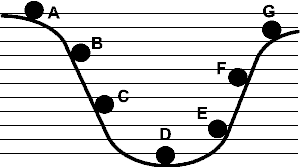
What is the Total Mechanical Energy at point A?
500,000 J
400,000 J
200,000 J
50,000 J
What is the Kinetic Energy at point B?
500,000 J
400,000 J
300,000 J
50,000 J
What is the Kinetic Energy at point C?
500,000 J
400,000 J
300,000 J
50,000 J
What is the Kinetic Energy at point D?
500,000 J
250,000 J
300,000 J
50,000 J
What is the GPE at point E?
500,000 J
250,000 J
300,000 J
100,000 J

What is the Total Energy at the top?
15,000 J
3,750 J
7,500 J
11,250 J
What is the KE 1/2 of the way down?
15,000 J
3,750 J
7,500 J
11,250 J

What is the GPE at the top?
50 J
25 J
0 J
100 J
What is the Total Energy at the bottom?
50 J
25 J
0 J
100 J
When you put on the brakes of a bicycle, friction causes some of the mechanical energy to transfer to thermal energy.
True
False
In every energy transformation, some energy is always “lost” as ____ energy.
Chemical
Radiant
Electrical
Thermal
According to the law of conservation of energy, energy can be created or destroyed.
True
False
According to the law of conservation of energy, the total amount of energy in the universe ____.
remains constant
changes constantly
increases
decreases


W=5000 Joules
t=???

What situation describes the initial (i) and final (f) state shown by the energy bar graph.
A phone falls from a table (i) to the floor (f)
A ball is thrown straight up (i) into the air (f)
A car driving on a flat road (i) accelerates (f)

Which description of motion matches this bar chart?
The driver of a car slows down on a level roadway
A golf ball rolls up a hill and comes to a stop
A skydive falls at constant speed
A girl on a sled starts at rest on a hill then slides down

Which description of motion matches the bar chart?
A driver hits the breaks to slow down to the speed limit
A car is moving along a level roadway at constant speed
A skydiver fall to the ground at constant speed
A baseball player slides into second base and comes to a stop

An energy bar chart is posted above. Which of the following scenarios could represent the cart?
A car driving up at hill at constant velocity
A skydiver falling to the ground at constant velocity after opening their parachute
A ball rolling down a ramp
A car applying their brakes on a level surface and coming to a stop

