wayground logo

Free Printable Worksheets

Font size

S
M
L
XL
Worksheets

Forces and Motion Review

Total questions: 76

Worksheet time: 1hrs 6mins

Name
Class
Date
1.
Which type of force(s) will cause a change in an object's motion?
a)
gravity
b)
zero net force
c)
balanced forces
d)
unbalanced forces
2.
friction is a force that acts 
a)
in the same direction as the motion
b)
opposite to the direction of the motion
c)
opposite to the applied forces
d)
the same direction as the applied force
3.
What Unit do we Measure Force in? 
a)
Newtons
b)
Joules
c)
Force
d)
Don't know
4.
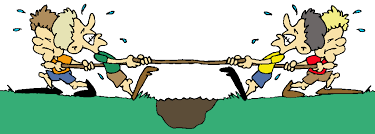
In a tug of war the left team pulls with a force of 200N. The right team pulls with a force of 150N.What is the net force?
a)
50N to the left.
b)
350N to the left.
c)
350N to the right.
d)
50N to the right.
5.
A balanced force has 
a)
no net force
b)
some net force
c)
a wee bit of net force
d)
a lot of net force
6.
Balanced or Unbalanced?
a)
Balanced 
b)
Unbalanced
7.
What happens when two forces act in the same direction?
a)
They cancel each other out.
b)
The stronger one prevails.
c)
Their strengths are added.
d)
Their sum divided by the two is the total force.
8.
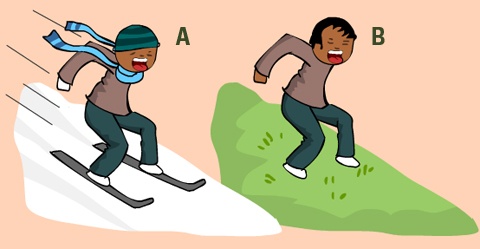
Why is it harder for the boy in Image B to get down the hill?
a)
Motion
b)
Friction
c)
Work
d)
Displacement
9.
A push or pull is referred to as a: 
a)
vector
b)
force
c)
air resistance
10.
When the net force is zero what type of force is acting on the objects? 
a)
balanced force
b)
unbalanced force
11.
What type of force is being illustrated?
a)
balanced force
b)
unbalanced force
12.
What type of force is being illustrated?
a)
balanced force
b)
unbalanced force
13.
What is the net force?
a)
20 N 
b)
0 N 
c)
400 N 
d)
40 N 
14.
What is the net force?
a)
30 N 
b)
25 N 
c)
5 N 
d)
55 N 
15.
If these teams are pulling with the same amount of force what will happen?
a)
The boy in blue will win.
b)
They will not move at all.
c)
The boy in red will win.
d)
Both will fall down.
16.
This is an example of what kind of force?
a)
Balanced Force
b)
Pushing Force
c)
Gravity Force
d)
Unbalanced Force
17.
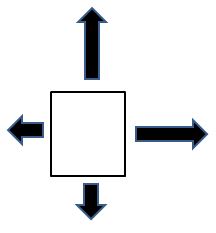
Calculate the net force of the object in the image shown.
a)
20N
b)
35N
c)
5N
d)
25N
18.
Which direction will the object move?
a)
Up
b)
Down
c)
Right
d)
Left
19.
Ted is trying to move a fridge through his house, he gets stuck on a carpet and even though he is pushing the fridge, it is not moving. What force is acting against him?
a)
gravity
b)
friction
c)
air
d)
mass
20.
Balanced or unbalanced?
a)
balanced
b)
unbalanced
21.
Forces have both _________ and direction.
a)
Magnitude
b)
Gravity
c)
Speed
d)
Height
22.

What is the net force for the following scenario. 100 N going left and 25 N going right.

a)

125N

b)

75N

c)

75N left unbalanced

d)

75N left balanced

23.

Calculate the net force for the diagram.

a)

800 N down unbalanced

b)

600N down balanced

c)

400 N down unbalanced

d)

400 N up unbalanced

24.

When two force act in the same direction, how would you calculate the net force?

a)

Subtract the forces

b)

Balance the forces

c)

Add the forces

d)

Divide the forces.

25.

When forces are going in the opposite direction, how do you calculate net force?

a)

Add the forces

b)

Divide the forces

c)

Find a fraction of the forces.

d)

Subtract the forces.

26.
The force that pulls things toward earth.
a)
Speed
b)
Gravity
27.

This object is being pushed on a surface. What direction would it be moving? (pick all that apply):

a)

up

b)

down

c)

left

d)

right

28.

What type of Force is acting upward on the playground equipment?

a)

Force of Tension

b)

Spring Force

c)

Force of Gravity

29.
What is the net force?
a)
5000 N right
b)
4000 N right
c)
40 N left
d)
4000 N left
30.
What is the net force of an object that is not moving?
a)
0N
b)
100N
c)
Upward force
31.
What makes a rolling ball stop moving?
a)
gravity
b)
friction
c)
a balanced force
32.
8 N to the left , and 4 N to the right. Find the net force. Is this balanced 
a)
12 N Right  No
b)
4 N Left  No
c)
12 N Right  Yes
d)
4 N Left  Yes
33.

A 25-N ball is in a lake. If the upward force on the ball due to the water (buoyant force) is 15-N, what is the magnitude (size) of the net force acting on the ball?

a)

0-N

b)

10-N

c)

40-N

d)

50-N

34.

A box has three forces applied to it in the horizontal direction: a 50 N force to the right, a 30 N force to the left & a 20 N force to the right. What is the net force on the box?

a)

40 N to the left

b)

40 N to the right

c)

100 N to the right

d)

100 N to the left

35.
Acceleration of an object happens when things ________
a)
slow down
b)
go faster
c)
change direction (turn)
d)
All of the above
36.
A car traveling 300 miles in 5 hours is an example of _____. 
a)
Speed
b)
Velocity
c)
Acceleration
d)
Direction
37.
1. Which of the following statements about speed and velocity is correct?
a)
Velocity only describes an object’s rate of motion.
b)
Speed describes how an object is changing its velocity.
c)
Speed and velocity both describe how an object is speeding up.
d)
Only velocity includes the direction an object is traveling.
38.
Acceleration describes how an object’s velocity is changing.  Which of the following scenarios provides the best example of an accelerating object?
a)
A car driving at a constant speed
b)
A book sitting on top of a high shelf
c)
A toy train traveling in a circle
d)
A toy boat floating in a bathtub
39.

The geese fly 23 mph to the south when they migrate for the winter. 

a)
speed
b)
velocity
c)
acceleration
40.
The tornado is traveling northwest at 20 mph. 
a)
speed
b)
velocity
c)
acceleration
41.
The Olympian swam 200 meters in 20 seconds. 
a)
speed
b)
velocity
c)
acceleration
42.
Avery likes to walk 30 feet in 10 seconds. What is her speed?
a)
3 feet/sec
b)
6 feet/sec
c)
10 feet/sec
d)
2 feet/sec
43.
How far will a person go if they jog for 2 hours at a speed of 12 km/hr?
a)
6 km
b)
0.5 km
c)
10 km
d)
24 km
44.
A runner races in the 100 meter dash.  It takes her 10 seconds to finish.  What is her average speed?
a)
10 m/s
b)
1000 m/s
c)
100 seconds
d)
10 seconds
45.
Shona cycles at an average speed of 8km/h. How far has she travelled if she cycles for 4 hours?
a)
55km
b)
32km
c)
43km
d)
32miles
46.
How far will a person go if they jog for 2 hours at a speed of 12 km/hr?
a)
6 km
b)
0.5 km
c)
10 km
d)
24 km
47.
Which of the following is a unit for acceleration?
a)
km/s
b)
m/s2
c)
mi/hr
d)
ft
48.
65mi/hr South is an example of...
a)
Speed
b)
Velocity
c)
Acceleration
d)
Direction
49.
Find the velocity of a plane that traveled 3000 miles west in 5 hours.
a)
65 mph west
b)
6 mph west
c)
600 mph west
d)
6000 mph west 
50.

Velocity is different from speed because...

a)

Velocity is distance/time. Speed is displacement/time.

b)

Velocity is speed in a certain direction and can be positive or negative.

c)

Speed is velocity in a certain direction. Both can only be positive.

d)

Velocity is how much speed changes over time.

51.

The image shows two cars with the same speed moving in different directions. What is true about the velocity of the cars?

a)

Each car has the same velocity because the speeds are the same.

b)

Each car has a different velocity because they are going in different directions.

52.

A horse accelerates from a velocity of 0m/s to 20 m/s in 3 seconds. What is the acceleration of the horse?

a)

60 m/s2

b)

6.67 m/s2

c)

0.15 m/s2

d)

30 m/s2

53.

A train decelerates from a velocity of 90 m/s to 80m/s in over 10 seconds. What is the train's acceleration?

a)

-1 m/s2

b)

1 m/s2

c)

10 m/s2

d)

-10 m/s2

54.

An elevator moves from rest to 2 m/s over 8 seconds. What is the elevator's acceleration?

a)

16 m/s2

b)

-8 m/s2

c)

0.25 m/s2

d)

2 m/s2

55.
You are riding your bike at 9 km/h. Ten minutes later, your speed is 6 km/h.
a)
Acceleration occurred because speed increased.
b)
Acceleration occurred because speed decreased.
c)
Acceleration occurred because you changed directions.
56.

At what speed would a car have to move in order to travel 20 kilometers in 2 hours.

a)

5 km/hr

b)

10 km/hr

c)

20 km/hr

d)

40 km/hr

57.
When you know both the speed and direction of an object's motion, you know the
a)
average speed of the object
b)
acceleration of the object
c)
distance the object has traveled
d)
velocity of the object
58.
A car accelerates from a standstill to 70 m/s in 10 seconds.  What is the acceleration?
a)
0.7m/s2
b)
7m/s2
c)
14m/s2
d)
none of the above
59.
What is the velocity of an object that travels 20 meters in 4 seconds North?
a)
80 m/s North
b)
5 m/s
c)
5 m/s North
d)
24 m/s
60.

How do you find the net force of this image.

a)

Add up all the arrows

b)

Add a green arrow and the orange arrow.

c)

Subtract all the arrows.

d)

Add the green arrows and subtract the orange arrow.

61.

Dave runs a 400 m race with a speed of 4 m/s. What time will it take him to finish the race?

a)

400 minutes

b)

100 minutes

c)

100 seconds

d)

.25 seconds

62.
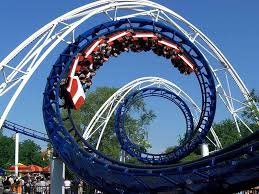
A roller coasters accelerates from an initial velocity of of 6.0 m/s to a final velocity of 70 m/s over 4 seconds.  What's the acceleration?
a)
24 m/s2
b)
18 m/s2
c)
16 m/s2
d)
16 m/s
63.
A magician pulls a tablecloth out from under dishes and glasses on a table without disturbing them.
a)
Newton's 1st Law
b)
Newton's 2nd Law
c)
Newton's 3rd Law
d)
None of them
64.
A person’s body is thrown outward as a car rounds a curve on a highway.
a)
Newton's 1st Law
b)
Newton's 2nd Law
c)
Newton's 3rd Law
d)
None of them
65.
Rockets are launched into space using jet propulsion where exhaust accelerates out from the rocket and the rocket accelerates in an opposite direction.
a)
Newton's 1st Law
b)
Newton's 2nd Law
c)
Newton's 3rd Law
d)
None of them
66.
A picture is hanging on a wall and does not move.
a)
Newton's 1st Law
b)
Newton's 2nd Law
c)
Newton's 3rd Law
d)
None of them
67.
A person not wearing a seatbelt flies through a car window when someone slams on the breaks because the person’s body wants to remain in continuous motion even when the car stops.
a)
Newton's 1st Law
b)
Newton's 2nd Law
c)
Newton's 3rd Law
d)
None of them
68.
Pushing a child on a swing is easier than pushing an adult on the same swing, because the adult has more inertia.
a)
Newton's 1st Law
b)
Newton's 2nd Law
c)
Newton's 3rd Law
d)
None of them
69.
Acceleration is produced when a force acts on a mass. The greater the mass (of the object being accelerated) the greater the amount of force needed (to accelerate the object).
a)
Newton's 1st Law
b)
Newton's 2nd Law
c)
Newton's 3rd Law
d)
None of them
70.
An object at rest will remain at rest unless acted on by an unbalanced force. An object in motion continues in motion with the same speed and in the same direction unless acted upon by an unbalanced force.
a)
Newton's 1st Law
b)
Newton's 2nd Law
c)
Newton's 3rd Law
d)
None of them
71.
A soccer ball accelerates more than a bowling ball when thrown with the same force.
a)
Newton's 1st Law
b)
Newton's 2nd Law
c)
Newton's 3rd Law
d)
None of them
72.
A student leaves a pencil on a desk and the pencil stays in the same spot until another student picks it up.
a)
Newton's 1st Law
b)
Newton's 2nd Law
c)
Newton's 3rd Law
d)
None of them
73.
Two students are in a baseball game. The first student hits a ball very hard and it has a greater acceleration than the second student who bunts the ball lightly.
a)
Newton's 1st Law
b)
Newton's 2nd Law
c)
Newton's 3rd Law
d)
None of them
74.
For every action there is an equal and opposite reaction.
a)
Newton's 1st Law
b)
Newton's 2nd Law
c)
Newton's 3rd Law
d)
None of them
75.
The swimmer moves her hand down and to the left and her body goes forward to the right.
a)
Newton's 1st Law
b)
Newton's 2nd Law
c)
Newton's 3rd Law
76.
A rocket is sent into space.  When the power dies out, the rocket will just keep floating and moving in space forever (unless an unbalanced force, such as a meteor, runs into it).
a)
Newton's 1st Law
b)
Newton's 2nd Law
c)
Newton's 3rd Law
d)
None of them