Wayground logo

Free Printable Worksheets

Font size

S
M
L
XL
Worksheets

Genetics Study Guide

Total questions: 64

Worksheet time: 1hrs 19mins

Name
Class
Date
1.

The process responsible for creating sex cells are gametes called sperm and egg.

a)

Meiosis

b)

Mitosis

c)

Metaphase I

d)

Photosynthesis

2.
What type of cells does meiosis produce? 
a)
2 Genetically identical cells
b)
2 Genetically different cells
c)
4 genetically identical cells
d)
4 genetically different cells
3.
The female sex cell is called
a)
zygote
b)
sperm
c)
fertilization
d)
egg
4.
The male sex cell is called
a)
egg
b)
zygote
c)
sperm
d)
mitosis
5.
The union of egg and sperm to form a new offspring is
a)
zygote
b)
fertilization
c)
homologous pairing
d)
meiosis
6.
A fertilized egg is called
a)
egg
b)
lettuce
c)
zygote
d)
sperm
7.
Which structure is labeled as A in the diagram?
a)
Centromere
b)
Chromosome
c)
Sister chromatids
8.
Which structure is labeled as B in the diagram?
a)
Centromere
b)
Chromosome
c)
Sister chromatids
9.
Which structure is labeled as C in the diagram?
a)
Centromere
b)
Chromosome
c)
Sister chromatids
10.

What phase is in the picture?

a)

Prophase 1

b)

Prophase 2

c)

Telophase 2

11.

What phase is the picture showing?

a)

Metaphase I

b)

Metaphase II

c)

Prophase II

d)

Anaphase I

12.

CROSSING OVER TAKES PLACE DURING

a)

PROPHASE II

b)

PROPHASE I

c)

INTERPHASE

d)

METAPHASE I

13.

CROSSING OVER INCREASES

a)

LIFE SPAN

b)

GENETIC VARIATION

c)

THE NUMBER OF OFF-SPRING

d)

ALL ARE TRUE

14.

What phase of Meiosis is the picture showing?

a)

Metaphase I

b)

Telophase I

c)

Anaphase II

d)

Telophase II

15.

What phase is shown in the picture?

a)

Prophase I

b)

Prophase II

c)

Telophase II

d)

Anaphase I

16.
Identify the phase.
a)
Metaphase I
b)
Metaphase II
c)
Anaphase I
d)
Anaphase II
17.
Identify the phase.
a)
Telophase I
b)
Telophase II
c)
Metaphase I
d)
Metaphase II
18.

A 2n cell of a bat has 44 chromosomes, how many chromosomes will you find in one of his gametes

a)

23

b)

22

c)

44

d)

88

19.

A photograph or picture of chromosomes grouped in ordered pairs is a ______________

a)

pedigree

b)

Punnett Square

c)

Venn Diagram

d)

Karyotype

20.

A normal human zygote should have _____ chromosomes inside.

a)

46

b)

23

c)

92

d)

64

21.

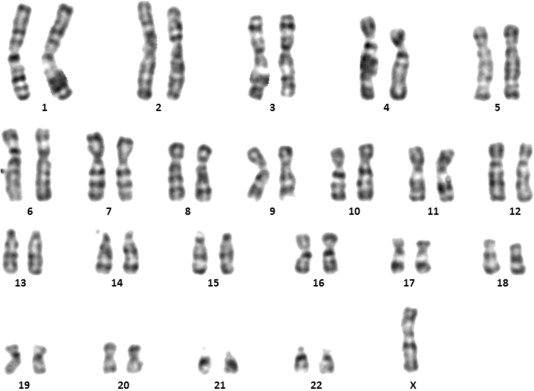
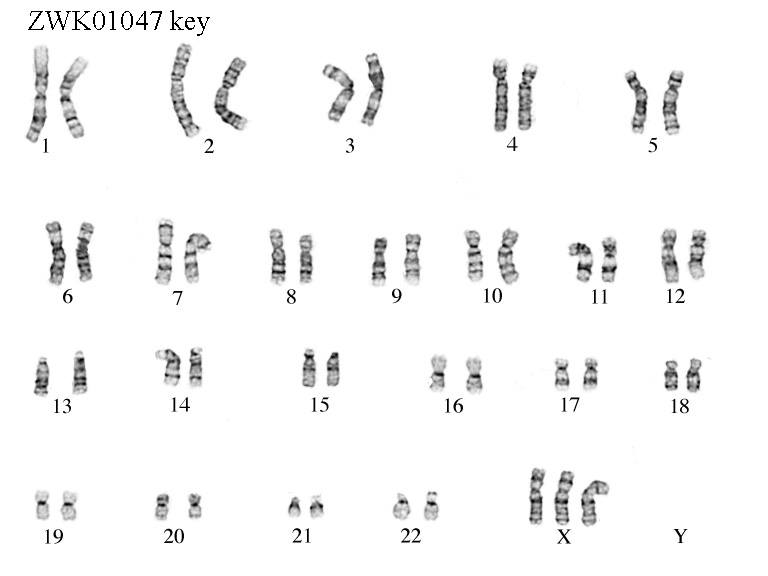
By looking at the chromosomes how can you tell that this person is biologically female?

a)

Because there are two X chromosomes

b)

Because there are more chromosomes than in a male
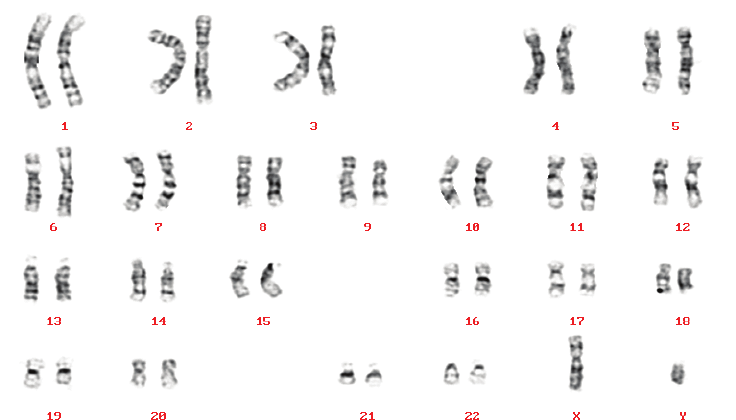
22.

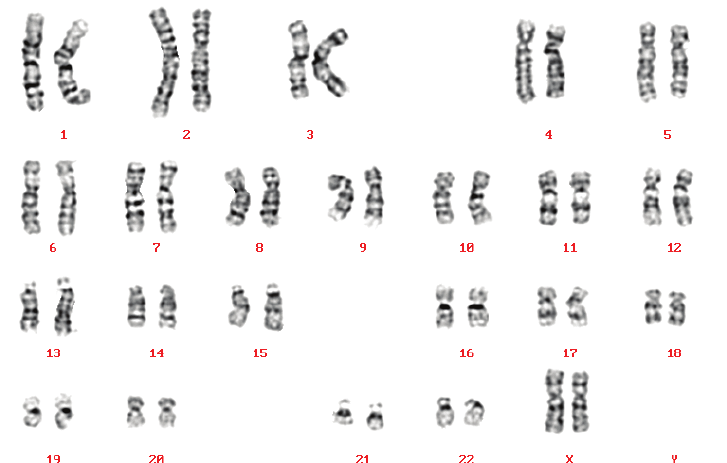
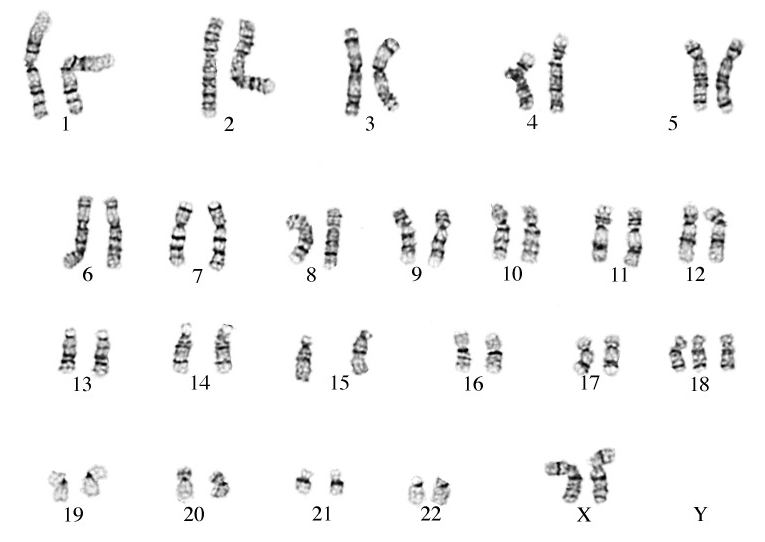
By looking at the chromosomes is this individual biologically male or female? How do you know?

a)

Female, because they have two X chromosomes

b)

Male, because they have one X and one Y chromosome
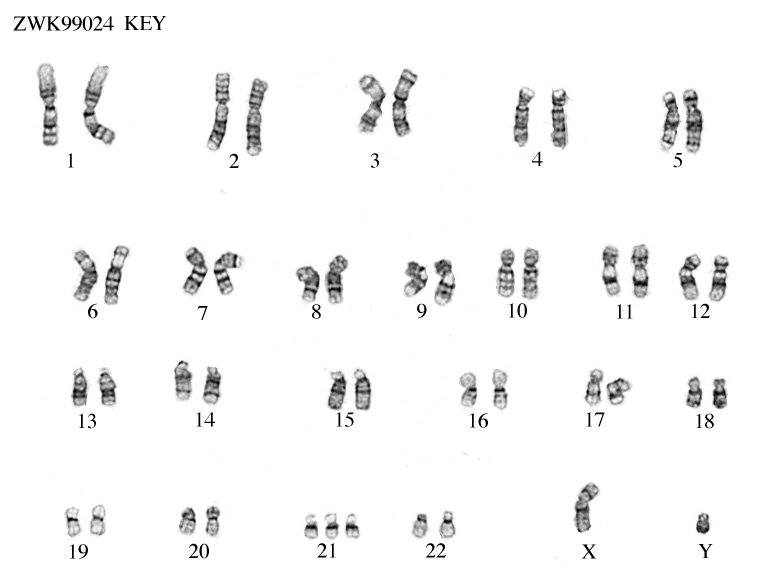
23.

What is the mutation in this persons chromosomes?

a)

There is only one X

b)

7 is shaped like a hockey stick

c)

There's an extra 21

d)

1 is too curved

24.

This is called Turners syndrome, can you notice the mutation in the chromosomes?

a)

Both chromosomes 1 are bent

b)

There are too many chromosomes

c)

There are too many of chromosome 3

d)

There is no Y chromosome

25.

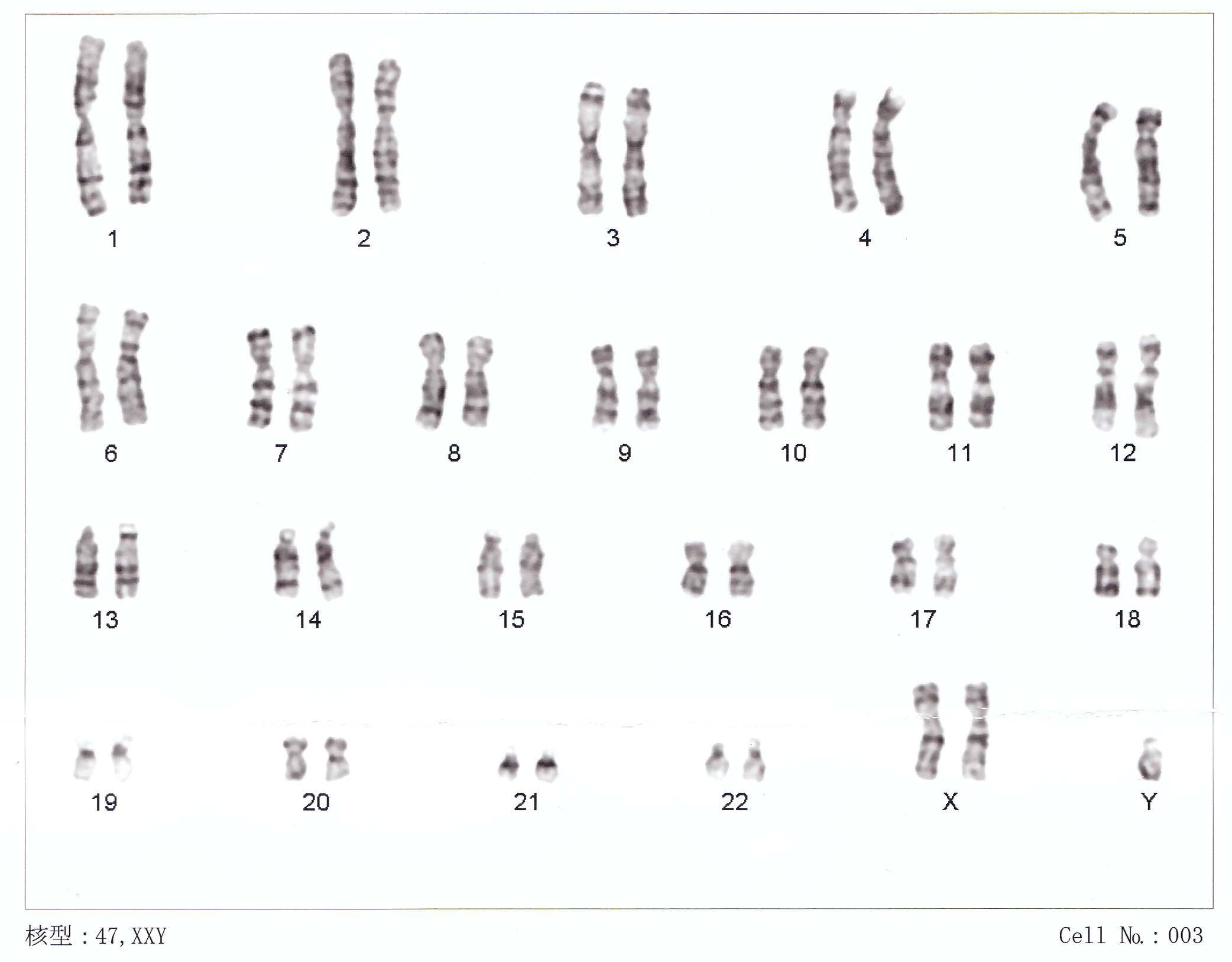
These are the chromosomes of someone with Kleinfelters syndrome. What is different about their chromosomes?

a)

There is only one Y chromosome

b)

One of the 5th chromosomes is too curved

c)

There is an extra X chromosome

d)

There are too few chromosomes

26.

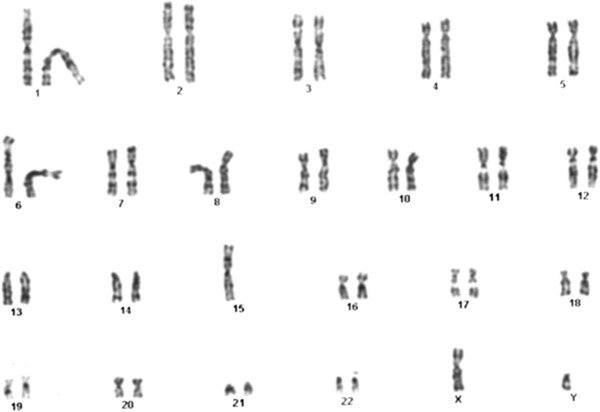
This person has Angel Mans syndrome. What is different about their chromosomes?

a)

Chromosome 1 is misshapen

b)

Chromosomes 21 is too small

c)

They are missing one of chromosome 15

d)

Chromosomes 7 and 8 look weird

27.

Based on the karyotype, can you guess the name of this genetic disorder?

a)

Curvy 3

b)

Jacob's syndrome

c)

Triple X

d)

Superwoman syndrome

28.

This is known as Edwards Syndrome, can you identify the chromosomal mutation?

a)

Chromosomes 1 and 2 are bent

b)

There is no Y chromosome

c)

This persons chromosomes are normal

d)

There are 3 of chromosomes 18

29.

A segment of DNA that codes for a trait

a)

gene

b)

centromere

c)

chromosome

d)

chromatid

30.

an observable characteristic

a)

trait

b)

personality

c)

cell

d)

DNA

31.

A version or variation of a gene

a)

trait

b)

gene

c)

allele

d)

DNA

32.

The alleles that an organism has/inherits are its

a)

genotype

b)

phenotype

c)

chromosome

d)

recessive

33.

The observable expression of a trait is its

a)

phenotype

b)

genotype

c)

chromosome

d)

allele

34.

When an organism has two of the same alleles, it is called

a)

homozygous

b)

heterozygous

c)

recessive

d)

dominant

35.

When an organism has two different alleles, it is called

a)

homozygous

b)

heterozygous

c)

recessive

d)

dominant

36.
Dominant alleles are represented by a:
a)
Male gene
b)
lowercase letter
c)
recessive trait
d)
capital letter
37.
Which of the following genotypes is homozygous dominant?
a)
A
b)
Aa
c)
AA
d)
aa
38.
Which of the following genotypes is heterozygous?
a)
Bb
b)
BB
c)
bb
d)
B
39.
Which of the following is homozygous recessive?
a)
Tt
b)
tt
c)
TT
d)
T
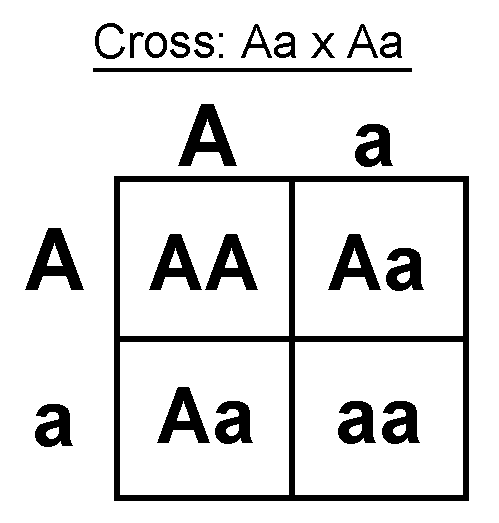
40.

Each one of the boxes on the Punnett square represents what probability of an offspring's genotype?

a)

25%

b)

1%

c)

10%

d)

0%

41.

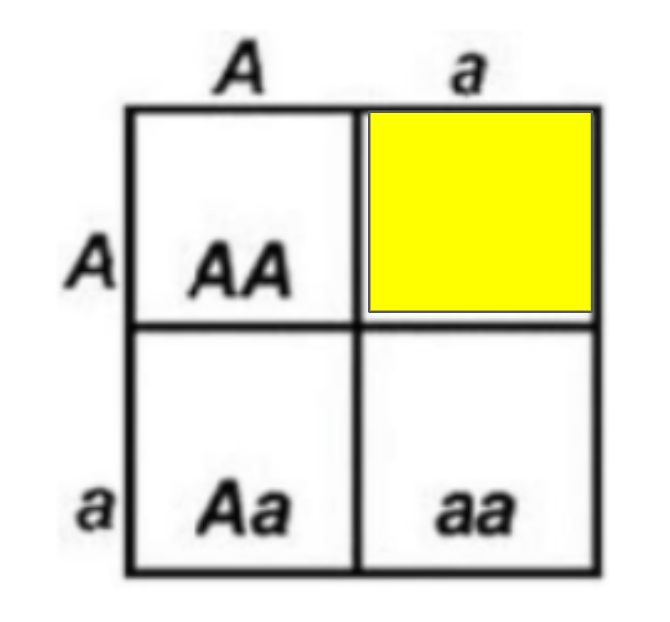
Fill in the Yellow Box

a)

AA

b)

Aa

c)

aa

42.

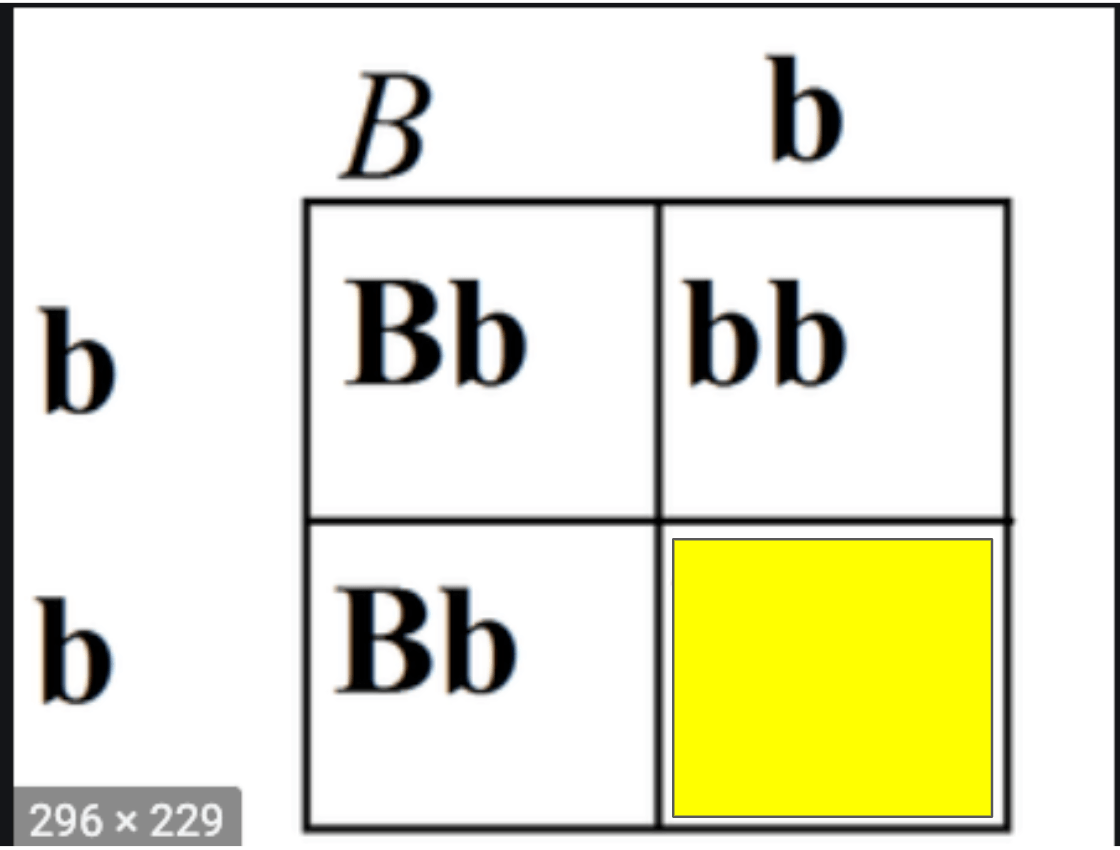
Fill in the Yellow Box

a)

Bb

b)

BB

c)

bb

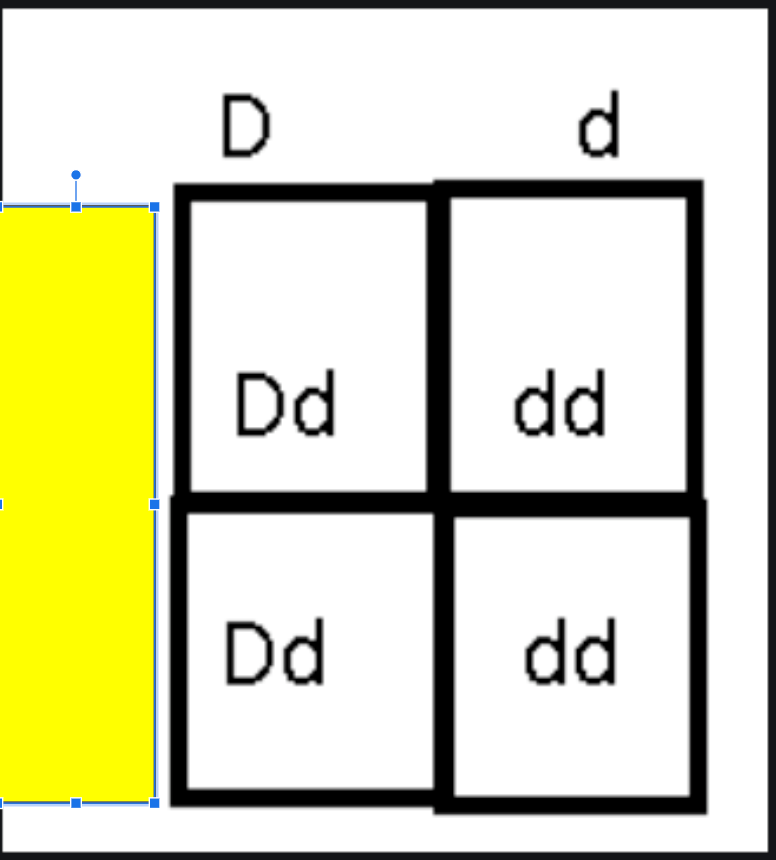
43.

What is the mother's genotype?

a)

DD

b)

Dd

c)

dd

44.
What is the probability of heterozygous offspring?
a)
25%
b)
50%
c)
0%
d)
100%
45.
What is the phenotype of the offspring? (A-Brown hair; a-blond hair) 
a)
50 % Brown Hair and 50% Blond Hair 
b)
25 % Brown Hair and 75% Blond Hair 
c)
75 % Brown Hair and 25% Blond Hair 
d)
0% Brown Hair and 100% Blond Hair 
46.
A heterozygous long-tusked elephant is crossed with a homozygous recessive short-tusked elephant. What is the probability of the offspring having short tusks?
a)
0%
b)
25%
c)
50%
d)
75%
47.
parent 1: GgBB
parent 2: ggBb
Find the gametes for parent 1.
a)
GB, GB, gB, gB
b)
gB, gb, gB, gb
c)
Gg, BB, GB, GB
d)
gg, Bb, gB, gb
48.

What goes in box 3

a)

Aabb

b)

AABB

c)

AAbb

d)

aaBb

49.
Based off this punnett square, what fraction of the offspring will have wrinkled, yellow seeds?
a)
9/16
b)
3/16
c)
1/16
d)
16/16
50.

When one allele is not dominant over another, resulting in a blended phenotype for heterozygous offspring is considered....

a)

Incomplete Dominance

b)

Codominance

51.

When one allele is not dominant over the other, resulting in both traits expressed in a heterozygous individual.....

a)

Incomplete Dominance

b)

Codominance

52.
This is an example of ___________?
a)
Incomplete dominance
b)
Co-Dominance
53.
This is an example of ___________.
a)
 Incomplete Dominance
b)
 Codominance
54.
Which of the following genotypes belongs in the red box in the Punnett square?
a)
XBXb
b)
XbXb
c)
XbY
d)
XBY
55.
What percentage of the female offspring will be a carrier for this recessive disease?
a)
0%
b)
50%
c)
100%
d)
25%
56.
Hemophilia is a recessive x-linked disorder.
Which genotype represents a male with hemophilia?
a)
XHXh
b)
XhXh
c)
XHY
d)
XhY
57.
Hemophilia is a recessive x-linked disorder.
Which genotype represents a female who is a carrier for hemophilia?
a)
XHXh
b)
XhXh
c)
XHXH
d)
XhY
58.
Hemophilia is a sex-linked recessive disorder. A woman with hemophilia marries an unaffected man whose father had hemophilia. What percentage of their daughters will have hemophilia?
a)
0%
b)
25%
c)
50%
d)
100%
59.
What does a filled in square represent?
a)
Not affected Female
b)
Not affected Male
c)
Affected Male
d)
Affected Female
60.
What does an open circle represent?
a)
Not Affected Male
b)
Not Affected Female
c)
Affected Male
d)
Affected Female
61.
What do half colored symbols represent?
a)
The individual is a carrier (heterozygous).
b)
The individual expresses the trait.
c)
The individual has both recessive alleles.
d)
The individual has both dominant alleles.
62.
How many females are in this pedigree?
a)
3
b)
4
c)
6
d)
7
63.
What would the genotype be for the blonde son in generation 2?
a)
BB
b)
Bb
c)
bb
d)
Not enough information 
64.
If the affected female in generation 3 mates with an affected male. What will be their offspring's genotype? 
a)
100% Hybrid/Pure 
b)
100% Homozygous Dominant 
c)
100% Homozygous Recessive 
d)
100% Heterozygous