
 Worksheets
Covalent Bonding Review
Total questions: 49
Worksheet time: 54mins

When you have H-Cl, what is the polarity?
nonpolar
polar
ionic

When you have Li-O, what is the polarity?
nonpolar
polar
ionic
When you have F-F, what is the polarity?
nonpolar
polar
ionic
When you have C-H, what is the polarity?
nonpolar
slightly polar
ionic
largely polar
The electrons in a polar covalent bonds are ...
shared equally
shared unequally
transferred
None of the Above
In a polar bond, the electrons gather around...
The atom with the Greatest Electronegativity
The atom with the Lowest Electronegativity
Each atom Equally
None of the Above
A diatomic molecule like O2 is always _____ because electrons are shared _____
nonpolar; unequally
polar; equally
nonpolar; equally
polar; unequally
Why does hexane not dissolve in water?
Hexane is polar and water is nonpolar.
Hexane is nonpolar and water is nonpolar.
Hexane is polar and water is polar.
Hexane is nonpolar and water is polar.

Which molecule contains bonds of GREATER polarity?
H2O
H2Te
H2S
H2Se
Which of the following liquids would mix with water?
Vegetable oil
Maple Syrup
Both
Neither
The ___________ of the soap molecule attracts water while its _______ is attracted to fat and grease.
head; tail
tail; head
center; outside
outside; center
When water molecules stick to other surfaces this is called...
Cohesion
Surfactants
Adhesion
Surface Tension
Methane, CH4, is a gas at room temperature while Octane, C8H18, is a liquid because ________
Methane has more polarity.
Octane has more polarity
Octane has more dispersion.
Methane has more dispersion.
Ethanol C2H5OH takes longer to evaporate than Acetone CH3COCH3.
Ethanol has dispersion while Acetone has dipole-dipole.
Ethanol has hydrogen bonding while Acetone has dipole-dipole.
Ethanol has dipole-dipole while Acetone has hydrogen bonding.
Ethanol has dipole-dipole while Acetone has dispersion.
Water molecules sticking to other water molecules is called...
Cohesion
Adhesion
Surface Tension
Surfactants
Why do water molecules attract one another?
Because of the slightly positive regions and slightly negative regions
Due to the positive regions attracting other positive regions
Due to the negative regions attracting other negative regions
None of the above

What electronegativity trend is shown in this periodic table?
Electronegativity increases as you go up and to the left.
Electronegativity increases as you go down and to the left.
Electronegativity increases as you go up and to the right.
Electronegativity increases as you go down and to the right.

How does this picture demonstrate the sharing of electrons?
two weak atoms sharing equally
two weak atoms sharing unequally
two strong atoms sharing equally
two strong atoms sharing unequally
one strong atom and one weak atom sharing unequally
Soap is "soap" because it attracts ________.
polar and nonpolar substances
only polar substances
only nonpolar substances
no substances
What shape would PH3 have?
Trigonal Planar
Trigonal pyramidal
Bent
Linear

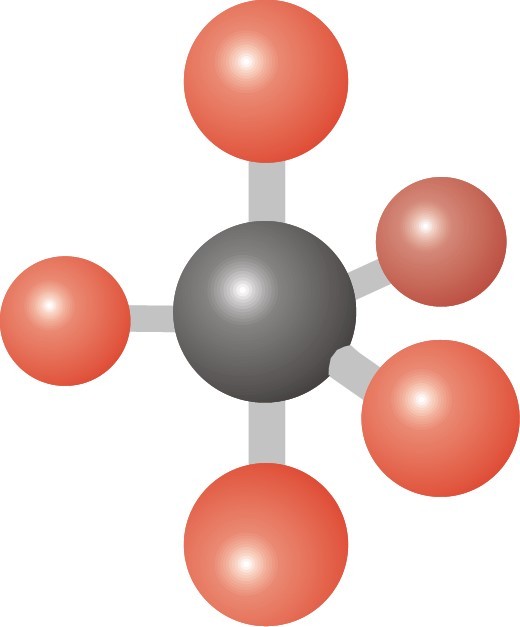
The shape of this molecule is _____
trigonal pyramid
tetrahedral
trigonal bipyramid
seesaw

What geometry will this molecule have?
bent
tetrahedral
linear
trigonal pyramid

What geometry will this molecule have?
linear
bent
trigonal planar
tetrahedral
What is the molecular shape of ICl3?
T Shaped
See Saw
Octahedral
Trigonal Bipyramidal
What is the molecular shape of SeH4 ? (You have to draw this)
T Shaped
See Saw
Octahedral
Trigonal Bipyramidal
In a water molecule, hydrogen is less electronegative than oxygen. What charge will hydrogen have?
negative
partial negative
positive
partial positive
________________________ have the strongest intermolecular forces of attraction.
Dipole- Dipole
Dispersion
Hydrogen Bonding
Rank the boiling points from low to high for: He, Ar, Ne, Kr.
He, Ne, Ar, Kr
Kr, Ar, Ne, He
He, Kr, Ar, Ne
Kr, Ne, Ar, He
Why does sugar dissolve in water?
because sugar is nonpolar and water is polar
because sugar and water are both polar
because sugar and water are both ionic
because sugar is polar and water is nonpolar
Salt will dissolve in oil.
True because salt and oil are both polar
False because salt is ionic and oil is nonpolar
False because salt and oil are both nonpolar
True because salt is ionic and oil is nonpolar
Hydrogen bonding is a type of covalent bond.
True; when H bonds to a N, O or F in a molecule
False; attraction between molecules that have H-O, H-N or H-F
False; only if asymmetric
False; only if symmetric

This molecule has ______ bond and is a ______ molecule.
polar, nonpolar
nonpolar, nonpolar
nonpolar, polar
polar, polar
How does NaCl dissolve in water? (check all that apply)
the Na ion is attracted to the hydrogen in the water molecule
the Cl ion is attracted to the hydrogen in the water molecule
the Na ion is attracted to the oxygen in the water molecule
the Cl ion is attracted to the oxygen in the water molecule
The ___________ of the soap molecule attracts water while its _______ is attracted to fat and grease.
head; tail
tail; head
center; outside
outside; center

How does soap affect the surface tension of water?
Soap increases surface tension, so more soapy drops fit on the penny than drops of regular tap water.
Soap decreases surface tension, so more soapy drops fit on the penny than drops of regular tap water.
Soap increases surface tension, so fewer soapy drops fit on the penny than drops of regular tap water.
Soap decreases surface tension, so fewer soapy drops fit on the penny than drops of regular tap water.
Surface tension is best described as
the ability of water molecules to stick to surfaces.
an unequal sharing of electrons between the oxygen and one hydrogen of a water molecule.
the ability of water molecules to dissolve many different chemical compounds.
a strong attraction between water molecules at the water’s surface.


The molecule contains _____ bonds and is ____________.
polar; asymmetric
nonpolar; asymmetric
polar; symmetric
nonpolar; symmetric
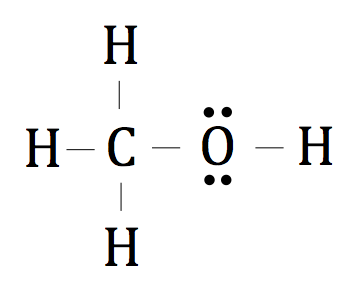
Is the following molecule polar or nonpolar?
polar
nonpolar

