
 Worksheets
Day/Night and Moon Phases
Total questions: 42
Worksheet time: 48mins
Name
Class
Date
1.
The spinning of an object on its axis is called______
a)
orbit
b)
rotation
c)
revolution
d)
tide
2.
Day and night is caused by the _____________ of earth on its axis.
a)
revolution
b)
orbit
c)
rotation
3.
The earth orbits around...
a)
the sun.
b)
the moon
c)
other planets
d)
the Milky Way
4.
What are the reasons for the seasons?
a)
Earth's tilt and rotation.
b)
Earth's rotation and revolution.
c)
Earth's tilt and revolution.
d)
Earth's tilt and resolution
5.

When the Northern Hemisphere of Earth is Leaning away from the Sun, What season is the Southern Hemisphere experiencing?
a)
Summer
b)
Winter
c)
Spring
d)
Fall
6.
How long does it take the Earth to make one REVOLUTION around the Sun?
a)
12 hours
b)
24 hours
c)
365 days
d)
29.5 days
7.

What season is letter A?
a)
Winter
b)
Summer
c)
Spring
d)
Fall
8.

What is letter B's Equinox date?
a)
June 21
b)
December 21
c)
March 21
d)
September 21
9.
What season is March 21st?
a)
Spring
b)
Fall
c)
Summer
d)
Winter
10.
When the Northern Hemisphere is pointing towards the sun, what season is the Southern Hemisphere?
a)
Winter
b)
Spring
c)
Fall
d)
Summer
11.

In the summer many people enjoy going to the beach. There is a beautiful beach in Argentina, which is located in the Southern Hemisphere. Which diagram shows the position of Earth when it is summer in Argentina?
a)
A
b)
B
c)
C
d)
D
12.
4. The Earth revolves in a ________________________direction around the Sun to create ___________________.
a)
clockwise
seasons
seasons
b)
clockwise
moon phases
moon phases
c)
counterclockwise
day & night
day & night
d)
counterclockwise
seasons
seasons
13.
What would happen if the world started to rotate faster?
a)
Seasons would last longer
b)
Days would be longer
c)
Days would be shorter
d)
Seasons would be shorter
14.
The hemisphere where you live
a)
northern
b)
southern
15.

How does the tilt of the Earth’s axis affect the angle of the Sun’s rays hitting the Earth?
a)
Angle is more direct in summer (more up & down)
b)
Angle is less direct in summer (more slanted)
16.

Which answer correctly labels each letter as day and night?
a)
X = night
Y = day
Y = day
b)
X = day
Y = night
Y = night
17.

What time of day is it at point A?
a)
day
b)
night
18.
Phases of the moon in which the moon appears to be getting larger are referred to as _.
a)
waxing
b)
waning
c)
new
d)
eclipse
19.

What Moon phase is this?
a)
Waxing Crescent
b)
Waning Gibbous
c)
Waning Crescent
d)
Waxing Gibbous
20.

What Moon phase is this?
a)
Full Moon
b)
Waxing Gibbous
c)
New Moon
d)
Half Moon
21.

What Moon phase is this?
a)
Old Moon
b)
Far Side of the Moon
c)
New Moon
d)
Waxing Gibbous
22.

What phase comes AFTER this one?
a)
Waning Crescent
b)
Waning Gibbous
c)
Waxing Crescent
d)
Third Quarter
23.

Which of the following is most responsible for the changing of seasons on Earth?
a)
Orbit of the Earth around the Sun
b)
Tilt of the axis of Earth
c)
Rotation of the Sun
d)
Rotation of the Earth
24.

The Moon orbits Earth in a ________________ direction
a)
clockwise
b)
counterclockwise
c)
upwards
d)
downwards
25.

If Katherine wanted to represent a solar eclipse, at what position should she place the Moon?
a)
A
b)
B
c)
C
d)
D
26.
Which type of eclipse occurs when the Moon comes directly between Earth and the Sun?
a)
Lunar eclipse
b)
Solar eclipse
27.
What is illuminating the Moon?
a)
Nuclear Fusion
b)
Sunlight
c)
Mirrors
d)
Flood Lights
28.
A solar eclipse only happens during a ________ moon.
a)
New
b)
Cresent
c)
Gibbous
d)
Full
29.

Name the eclipse.
a)
solar eclipse
b)
lunar eclipse
30.
A lunar eclipse only occurs during which moon phase?
a)
New Moon
b)
3rd Quarter
c)
Full Moon
d)
1st Quarter
31.
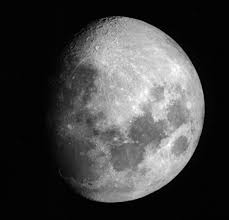
Name the moon phase
a)
waning crescent
b)
waxing crescent
c)
waning gibbous
d)
waxing gibbous
32.
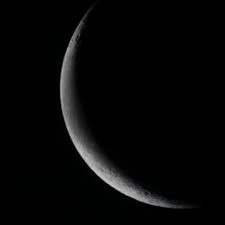
Name the moon phase
a)
waning crescent
b)
waxing crescent
c)
waning gibbous
d)
waxing gibbous
33.

Name the moon phase
a)
waning crescent
b)
waxing crescent
c)
waning gibbous
d)
waxing gibbous
34.

Name the moon phase
a)
waning crescent
b)
waxing crescent
c)
waning gibbous
d)
waxing gibbous
35.
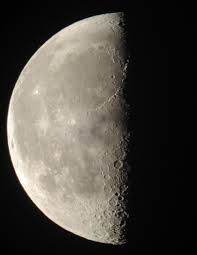
Name the moon phase
a)
First Quarter
b)
Last Quarter or (third quarter)
c)
New Moon
d)
Full Moon
36.
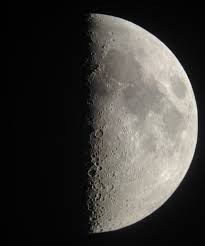
Name the moon phase
a)
First Quarter
b)
Last Quarter
c)
New Moon
d)
Full Moon
37.
How much of the moon is always lit?
a)
can't tell
b)
always changes
c)
half
d)
3/4
38.

What moon phase came right BEFORE this one?
a)
First Quarter
b)
Last Quarter
c)
New Moon
d)
Full Moon
39.
What is the difference between a gibbous moon and a crescent moon?
a)
The gibbous shows more than half of the bright side of the moon.
b)
The crescent shows more than half of the bright side of the moon.
c)
The gibbous shows less than half of the bright side of the moon.
40.
How many phases does the moon go through?
a)
4
b)
8
c)
10
d)
16
41.
As the moon's shape appears to get smaller, we say that the moon is _.
a)
swelling
b)
waxing
c)
waning
d)
disappearing
42.
The cycle of the moon lasts about a _.
a)
day
b)
year
c)
week
d)
month
100 %

