wayground logo

Free Printable Worksheets

NEW

Font size

S
M
L
XL
Worksheets

Forces-Revision

Total questions: 76

Worksheet time: 1hrs 12mins

Name
Class
Date
1.
What force holds the planets in motion around the sun?
a)
Magnetic
b)
Electrical
c)
Gravitational
d)
Air Resistance
2.
All objects in the universe have a gravitational attraction to each other. 
a)
True
b)
False
3.
What force brings the pencil down?
a)
Applied
b)
Magnetic
c)
Normal
d)
Gravitational
4.
What force ultimately slows the roller coaster to a stop?
a)
Applied
b)
Normal
c)
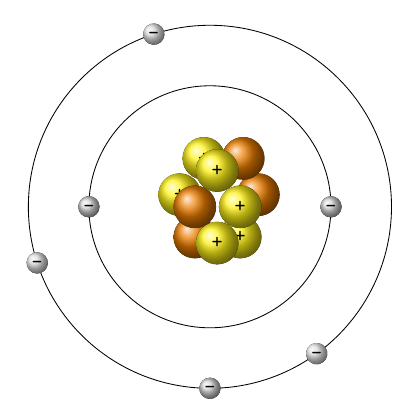
Friction
d)
Magnetic
5.

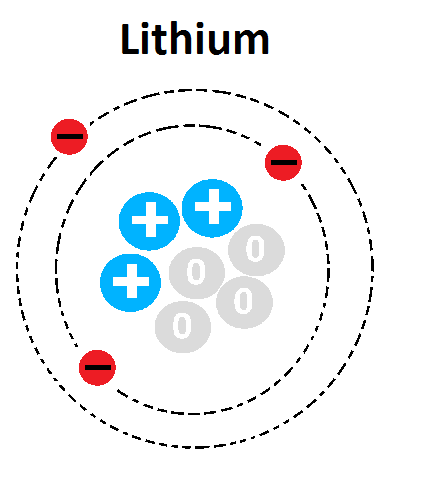
What is defined as a push or pull?

a)

force

b)

motion

c)

vector

d)

speed

6.

If the net force is equal to zero, the forces acting on the object are

a)

balanced

b)

unbalanced

7.

What is it?

a)

Push

b)

Pull

c)

Heavy

d)

Weak

8.

What is it?

a)

Pull

b)

Friction

c)

Push

d)

Heavy

9.

What is it?

a)

Heavy

b)

Light

c)

A magnet

d)

Friction

10.
What is the net force?
a)
10 N
b)
0 N
c)
25 N
d)
1 N
11.
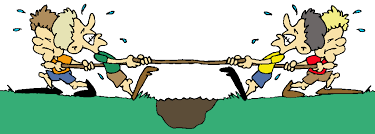
If these teams are pulling with the same amount of force what will happen?
a)
The boy in blue will win.
b)
They will not move at all.
c)
The boy in red will win.
d)
Both will fall down.
12.
Balanced or unbalanced?
a)
balanced
b)
unbalanced
13.
Balanced or Unbalanced?
a)
Balanced 
b)
Unbalanced
14.
What is the net force?
a)
400 N Up
b)
400 N Down
c)
- 400 N Down
d)
800 N Down
15.
What is the name of the units that we measure force in?
a)
Einsteins 
b)
Newtons
c)
Kg
d)
Metres
16.
Which one is balanced?
a)
top
b)
bottom
c)
both
17.

What is the magnitude and direction of the force in the free body diagram shown?

a)

70 N right

b)

70 N left

c)

50 N right

d)

50 N left

18.

What is the magnitude and direction of the force in the free body diagram shown?

a)

20 N, no change in motion

b)

20 N right

c)

20 N left

d)

0 N , no change in motion

19.

Weight is _________.

a)

the quantity of matter in an object.

b)

the measure of an object's inertia.

c)

the force exerted by gravity on an object's mass.

d)

equal to the mass of an object.

20.

Weight is constant.

a)

True

b)

False

21.

Mass is often constant for a given object.

a)

True

b)

False

22.
The scientific unit of weight is
a)
Kg
b)
N
c)
pounds
d)
Kgm/s
23.
The scientific unit for mass is
a)
Kg
b)
N
c)
pounds
d)
ounces
24.
What is the best definition for mass?
a)
how much space an object takes up
b)
how much matter an object contains
25.
Without gravity we would________. 
a)
Float away
b)
Stay in the ground
c)
Nothing would happen.
d)
I don't know
26.
A child has a mass of 30 Kg on Earth. If the gravity on Moon is one sixth that of the Earth what is the mass of the child on Moon? 
a)
30 Kg
b)
180 Kg
c)
5 Kg
d)
0 Kg
27.
If an object mass =30 Kg on the Earth, what would be it's weight on Earth?
a)
30 N
b)
300 kg
c)
3000N
d)
300 N
28.
If the mass of an object is 1000 kg on Earth, what is it's mass on the moon?
a)
10kg
b)
100kg
c)
1000kg
d)
10,000kg
29.
The force that acts in the opposite direction of motion when two surfaces come in contact. 
a)
Force
b)
Friction
c)
Static
d)
Kinetic 
30.

Which of these materials do you predict would have the MOST amount of friction

a)

Metal

b)

Tile

c)

Sand Paper

d)

Denim

31.
When two magnets repel, they ________________
a)
change color
b)
pull together
c)
push apart
d)
get colder
32.
When two magnets attract, they ______________
a)
push apart
b)
change color
c)
get colder
d)
pull together
33.
Two north poles will attract.
a)
True
b)
False
34.
Magnets have a north and a south ___________
a)
shape
b)
color
c)
pole
d)
region
35.
A north pole and a south pole will attract.
a)
True
b)
False
36.
What would we call a nail that can pick up a paperclip because it is touching a magnet?
a)
temporary magnet
b)
poles
c)
force
d)
detector
37.
What will happen when these magnets are brought close together?
a)
They will attract each other.
b)
They will repel each other.
c)
Both magnets will turn to the left
d)
Both magnets will turn to the right
38.
The magnet's shown will
a)
not move
b)
attract
c)
repel
d)
all of the above
39.
What do the lines around this magnet represent?
a)
North Pole
b)
South Pole
c)
Magnetic Declination
d)
Magnetic Field
40.

What causes an object to sink in a water?

a)

if the object's density is less than the water's density.

b)

if the object's density is the same as water's density.

c)

if the object's density is greater than water's density.

d)

if the object's density is zero

41.

Will a paper clip float or sink?

a)

Float

b)

Sink

42.

Subatomic particles with a negative charge

a)

Electrons

b)

Neutrons

c)

Protons

d)

Quarks

43.

Subatomic particles that are neutral in charge

a)

Nucleus 

b)

Electrons

c)

Protons

d)

Neutrons

44.

All matter is made of 

a)

energy 

b)

atoms 

c)

air

d)

chemistry

45.

Where are the Electrons found in the structure of an atom?

a)

In the nucleus

b)

In spaces around the nucleus

46.
Which two subatomic particles make up the nucleus of an atom?
a)
Protons and Electrons
b)
Neutrons and Electrons
c)
Electrons and Protons
d)
Protons and Neutrons
47.
Which subatomic particle has a neutral or no charge?
a)
Proton
b)
Electron
c)
Neutron
48.
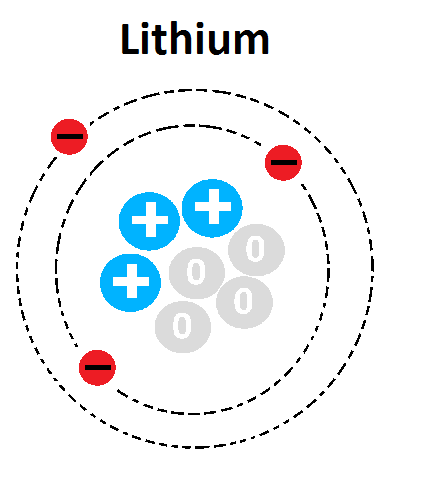
How many electron shells/levels does this atom have?
a)
1
b)
2
c)
3
d)
4
49.
How many protons does this atom have?
a)
3
b)
6
c)
4
d)
2
50.

At what part of the atom is the arrow pointing?

a)

nucleus

b)

energy level

c)

electron

d)

proton

51.

In a neutral atom,

a)

protons = electrons

b)

protons = neutrons

c)

neutrons = electrons

d)

protons = neutrons = electrons

52.
What is the atomic number of this atom?
a)
1
b)
3
c)
4
d)
7
53.

What is the atomic mass of this atom?

a)

1

b)

3

c)

4

d)

7

54.
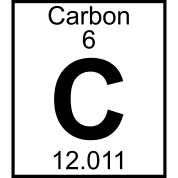
What does the C represent?
a)
atomic mass
b)
atomic number
c)
element name
d)
chemical symbol 
55.
what does the 6 represent?
a)
Atomic mass
b)
atomic number
c)
chemical symbol
d)
element name
56.
In this picture, the Electrons are found in which color?
a)
Blue
b)
Red
c)
Green
57.

What is the Atomic Mass Number of the element mentioned above

a)

12

b)

6

c)

C

d)

16

58.

What charge do protons have?

a)

Positive

b)

Negative

c)

Neutral

59.
WHAT ARE THE 3 MAIN PARTS OF A LEVER?
a)
FOOT, EFFORT, REPORT
b)
FULCRUM, STRUCTURE, EFFORT
c)
FULCRUM, EFFORT, LOAD
60.
A see saw is an example of a:
a)
1st class lever
b)
2nd class lever
c)
3rd class lever
61.
In second class lever, the load is between the fulcrum and _______.
a)
Load
b)
Effort
c)
Stone
62.
What is the fixed point where a lever turns or pivots?
a)
load
b)
work
c)
fulcrum
d)
screw
63.

What type of lever

a)

First Class Lever

b)

Second Class Lever

c)

Third Class Lever

64.

This baseball BAT is demonstrating which type of lever at the shoulder?

a)

1st class

b)

2nd class

c)

3rd class

d)

4th class

65.

How many classes of levers are there?

a)

1

b)

2

c)

3

d)

4

66.

This object is a lever class number ...

a)

1

b)

2

c)

3

d)

No. It is not a lever.

67.

Which of the following is not a first-class lever?

a)
b)
c)
d)
68.
a)
1st Class
b)
2nd Class
c)
3rd Class
d)
It is not a lever
69.

What must a pulley have ?

a)

a rope

b)

wheel

c)

axle

d)

all the above

70.

What is this part of pulley?

a)

Axle

b)

Groove

c)

Rope

d)

Wheel

71.

What is this part of pulley?

a)

Axle

b)

Groove

c)

Rope

d)

Wheel

72.

What is this part of pulley?

a)

Axle

b)

Groove

c)

Rope

d)

Wheel

73.

Identify the type of pulley above.

a)

fixed pulley

b)

movable pulley

c)

compound pulley

74.

This is the example of________.

a)

Fixed Pulley

b)

Moveable Pulley

c)

Compound Pulley.

d)

Lever

75.

This is the example of which pulley?

a)

Lever

b)

Fixed Pulley

c)

Moveable Pulley

d)

Compound Pulley

76.

Scissor is an example of________.

a)

Class 1 lever

b)

Class 2 lever

c)

Class 3 lever

d)

Class 4 lever