wayground logo

Free Printable Worksheets

Font size

S
M
L
XL
Worksheets

Grimm APoW Review

Total questions: 142

Worksheet time: 1hrs 13mins

Name
Class
Date
1.
From the founding of each religion, Christians and Muslims shared a belief in
a)
the principle of separation of church and state
b)
the legal equality of men and women
c)
equality of opportunity
d)
a single omnipotent deity
2.
Which of the following describes a major effect of the Bantu migrations?
a)
The spread of Islam across sub-Saharan Africa
b)
The diffusion of iron metallurgy in sub-Saharan Africa
c)
The introduction of banana cultivation in East Africa
d)
The success of hunter-foraging in sub-Saharan Africa
3.
Inca and Aztec societies were similar in that both
a)
developed from Maya civilization
b)
acquired empires by means of military conquest
c)
independently developed iron technology
d)
depended entirely on oral record keeping
4.
Which of the following was a major similarity among European colonial empires in the Americas in the period 1450–1750 ?
a)
Widespread religious tolerance and diversity
b)
Encouragement of the development of industrial manufacturing in territories
c)
Enslavement of African peoples and subjugation of Amerindians
d)
Settlement of millions of Europeans in each of their colonial territories
5.
Which of the following European developments is most closely associated with the revolution in Haiti?
a)
The Protestant Reformation
b)
The Russian Revolution
c)
The French Revolution
d)
The Industrial Revolution
6.
Before 1450 C.E. which of the following is true of sub-Saharan Africa’s commercial economy?
a)
Phoenicians controlled most long-distance trade in sub-Saharan Africa.
b)
The Mali–Great Zimbabwe trade route dominated.
c)
Sub-Saharan Africa exported gold.
d)
The Sahara Desert prevented sub-Saharan traders from long-distance trade.
7.
Which of the following consequences of the Columbian Exchange most affected Amerindians in the sixteenth century?
a)
Diseases caused pandemics.
b)
Newly introduced crops replaced indigenous American crops.
c)
The influx of African slaves displaced Amerindians.
d)
European livestock disrupted Amerindian agriculture.
8.
Which of the following was a widespread social consequence of industrialization in the 1800s?
a)
A decline in the social status of women
b)
An increase in the power and prestige of the landowning aristocracy
c)
The general leveling of social hierarchies based on wealth
d)
The creation of a wage-earning working class concentrated in urban areas
9.
After the Second World War, countries around the world did which of the following to restore the global economy?
a)
Created the EU to coordinate European economic aid to former colonies.
b)
Developed a common economic aid package for African and Asian states.
c)
Established new financial institutions, such as the World Bank.
d)
Allowed the United Nations to take over failing national economies.
10.
Ho Chi Minh (1890–1969), Jomo Kenyatta (1894–1978), and Kwame Nkrumah (1909–1972), had which of the following in common?
a)
Defense of capitalism
b)
Support for free-trade systems
c)
Rejection of violent revolution
d)
Opposition to colonial rule
11.
North and South American independence movements from 1700-1900 shared which of the following?
a)
Revolutionary demands based on Enlightenment political ideas
b)
Reliance on Christian teachings to define revolutionary demands
c)
Industrial economies that permitted both to break free of European control
d)
Political instability caused by constant warfare among the new states
12.
Which of the following statements is true about both the Mughal and Ottoman empires in the sixteenth century?
a)
In both empires the majority of the people were Muslims.
b)
Both empires had powerful navies that engaged European navies.
c)
Both expanded through using gunpowder weapons and extensive bureaucracies.
d)
Both gave little monetary support to artistic and cultural endeavors.
13.
What was the leading cause of the unprecedented increase in global population in the twentieth century?
a)
The end of international epidemics
b)
Global warming and other types of climate change
c)
The impact of medical innovations and public health measures
d)
The reduction of world hunger
14.
Which of the following represents a nationalistic interpretation of the collapse of the Ottoman and Russian empires?
a)
Military weakness and political instability
b)
The growing demands of various ethnic groups
c)
The slow pace of industrialization
d)
Religious differences between the Russian Empire and the Ottoman Empire
15.
Which of the following was a significant environmental effect of the globalization of the world’s economy?
a)
There was a significant improvement in air and water quality worldwide.
b)
Air and water quality deteriorated in many parts of the developing world.
c)
Emissions of greenhouse gasses that contribute to global warming decreased.
d)
Biodiversity increased in the developed world.
16.
Which of the following accurately describes the Mongol Empire’s role in facilitating trans- Eurasian trade?
a)
It imposed Mongol religious beliefs and practices on conquered peoples.
b)
It reestablished the Silk Roads between East Asia and Europe.
c)
It banned non-Mongol merchants from its territories.
d)
It developed a sophisticated bureaucracy staffed by talented Mongols.
17.
As a result of Bismarck’s Berlin Congress’ plan to partition Africa
a)
Germany controlled a substantial portion of Africa
b)
the United States entered the scramble for Africa
c)
the slave trade with Europe, North America, and South America was halted
d)
only two African nations remained free at the beginning of the 1900s
18.
The Four Noble Truths are associated with
a)
Buddhism
b)
Legalism
c)
Judaism
d)
Islam
19.
The movement to industrialize Russia was most dependent on
a)
emancipating serfs to provide a substantial labor pool for industry
b)
becoming more active in colonizing to obtain raw materials and new markets
c)
importing coal and other fuel sources necessary to build factories
d)
developing a capitalistic system with laissez-faire economic policies
20.
The changes brought about by the Council of Trent did NOT include
a)
outlawing the sale of indulgences
b)
the commissioning of art and architecture
c)
the rejection of predestination
d)
less emphasis on saints in religious ceremonies
21.
In order to hold onto their territory, the Ottomans instituted the Tanzimat Reforms, which included
a)
access to western education
b)
universal suffrage
c)
nationalization of private industries
d)
emancipation of slaves
22.
Both Gandhi and Mao Zedong
a)
agreed on the desirability of effecting change nonviolently
b)
worked to reform the social order in their respective nations
c)
believed change begins at the individual and involve a spiritual element
d)
believed in unity among different religious groups
23.
Rachel Carson’s book Silent Spring increased international awareness of
a)
ethnic cleansing in Bosnia
b)
environmental degradation
c)
gender rights in Africa
d)
drought and famine in Biafra
24.
Marxism found few supporters in the late nineteenth century in Europe because
a)
working conditions in factories improved due to union demands
b)
the middle class gained additional political representation
c)
improvements in farming technology increased crop yields
d)
union organizing was outlawed in a majority of industries
25.
Which of these factors played the greatest role in European interest in South Africa in the late 1800s?
a)
The need for additional sources of African slaves
b)
The desire for new markets for European goods
c)
The discovery of precious metal resources
d)
Political turmoil along northern European trade routes
26.
The encomienda system in Spanish colonies was most similar to
a)
mercantilism
b)
feudalism
c)
a corporate colony
d)
chattel slavery
27.
Which of the following is a true statement about the French Revolution of 1789?
a)
It failed to instill a sense of nationalism in France.
b)
Women gained suffrage as part of the revolution.
c)
The Revolution turned radical with the involvement of the peasants.
d)
It officially ended with the Constitution of 1791.
28.
Which of the following was an impact of the theory of Social Darwinism?
a)
Industrialization led to worker revolts.
b)
Rulers were obligated to protect their citizens.
c)
Europeans justified their domination of colonized people.
d)
Science was viewed as more important than religious belief.
29.
The Chinese Communist Party adapted Marxist communism to
a)
accommodate a large peasant population
b)
allow for capitalistic economic programs
c)
prevent Russian-style education programs
d)
justify imperialistic policies in Japan, Taiwan, and Mongolia
30.
In which of these colonies did a private company have political authority?
a)
India
b)
Brazil
c)
Cuba
d)
Benin
31.
Which of the following is an accurate statement about trends in art and literature after World War I?
a)
Modernism and experimental methods and materials dominated the art world.
b)
New materials and technology revolutionized architecture.
c)
Anxiety/uncertainty in the postwar period influenced literature and art.
d)
Governmental censorship during the war resulted in anti-government writing.
32.
The Christians won the ______ crusade.
a)
First
b)
Second
c)
Third
d)
Fourth
33.
This explorer established a direct trade route with Asia.
a)
Vasco da Gama
b)
Bartholomeu Dias
c)
Henry I
d)
Ferdinand Magellan
34.
This explorer conquered the Azetcs.
a)
Vasco da Gama
b)
Bartholomeu Dias
c)
Hernando Cortes
d)
Francisco Pizzaro
35.
Who invented the printing press?
a)
Thomas More
b)
Niccolo Machiavelli
c)
Johann Gutenberg
d)
Leonardo Da Vinci
36.
This explorer conquered the Incas.
a)
Henry VIII
b)
James I of England
c)
Ferdinand and Isabella
d)
Francisco Pizzaro
37.
Who were the Young Turks?
a)
reformist officers who wanted to preserve Ottoman traditions
b)
young Ottoman soldiers training to become officers
c)
reformist officers wanting to modernize the Ottoman Empire
d)
elite military officers who spied on radicals
38.
What was the purpose of the African National Congress?
a)
To protect native Americans from the racist policies.
b)
To protect native Africans from the racist policies.
c)
To protect native Africans from the religious policies.
d)
To protect British ethnic policy.
39.
Military alliance in Eastern Europe
a)
NATO
b)
United Nations
c)
Warsaw Pact
d)
14 Points
40.
Which of the following was a proxy war?
a)
Chinese Civil War
b)
First Sino-Japanese War
c)
Vietnam War
d)
Korean War
41.
Who led the decolonization of Egypt?
a)
Muburak
b)
Sadat
c)
Nasser
d)
Nehru
42.
India is majority...
a)
Hindu
b)
Muslim
c)
Sikh
d)
Catholic
43.
What was the role of women in Mongol society?
a)
Women were kept at home.
b)
Women were mostly absent from the Mongolian military.
c)
Women were treated nearly as equal to men.
d)
Women were treated as superior to men.
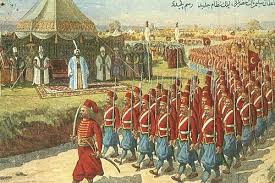
44.
For the Ottomans, Devshirme was a system that
a)
forced all people in their empire to become Muslim
b)
took Christian children as tributes for the army
c)
abolished slavery within the empire
d)
killed people as sacrifices to their gods
45.
Which is NOT a characteristic of fascism?
a)
extreme nationalism
b)
militarism
c)
individual rights
d)
dictatorship
46.
Which country had the largest number of civillian casualties in WWII?
a)
USSR
b)
Germany
c)
Japan
d)
Great Britain
47.
Though often not officially interested in foreign trade, what example below indicates the involvement of the Chinese government in internal trade?
a)
The Great Wall of China
b)
The opening of the civil service exam to all backgrounds
c)
The construction of the Grand Canal
d)
The use of tax money for flood control
48.
What statement best explains the adoption of the Arabic language across North Africa?
a)
The retreat of the Roman Empire allowed people to return to their native language.
b)
The Islamic conquest destroyed the native population living in this region
c)
The Islamic conquest of the region resulted in many conversions to Islam and the adoption of Islamic customs.
d)
The defeat of the Byzantine Empire convinced many inhabitants of the superiority of Arabic culture.
49.
Which of the following leaders first led to a "thaw" in the Soviet Union?
a)
Harry Truman
b)
Winston Churchill
c)
Mikhail Gorbachev
d)
Nikita Khruschev
50.
In which country did the Industrial Revolution begin?
a)
The United States
b)
England
c)
France
d)
Germany
51.
Which 2 natural resources were the backbone of the Industrial Revolution?
a)
wood and peat
b)
oil and natural gas
c)
coal and iron
d)
cotton and tobacco
52.
Which innovation  allowed factories to be built anywhere?
a)
flying shuttle
b)
spinning jenny
c)
cotton gin
d)
steam engine
53.
What product was first made using machines in factories?
a)
Steel
b)
textiles
c)
locomotives
d)
flying shuttles
54.
Which of the following groups would most likely benefit from the socialist ideas of Karl Marx?
a)
Entrepreneurs
b)
Factory Workers
c)
Large Business Corporations
d)
Factory Managers
55.
Which European nation controlled Haiti?
a)
England
b)
France
c)
Italy
d)
Greece
56.
What group was at the top of the Latin American social hierarchy?
a)
Creoles
b)
Mestizos
c)
Peninsulares
d)
Mulattos
57.
The desire of people with the same language, history, and customs for self-rule is known as _____________.
a)
Racism
b)
Nationalism
c)
Militarism
d)
Alliances
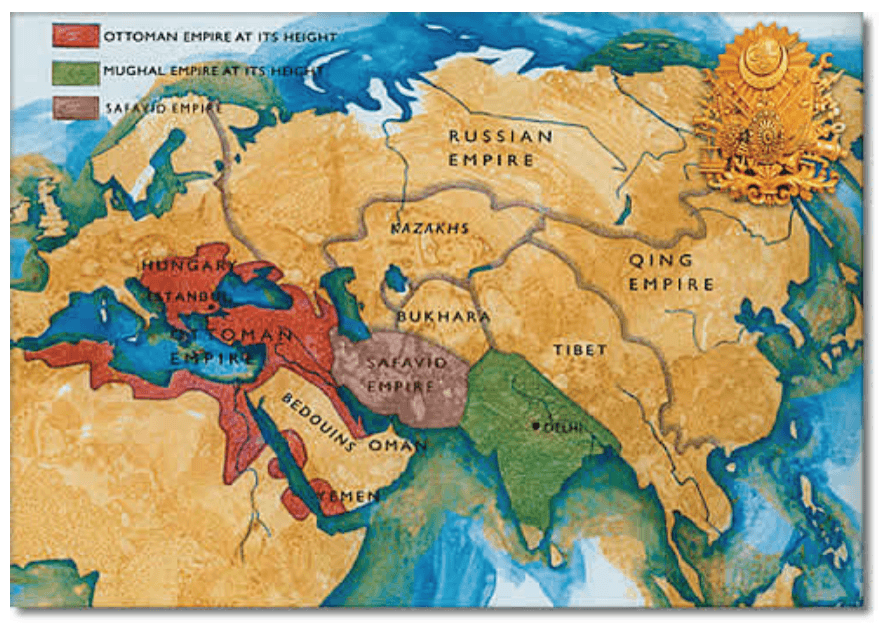
58.

Who ruled at the height of the Safavid Empire?

a)

Genghis Khan

b)

The great Khan

c)

Shan Abbas

d)

Mr. Jurgens

59.

What places did Safavid Empire have by the 16th and 17th century?

a)

Iran, Liberia, Germany, France

b)

USA, Russia

c)

Iran, Iraq, and parts of Turkey and Georgia

d)

Yemen, Liberia, Iraq, Iran

60.
Muslim empires were characterized by all of the following EXCEPT:
a)
New military technology
b)
Strong armies
c)
Cultural diffusion
d)
Democratic governments
61.
Under the Devshirme System, male children of what type of conquered territories were trained and educated so they could fight in Suleyman's army later?
a)
Christian
b)
Jewish
c)
Muslim
d)
Hindu
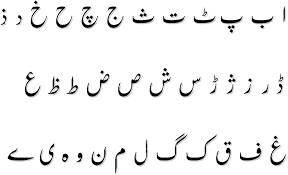
62.
Under Akbar, what new language was developed by soldiers who spoke different languages?
a)
Hindi
b)
Arabic
c)
Cantonese
d)
Urdu
63.
What primarily led to the decline of the Ottoman and Safavid Empires?
a)
massive droughts
b)
incompetent leadership
c)
invading armies
d)
religious wars
64.

What are the Middle Ages?

a)

Golden Age of Islam

b)

1,000 year period after the fall of Rome

c)

500 year period before the present

d)

The last 2,000 years

65.

Which institution survived the fall of Rome?

a)

Christian Church

b)

Knights of the Guild

c)

Roman Government

d)

Weavers Guild

66.

What is serfdom?

a)

Aliens

b)

Political Party

c)

Peasants who were forced to work on a Lord's Land

d)

People taken from their homeland to work as slaves

67.

How would you define manor?

a)

The way in which you complete things

b)

A main part of a noble’s land (may have a large house or castle)

c)

A place of prayer and worship

d)

A group of people with the same occupation

68.

Arguably one of the greatest Byzantine emperors. Ruled from 527 C.E.- 565 C.E.

a)

Theodora

b)

Justin

c)

Justinian

d)

Belisarius

69.
What was the new name given to Byzantine after Constantine moved the capital?
a)
Constantinople
b)
Constantinian
c)
Byzantium
d)
Istanbul
70.
Who helped Justinian in managing the affairs of the empire?
a)
His trusted adviser Tribonian
b)
His beloved nephew Justinian
c)
His wife Theodora
d)
No one helped him?
71.

Which country had the largest sphere of influence in Latin America during the Age of Imperialism?

a)

United States

b)

Spain

c)

Mexico

d)

England

72.

The economic system that prevailed from c. 1750-1900 was

a)

Capitalism

b)

Communism

c)

Socialism

d)

Mercantilism

73.

What was Japan's response to foreign interference in the nineteenth century?

a)

Adapt to Western politics and culture (Meiji Restoration)

b)

Isolate themselves further by resisting and fighting

c)

Became allies with the Chinese to become the dominant power in the region

d)

Adapt to the ideas of the islanders and tribal people to resist

74.

Which of the following was the primary reason that immigrants created ethnic enclaves?

a)

Support and safety

b)

Refusal to assimilate

c)

Difficulty finding work

d)

Segregation by the government

75.

Which of the following descriptions is an accurate change over time in the period c. 1750-1900?

a)

Once the leader in scientific and economic development, China fell behind Europe

b)

Once the leading producer of porcelain, China fell behind India

c)

Once a country that maintained an isolationist policy, China participated in the Scramble of Africa

d)

Once a country that actively sought foreign converts to Buddhism, China became an atheist state

76.

Why did European powers turn to indentured servants for labor?

a)

The abolition of the slave trade

b)

The shift in control in India to the British

c)

The growth of industrialization in China

d)

The success of the Atlantic revolutions

77.

Why did European powers divide Africa by diplomatic agreements between each other?

a)

Fear of going to war because of fierce competition

b)

Rapid population increase in European colonies in Asia

c)

Atlantic revolutions lead Europeans states to seek new troops

d)

Creation of transnational business fostered exchange of raw materials

78.

Select all of the accurate pairings of imperialism in Southeast Asia.

a)

Netherlands: Dutch East Indies

b)

France: Indochina

c)

Great Britain: Philippines

d)

United States: Malaya

79.

Select all of the accurate migration patterns in the time period c. 1750-1900.


*Migration group: reason, destination

a)

British: prisoners, to Australia

b)

Indian: indentured servants, to the Caribbean

c)

Japanese: voluntary laborers, to South America

d)

West Africans: slaves, to North America

e)

Irish: plagued by famine, to Germany

80.

The Increased food production accompanying the introduction of Champa rice into China from Vietnam during the 11th century best illustrates which of the following?

a)

The stimulation of agriculture by technological innovation

b)

The reliance of China on food imports

c)

The importance of Vietnam to the world economy

d)

The influence of China on neighboring societies

81.

Which of the following was a common feature of most Asian and European philosophies between 1000 to 1450?

a)

Emphasis on experimental science

b)

Reliance on ideas of individual freedom

c)

A close association with religion

d)

wide availability through printed books

82.

Which of the following is true of commerce in the Indian Ocean during the time period 1000-1450?

a)

Chinese merchants dominated the trade routes of the Indian Ocean.

b)

Following the rise of the Mongols during the thirteenth century, the volume of Indian Ocean commerce fell sharply.

, Not Selected

c)

There was very little commercial activity in the Indian Ocean.

d)

Indian Ocean commerce flourished and was conducted by a mixture of Asian, Middle Eastern, and East African merchants.

83.

In the period 1000 to 1450, which of the following developments partially resulted from knowledge of Greek science and technology?

a)

Mongol military tactics in Central Asia

b)

Inca bridge design in the Andes

c)

Islamic medical books in Baghdad

d)

Christian theology in the Roman Empire

e)

Japanese temple design in Kyoto

84.

From 1400 to 1750, Eurasian rulers sponsored the arts primarily for which of the following reasons?

a)

To encourage tourism and pilgrimages

b)

To display power and legitimize their rule

c)

To increase employment opportunities for struggling artists

d)

To spend excess money collected in taxes

85.

Which of the following was the most immediate effect of the Portuguese establishment of a school for navigation in the 1400s?

a)

The establishment of direct overseas trade links between India and Europe

b)

The development of overseas trade between West Africa and Europe

c)

The decline of Venetian control of the trade in Asian luxury goods

d)

The establishment of regular trade contacts between Europe and the Americas

86.

Inca and Aztec societies were similar in that both

a)

developed from Mayan civilization

b)

independently developed iron technology

c)

depended entirely on oral record keeping

d)

acquired empires by means of military conquest

87.

Which of the following is an accurate comparison of the political systems in western Europe and China during the time period 1000—1300?

a)

Both societies gradually adopted a representative democratic system.

b)

Developments in the legal systems of China emphasized individual political rights, while western Europe concentrated on maritime law.

c)

Western Europe developed multiple monarchies, while China maintained a single empire.

d)

Both regions experienced Mongol imperial rule.

88.

Judaism, Christianity, and Islam share which of the following?

a)

They share the Talmud and the Gospels as sacred texts.

b)

They are polytheistic religions.

c)

They recognize the existence of Adam and of Moses.

d)

They recognize the divine nature of certain prophets.

89.

Between 200 B.C.E. and 1450 C.E., the Silk Roads linked which of the following?

a)

East Asia and the Mediterranean Sea

b)

The Pacific Ocean and the Caribbean Sea

c)

The Indian Ocean and the Atlantic Ocean

d)

North Africa and western Europe

90.

Which of the following best describes patriarchal gender systems?

a)

Women are not allowed to work.

b)

Women are confined to the home.

c)

Women are inferiors and must be protected by men.

d)

Women can be bought and sold.

91.

Which of the following describes an accurate similarity between the Qing and Russian empires in the eighteenth and nineteenth centuries?

a)

Both relied heavily on maritime trade as a source of material goods.

b)

Both had vast territories with peoples of various ethnicity and languages.

c)

Both successfully resisted pressure from industrialized powers.

d)

Both were heavily influenced by the intellectual work of Jesuit missionaries.

92.

Before 1700, Spain governed its American colonies through a system of

a)

elected presidents

b)

written constitutions

c)

chartered companies

d)

appointed administrators

e)

independent merchants

93.

During the period 1600—1800, the leaders of China, Korea, and Japan all had policies that

a)

regulated interactions with foreigners

b)

opened their countries to European merchants

c)

led to wars involving all of East Asia

d)

encouraged emigration and colonization

e)

promoted trade and expansion

94.

Identify the present-day county that was largely controlled by the Kingdom of Srivijaya

a)

Thailand

b)

Indonesia

c)

Vietnam

d)

Cambodia

95.

Why did the Srivijaya Kingdom disappear?

a)

There was a terrible natural disaster that destroyed the kingdom

b)

The king did not have enough money to maintain the kingdom

c)

The people did not like the king and killed him

d)

They lost to other stronger kingdoms in the region

96.

Why did large numbers of Hindus and Muslims migrate immediately after India gained its independence?

a)

Many jobs were being outsourced overseas.

b)

The government offered housing incentives in newly developed areas.

c)

Religious pilgrimages to neighboring countries were required based on their beliefs.

d)

The subcontinent was divided into countries based primarily on the location of religious majorities.

97.

Which is an accurate statement regarding modern African nations?

a)

Most African nations have rejected membership in the United Nations.

b)

For economic reasons, many African nations have maintained ties with their former colonial powers.

c)

Most African nations are experiencing a decrease in urbanization.

d)

Most African nations are miIitary allies of Russia.

98.

A similarity of the goals of Nelson Mandela and Mohandas Gandhi is that both leaders wanted to

a)

secure political power for the majority of the people

b)

encourage a greater degree of industrialization

c)

improve the economy by expanding governmental control

d)

gain independence from the Soviet Union

99.

One way in which apartheid in South Africa and the caste system in India are similar is that both systems

a)

allowed for educational opportunities

b)

determined roles based on gender

c)

revolved around central religious beliefs

d)

enforced different sets of rules for distinct groups of people

100.

In 1979, the signing of the Camp David accords by Egypt and Israel indicated that

a)

nationalism was no longer a force in Middle Eastern politics

b)

the differences between Shi'ite and Sunni Moslems had been settled

c)

former enemies were able to negotiate

d)

the Soviet Union dominated Middle Eastern affairs

101.

What is the term to describe the movement promoting the establishment of a Jewish homeland?

a)

Judaism

b)

Nationalism

c)

Zionism

d)

Isolationism

102.

Who controlled Israel-Palestine prior to the British?

a)

Romans

b)

Greeks

c)

Egyptians

d)

Ottomans

103.

The creation of a Jewish nation in the Middle East in 1917 was supported by Great Britain in

a)

The Balfour Declaration

b)

The Treaty of Versailles

c)

The League of Nations

d)

The Holocaust

104.

Transportation and Sea Trade between India and the societies to the west were dominated by mariners from

a)

Afghan & Persia

b)

Anatolia

c)

Arabia & Persia

d)

China

105.
Which is true about the Indian Ocean Trade?
1) It spread Buddhism to West Africa
2) It made many cities grow and become rich
3) the traders determined the price of goods
4) it spread Islam to Indonesia
a)
1, 2 and 3 only
b)
1, 3 and 4 only
c)
2, 3 and 4 only
d)
1, 2, 3 and 4
106.
Mali controlled part of the _____________ Routes
a)
Silk Road Trade
b)
Trans-Sahara Trade
c)
Maritime Trade 
107.
Which conclusion can be made regarding the impact of the silk road and the African gold-salt trade?
a)
little is known about the impact of either
b)
both facilitated the spread of trade and ideas 
c)
while they successfully facilitated the rapid growth of intra-continental trade, they failed to promote a sharing of ideas across the different regions they connected.
d)
both stunted the spread of trade and ideas
108.

Which is the most likely reason that rulers during the seventeenth century built elaborate palaces such as the one at Versailles, France, shown above?

a)

To provide jobs for artists, architects, and builders

b)

To demonstrate their wealth and power

c)

To create fortresses as a defense against invading armies

d)

To glorify and demonstrate the power of the official state religion

109.

Which of the following best describes Middle Eastern trade in the period 1000 to 1450 ?

a)

A unified Islamic Empire eliminated all internal tariffs and encouraged trade.

b)

The area was engaged in regular trade with China, India, and sub-Saharan Africa.

c)

The Ottoman Empire drained the resources of the area in the Empire’s war with India.

d)

The area ceased trading with Europe but continued trading with sub-Saharan Africa.

110.

What does a joint-stock company accomplish?

a)

minimizes and spreads financial risk

b)

allows for royal control of companies

c)

invests in the cultivation of lands for animal husbandry

d)

Capital

111.

How did Dutch mariners differ from the Portuguese and Spanish?

a)

They used instantaneous aquatransport in lieu of ships

b)

They were "all about the Benjamins" - they did not worry about seeking converts to Christianity

c)

They successfully converted a majority of the Indonesian population to Christianity

d)

They converted to the Islamic faith which was popular in Indonesia

112.

Each of the following is a reason for the decline of the Portuguese Trading Post Empire EXCEPT

a)

too few ships to enforce control

b)

Arab traders obviated Portuguese control in the Red Sea

c)

Portugal was a small country with fewer men and resources than others

d)

Portuguese citizens revolted at home due to a famine

113.

West Africa empires traded gold for what?

a)

Salt

b)

Chocolate

c)

Ore

d)

Diamonds

114.

All of the following details describes African traditional religions except for:

a)

African religion had a single creator

b)

African religions provided rules to live by

c)

Pilgrimage to Mecca was important to African religions

d)

Traditional religions varied from place to place

115.

Which of the following conquered the declining empire of Ghana and created a new empire?

a)

Mali

b)

Songhai

c)

Axum

d)

Benin

116.

All of the following details describes an impact Islam had on the West African region except for:

a)

Islam replaced importance of griots

b)

Islam influenced laws and architecture

c)

Arabic language spread throughout the region

d)

Timbuktu became a center for Islamic learning

117.

What is pictured here?

a)

the Cube

b)

the Prophet's Mosque

c)

the Qur'an

d)

the Ka'aba

118.

The Umayyad dynasty was replaced by

a)

Abbasid rulers.

b)

Bedouin rulers.

c)

Seljuk Turks.

d)

Sunni rulers.

119.

As the Arab Empire grew, people who were not Muslims or did not convert to Islam in the conquered territories

a)

had to give up all of their property to the empire.

b)

had to pay special taxes.

c)

were banished from those territories.

d)

were imprisoned for at least five years.

120.

Which question separated the Sunnis and Shi'a?

a)

It was wise to expand the empire?

b)

Should non Muslims be able to practice their own religion in Muslim territory?

c)

Should religious pictures of humans be permitted?

d)

Must a caliph be descended from Muhammad?

121.

A majority of Muslims are

a)

Sunni

b)

Shi'a

122.

The term Dar-al-Islam refers to what?

a)

The Abbasid Caliphate

b)

The government as established by Abu Bakr

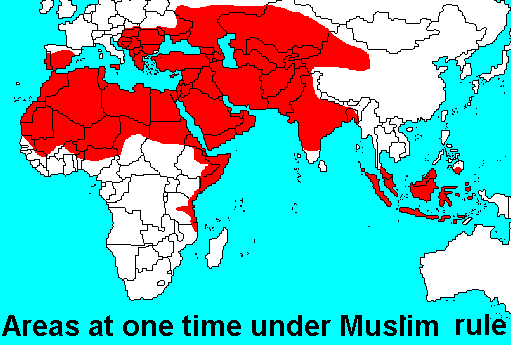
c)

The areas of the world under islamic rule

d)

The sacred text of Islam

123.

Islamic scholars of the Middle Ages advanced which of the following fields of study?

a)

Medical Knowleldge

b)

Algebra

c)

Astronomy

d)

All of the other choices

124.
Which of the following best describes Wu Zhao of the Tang Dynasty?
a)
The Chinese emperor who defeated the Mongols and started the TAng Dynasty
b)
the woman who assassinated the last Sui emperor and thus began the TAng Dynasty
c)
the General who expanded the Tang Dynasty into Western China and Korea
d)
An Empress, she was the only woman to have openly ruled China
125.

Which of the following was an important Chinese invention during the Tang Dynasty?

a)

Woodblock printing

b)

Bronze

c)

Iron casting

d)

Silk

126.
Which of the following is the main reason for the spread of Buddhism:
a)
Conquest
b)
Trade
c)
Migration
d)
None of the above
127.
To become a scholar official
a)
students had to know Buddhism
b)
Students had to be from noble families
c)
students had to make inventions
d)
students had to pass a difficult Confucian test 
128.
Which was NOT an invention from  China?
a)
Compass
b)
Gun powder
c)
Astrolabe
d)
Wood Block Printing
129.
The Chinese invented all of the following except:
a)
Porcelain
b)
Paper
c)
Silk
d)
Number zero
130.
The top religious leader in all of Eastern Orthodox Christianity.
a)
the Pope in Rome
b)
the Patriarch in Constantinople
c)
the Caliph in Baghdad
d)
the Bishop in Milan
131.
Which person was the leader of the Seljuk armies that reclaimed Jerusalem and defeated the Crusaders during the 2nd and 3rd Crusades.
a)
Malik Shah
b)
Justinian
c)
Genghis Khan
d)
Saladin
132.

Under the Abbasid Caliphate, which city became the learning center?

a)

Istanbul

b)

Mecca

c)

Baghdad

d)

Cairo

133.

During this time period, in what country did Christians and Muslims live in relative tolerance and cooperation?

a)

Italy

b)

Turkey

c)

Egypt

d)

Spain

134.
A pastoral nomad (pastoralist) makes a living by
a)
fighting
b)
growing food
c)
trading goods
d)
herding animals
135.
What happened during the Pax Mongolica?
a)
The irrigation systems in the Tigris and Euphrates valleys were rebuilt.
b)
A cure for the bubonic plague was developed in China.
c)
Ideas and inventions spread with trade between Europe and China.
d)
Movable type, gunpowder, and the magnetic compass were invented.
136.
The ________ was highly valued amongst the Mongols.
a)
ability to run
b)
farming techniques
c)
ability to fight
d)
ability to write
137.
Why did the Mongols terrorize people?
a)
To spread fear, thus making them more likely to surrender without a fight
b)
To make them fight for their lives
c)
To make other people talk about them, and write about them in books
d)
They only terrorized people after they conquered them.
138.

What river was the City of Cahokia built on?

a)

Nile

b)

Amazon

c)

Mississippi

139.

What was Cahokia?

a)

A pyramid made of packed earth that rose in three major terraces to a height of one hundred feet.

b)

A mound used to enclose sacred ceremonial spaces in which great crowds would gather.

c)

A large circle of cedar posts that numbered in multiples of twelve, indicating a recognition of the number of lunar months in a year.

d)

A city built by American Indians along the Mississippi River almost a thousand years ago.

140.

Which kingdom is located in South Africa?

a)

Ghana

b)

Kush

c)

Mali

d)

Zimbabwe

141.
Which African kingdom adopted Christianity?
a)
Ghana
b)
Zimbabwe
c)
Axum
d)
Songhai
142.

Where would you find this image

a)

Kush

b)

Zimbabwe

c)

Axum

d)

Ghana