
Font size
 Worksheets
Unit K Section 1 Review
Total questions: 34
Worksheet time: 17mins
The red car rolled 0.5 meters across the table for 2 seconds. The table was 4 meters high. What was the average speed of the red car in m/sec?
0.25 m/sec
2 m/sec
2.25 m/sec
4 m/sec

Describe the motion in the graph:
Constant Speed (positive slope)
Stopped (at rest)
Acceleration (increasing speed)
Return Home (negative slope)

Describe the motion in the graph:
Constant Speed (positive slope)
Stopped (at rest)
Acceleration (increasing speed)
Return Home (negative slope)

Describe the motion in the graph:
Constant Speed (positive slope)
Stopped (at rest)
Acceleration (increasing speed)
Return Home (negative slope)

Describe the motion in the graph:
Constant Speed (positive slope)
Stopped (at rest)
Acceleration (increasing speed)
Return Home (negative slope)

Match the description to the graph:
"The car is slowing down."


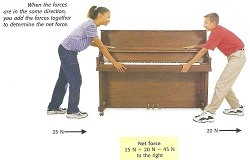
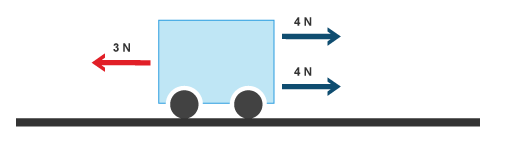
The sum of all of the forces acting on an object is known as the (a) force.
Do directions matter with forces?
(a)
When forces are acting in the same direction they should be added together.
True
False
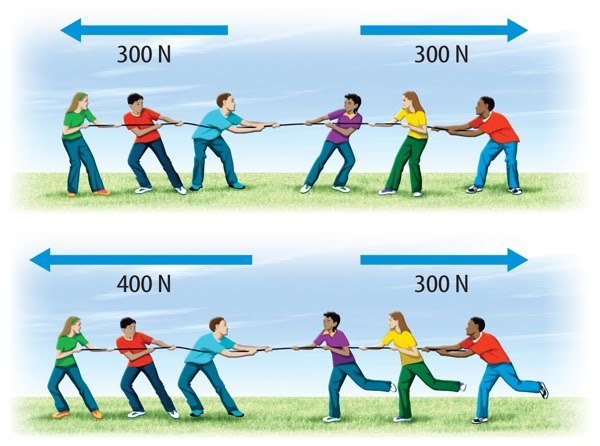
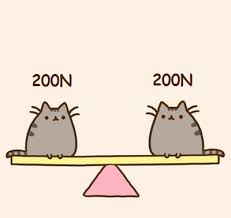
If the net force (Fnet) is 0, _____
the forces are balanced.
the object just keeps doing what it was doing.
the object maintains its same speed and direction.
the object maintains its velocity.
the object does not speed up, slow down, or turn.
If the net force is not 0, _____
the forces are not balanced.
the object changes what it is doing.
the object changes its velocity.
the object accelerates.
True or False: objects that are smooth have LESS friction than objects that are rough
TRUE
FALSE
This force acting on a plane makes it move forward
lift
weight
thrust
drag
Simply, what happens when lift is greater than weight?
plane goes forward
plane goes down
plane goes up
plane slows down

The arrow under the plane represents?
lift
drag
weight
thrust

The arrow in front of the plane represents?
lift
drag
weight
thrust

The image shows a plane in a "climb"..which is diagonal movement.. in order for this to take place, these TWO forces must be greater than their counterpart forces.....
Weight and Thrust
Thrust and Drag
Drag and Lift
Lift and Thrust

