wayground logo

Free Printable Worksheets

Font size

S
M
L
XL
Worksheets

EOC Review Quizizz Final 2

Total questions: 95

Worksheet time: 2hrs 3mins

Name
Class
Date
1.

Which of the following characteristics, structures, or processes is common to both bacteria and

viruses?

a)

cell division

b)

genetic material composed of nucleic acid

c)

ribosomes

d)

metabolism

2.
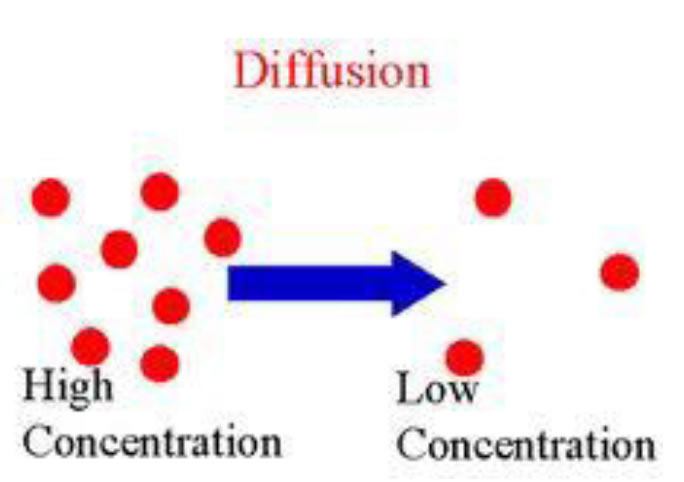
What part of a virus is the protein capsule that houses the genetic material (DNA/RNA)?
a)
tail
b)
nucleus
c)
capsid
d)
glycoprotein
3.
Antibiotics kill viruses
a)
True
b)
False
4.
When you step out into the cold, your body shivers in order to keep its temperature at 98.6oF.
a)
All living things use energy
b)
All living things contain cells
c)
All living things maintain homeostasis
d)
All living things grow and develop
5.
The roots of a plant grow towards a source of ground water.
a)
All living things use energy
b)
All living things reproduce
c)
All living things respond to their environment
d)
All living things grow and develop
6.
_____ are cells that enclose their DNA in nuclei.
a)
Phototophylites
b)
Prokaryote
c)
Eukaryote
d)
LocoKaryotes
7.
_____ are located near the nucleus, help organize cell division, and are not found in plant cells.
a)
vacuoles
b)
centrioles
c)
chloroplasts
d)
organelles
8.
Large numbers of ribosomes are present in cells that specialize in producing which of the following molecules?
a)
glycogen
b)
cellulose
c)
proteins
d)
lipids
9.
All of the following are part of a prokaryotic cell except
a)
a plasma membrane
b)
DNA
c)
an endoplasmic reticulum
d)
ribosomes
10.
Lysosome:
a)
The smallest organelle with a huge job / Makes proteins, which are the building blocks of the body.
b)
Small sacks with pores / Contains digestive enzymes that get rid of waste, worn-out cell parts, and captured invaders.
c)
Bean-shaped organelle filled with folded membranes / Breaks down glucose to release energy for cell functions
d)
Stacks of pancake-like membranes that package materials to ship out of the cell.
11.
What 4 structures are common between plant, animal, and bacterial cells?
a)
Golgi Apparatus, Chloroplasts, Ribosomes, Nucleus
b)
Cell Wall, Mitochondria, Cell Membrane, Cytoplasm
c)
Rough ER, Smooth ER, Nucleus, Ribosomes
d)
DNA, Cytoplasm, Ribosomes, Cell membrane
12.
What is in all cells and provides protein synthesis?
a)
Cell Membrane
b)
Ribosome
c)
Lysosome
d)
Chlroplast
13.
Which of the following supports the Endosymbiotic Theory?
a)
cells produce their own proteins
b)
glycolysis is common to all cells
c)
mitochondria contain their own DNA and ribosomes
d)
chloroplasts developed from enfoldings of the cell membrane
14.
package, modify, and ship proteins
a)
mitochondria
b)
rough ER
c)
Golgi apparatus
d)
smooth ER
15.
What type of solution allows water to enter the plant cell?
a)
hypotonic solution
b)
hypertonic solution
c)
isotonic solution
d)
active transport
16.

In an isotonic solution which way will the water flow

a)

it will not flow at all

b)

it will flow into the cell

c)

it will flow both ways at equal rates

d)

out of the cell

17.
What is the difference between active and passive transport?
a)
Active does not need energy and passive uses ATP (energy)
b)
Active uses ATP (energy) and passive does not need energy
c)
Active stores transport proteins and passive releases 
d)
Active uses hormones and passive does not 
18.

Which of the following would likely diffuse through the lipid bilayer of a plasma membrane most rapidly?

a)

sucrose.

b)

an amino acid.

c)

O2.

d)

Na+.

19.

Which cell is in a hypertonic environment?

a)

A

b)

B

c)

C

d)

None of them are hypertonic

20.

Glycolysis occurs in the _____.

a)

mitochondrial matrix

b)

inner membrane

c)

cytoplasm

d)

cell membrane

21.

In the absence of oxygen, ____ follows glycolysis.

a)

the link reaction

b)

the citric acid cycle

c)

fermentation

d)

the calvin cycle

22.

What is the net yield of ATP produced by glycolysis?

a)

4

b)

2

c)

1

23.

When NADH produced during the transition reaction and Citric Acid cycle delivers electrons to the electron transport system, _____ ATP is/are produced.

a)

1

b)

2

c)

3

d)

36

24.

What is the role of ribosomes?

a)

To store genetic information.

b)

To produce glycolipids.

c)

To synthesize proteins.

d)

To hydrolyze waste materials.

25.

In plants, what is the primary function of vacuoles?

a)

To maintain water pressure inside of the cell.

b)

To remove waste from inside of the cell.

c)

To store nutrients inside of the cell.

d)

To synthesize new membranes for the cell.
26.
Osmosis is a form of ______________. 
a)
Passive Transport
b)
Active Transport
27.
Movement of particles from high to low concentration. 
a)
Passive Transport
b)
Active Transport
28.
a)
Passive Transport
b)
Active Transport
29.
How does a cell maintain homeostasis?
a)
Regulates what enters and leaves the cell
b)
Flexibility
c)
Protective barrier
d)
Structure and support
30.
This picture represents what type of cell transport?
a)
endocytosis
b)
exocytosis
c)
osmosis
d)
passive transport
31.
Controlling what goes into or out of the cell without energy is called
a)
active transport
b)
endocytosis
c)
passive transport
d)
exocytosis
32.
When muscles work at their maximum ability, blood flow is often unable to provide enough oxygen to continue to produce ATP. Which process allows muscles to continue ATP production in this situation? 
a)
beta oxidation 
b)
aerobic respiration 
c)
lactic acid fermentation 
d)
alcoholic fermentation 
33.

A researcher observes a cell from a adrenal gland under an electron mictoscope. Adrenal glands produce several type of steroid hormones. What should the researcher expect to see in the cell?

a)

a high number of mitochondria

b)

large prominent rough ER

c)

large prominent smooth ER

d)

a high number of centrioles

34.
Some bacteria are metabolically active in hot springs because ____________
a)
their enzymes are insensitive to temperature
b)
they use molecules other than proteins as their main catalysts
c)
their enzymes have high optimal temperatures
d)
they are able to maintain an internal temperature much cooler than that of the surrounding water
35.
Which of these is NOT true?
a)
Enzymes can denature (change shape) when the temperature gets too high.
b)
Enzymes can only be used once in a chemical reaction. 
c)
Extreme pH can denature enzymes.
d)
Enzymes speed up chemical reactions. 
36.
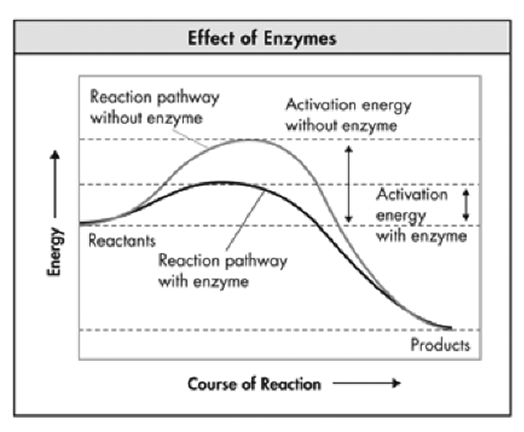
The graph shows how enzymes affect reactions in cells. Which statement best summarizes the information shown in the graph?
a)
Enzymes increase the energy of the reactants.
b)
Enzymes decrease the energy level of the products.
c)
Enzyme decrease the activation energy of the reaction.
d)
Enzymes reverse the direction of the reaction.
37.
The part of the enzyme that the substrate bonds to is called the _____.
a)
active site
b)
activation energy
c)
bond site
d)
peptide bond
38.

Each enzyme only has 1 substrate that will fit its active site. What is this called?

a)

reusability

b)

catalysis

c)

specificity

d)

fragility

39.
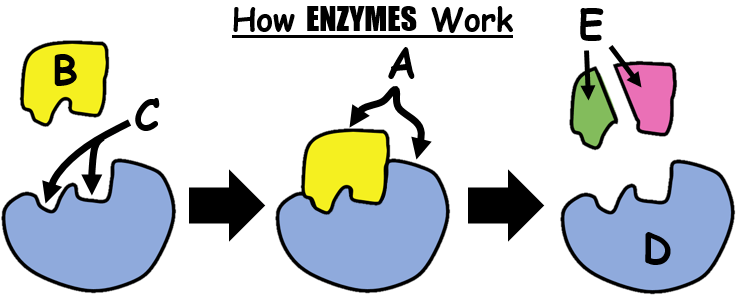
Letter D...
a)
active site
b)
enzyme
c)
substrate
d)
products
40.
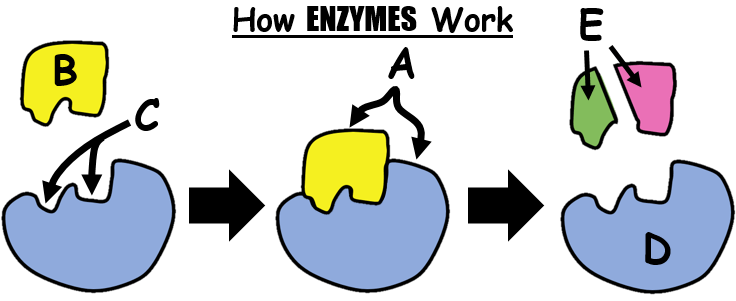
Letter B...
a)
active site
b)
enzyme
c)
substrate
d)
products
41.
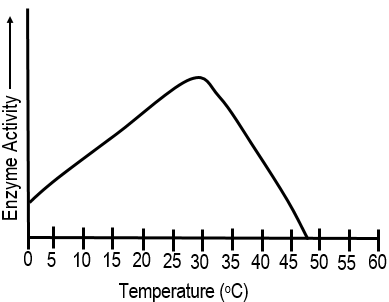
Based on the graph, what is the optimal temperature for this enzyme? 
a)
15oC
b)
40oC
c)
30oC
d)
35oC
42.
DNA is replicated during ______ of the cell cycle.
a)
G1
b)
S
c)
G2
d)
G0
43.
Why do cells go through cell division
a)
Growth
b)
Reproduction
c)
Repair
d)
All of the above
44.
In mitosis, the two resulting cells are
a)
different from the starting cell and identical to each other.
b)
different from the starting cell and different from each other.
c)
identical to the starting cell and different from each other.
d)
identical to the starting cell and identical to each other.
45.
Which of the following is not a part of interphase?
a)
G2
b)
M
c)
G1
d)
S
46.
Chromosomes and genes are replicated during
a)
prophase
b)
telophase
c)
metaphase
d)
interphase
47.
The uncontrolled division of cells can lead to:
a)
cancer
b)
mitosis
c)
meiosis
d)
cellular recombination
48.
When a chromosome is NOT dividing, what form does it take?
a)
chromatid
b)
chromatin
c)
chromosome
d)
centromere
49.

The mitotic spindle (microtubules) plays a role in which process?

a)

cytokinesis

b)

condensation of chromatin into chromosomes

c)

dissolving the nuclear membrane

d)

separation of sister chromatids

50.
The purpose of meiosis is to form ________ cells.
a)
body
b)
sex
c)
somatic
d)
brain
51.
Meiosis makes sperm and egg cells. In humans, sperm and egg cells each have _____ chromosomes. Therefore a fertilized human egg cell (sperm and egg cell combined) would create a cell with _____ chromosomes.
a)
23, 46
b)
46, 23
c)
2, 4
d)
50, 100
52.
What is it called when a sperm and egg meet?
a)
meiosis
b)
fertilization
c)
cell division
d)
mitosis
53.
Which of the following units are repeatedly joined together to form a strand of DNA? (This is the MONOMER of DNA.) 
a)
amino acids
b)
nucleotides
c)
fatty acids
d)
polysaccharides
54.
What are the nucleotides made of?
a)
Sugar, Phosphate, nitrogen base
b)
Phosphate, Adenine, nitrogen base
c)
Thymine, Adenine, Cytomine
d)
Phosphate, Nitrogen, Adenine
55.
Guanine bonds with ______________.
a)
Adenine
b)
Guanine
c)
Cytosine
d)
Thymine
56.
Which 2 molecules forms the sides (backbone) of the DNA ladder?
a)
deoxyribose and adenine
b)
deoxyribose and a hydrogen bond
c)
sugar and the nucleus
d)
deoxyribose (sugar) and phosphate
57.
What are the 4 nitrogen bases?
a)
adenine, thymine, cytoplasm, and guanine
b)
adenine, thymine cytosine, and guanine
c)
adenine, thymine, cytosine, and gylcerol
d)
adenine, thymine, cytosine, and glucose
58.
Nitrogenous bases are joined by which type of bond?
a)
polar bonds
b)
ionic bonds
c)
covalent bonds
d)
hydrogen bonds
59.
Which enzyme is responsible for adding nucleotides?
a)
Topoisomerase
b)
DNA Polymerase
c)
Ligase
d)
Primase
60.
What is the corresponding codon for AGT?
a)
UCA
b)
TCA
c)
UGA
d)
ACU
61.
What is the anticodon on the tRNA that binds to mRNA codon for the DNA coding sequence AAA?
a)
TTT
b)
UUU
c)
UUA
d)
AAA
62.
Suppose a double-stranded DNA molecule was shown to have 15% adenine bases. What would be the expected percentage of guanine bases in that molecule?
a)
15%
b)
35%
c)
85%
d)
Not enough information
63.
 A frameshift mutation could result from 
a)
a base insertion only.
b)
a base deletion only. 
c)
a base substitution only. 
d)
either an insertion or a deletion of a base.
64.

Suppose that in sheep, a dominant allele (B) produce black hair and a recessive allele (b) produce white hair. If you saw a black sheep, you would be able to identify

a)

its phenotype for hair color

b)

its genotype for hair color

c)

the genotype of only one of its parents

d)

the phenotype of both of its parents

65.
In humans, hemophilia is an X-linked recessive trait. If a man and a woman have a son who is affected with hemophilia, which of the following is definitely true?
a)
The mother carries an allele for hemophilia
b)
The father carries an allele for hemophilia
c)
The father is afflicted with hemophilia
d)
both parents carry an allele for hemophilia
66.

If 2n = 48 for a particular cell, then the chromosome number in each cell after meiosis would be

a)

96

b)

48

c)

24

d)

12

67.

A male fruit fly (Drosophila melanogaster) with red eyes and long wings was mated with a female with purple eyes and vestigial wings. All of the offspring in the F1 generation had red eyes and long wings. These F1 flies were test crossed with purple-eyed, vestigial-winged flies. Their offspring, the F2 generation, appeared as indicated below.


If in the F1 and F2 generations the same characteristics appeared in both males and females, it would be safe to assume that these traits for eye color and wing length are...

a)

are sex-linked

b)

are sex-influenced characteristics

c)

are autosomal characteristics

d)

follow the Mendelian rule of independent assortment

68.
Determine the sex of the individual whose karyotype is displayed in the image.
a)
female
b)
male
69.
A sperm contains
a)
Both an X and a Y chromosome
b)
Two X chromosomes
c)
An X OR a Y chromosome
d)
only a Y chromosome
70.
Klinefelter's Syndrome has the karyotype notation of 
a)
47XX+21
b)
47XXY
c)
45XO
d)
44XX
71.
Chromosome pairs 1-22 are referred to as
a)
sex chromosomes
b)
sister chromatids
c)
a karyotype
d)
autsomes
72.
Sickle-cell anemia is associated with a mutation in the red blood cells that changes the shape. Scientists think this is an evolutionary response to exposure to malaria. People who are heterozygous for this allele are less likely to get malaria if they are bitten by a mosquito carrying the disease. This change in variation is called a.. 
a)
Mutation
b)
Response
c)
Migration
d)
Phenotype
73.
Crossing over in the chromosomes during meiosis, conjugation between bacterial cells and fertilization of an egg cell with a sperm cell all will result in what?
a)
Transcription
b)
Increase in genetic variation
c)
Increase in chromosome numbers
d)
Missense mutation
74.
Cystic Fibrosis is the most common genetic disease in Caucasian populations. Parents can be carriers and be unaffected. This means the disease is
a)
a single point mutation
b)
Domminant
c)
Missense mutation
d)
Recessive
75.
A newly identified organism has four limbs and amniotic eggs with shells.  Which organism do they most likely share a common ancestor with?
a)
ray-finned fish
b)
birds
c)
rodents
d)
amphibians
76.

similar structures that related species have inherited from a common ancestor, different function

a)

homologous structures

b)

analogous structures

c)

vestigial structures

77.

remnant of a structure that may have had an important function in a species' ancestors, but has no clear function in the modern species.

a)

homologous structures

b)

analogous structures

c)

vestigial structures

78.
Which is a mechanism for change in allele frequency?
a)
gene flow
b)
genetic drift
c)
natural selection
d)
all answers are correct
79.

Photosynthesis goal is to

a)

convert light energy into glucose energy

b)

use light energy to make oxygen gas

c)

convert sugar energy into ATP

d)

convert sugar energy into oxygen gas

80.

What is FALSE about the calvin cycle

a)

uses the light reactions products

b)

produces a three carbon sugar (G3P)

c)

produces carbon dioxide

d)

produces NADP+

81.

The light dependent reactions of photosynthesis occur in the _____.

a)

thylakoid membrane

b)

grana

c)

stroma

d)

mesophyll

82.
Where does the Calvin cycle take place?
a)
stroma of the chloroplast
b)
thylakoid membrane
c)
outer membrane of the chloroplast
d)
interior of the thylakoid membrane
83.

Which process does not occur in aerobic (with oxygen) conditions?

a)

Fermentation

b)

Pyruvate Oxidation (Link Reaction)

c)

Citric Acid Cycle or Krebs cycle

d)

Oxidative Phosphorylation

84.

Which organisms would be at the top or last trophic level?

a)

plant

b)

herbivore

c)

omnivore

d)

carnivore

85.
What is the original source of almost all energy in most ecosystems?
a)
carbohydrates
b)
sunlight
c)
water
d)
carbon
86.
An organism that produces its own food supply from inorganic compounds is called a(an)
a)
heterotroph
b)
consumer
c)
detritivore
d)
autotroph
87.
The energy pyramid below shows a possible amount of energy, in kilocalories, available in the organisms at each trophic level in an ecosystem.  According to the law of conservation of energy, energy can neither be created nor destroyed.  If this is true, why is there less energy in the top of the energy pyramid than there is in the bottom of the energy pyramid?
a)
Energy is lost between each trophic level as heat.
b)
The law of conservation of energy does not apply to ecosystems.
c)
Organisms in the top of the energy pyramid use up energy the fastest.
d)
The extra energy in the bottom is slower to reach the top.
88.
The graph below shows population data for two species.  What can be said about the relationship between species 1 and species 2?
a)
When the population of species 1 increases, the population of species 2 decreases.
b)
The population of species 1 and species 2 stay the same over the time period shown.
c)
The population of species 1 is not influenced by the population of species 2.
d)
When the population of species 1 increases, the population of species 2 increases.
89.
Energy in an ecosystem is used for growth or lost as __________
a)
light
b)
heat
c)
death
d)
biomass
90.
What factor describes when populations increase because animals are moving into a population?
a)
Emigration
b)
Limiting Factors
c)
Immigration
d)
Exponential Growth
91.
What factor describes when populations decrease because animals are moving out of a population?
a)
Emigration
b)
Limiting Factors
c)
Immigration
d)
Exponential Growth
92.
What does the graph represent?
a)
Emigration
b)
Exponential growth
c)
Immigration
d)
Logistic Growth
93.

Primary succession occurs in an area that has:

a)

Has Soil

b)

Has No Soil

c)

Has Some Soil

d)

none of these

94.

What is the main difference between primary and secondary ecological succession?

a)

Primary begins WITHOUT soil; Secondary begins WITH soil

b)

Primary is the first state and secondary is the second stage

c)

Primary builds plant community; secondary builds animal community.

d)

Primary begins WITH soil; Secondary begins WITHOUT soil

95.

All of the following contribute directly to soil formation EXCEPT

a)

lichens

b)

decomposition of organisms

c)

volcanic eruptions

d)

erosion of rock by weather