wayground logo

Free Printable Worksheets

Font size

S
M
L
XL
Worksheets

Classifying Organisms Review

Total questions: 91

Worksheet time: 1hrs 10mins

Name
Class
Date
1.

Name the domains

a)

Archea, Bacteria

b)

Bacteria, Fungi, Kingdom

c)

Archea, Bacteria, Eukarya

d)

Domain, Kingdom, Other

2.

To decide what domain an organism is in you look at

a)

type of cells

b)

number of cells

c)

color

d)

how it gets food

3.

Humans are part of the ___________ domain.

a)

animalia

b)

bacteria

c)

eukarya

d)

protists

4.

A domain that includes asexual and sexual reproduction includes

a)

Eukarya

b)

Bacteria

c)

Animalia

d)

Kingdom

5.

What characteristics are used to classify organisms?

a)

number of cells, how they get their food, cell type, mode of reproduction

b)

number of cells, how they breathe, mode of reproduction

c)

color of cells, cell type, how they get their food, mode of reproduction

d)

none of the above

6.

Which domain are not -single-celled without a nucleus?

a)

bacteria

b)

archaea

c)

fungi

d)

Eukarya

7.

The Bacteria Domain

a)

have a nucleus

b)

have cell walls

c)

are not real

d)

do not have a nucleus

8.

What comes after Domain in the classification system?

a)

Kingdom

b)

Phylum

c)

Class

d)

Order

9.

This organism has many cells, nucleus, and feed on algae. In which Kingdom would it work?

a)

Archea

b)

Fungi

c)

Bacteria

d)

Protista

10.

What is the difference between prokaryotic and eukaryotic cells?

a)

Prokaryotic=nucleus

b)

Eukaryotic=no nucleus

c)

Prokaryotic=always multi-cellular

d)

Eukaryotic=nucleus

11.

The words autotrophic and heterotrophic are referring to

a)

color

b)

having a nuclei

c)

how organisms get their food

d)

reproduction

12.

What type of cell is this?

a)

prokaryotic

b)

eukaryotic

c)

a good one

d)

plant

13.

What characteristics are found in this organisms?

a)

Eukaryotic

b)

multi-cellular

c)

autotroph

d)

heterotroph

14.
Unicellular means...
a)
An organism is made of many cells
b)
An organism is made of one cell
c)
An organism is made of no cells
15.
Multicellular means...
a)
an organism is made of many cells
b)
An organism is made of only one cell
c)
An organism is made of no cells
16.
Heterotroph is when an organism...
a)
Has to eat other things
b)
has to make it's own food
17.
Autotroph is when..
a)
An organism makes it's own food
b)
An organism has to eat other things
18.
Bacteria are all prokaryotic. What does it mean to be prokaryotic?
a)
Has a nucleus 
b)
Sometimes has a nucleus 
c)
Does not have a nucleus 
d)
Has a cell membrane 
19.
Eukaryotic cells always have a _______________.
a)
Nucleus 
b)
Plant
c)
no nucleus 
d)
heart 
20.
Eukaryotic cells always have a _______________.
a)
Nucleus 
b)
Plant
c)
no nucleus 
d)
heart 
21.
Every time you see the word autotrophic, we are talking about______________.
a)
Animals 
b)
Fungi
c)
Plants
d)
Bacteria 
22.
Animas and bacteria both need to get energy from other organism. What is this called?
a)
Autotrophic 
b)
Heterotrophic 
c)
Carbon Dioxide 
d)
Plants 
23.

What two kingdoms can you see in the picture?

a)

Fungi & Bacteria

b)

Animals & Fungi

c)

Fungi & Plantae

d)

Animals & Plants

24.
Zombies must be _______________ because they need to eat other organisms.
a)
Autotrophic 
b)
Heterotrophic 
25.
My cell is prokaryotic, what kingdom do I belong to?
a)
Fungi
b)
Moneran
c)
Plant
d)
Protoctist
26.
I have tissues and I am autotrophic, what kingdom do I belong to?
a)
Monera
b)
Protoctista
c)
Plants
d)
Animals
27.
I am multicellular, I have no tissues and I am heterotrophic, what kingdom do I belong to?
a)
Fungi
b)
Plant
c)
Animal
d)
Protoctista
28.

A cell with nucleus is

a)

Autotrophic

b)

Prokaryotic

c)

Eukaryotic

d)

Heterotrophic

29.
Kingdom with the following characteristics: eukaryotic cells, unicellular or multicellular, autotrophic or heterotrophic 
a)
Fungi
b)
Monera
c)
Protoctista
d)
Plant
30.
Nutrition that consists of obtaining organic nutrients from other living being
a)
Autotrophic
b)
Photosynthesis
c)
Interaction
d)
Heterotrophic
31.
Unicellular fungi used to make bread
a)
Yeast
b)
Mushroom
c)
Flour
d)
Mould
32.
Unicellular means...
a)
An organism is made of many cells
b)
An organism is made of one cell
c)
An organism is made of no cells
33.
Multicellular means...
a)
an organism is made of many cells
b)
An organism is made of only one cell
c)
An organism is made of no cells
34.
Heterotroph is when an organism...
a)
Has to eat other things
b)
has to make it's own food
35.
Autotroph is when..
a)
An organism makes it's own food
b)
An organism has to eat other things
36.
Bacteria are all prokaryotic. What does it mean to be prokaryotic?
a)
Has a nucleus 
b)
Sometimes has a nucleus 
c)
Does not have a nucleus 
d)
Has a cell membrane 
37.
Eukaryotic cells always have a _______________.
a)
Nucleus 
b)
Plant
c)
no nucleus 
d)
heart 
38.
Every time you see the word autotrophic, we are talking about______________.
a)
Animals 
b)
Fungi
c)
Plants
d)
Bacteria 
39.
A paramecium is a single celled organism with a nucleus that consumes other organisms for energy. The offspring are genetically different from its parents.
a)
Prokaryotic
b)
Eukaryotic
40.
Penguins are a multicellular, eukaryotic organisms that consumes fish for energy. 
Which for the following organisms would belong in the same Kingdom as a penguin?
a)
Worm
b)
Algae
c)
Mushroom
d)
Paramecium
41.
A mushroom is composed of many cells that have a nucleus
In which domain does a mushroom belong?
a)
Archaea
b)
Eukarya
c)
Bacteria
42.
Which of the following terms means "a cell that does not have a nucleus"?
a)
Prokaryotic
b)
Eukaryotic
c)
Protista
d)
Archaea
43.
Which of the following describes asexual reproduction?
a)
Two parents
b)
Diverse offspring
c)
Budding
44.
How would bacteria and a mushroom be classified?
a)
same domain, same kingdom
b)
same domain, different kingdom
c)
different domain, same kingdom
d)
different domain, different kingdom
45.
Which of the following is autotrophic?
a)
 a tree
b)
a bird
c)
a worm
d)
a mushroom
46.
Where is DNA located in a eukaryotic cell?
a)
chloroplast
b)
nucleus
c)
amoeba
47.
Which of the following determines if an organism is eukaryotic?
a)
having identical offspring
b)
producing their own food
c)
having a nucleus
d)
number of cells
48.
Which of the following domains would a prokaryotic organism belong?
a)
Animalia
b)
Protista
c)
Eukarya
d)
Bacteria
49.
Which of the following describes a heterotrophic organism?
a)
Consumes food
b)
Creates food
c)
Identical offspring
d)
Diverse offspring
50.
In which of the following domains would a lion cub belong?
a)
Protista
b)
Animalia
c)
Eukarya
d)
Archaea
51.
All organisms can be classified into..
a)
3 kingdoms and 6 domains
b)
3 domains and 6 kingdoms
52.
All organisms can be classified into..
a)
3 kingdoms and 6 domains
b)
3 domains and 6 kingdoms
53.

Which type of cells contain a DNA in a nucleus and membrane bound organelles.

a)

eukaryotes

b)

prokaryotes

54.

Which type of cells do not possess a nucleus and do not have membrane bound organelles.

a)

eukaryotes

b)

prokaryotes

55.

Unicellular Organisms

a)

Organisms made up of only one cell

b)

Organisms made up of many cells.

56.

Multicellular Organisms

a)

Organisms made up of only one cell

b)

Organisms made up of many cells.

57.

Autotrophic Organisms

a)

Organisms that can make their own food through processes such as photosynthesis.

b)

Organisms that cannot make their own food and must consume other organism to obtain energy.

58.

Heterotrophic Organisms

a)

Organisms that can make their own food through processes such as photosynthesis.

b)

Organisms that cannot make their own food and must consume other organism to obtain energy.

59.

Requires only 2 parents to produce offspring

a)

Asexual Reproduction

b)

Sexual Reproduction

60.

Requires only 1 parent to produce offspring

a)

Asexual Reproduction

b)

Sexual Reproduction

61.
Which kingdom are mosses, ferns, conifers, and flowering plants a part of?
a)
Archaebacteria
b)
Plantae
c)
Animalia
d)
Protista
62.
True or False: I am an autotrophic organism, therefore, I cannot make my own food.
a)
True
b)
False
63.
Amoeba and paramecia are eukaryotic, single cellular, heterotrophic, and reproduces asexually. Which kingdom would best these organisms best be classified into?
a)
Plant
b)
Animal
c)
Protist
d)
Fungi
64.
A paramecium is a single celled organism with a nucleus that consumes other organisms for energy. The offspring are genetically different from its parents.
a)
Prokaryotic
b)
Eukaryotic
65.
A mushroom is composed of many cells that have a nucleus
In which domain does a mushroom belong?
a)
Archaea
b)
Eukarya
c)
Bacteria
66.
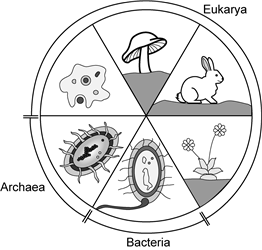
The taxonomic levels represented in this picture are the three —
a)
classes, the lowest levels of organization, and their associated phyla.
b)
kingdoms, the broadest levels of organization, and their associated phyla.
c)
domains, the broadest levels of organization, and their associated kingdoms.
d)
orders, the lowest levels of organization, and their associated domains.
67.
The domains of living organisms are —
a)
Prokarya, Bryozoa, and Bacteria, and they are the lowest level of taxonomic organization.
b)
Archaea, Euryarchaeota, and Eukarya, and they are the broadest level of taxonomic organization.
c)
Archaea, Bacteria, and Eukarya, and they are the broadest level of taxonomic organization.
d)
Flustrina, Archaea, and Bryozoa, and they are the second-lowest level of taxonomic organization.
68.
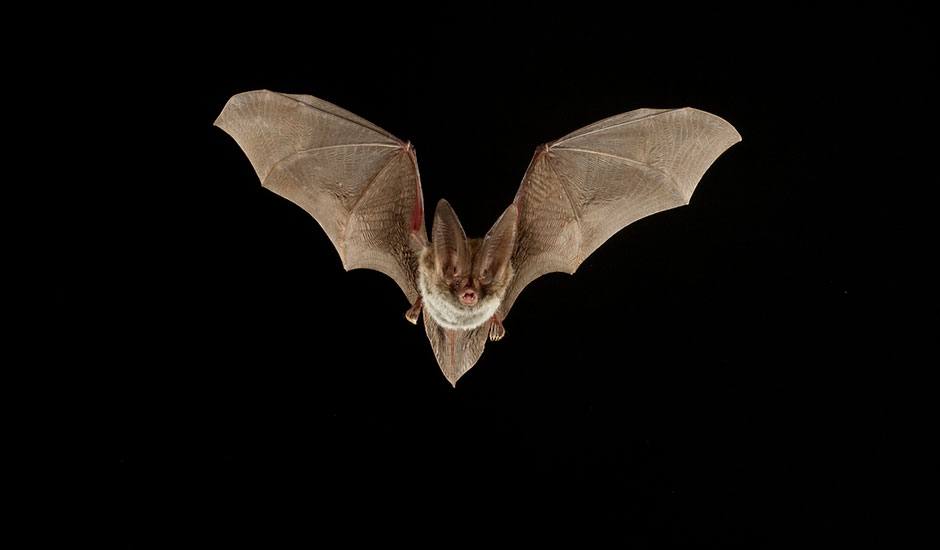
All species of bats are members of the kingdom Animalia. They are classified as animals because —
a)
their cells have cell walls.
b)
they feed on other organisms.
c)
their cells are large.
d)
they can move quickly.
69.
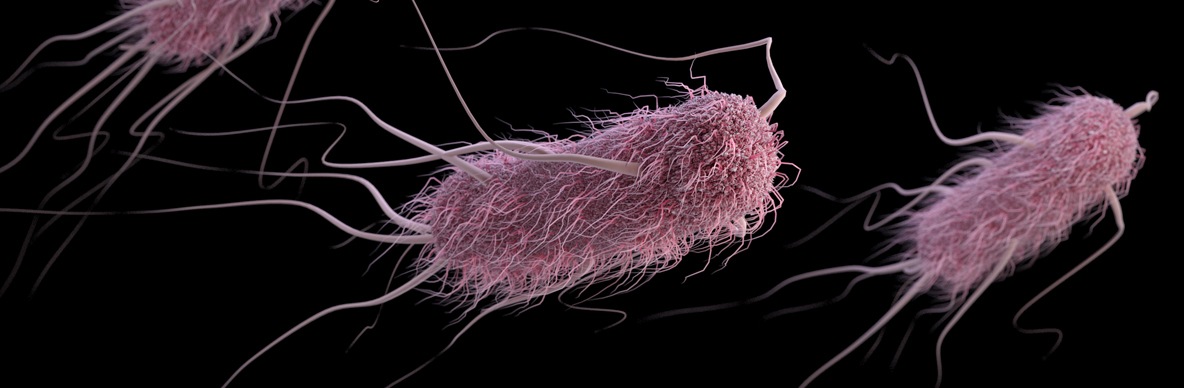
Escherichia coli, or E. coli, is a single-celled, prokaryotic organism. These characteristics require E. coli to be classified in the kingdom —
a)
Protista.
b)
Bacteria.
c)
Plantae
d)
Fungi
70.
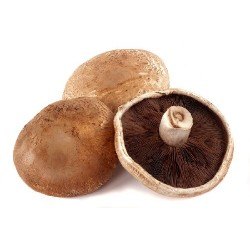
Agaricus bisporus, also known as the portobello mushroom, belongs to the kingdom Fungi. One of the characteristics that defines Agaricus bisporus as a fungus is that it has —
a)
the ability to ingest other organisms.
b)
the ability to photosynthesize.
c)
nucleus in its cells.
d)
pigment in its skin.
71.
What is the most basic difference between autotrophs and heterotrophs?
a)
Heterotrophs respond to their surroundings, while autotrophs do not.
b)
Heterotrophs remain in one place, while autotrophs move around.
c)
Heterotrophs get nutrition by eating, while autotrophs make their own food.
d)
Heterotrophs excrete waste products, while autotrophs do not.
72.
The diverse world of protists includes protozoans, slime molds, and certain algae. The word "protozoan" comes from Greek words meaning "first animal." What are the two main characteristics that protozoans share with members of the animal kingdom?
a)
They move around and cannot make their own food.
b)
They reproduce and are able to make their own food.
c)
They reproduce and respond to their environment.
d)
They respond to their environment and are multicellular.
73.
Green algae, ferns, and pine trees are classified in the plant kingdom. These organisms share certain characteristics. Which of the following is a characteristic used to classify these organisms as plants?
a)
They engage in photosynthesis.
b)
They have an immune system.
c)
They can be found in many different regions on Earth.
d)
They produce flowers.
74.
Tigers, sponges, and whales are all members of the animal kingdom. These organisms are very different, but are similar in some ways. Which of the following is a characteristic used to classify these organisms as animals?
a)
They have fur.
b)
They have cell walls.
c)
They eat other living organisms.
d)
They feed on decomposing organic matter.
75.
Amanda learns that some species of algae share the characteristics of being unicellular and producing sugar by photosynthesis. These species of algae fall into which kingdom?
a)
Fungi
b)
Animalia
c)
Protista
d)
Plantae
76.
Bacteria can be classified into two kingdoms: Archaea and Eubacteria. Bacteria in both of these kingdoms are all —
a)
organisms that live in harsh environments.
b)
autotrophs.
c)
organisms that reproduce sexually.
d)
prokaryotes.
77.
An organism is unicellular, reproduces asexually, and lives in a hot hydrothermal vent at the bottom of the ocean. This organism most likely belongs to the kingdom —
a)
Archaea
b)
Eubacteria   
c)
Animalia
d)
Protista.
78.
A mushroom that is multicellular, eukaryotic, and a decomposer belongs to the kingdom —
a)
Plantae
b)
Fungi
c)
Animalia
d)
Protista
79.
The characteristics of a particular organism are listed below. 
 
• Is unicellular
• Has cell nuclei
• Lives in moist environments
• Reproduces asexually
• Is mobile
 
In which kingdom should this organism be classified?
a)
Animalia
b)
Protista
c)
Plantae
d)
Eubacteria
80.
The characteristics of a particular organism are listed below.

• Is multicellular
• Is a consumer
• Has cells with nuclei
• Reproduces sexually
• Is mobile
• Digests foods internally

 
In which kingdom should this organism be classified?
a)
Animalia
b)
Fungi
c)
Archaea
d)
Plantae
81.
An organism made up of one cell
a)
Multicellular
b)
Unicellular
c)
Triocellular
d)
One-cellular
82.
Sexual or asexual process of an organism producing more of its own kind
a)
Reproduction
b)
Sexual Reproduction
c)
Asexual Reproduction
d)
Autotrophic
83.
An organism that can make its own food
a)
Humans
b)
Heterotroph
c)
Autotroph
d)
Multicellular
84.
Plantae is different than fungi because
a)
plantae reproduces through sexual reproduction
b)
plantae can make their own food
c)
plantae are made up of one cell
d)
plantae are prokaryotes
85.
All cells that are bacteria 
a)
are made up of more than one cell 
b)
lack a nucleus 
c)
are related to fungi
d)
make their own food 
86.
Fungi cannot 
a)
have a nucleus 
b)
reproduce
c)
belong to a domain
d)
Make their own food 
87.
if something is multicellular, heterotrophic, and reproduces sexually what is it?
a)
Plantae
b)
Animalia
c)
Eubacteria
d)
Protista
88.
Which organism can only reproduce sexually?
a)
Protista
b)
Fungi
c)
Plantae
d)
Animalia
89.
members of the Plantae kingdom are always
a)
asexual
b)
autotrophic
c)
unicellular
d)
happy
90.
plants are autotrophic but fungi are
a)
heterotrophic
b)
unicellular
c)
prokaryotic
d)
bacteria
91.
An organism made up of more than one, often different, cells.
a)
autotrophic
b)
unicellular
c)
heterotrophic
d)
multicellular