wayground logo

Free Printable Worksheets

Font size

S
M
L
XL
Worksheets

Chemistry Final Exam Review 2021

Total questions: 92

Worksheet time: 4hrs 24mins

Name
Class
Date
1.

What is the name of the family that is highlighted?

a)

Alkali Metal Family

b)

Halogen Family

c)

Noble Gas Family

d)

Transition Metal Family

2.
Which element has a full valence shell?
a)
F
b)
D
c)
C
d)
E
3.
Which of the following will have a larger radius than Zinc?
a)
Gallium
b)
Aluminum
c)
Magnesium
d)
Strontium
4.
Which of the following will have a higher electronegativity than arsenic (As)?
a)
Carbon (C)
b)
Neon (Ne)
c)
Antimony (Sb)
d)
Germanium (Ge)
5.
As atoms of elements in group 16 are considered in order from top to bottom, the electronegativity of each successive element....
a)
decreases
b)
increases
c)
remains the same
d)
none of the above
6.
As you move down the periodic table atoms get bigger.  This is because ____________.
a)
The atoms have more mass.
b)
The atoms have more protons.
c)
The atoms have more energy levels
d)
The atoms have more neutrons
7.
As you move across the periodic table atoms tend to get smaller because, ______________.
a)
the atoms have more mass.
b)
the atoms have less mass
c)
the atoms have more protons.
d)
the atoms have less electrons.
8.
Electronegativity is...
a)
the ability of an atom to attract/ accept electrons
b)
the ability of an atom to lose electrons
c)
the energy required to remove an electron from a specific atom
d)
how easy it is to make friends. 
9.
Ionization energy is...
a)
the energy required to add an electron to a specific atom
b)
how much energy it takes to remove an electron from an atom
c)
the energy required to shield the outer electrons from the nucleus
d)
a measure of the ability of an atom to attract electrons
10.
Metals have the largest - 
a)
atomic radius and electronegativity
b)
electronegativity and ionization energy
c)
atomic radius only
d)
ionization energy and atomic radius
11.
Which statement correctly and completely identifies a trend?
a)
Atomic radius decreases across a period and increases down a group.
b)
Electronegativity decreases across a period and decreases down a group.
c)
Ionization energy increases across a period and increases down a group.
d)
Ionic radius increases across a period and increases down a group.
12.
Electronegativity __________ from left to right within a period and __________ from top to bottom within a group.
a)
decreases, increases 
b)
increases, increases
c)
increases, decreases 
d)
stays the same, increases
13.
Atomic radius generally increases as we move __________.  
a)
down a group and from right to left across a period 
b)
up a group and from left to right across a period 
c)
down a group and from left to right across a period 
d)
up a group and from right to left across a period 
14.
Sodium (Na) and potassium (K) are in the same group on the periodic table. Based on their locations, which statement about sodium and potassium is true?
a)
Sodium is less electronegative than potassium. 
b)
Sodium has fewer energy levels than potassium. 
c)
Sodium has a larger ionic radius than potassium. 
d)
Sodium has lower ionization energy than potassium. 
15.
Fluorine, chlorine, bromine, and iodine all have the same number of valence electrons and have a tendency to gain electrons. Which element has the greatest ionization energy and electronegativity?
a)
fluorine
b)
chlorine 
c)
bromine 
d)
iodine 
16.
Which of the following is NOT a step in forming an ionic bond?
a)
One atom shares its electrons with another one.
b)
Opposite charged ions form due to e- transfer
c)
One atom gives electrons to another one
d)
Opposite charged ions attract
17.
Why do ionic bonds form?
a)
So the number of protons equals the number of electrons.
b)
To stabilize the atom with a full outer shell.
c)
So an atom can become unstable.
d)
So atoms will stick together to form molecules.
18.
 Which of the following is the correct formula for these two ions:
Al+3 +  S-2
a)
AlS3
b)
Al2S3
c)
Al3S2
d)
Al3S
19.
What type of elements will form an ionic bond?
a)
Metals + Metals
b)
Nonmetals + Nonmetals
c)
Metals + Nonmetals
d)
None of the above
20.
To form a charge of +2 an atom must _ electrons.  To form -3 it must _ electrons.
a)
Gain 2; Lose 3
b)
Gain 3; Lose 2
c)
Lose 2; Gain 3
d)
Lose 3; Gain 2
21.
What determines how ionic bonds will form?
a)
Number of protons
b)
Mass of the atom
c)
Number of total electrons
d)
Number of valence electrons
22.
Magnesium bromide is an ionic compound with the chemical formula MgBr₂.  What does the "2" tell you?
a)
There are 2 bromide ions for every magnesium ion
b)
Bromide has a 2- charge
c)
Bromide has a 2+ charge
d)
There are 2 magnesium ions to every bromide ion
23.
What is the name of K3PO4?
a)
Tripotassium Phosphate
b)
Tripotassium Phosphite
c)
Potassium phosphide
d)
Potassium phosphate
24.
What is the name of Al(NO3)3?
a)
Aluminum trinitrate
b)
Monoaluminum nitrate
c)
Aluminum (III) nitrate
d)
Aluminum Nitrate
25.
What is the name of Mg(OH)2?
a)
Magnesium Hydride
b)
Magnesium Dihydride
c)
Magnesium Dihydroxide
d)
Magnesium Hydroxide
26.

Ions that end in -ide

a)

are polyatomic

b)

are monoatomic

c)

do not exist

d)

are always cations

27.

Ions that end in -ate or -ite are...

a)

polyatomic

b)

monoatomic

c)

do not exist

d)

are always cations

28.
The sum of all oxidation numbers in a neutral compound is ___.
a)
0
b)
1
c)
-1
d)
depends on the compound
29.

Which of the following pairs of elements will NOT form an ionic compound?

a)

sodium and fluorine

b)

phosphorous and aluminum

c)

potassium and magnesium

d)

strontium and oxygen

30.

What is the correct formula for the ionic compound that results from these two atoms below?

a)

X₂Y₅

b)

X₅Y₂

c)

X₂Y₃

d)

X₃Y₂

31.

Covalent bonding occurs between which two types of elements?

a)

metals and metals

b)

nonmetals and metals

c)

nonmetals and nonmetals

d)

metalloids and metalloids

32.

With the exception of Hydrogen nonmetals can be found in what location on the periodic table?

a)

top left

b)

top right

c)

bottom left

d)

bottom right

33.
When two atoms share electrons, a chemical bond is formed.  This type of bond is called:
a)
covalent bond
b)
ionic bond
c)
crystal bond
d)
polyatomic bond
34.
What type of compound consists of molecules that made of atoms that are covalently bonded?
a)
ionic
b)
crystal
c)
noncovalent
d)
molecular
35.
What is the correct formula for this molecule?
a)
NH
b)
N3H
c)
NH3
d)
NH4
36.

Which of the following diatomic molecules will form a double bond?

a)

H2

b)

O2

c)

F2

37.
According to VSEPR, molecules adjust their shapes to keep which of the following as far away as possible?
a)
Pairs of valence electrons
b)
Inner shell electrons
c)
Mobile Electrons
d)
Electrons closest to the nucleus
38.

2 bonded atoms and 0 lone pairs

a)

linear

b)

trigonal planar

c)

bent

d)

tetrahedral

e)

trigonal pyramidal

39.

What shape would this have?

a)

Trigonal planar

b)

Pyramidal

c)

Tetrahedral

d)

Bent

40.
P2O5
a)
Phosphorus Oxide
b)
Pentaphosphorus Dioxide
c)
Diphosphorous pentoxide
d)
Phosphoric Oxygen
41.
Phosphorous trichloride
a)
PCl3
b)
P3Cl
c)
P3Cl3
d)
PCL
42.

The electrons in a polar covalent molecule are shared...

a)

Evenly

b)

Unevenly

c)

Electrons are not shared

d)

None of the Above

43.

In a polar covalent bond, the electrons gather around...

a)

The atom with the Greatest Electronegativity

b)

The atom with the Lowest Electronegativity

c)

Each atom Equally

d)

None of the Above

44.

The polarity of a bond is determined by...

a)

The sum of the electronegativities of the two atoms

b)

The difference in the electronegativities of the two atoms

c)

The charges of the atoms

d)

None of the Above

45.
Rank these in order of strength:
covalent bond
London forces
hydrogen bond
dipole-dipole attraction
a)
dipole-dipole>covalent bond>hydrogen bond>London
b)
London>dipole-diple>hydrogen bond>covalent bond
c)
covalent bond>hydrogen bond>dipole-dipole>London
d)
hydrogen bond>dipole-dipole>London>covalent bond
46.
In chemistry, a "mole" is:
a)
The mass of an atom
b)
a large number used to count particles
c)
based on the volume of a substance
47.
How many atoms of iodine are in a mole of iodine?
a)
53
b)
63.55g
c)
126.9
d)
6.02 x 10²³
48.
The number 6.02 x 10²³ is called...
a)
Obama's number
b)
Bohr's number
c)
Trump's number
d)
Avogadro's number
49.
We use the periodic table to calculate...
a)
mass
b)
molar mass
c)
moles
50.
What is the molar mass of NaCl?
a)
58.45g/mol
b)
28g/mol
c)
12g/mol
d)
6.02 x 10²³
51.
How do we get mass from moles?
a)
multiply by avogadro's number
b)
multiply by molar mass
c)
divide by avogadro's number
d)
divide by molar mass
52.
What would be the mass of 1.5mol H2O
a)
20
b)
27
c)
32
d)
40
53.
Find the percent composition of N2S2.
a)
N: 69.6%  S: 30.4%
b)
N:36% S: 75.6%
c)
N: 96.6% S: 3.4%
d)
N: 30.4% S: 69.6%
54.
T/F
If 2 compounds have the same empirical formula, they are the same (same properties, structure, etc.)
a)
True
b)
False
55.

Which of the following statements regarding the mole is INCORRECT?

a)

A mole is a unit of quantity equal to 6.02 x 10²³ particles.

b)

The number of particles in a mole is known as Avogadro’s number.

c)

A mole of particles of an element is numerically equal to the atomic mass of the element.

d)

none of the above

56.
What is the volume occupied by 1 mole of any gas?
a)
44.8 L
b)
22.4 L
c)
16.8 L 
d)
20.4 L 
57.

How many moles are in a 18 L tank of nitrogen gas?

a)

0.9 moles

b)

1 mole

c)

0.8 moles

d)

0.75 moles

58.
A formula with the lowest whole # ratio of elements in a compound is called
a)
Molecular Formula
b)
Chemical Formula
c)
Empirical Formula 
d)
Distance Formula
59.
EF = CF
Molecular formula mass = 192
MF =
a)
C4F8
b)
C4F
c)
CF8
d)
C2F4
60.
Which has more molecules?
a)
1 mole H2O
b)
1 mole Al(OH)3
c)
1 mole NaCl
d)
There are all the same
61.
Balance this reaction: ____ Na3PO4 + ____ KOH ---> ____ NaOH + ____ K3PO4
a)
1,3,3,1
b)
1,3,2,1
c)
2,3,3,1
d)
1,1,3,1
62.
Balancing this reaction: ____ CH4 + ____ O2 ---> ____ CO2 + ____ H2O
a)
2,1,3,1
b)
1,2,1,2
c)
1,2,2,1
d)
2,1,1,2
63.
Balance this reaction: ____ NaF + ____ Br2 ---> ____ NaBr + ____ F2
a)
3,1,2,1
b)
1,2,3,4
c)
2,1,2,1
d)
1,2,1,2
64.

In a balanced chemical equation, the mass of the reactant is equal to the

a)

atoms in a molecule.

b)

atomic mass of the elements.

c)

volume of the reactacts.

d)

mass of the products.

65.

A chemical equation is balanced by changing or adding

a)

chemical symbols.

b)

subscripts.

c)

coefficients.

d)

reactants.

66.

What type of chemical reaction is the following:

2Mg + O2 >>> 2MgO

a)

synthesis reaction.

b)

decomposition reaction.

c)

single-replacement reaction.

d)

double-replacement reaction.

67.

What type of chemical reaction is the following:

Mg + 2HCl >>> H2 + MgCl2

a)

synthesis

b)

decomposition

c)

single-replacement

d)

double-replacement

68.

What type of chemical reaction is the following:

2HgO >>> 2Hg + O2

a)

synthesis

b)

decomposition

c)

single-replacement

d)

double-replacement

69.

What type of chemical reaction is the following:

Pb(NO3)2 + 2KI >>> PbI2 + 2KNO3

a)

synthesis

b)

decomposition

c)

single-replacement

d)

double-replacement

70.

When one element replaces another element in a compound during a chemical reaction, the reaction is a _____ reaction.

a)

synthesis

b)

decomposition

c)

single-replacement

d)

double-replacement

71.

What reaction has the following general formula:
 CxHy + O2 >CO2 + H2OC_xH_y\ +\ O_2\ ->CO_{2\ }+\ H_2O  

a)

Combination

b)

Decomposition

c)

Single Replacement

d)

Double Replacement

e)

Combustion

72.

A solid that is deposited from a solution

a)

Solid

b)

Liquid

c)

Product

d)

Precipitate

73.
The blue numbers in the image below represent ________
a)
I don't know, and don't want to try
b)
coefficients
c)
subscripts
d)
none of the answers are correct
74.
The red numbers in the image below represent ________
a)
subscripts
b)
coefficients
c)
I don't know, and don't want to try
d)
None of the answers are correct
75.

Predict the products for the this Single Replacement reaction:

K + HCl →

a)

KCl + H2

b)

KHCl

c)

KH + Cl2

d)

HCl + K2

76.
What does Boyle's law relate to?
a)
Temperature and Volume
b)
Volume and Pressure
c)
Temperature and Pressure
77.
When the temperature of matter increases the particles...
a)
speed up and move closer
b)
speed up and move farther apart
c)
slow down and move closer together
d)
slow down and move farther apart
78.
How do gas molecules move? 
a)
in an orderly fashion 
b)
constantly and randomly
c)
in straight line paths
d)
in a circular motion
79.
In Charles' Law the pressure remains constant.
a)
True
b)
False
80.
What type of relationship is Charles' Law?
a)
Inverse
b)
Direct
c)
Not enough information
d)
#goals
81.
True or False: Gases can be compressed. 
a)
True
b)
False
82.
What is the formula for Boyle's Law?
a)
P1V1=P2V2
b)
P1V1/P2V2
c)
P1V2=P2V1
d)
P1/V1=P2/V2
83.
When Pressure increases then the Volume must...
a)
Increase
b)
decrease
84.
When Volume increases then Pressure must...
a)
Increase
b)
Decrease
85.
What type of relationship to pressure and volume have?
a)
direct
b)
inverse
c)
no relationship
d)
I don't know
86.
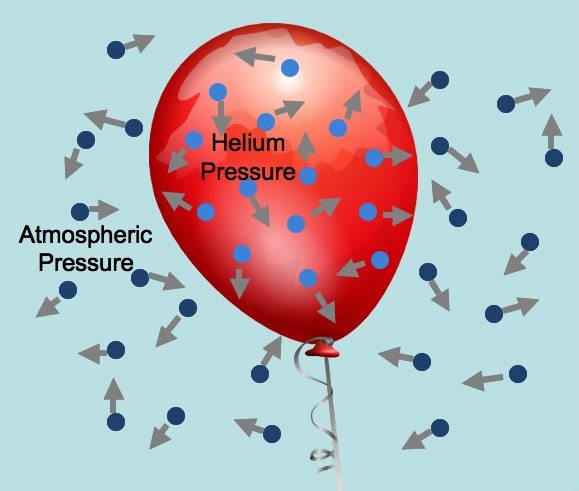
What causes pressure?
a)
The walls of the container
b)
The vacuum in the container
c)
The collisions of the particles
d)
Atmospheric pressure acting on the outside walls
87.
What is the formula Charles' Law?
a)
V = T
b)
VT = VT
c)
T1 / V1 = T2 / V2
d)
V1 / T1 = V2 / T2
88.
What is the variable for this number 1.5 mol
a)
P
b)
T
c)
n
d)
V
89.
PV=nRT
a)
Charles Law
b)
Boyle's Law
c)
Combined Gas Law
d)
Ideal Gas Law
90.
Gases have...
a)
A definite shape and volume
b)
A definite shape but no definite volume
c)
No definite shape but a definite volume
d)
No definite shape or volume
91.
Gases have...
a)
A definite shape and volume
b)
A definite shape but no definite volume
c)
No definite shape but a definite volume
d)
No definite shape or volume
92.

Which answer shows the correct Combined Gas Law

a)
b)
c)
d)