wayground logo

Free Printable Worksheets

NEW

Font size

S
M
L
XL
Worksheets

Review for DCA 4.1 Space Exam

Total questions: 70

Worksheet time: 48mins

Name
Class
Date
1.
A model of the solar system in which Earth and the other planets revolve around the SUN.
a)
Heliocentric
b)
Geocentric
2.
The sun centered view of the universe
a)
Galaxy
b)
Geocentric
c)
Astonomy
d)
Heliocentric
3.
Ptolemy's view of the universe
a)
Galaxy
b)
Geocentric
c)
Astonomy
d)
Heliocentric
4.
Copernicus' view of the universe
a)
Galaxy
b)
Geocentric
c)
Astonomy
d)
Heliocentric
5.
What did Galileo Improve?
a)
The astrolabe
b)
the stars
c)
The Telescope
d)
cat food.
6.
A philosopher that proved the Earth is a sphere & thought it was at the center of the universe.
a)
William Herschel
b)
Isaac Newton
c)
Aristotle
d)
Nicolaus Copernicus
7.
Began a new era of astronomy when he concluded that the Sun was the center of the universe
a)
Aristotle
b)
Isaac Newton
c)
Claudius Ptolemy
d)
Nicolaus Copernicus
8.
He showed the laws governing astronomical bodies were the same laws governing motion on Earth
a)
Isaac Newton
b)
Charles Messier
c)
Tycho Brahe
d)
Hipparchus
9.
This astronomer discovered that the orbit of each planet is an ellipse, or an oval shape, and not perfectly circular.
a)
Aristotole
b)
Copernicus
c)
Kepler
d)
Newton
10.
What shape is an ellipse?  
a)
An oval shape
b)
A round shape
c)
A circle shape 
d)
Sun, moon and Earth lined up shape
11.

Astronomer Edwin Hubble discovered (in 1929) that all galaxies are

a)

rushing toward each other.

b)

getting larger by galactic mergers

c)

rushing away from each other.

d)

spiral in shape

12.

Most scientists believe the Big Bang Theory explains which of the following questions?

a)

How our planets and moons formed

b)

How our universe began

c)

How the sun turns hydrogen into helium

d)

How fast light travels through space

13.

Which statement is true?

a)

The galaxies are moving toward us.

b)

The galaxies are moving away from us.

c)

The universe remains static or unchanged in motion.

d)

None of the above

14.

Cosmic Microwave Background Radiation is a form of _________.

a)

Matter

b)

Energy

c)

Visible Light

d)

Water

15.

Which elements are most

abundant in the visible

universe?

a)

Hydrogen and Carbon

b)

Carbon and Helium

c)

Hydrogen and Oxygen

d)

Hydrogen and Helium

16.

As galaxies move away from our galaxy

a shift on the electromagnetic spectrum

(EMS) is noticed. This phenomena is

called _____________.

a)

redshift

b)

blueshift

c)

unshift

d)

blackshift

17.
How much of the moon is always lit?
a)
can't tell
b)
always changes
c)
half
d)
3/4
18.
The cycle of the moon lasts about a _.
a)
day
b)
year
c)
week
d)
month
19.
Which of the following words describe the phases of the moon?
a)
none, quarter, half, three quarters, full
b)
new, crescent, quarter, gibbous, full
c)
dark, light, half, quarter, blue
d)
first quarter, second quarter, third quarter, fourth quarter
20.

What is the source of the moon's light?

a)

Earth

b)

the sun

c)

the moon

d)

Mars

21.
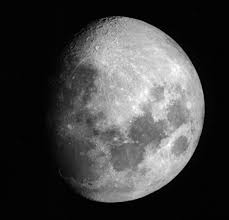
Name the moon phase
a)
waning crescent
b)
waxing crescent
c)
waning gibbous
d)
waxing gibbous
22.
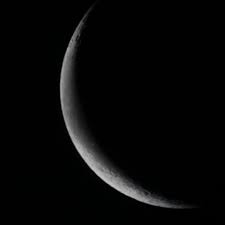
Name the moon phase
a)
waning crescent
b)
waxing crescent
c)
waning gibbous
d)
waxing gibbous
23.
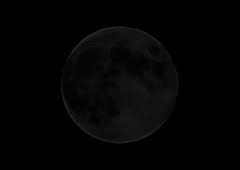
Name the moon phase
a)
First Quarter
b)
Last Quarter
c)
New Moon
d)
Full Moon
24.
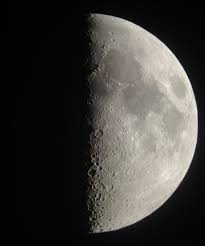
Name the moon phase
a)
First Quarter
b)
Last Quarter
c)
New Moon
d)
Full Moon
25.
What type of eclipse is this?
a)
Solar eclipse
b)
Lunar eclipse
26.
What type of eclipse is this?
a)
Solar Eclipse
b)
Lunar Eclipse
27.
Differences in the moon's and sun's pull on different sides of the Earth cause _________.
a)
gravity
b)
lunar phases
c)
tides
d)
dabbing
28.
What type of tide would this arrangement of earth-moon-sun create?
a)
full moon tide
b)
new moon tide
c)
neap tide
d)
spring tide
29.
What type of tides would this arrangement of earth-moon-sun create?
a)
neap tide
b)
spring tide
c)
new moon tide
d)
full moon tide
30.
What type of galaxy is this?
a)
Spiral
b)
Elliptical
c)
Irregular 
d)
Irrational
31.
What type of galaxy is this?
a)
Spiral
b)
Elliptical
c)
Irregular
d)
Irrational
32.
What type of galaxy is this?
a)
Spiral
b)
Elliptical
c)
Irregular
d)
Irrational
33.
pulls clusters of stars together in most galaxies.
a)
air
b)
Big Bang Theory
c)
gravity
d)
dark energy
34.
The belt between Mars and Jupiter
a)
Comets
b)
Asteroids
c)
Meteors
d)
Stars
35.
Sometimes I am called a "dirty snowball". I have a hydrogen cloud, coma, and a nucleus. I am invisible except when near the sun. What am I?
a)
Asteroid
b)
Star
c)
Meteor
d)
Comet
36.
I am a rock entering a planet's atmosphere.
a)
meteor
b)
meteorite
c)
asteroid
d)
comet
37.
When a meteor hits Earth, what is it called?
a)
meteorite
b)
meteroid
c)
meteor
38.
Our galaxy is called the
a)
Earth Nebula
b)
The Hubble Galaxy
c)
The Milky Way
d)
The Snickers
39.
In the diagram given, what happens as we move to the left?
a)
Stars Get Larger
b)
Stars get Colder
c)
Stars get hotter
40.
Which star is the coldest?
a)
Yellow Star
b)
Red Star
c)
Orange Star
d)
Blue Star
41.
Which category is our Sun located in?
a)
White Dwarfs
b)
Supergiants
c)
Main Sequence
d)
Giants
42.
The distance that light travels in one year...
a)
Light year
b)
Quantumyear
c)
Stellar-year
d)
1 million kilometers
43.

This is the suns outer atmosphere

a)

Corona

b)

Chromosphere

c)

Photosphere

d)

Convection Zone

44.

In this layer, huge arcs of gas and tremendous explosions occur.

a)

Corona

b)

Chromosphere

c)

Photosphere

d)

Radiative Zone

45.

This zone is the movement of heat going from the radiative zone to the surface and back.

a)

Core

b)

Photosphere

c)

Convection Zone

d)

Corona

46.

This is the source of ultraviolet light

a)

Core

b)

Corona

c)

Chromosphere

d)

Convection Zone

47.

Energy from the core moves outward through this zone.

a)

Convection Zone

b)

Radiative Zone

c)

Chromosphere

d)

Photosphere

48.

Nuclear Fusion happens here.

a)

Corona

b)

Core

c)

Photosphere

d)

Radiative Zone

49.

Nuclear Fusion is when ________ atoms are squeezed together forming _________ atoms.

a)

Hydrogen / Helium

b)

Nitrogen / Hydrogen

c)

Oxygen / Neon

d)

Helium / Oxygen

50.

These cooler areas are created by concentrated magnetic fields

a)

Solar Flares

b)

Core

c)

Sun Spots

d)

Corona

51.

When we look at the sun our eyes thinks this layer of the sun is solid.

a)

Sun Flare

b)

Sun Spot

c)

Corona

d)

Photosphere

52.

This vast halo of super heated plasma can have streamers that reach millions of miles into space.

a)

Sun spots

b)

Chromosphere

c)

Photosphere

d)

Corona

53.
a brief burst of energy from the sun’s photosphere
a)
corona
b)
solar flare
c)
solar wind
d)
photosphere
54.
Identify part 1.
a)
corona
b)
photosphere
c)
core
d)
radiation zone
55.
Identify part 3.
a)
corona
b)
convection zone
c)
core
d)
radiation zone
56.
Identify part 4.
a)
photosphere
b)
convection zone
c)
core
d)
radiation zone
57.
Identify part 8.
a)
sunspot
b)
solar flare
c)
granules
d)
radiation zone
58.
Identify part 7.
a)
sunspot
b)
solar flare
c)
corona
d)
radiation zone
59.
Identify part 9.
a)
sunspot
b)
solar flare
c)
granules
d)
prominence
60.

What are the inner layers of the Sun?

a)

Core, Radiative zone, and Convection zone.

b)

Crust, mantle, and core.

c)

Core, Photosphere, and Radiative Zone.

d)

The Sun doesn't have inner layers.

61.

What are the outer layers of the Sun?

a)

The Sun has only inner layers.

b)

Photosphere, Chromosphere, and Corona.

c)

Core, Radiative zone, and Convection zone.

d)

Crest, Corona, Mantle.

62.

Cell phones (also have microwaves) and televisions use this type of EM wave. It has the longest wavelength with the lowest frequency.

a)

Radio Wave

b)

TV Wave

c)

Gamma wave

d)

Ultraviolet Wave

63.

Which portion of the electromagnetic spectrum includes the range of light that can be detected by the human eye?

a)

ultraviolet light

b)

visible light

c)

infrared light

d)

x-rays

64.

Which part of the electromagnetic spectrum has high enough energy to cause sunburn?

a)

infrared light

b)

visible light

c)

ultraviolet light

d)

microwaves

65.

The type of EM wave that is used to cook food. It has a higher frequency (and shorter wavelength) than radio waves.

a)

radio

b)

microwave

c)

gamma

d)

visible light

66.

Which has the LONGEST wavelength and, therefore, the lowest frequency/energy

a)

Gamma Rays

b)

Radio Waves

c)

Visible Light

d)

Infrared rays

67.

Which of the following electromagnetic waves is given off as heat, which can be used in night vision goggles?

a)

Radio Waves

b)

Infrared Rays

c)

Visible Light

d)

Gamma Rays

68.
Which type of electromagnetic radiation has the shortest wavelength?
a)
Radio Waves
b)
Visible Light
c)
Microwaves
d)
Gamma Rays
69.
Which of the following types of radiation has the shortest wavelength and the highest frequency?
a)
Radio Waves
b)
Infrared
c)
Visible
d)
X-Rays
70.

All objects in space (comets, planets, moons, stars, galaxies, and asteroids) are moving

a)

True

b)

False