wayground logo

Free Printable Worksheets

Font size

S
M
L
XL
Worksheets

McCool 4th 9 Weeks Review 6th Advanced

Total questions: 50

Worksheet time: 54mins

Name
Class
Date
1.
What is a producer? 
a)
Organism that creates their own food.
b)
Organism that eat other organisms for energy
c)
Organism that eat other dead organisms
2.
What is a consumer? 
a)
Organism that creates their own food.
b)
Organism that eat other organisms for energy
c)
Organism that eat other dead organisms
3.
What is a decomposer? 
a)
Organism that creates their own food.
b)
Organism that eat other organisms for energy
c)
Organism that eat other dead organisms
4.
What do Omnivores eat? 
a)
Plants ONLY 
b)
Animals ONLY
c)
Plants AND Animals
5.
What do Herbivores eat? 
a)
Plants ONLY 
b)
Animals ONLY
c)
Plants AND Animals
6.
What animal is on the top of the food chain? 
*Remember Humans are on the top of all food chains because we do not get hunted. 
a)
Grass
b)
Grasshopper
c)
Mouse
d)
Owl
7.
Who does the owl get energy from? 
a)
Grass
b)
Grasshopper
c)
Mouse
d)
Ow
8.
Who is the producer in this food chain? 
a)
Grass
b)
Grasshopper
c)
Mouse
d)
Ow
9.
Who does the grasshopper get energy from? 
a)
Grass
b)
Grasshopper
c)
Mouse
d)
Ow
10.
What do Carnivores eat? 
a)
Plants ONLY 
b)
Animals ONLY
c)
Plants AND Animals
11.

Position that an organism occupies based on what it eats

a)

Producer

b)

Trophic level

c)

Heterotroph

d)

Consumer

12.

Cannot make its own food

a)

Autotroph

b)

Producer

c)

Heterotroph

d)

Biomass

13.

Makes its own food

a)

Herbivore

b)

Carnivore

c)

Heterotroph

d)

Autotroph

14.

What amount of percentage does the energy decrease as it goes up the pyramid?

a)

100%

b)

1000%

c)

10%

d)

1%

15.

Which biome is represented by the rainfall amounts in letter C?

a)

desert

b)

prairie

c)

deciduous forest

d)

tropical rain forest

16.
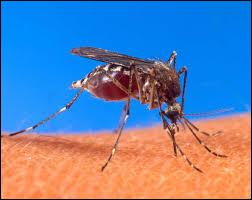
Mosquito  belongs to what kingdom?
a)
Animal Kingdom
b)
Plant Kingdom
c)
Fungi Kingdom
d)
Protista Kingdom
17.

An example of an unicellular organism would be:

a)

monkey

b)

bacteria

c)

spider

d)

human

18.

What kingdom do unicellular, prokaryotic organisms that live in extreme environments?

a)

Animal

b)

Archaebacteria

c)

Eubacteria

d)

Plant

19.
Which term means "True Nucleus" or cell(s) with a nucleus?
a)
Eukaryotes
b)
Prokaryotes
c)
Multi-cellular
20.
Which one of these isn't one of the 5 kingdom names?
a)
Animalia
b)
Protista
c)
FUngi
d)
Virusia
21.
Vertebrates can be classified in......
a)
5 groups: Mammals, Birds, Fish, Reptiles and Amphibians
b)
5 Groups: Dogs, Birds, Fish, Reptiles, and Amphibians
c)
4 Groups: Mammals, Birds, Fish and Ampbibians
22.
A scientific name consists of 
a)
Genus and Order
b)
Genus and Domain
c)
Genus and species
d)
Kingdon and Phylum
23.

Which do BOTH prokaryotes and eukaryotes contain?

a)

nucleus

b)

mitochondria

c)

ribosomes

d)

cell wall

24.
Made up of one cell
a)
Prokaryote
b)
Eukaryote
25.

Which organelle is responsible making food (Glucose) using sunlight?

a)

Cell Membrane

b)

Nucleus

c)

Chloroplast

d)

Mitochondria

26.

Select all that are raw materials for Photosynthesis.

a)

Water

b)

Carbon Dioxide

c)

Oxygen

d)

Sunlight (Light Energy)

e)

Glucose (Sugar/food)

27.

Select all that are products of Photosynthesis.

a)

Water

b)

Carbon Dioxide

c)

Oxygen

d)

Sunlight (Light Energy)

e)

Glucose (Sugar/food)

28.

Which organelle stores water for use in photosynthesis?

a)

Chloroplast

b)

Cell Membrane

c)

Vacuole

d)

Nucleus

29.

Is Glucose (C6H12O6) a Raw Material (Ingredient) or Product of Photosynthesis?

a)

Product

b)

Raw Material

c)

Neither

30.
Why do plants conduct photosynthesis?
a)
To make light
b)
To make mitochondria
c)
To make glucose
d)
To release carbon dioxide
31.
How does carbon dioxide get into the leaves of a plant?
a)
It's absorbed by the roots
b)
It's made in a chemical reaction in the stem
c)
It enters through the stomata
d)
It goes through the flowers
32.
Which of these conditions would decrease the rate of photosynthesis in a plant?
a)
Above average precipitation
b)
Changing the daylight hours from 14 hrs to 10 hrs
c)
Changing the CO2 concentration from 380 ppm to 410 ppm
d)
All of these choices
33.
Which choice correctly shows the gases that enter and exit plants during photosynthesis?
a)
Enter: Oxygen
Exit: Carbon dioxide
b)
Enter: Water vapor
Exit: Glucose
c)
Enter: Carbon dioxide
Exit: Oxygen
d)
Enter: Light
Exit: Water vapor
34.

Which of the following is the correct equation for PHOTOSYNTHESIS?

a)

light + carbon dioxide + water --> glucose + oxygen

b)

carbon dioxide + sugar + water --> oxygen + light

c)

oxygen + light + water --> carbon dioxide + sugar

d)

carbon dioxide + oxygen + water --> Light+ Sugar

35.

Based on the dichotomous key, which bird is Certhidea? (Slender = thin; stout= round)

a)

Bird W

b)

Bird X

c)

Bird Y

d)

Bird Z

36.

Identify the plant shown

a)

A

b)

B

c)

C

d)

D

37.
a)

A

b)

B

c)

C

d)

D

38.
a)

A

b)

B

c)

C

d)

D

39.
Aa, DD, bB, yy are all examples of
a)
genotypes
b)
phenotypes
40.
What you see, or the physical appearance.
a)
Genotype
b)
Phenotype
c)
Homozygous
d)
Heterozygous
41.
Which of the following is homozygous recessive?
a)
Tt
b)
tt
c)
TT
d)
T
42.
The passing of traits from parents to offspring
a)
heredity
b)
genetics
c)
trait
d)
alleles
43.
The science of heredity
a)
heredity
b)
genetics
c)
trait
d)
gene
44.
Characteristics can also be called
a)
heredity
b)
traits
c)
gene 
d)
alleles
45.
The factors that control a trait
a)
genetics
b)
trait
c)
gene
d)
alleles
46.

Which type of reproduction requires 2 parent cells combining to create a new cell (offspring)?

a)

sexual

b)

asexual

47.

Which type of reproduction only requires one parent?

a)

sexual

b)

asexual

48.

Which of the following is NOT a type of ASEXUAL reproduction?

a)

Budding

b)

Regeneration

c)

Vegetative Propogation

d)

Cloning

e)

A flower being pollinated

49.

Identify the type of asexual reproduction shown in the image.

a)

vegetative propogation

b)

cloning

c)

binary fision

d)

budding

50.

The offspring of asexual reproduction are genetically _____________. (select two)

a)

identical (the same)

b)

diverse

c)

different

d)

clones