wayground logo

Free Printable Worksheets

Font size

S
M
L
XL
Worksheets

PS Final Review

Total questions: 56

Worksheet time: 3570secs

Name
Class
Date
1.

When an atom loses an electron, it becomes a

a)

positive ion

b)

negative ion

c)

neutral ion

d)

neutral atom

2.
Ionic bonds are between...
a)
Metal and Non-metal
b)
Non-metal and Non-metal
c)
Metal and Metal
3.
How are ionic bonds formed?
a)
Transfer of electrons
b)
Sharing of electrons
4.
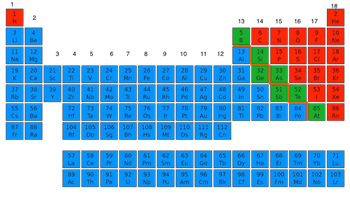
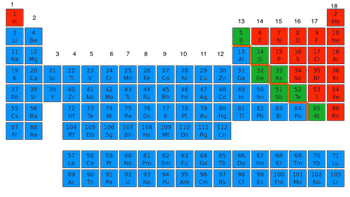
Where are the nonmetals located on the periodic table? 
a)
Blue
b)
Red
c)
Green
5.
Where are metals located on the periodic table?
a)
Blue
b)
Green
c)
Red
6.
Ionic bonds form between two ions that have...
a)
ionic compounds
b)
negative charges
c)
positive charges
d)
opposite charges
7.

What type of elements form cations?

a)

metals

b)

nonmetals

c)

metalloids?

8.

Anions

a)

Gain electrons, has an overall positive charge

b)

Lose electrons, has an overall positive charge

c)

Lose electrons, has an overall negative charge

d)

Gain electrons, has an overall negative charge

9.

Cations

a)

Gain electrons, has an overall positive charge

b)

Lose electrons, has an overall positive charge

c)

Lose electrons, has an overall negative charge

d)

Gain electrons, has an overall negative charge

10.
Name this compound: 
KF
a)
Potassium fluoride
b)
Potassium fluorite
c)
Fluorine potasside 
d)
Potassium fluorate
11.
The chemical formula of carbon tetrachloride is
a)
CCl
b)
C₄Cl
c)
CCl₄
d)
C(IV)Cl
12.
carbon monoxide
a)
CO
b)
CO2
c)
C2O
d)
COH
13.
The chemical formula of dinitrogen textroxide is
a)
Ni₂O₄
b)
NiO
c)
N₂O₄
d)
NiO₂
14.

Which particle is emitted in beta-plus decay?

a)

electron

b)

neutron

c)

positron

d)

proton

15.

What is the relative charge of a positron?

a)

-1

b)

0

c)

1

d)

2

16.

The particle emitted in beta-minus decay is a ____________________.

a)

fast-moving electron

b)

proton

c)

Helium

d)

Krypton

17.
Sodium has an atomic number of 11, how many protons does this atom have?
a)
22
b)
11
c)
12
d)
2
18.
The following element key shows how many protons?
a)
16
b)
15.999
c)
Oxygen
d)
8
19.

The smallest particles of matter are called

a)

neutrons

b)

atoms

c)

electrons

d)

protons

20.
What are the products to a neutralization reaction?
a)
H2 + Ionic Salt
b)
H2O + Ionic Salt
c)
H3O+ + Ionic Salt
d)
OH- + Ionic Salt
21.

Complete the following reaction:

HCl + Mg(OH)2 -->

a)

MgCl2 + H2O

b)

Mg +H2O

c)

MgCl2 + H2

d)

MgCl2 + H2O + CO2

22.

Define soluble

a)

A substance that is invisible

b)

A substance that bubbles

c)

A substance that is transparent

d)

A substance that can dissolve

23.

What is a solute?

a)

a substance that changes to blue in liquid

b)

a substance that is added to an acid

c)

a substance that is dissolved in liquid

d)

a liquid that disappears

24.

What is a solvent?

a)

A substance that can dissolve another substance

b)

A substance that can make another substance catch fire

c)

A substance that can change the colour of another substance

d)

A substance that can change the sate of matter of another substance

25.
What would be the proper chemical formula for combining Al3+ and Cl- :
a)
AlCl3
b)
Al3Cl
c)
AlCl
d)
Al3Cl3
26.
copper(II) chloride
a)
CuCl2
b)
CuCl
c)
Cu2Cl
d)
Cu2Cl2
27.
Which problem is balanced?
a)
PbO2 + 2H2
b)
SO2 + H20 --> H2SO4
c)
2Na + 2H2O --> 2NaOH + H2
28.
Is the equation balanced?: 2H2O + O2 --> 4MgO + 3Fe
a)
Yes
b)
No
29.

A substance is found to have the following characteristics:


Very bitter taste

Feels slippery to the touch

Produces OH- ions when dissolved in water


In what category would the substance be classified?

a)

acid

b)

base

c)

enzyme

d)

fatty acid

30.

KOH is ...

a)

an acid

b)

a base

c)

a salt

d)

an ionic compound

31.
Releases hydrogen in an aqueous solution.
a)
base
b)
strong base
c)
acid
d)
weak base
32.

HNO2

a)

a base

b)

a salt

c)

an acid

d)

an ionic compound

33.
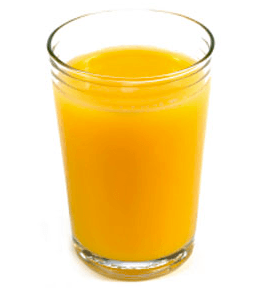
Which form of matter take the shape of a container like this juice?
a)
liquid
b)
solid
c)
glass
d)
gas
34.
What happens when my glass of water is sitting in the sun and disappears into a gas?
a)
evaporation
b)
burning
c)
melting
d)
freezing
35.
In a solid, the particles
a)
vibrate in place
b)
slide past one another
c)
overcome the strong attraction
d)
move freely in any direction
36.
Freezing (or solidification) is . . . .
a)
liquid to solid
b)
solid to liquid
c)
solid to gas
d)
solid to plasma
37.
5. What is it called when a solid turns directly into a gas?
a)
Sublimation
b)
Condensation
c)
Liquid
38.
Endothermic phase changes include
a)
conduction, convection and radiation
b)
freezing and condensation
c)
vaporization and condensation
d)
melting, boiling, evaporation and sublimation
39.
Exothermic phase changes include
a)
conduction, convection and radiation
b)
freezing and condensation
c)
vaporization and condensation
d)
melting, boiling, evaporation and sublimation
40.

What type of reaction is this?

a)

Exothermic

b)

Endothermic

c)

Energy Producing

d)

No way to tell

41.

A __________ is a subatomic particle with a negative charge.

a)

proton

b)

neutron

c)

electron

d)

nucleus

42.

What is the atomic number of this element?

a)

17

b)

18

c)

35

d)

35.453

43.

What is the mass number of this atom of Chlorine?

a)

17

b)

18

c)

35

d)

35.453

44.

How is the alpha particle written in a nuclear equation?

a)

42He

b)

24He

c)

0-1e

d)

00γ

45.
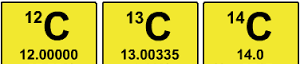
What do these isotopes of carbon all have in common?
a)
neutrons & mass number
b)
atomic number and neutrons
c)
atomic number and electrons
d)
protons, atomic number, and mass number
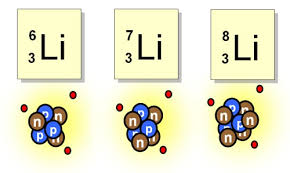
46.
which atom has  4 neutrons?
a)
Li-6
b)
Li-7
c)
Li-8
d)
they have the same # of neutrons
47.
What does Boyle's law relate to?
a)
Temperature and Volume
b)
Volume and Pressure
c)
Temperature and Pressure
48.
When the temperature of matter increases the particles...
a)
speed up and move closer
b)
speed up and move farther apart
c)
slow down and move closer together
d)
slow down and move farther apart
49.
Boyle's law : When _______ is held constant, the pressure and volume of a gas are ________  proportional
a)
temperature,  equally
b)
mass, inversely
c)
temperature, inversely
d)
mass, equally
50.

Distillation is used to separate ______.

a)

a liquid from its solution.

b)

an insoluble solid from its solution.

c)

a soluble solid from its solution.

51.

Distillation is made up of ___.

a)

evaporation, then condensation

b)

condensation, then evaporation

c)

boiling, then condensation

d)

condensation, then boiling

52.

Which factors affect the rate of a reaction?

a)

temperature

b)

concentration

c)

size

d)

pressure

e)

catalyst

53.

Why does a higher temperature increase the rate of a reaction?

a)

It increases both the frequency collision and energy of reactant particles

b)

It only increases the frequency of collision

c)

It only increases the energy of reactant particles

d)

It reduces the activation energy of the reaction

54.

How does a catalyst work in speeding up a reaction?

a)

By lowering the activation energy or reaction

b)

by giving them more energy

c)

by making them more available

55.
When 50 grams of KCl is dissolved in 100 grams of water at 50 ºC, the solution can be correctly described as:
a)
supersaturated
b)
unsaturated
c)
saturated
56.
When 42 grams of potassium chloride, is dissolved in 100 grams of water at 50 ºC, the solution can be correctly described as:
a)
supersaturated
b)
saturated
c)
unsaturated