

wayground logo

Free Printable Worksheets

NEW

Font size

S
M
L
XL
Worksheets

Hydrosphere Review

Total questions: 64

Worksheet time: 6hrs 24mins

Name
Class
Date
1.
When water is heated in the ocean by the sun and turns into water vapor
a)
condensation
b)
evaporation
c)
transpiration
d)
runoff
2.
Water in lakes and rivers that does not contain salt-
a)
recycled water
b)
new water
c)
salt water
d)
fresh water
3.
The ________ is the driving force of the earth's surface.
a)
sun
b)
moon 
c)
stars
4.
The water cycle has no start or end
a)
true
b)
false
5.

Which of the following is NOT a way water moves from the land to the air?

a)

transpiration

b)

respiration

c)

evaporation

d)

precipitation

6.

What is shown by letter D in the diagram?

a)

runoff

b)

groundwater

c)

melting

d)

vapor

7.
97% of the water on earth is _________, making it undrinkable for humans.
a)
fresh water
b)
ground water
c)
salt water
d)
surface water
8.

The large underground bodies of water containing fresh water used by humans are called:

a)

Aquifers

b)

Runoffs

c)

Ponds

d)

Collections

9.

Where is most of the fresh water on earth found?

a)

Under ground

b)

Glaciers and Ice Caps

c)

Rivers

d)

Lakes

10.
The water that fills lakes and rivers
a)
groundwater
b)
surface water
c)
water table
d)
saturated zone
11.

An area of land encompassing that drains into a river and its tributaries

a)

Tributary

b)

Wetland

c)

Divide

d)

Watershed

12.
A result of upwelling is a/an _________ in nutrients in the water.
a)
Decrease
b)
Increase
c)
No Change
13.

The nutrients in ocean water help tiny plants called ______________  to grow. 

a)
algae
b)
kelp
c)
plankton
14.
As oceans become deeper, the water pressure ___________________.
a)
increases
b)
decreases
c)
stays the same
15.

Which Zone is from 0-200 meter below sea level?

a)

Hadal Zone

b)

Photic Zone

c)

Aphotic Zone

16.

The Aphotic Zone is ______ meters below sea level.

a)

0-1,000

b)

1,000 - 11,000

c)

1,000-4,000

17.

What Zone is 4,000-6,000 meters below sea level?

a)

Hadal

b)

Epipelagic

c)

Abyssal

18.

What Zone is 6,000-11,000 meters below sea level?

a)

Hadal

b)

Abyssal

c)

Bathyal

19.

What ocean floor feature is in the Hadalpelagic Zone?

a)

Trenches

b)

Mid-Ocean Ridges

c)

Volcanic Islands

20.

The Photic Zone includes which two pelagic zones?

a)

Epipelagic, Mesopelagic

b)

Hadalpelagic, Epipelagic

c)

Mesopelagic, Bathypelagic

d)

Bathypelagic, Hadalpelagic

21.
The large, flat part of the ocean floor is called the _____________. 
a)
trench
b)
continental shelf
c)
continental slope
d)
abyssal plain
22.

What do you call an underwater mountain?
a)
trench
b)
abyssal plain
c)
seamount
d)
volcanic island
23.
If you are walking into the ocean you would be on the continental...
a)
shelf
b)
slope
c)
rise
24.
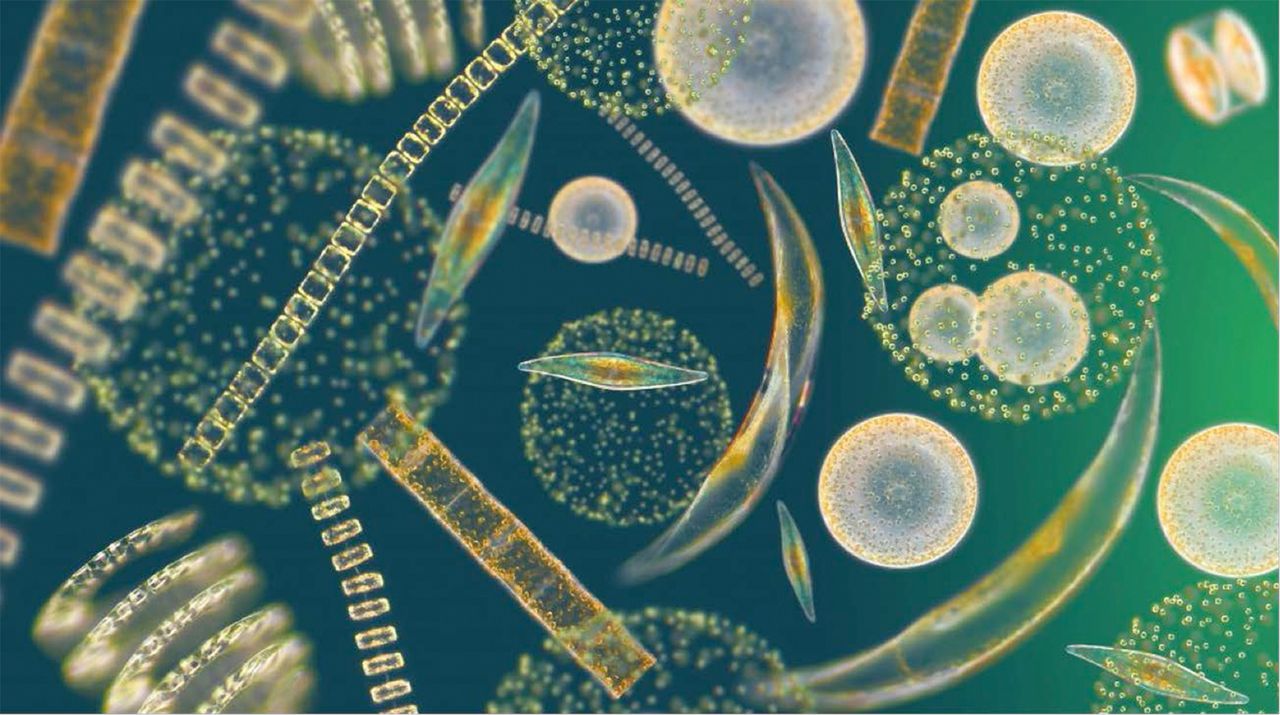
What are tiny organisms that float near the surface of the water?
a)
plankton
b)
organisms
c)
abiotic factor
d)
insects
25.
Plankton that uses photosynthesis:
a)
Phytoplankton
b)
Zooplankton
26.

Permanent members of the plankton family.

a)

Holoplankton

b)

Meroplankton

c)

Autotroph

d)

Heterotroph

27.

Animal members of the plankton community.

a)

Phytoplankton

b)

Meroplankton

c)

Holoplankton

d)

Zooplankton

28.

Which group of zooplankton is plankton for its WHOLE life?

a)

holoplankton

b)

meroplankton

29.

Organisms who are plankton only part of their lives.

a)

holoplankton

b)

microplankton

c)

meroplankton

d)

macroplankton

30.

Which factors can limit phytoplankton productivity?

a)

Sunlight

b)

Inorganic Nutrients

c)

Temperature

d)

All of these

31.
Describes the chemical, physical and biological attributes of water as it is fit for drinking, fishing, swimming, farming, etc
a)
Water Quality
b)
Water Sheds
c)
Dissolved oxygen
d)
nitrates
32.
The amount of oxygen in the water, measured in parts per million (ppm)
a)
pH
b)
Dissolved Oxygen
c)
nitrates
d)
eutrophication
33.
We used bioindicators to measure the quality of water.  What is a bioindicator?
a)
any living creature
b)
eutrophication
c)
An organism sensitive to its environment
d)
a turbidity tube
34.
The specific bioindicator we used were macroinvertebrates.  What is a macroinvertebrate?
a)
large enough to be seen without a microscope with no backbone (bugs)
b)
any bioindicator
c)
nitrates
d)
pH
35.
What is the healthiest combination listed?
a)
low pH, high nitrates, neutral temperature
b)
low temperature, neutral pH and low nitrates
c)
as many nitrates as possible, low temp and low pH
d)
high temp, high nitrates and high pH
36.
High turbidity means.....
a)
very clear water
b)
neutral pH
c)
very murky or cloudy water
d)
high nitrates
37.
how does increasing nitrates impact stream health
a)
excess algae
b)
increased oxygen
c)
increased water clarity
38.
What is the end result of eutrophication?
a)
More algae
b)
decreased oxygen and fish kills
c)
less turbidity
d)
a new pond
39.
If water temperature goes UP, what happens to the level of Dissolved oxygen?
a)
It goes up
b)
It goes down
40.

What does a pH of 7 mean?

a)

acid

b)

base

c)

neutral

41.

What does a pH below 7 mean?

a)

acid

b)

base

c)

neutral

42.

What does a pH above 7 mean?

a)

acid

b)

base

c)

neutral

43.

The majority of aquatic creatures prefer a pH range of 6.5-9.0. If it is too low or high they will die

a)

True

b)

False

44.
What is a water molecule composed of?
a)
1 Hydrogen atom and 2 Oxygen atoms
b)
2 Hydrogen atoms and 1 Oxygen atom
c)
3 Oxygen atoms
d)
2 Helium atoms and 1 Oxygen atom
45.
Large bodies of water do not quickly fluctuate in temperature. Why?
a)
Water is a solvent.
b)
Water has a high heat capacity.
c)
Water acts as a buffer.
d)
Water is non-polar.
46.
The illustration provided shows a river and four cities on that river. When the water from the river was sampled at location X, it was determined to be polluted with various chemicals. What would be the most likely source for this pollution?
a)
City 1 and City 2
b)
City 2 and City 3
c)
City 3 and City 4
d)
City 1 and City 4
47.
Where would you find brackish water?
a)
Wetlands
b)
Aquifers
c)
Glaciers
d)
Estuaries
48.
Brackish water is:
a)
Salty
b)
Fresh
c)
Found only in extremely cold water
d)
A mix of salty and fresh
49.

the amount of salt dissolved in water is

a)

pH

b)

salinity

c)

solution

d)

miscibility

50.

True or False:

Estuaries are one of the most productive Ecosystems/Biomes in the world.

a)

False

b)

True

51.

Which letter marks the estuary in the diagram shown?

a)

B

b)

C

c)

A

52.

Why are estuaries important to our environment?

a)

Estuaries filter pollutants and prevent erosion.

b)

Estuaries provide nurseries for marine life.

c)

Estuaries act as home for many types of wildlife.

d)

All of the above.

53.

Where would you find greater salinity in an estuary?

a)

On the surface of the water.

b)

Near the bottom.

c)

Somewhere in the middle.

d)

It would be the same throughout the estuary.

54.

Which of the following is the the largest estuary in North Carolina?

a)

Pamlico Sound

b)

Albermarle Sound

c)

Core Sound

d)

Bogue Sound

55.

Are salinity levels in estuaries higher or lower than the open ocean?

a)

Higher

b)

Lower

c)

The same

56.

A watershed is defined as--

a)

water that is in the Chesapeake Bay

b)

land that drains water into a particular set of rivers

c)

land that is surrounded by water

d)

the place that fresh and salt water meet

57.

What is the defining difference between the marine, freshwater, and estuary biomes?

a)

Salinity (dissolved salt)

b)

Sunlight

c)

Oxygen

d)

Amount of Water

58.

Why does the water level in an estuary rise and fall?

a)

ocean tides bring water in and out of the shore, causing flooding in the estuary

b)

rivers add new water off and on through the day

c)

people all flush their toilets at the same time and it fills the estuary

d)

lots of rain makes the flooding

59.

Which type of estuary is caused by sinking of land during earthquakes?

a)

Tectonic

b)

Fjord

c)

Bar-built

d)

Drowned river valley

60.

Which type of estuary is the Pamlico Sound?

a)

Bar-built

b)

Tectonic

c)

Fjord

d)

Drowned river valley

61.
The ability of a material to transmit water through interconnected pores is called
a)
capacity
b)
competence
c)
permeability
d)
porosity
62.
How much of the earth's water is freshwater?
a)
50 %
b)
3 %
c)
97 %
d)
93 %
63.
Ocean's cover what percent of the Earth's surface?
a)
70 %
b)
60 %
c)
10 %
d)
none of the above
64.
What is it called when plants give off water vapor as a waste product?
a)
condensation
b)
evaporation
c)
sublimation
d)
transpiration
