
 Worksheets
Physics (2nd Semester) Final Exam Unit Practice
Total questions: 141
Worksheet time: 4hrs 56mins
When light bounces off an object- If the surface is smooth and shiny, like glass, water or polished metal, the light will reflect at the same angle as it hit the surface.
reflection
refraction
diffusion
Objects that allow ALL light to pass through
transparent
translucent
opaque
What type of wave is a light wave?
A sound wave
A seismic wave
A electromagnetic wave
A mechanical wave
Ms Pippin rubbed two balloons with a piece of wool. What will happen when the balloons are brought near each other?
The balloons will repel each other.
The balloons will attract each other.
The balloons will become positively (+) charged.
The balloons will pop.
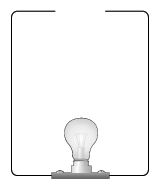

What is a circuit that only has ONE path for electricity to flow?
series circuit
closed circuit
parallel circuit
light bulb

What is a circuit with several paths for electricity to flow?
conductor
series circuit
parallel circuit
open circuit

Every magnet has a _____ pole.
North
South
North and South

What types of energy does the toy oven use to bake the cakes?
Light and sound
Electrical and thermal
Thermal and mechanical
Mechanical and electrical
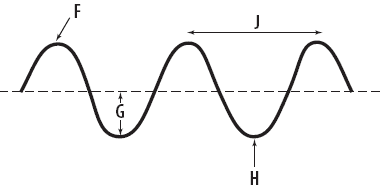
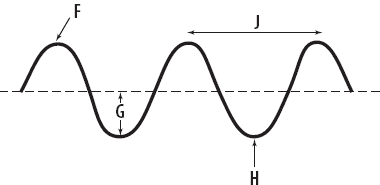
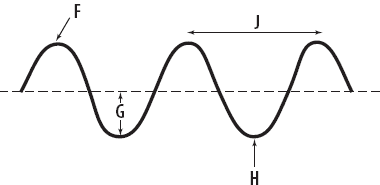
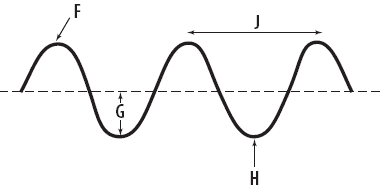
Amplitude is...
measurement of the height of a wave
the speed of sound. 343 meters per second
the distance it takes for one wave cycle to occur
the unit of measurement of frequency
how often a wave occurs in a given amount of time
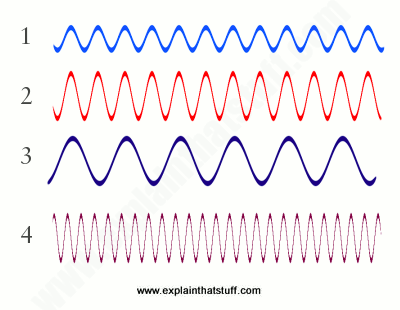
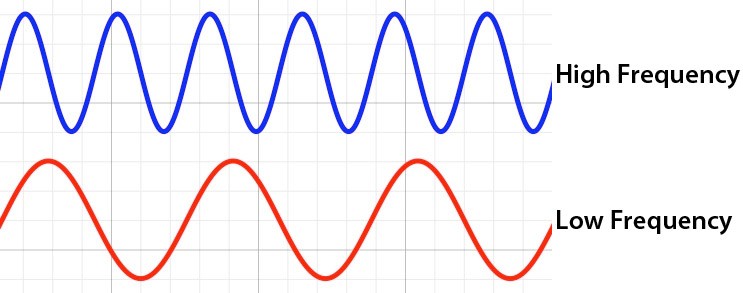
frequency
wavelength
amplitude
The highest part of a transverse wave is
the crest
the trough
the wave point
the hotel transylvania
The lowest part of a transverse wave are the
crests
troughs
wave points
low nodules
The distance between two corresponding parts of a wave is its
amplitude
frequency
wavelength
velocity
The height of the wave from its resting point is called its
wavelength
amplitude
velocity
frequency
The_________________of an earthquake is on the surface directly above the _______________.
center, fault
epicenter, focus
focus, epicenter
Which graph best represents the relationship between the strength of an electric field and distance from a point charge?


The electricity in our house is
AC
DC
BC
AD
A 4000-Ω resistor is connected across a 220-V power source. What current will flow through the resistor?
0.055 A
1.8 A
5.5 A
18 A
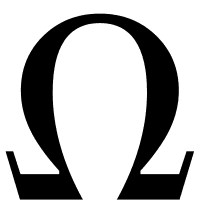
What do you call that symbol?
resistance
current
microfarad
ohm
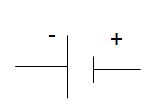
What does the following symbol represents?
Battery
Resistor
Bulb
Ammeter

Each battery is a 10-V battery. What is the voltage difference between points B and D?
10 V
20 V
30 V
40 V


When the second bulb is added, they get
brighter
dimmer
broken
cold

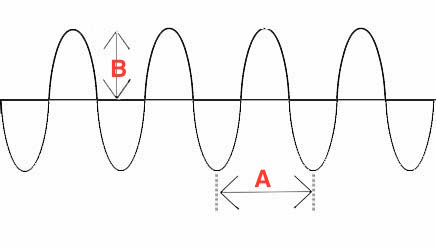
An ocean wave usually occurs at a frequency of 0.2 Hz. What is the period of each wave?
5 seconds
0.2 seconds
12 seconds
300 seconds

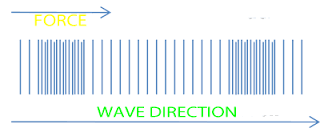
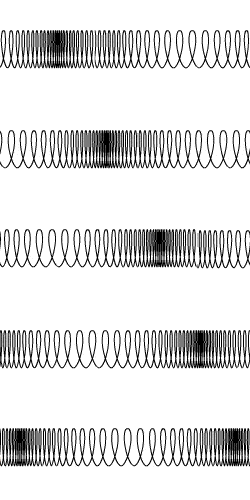
what type of wave is pictured
transverse
longitudinal
slinky

A wave machine generated waves with a wavelength of 0.080 m at a constant wave speed of 17 m/s. Calculate the frequency of the waves.
212 Hz
1.36 Hz
0.00470 Hz
16.92 Hz
1.36


A concave mirror is curved
inward
outward
Which lens represents the path light takes through a diverging lens?


Magnetic Field lines around a bar magnet:
are perpandicular the the magnet
spread out from north pole and curve to south
Cross back and forth over eachother
are perfectly straight

Magnetic poles that are UNLIKE will:
attract
repel
do nothing
all of these.
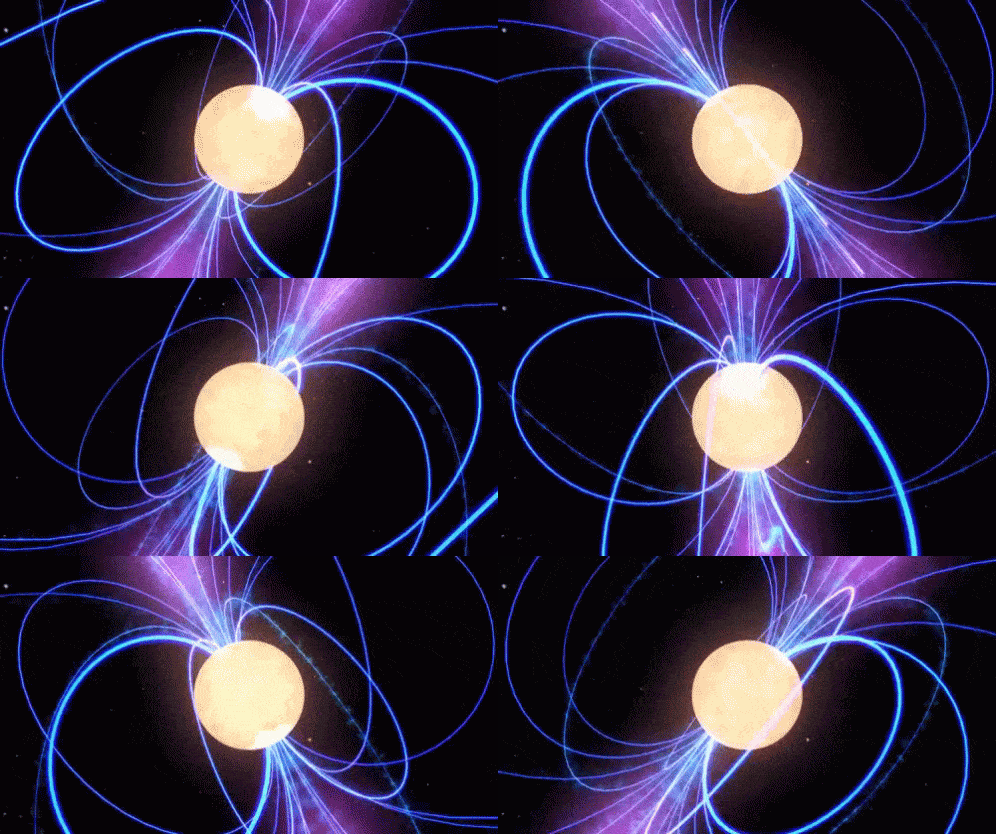
As the earth rotates, the magnetic poles:
stay the same
change a little
Switch completely
disappear

The earth is like a magnet because:
It has a magnetic field due to its core
it has a magnetic field do to its crust
There is a magnetic pole in the earth's core
Gravity generates a magnetic field

You can increase the strength of an electromagnet by:
Decreasing the battery charge
Decreasing the amount of loops in the solenoid
Winding the coils more closely
Winding the coils more loosely

On an atomic level, what creates a magnetic force?
gravity
electrons
protons
neutrons

Running electricity through metal produces:
a magnet
a magnetic field
a solenoid
an insulator

What is the difference between a galvanometer and an electric motor?
Electric motor does not require electric current
Galvanometer uses electric energy
In an electric motor, the wire spins
an electric motor uses electric energy

you can inccrease the strength of an electromaget by
Decreasing the current
Decreasing the loops
using a stronger iron (Ferro) material
winding the coils more loosely
DC Current stands for:
Direct Current
Alternating Current
Diametric Current
Induced Current

In the diagram, an electric motor is pictured. This motor works by:
The wire makes the magnets move
The magnets spin and generate electricity
The current causes the wire (Armature) to spin
the magnets take energy directly from the battery

How do Maglev trains go up to 311 MPH?
a train is pulled by a big magnet at the end of the tracks
electric motors push the train and cause it to levitate
Magnetized coils repel magnets on the train which moves it
a generator creates electricity which fuels the train

a magnetic crane picks up pieces of metal in the picture. the crane magnet is made by electrified current and a coil. Most likely, what element is the metal?
copper
steel
aluminum
iron

A magnetic pole is the part of the magnet where the magnetic field is the..
Strongest
Weakest
Most average

Electromagnetic Induction is a technical way to say that we can create a magnetic field using electricity.
True
False

A compass works because of the effect that the moon has on the earth's magnetic field.
True
False
Increasing the number of loops in a solenoid will cause its strength to increase.
True
False
Electromagnetic waves are generated by ____________?
movement of electric charges
Which of the following is not a characteristic of electromagnetic waves?
They require a medium to travel
They travel at the speed of light in vacuum
They can be polarized
They are transverse waves
What is the speed of light in vacuum, commonly used in calculations involving electromagnetic waves?
3 x 10^8 m/s
2 x 10^8 m/s
1 x 10^8 m/s
5 x 10^8 m/s
Which component of the electromagnetic spectrum has the shortest wavelength?
Infrared
Visible Light
Ultraviolet
Gamma rays
Electromagnetic waves are made up of ________.
Protons
Photons
Electrons
Leptons
Light acts as a _______?
Particle
Force
Wave
Mystery
If the index of refraction for air is approximately 1 and for water it is approximately 1.33, what can be inferred about the speed of light in these media?
Light travels faster in water than in air
Light travels slower in water than in air
Light travels at the same speed in both water and air
The speed of light in water is unpredictable

The dark sections of the light band presented in the image represent what interference?
What is the term for the bending of light waves as they pass from one medium to another?
Reflection
Refraction
Diffraction
Polarization

While performing the double slit experiment, if you bring the openings closer together, how will the light pattern change?
The interference pattern will create more bright spots(fringes).
The interference pattern will have less bright spots(fringes).
Light is (a) when mixed so it becomes brighter.
A flash light is sending white light towards two filters. The first filter is blue and the second filter is red. What light get through the filters?

You have two polarizers and you want to block out 50% of the light coming through the polarizer. At what angle would you hold the two polarizers?
The law of reflection states that?
Light shines through air and hit glass at an angle 30 degrees. If the Index of Refraction is 1.25, What is the angle of refraction?

Why does the object not produce an image?
The object is on the focal point

Where would you place the object to make the image larger than the object?
Farther from the concave mirror
Keep the object the same distance from the mirror
Place the object to the side of the mirror
Closer to the concave mirror
A convex mirror always produces a ___________ image?

Describe the image that is created in this diagram
Virtual
Real
Upright
Inverted
Larger
A diverging lens only creates a ________ image?
The distance of an object is 2 meters, the distance of the image is .5 meters. What is the focal length?
What is the magnification of an image if the height of the image is 0.25 and the height of the object is 2.5?
You stand in front of a mirror and stop. You are 1.5 meters tall and stand 0.5 meters from the mirror. If the image height is 0.5, what is the focal point?
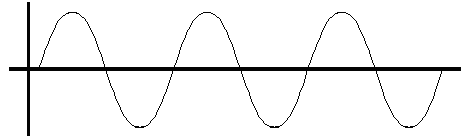
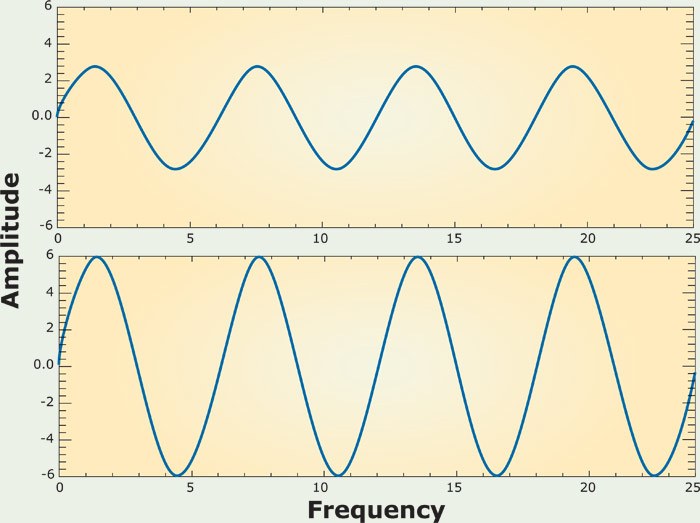






As an electron falls from n = 5 to n = 2, it emits a photon with a wavelength of ___________.
104 nm
113 nm
155 nm
311 nm
210 nm
As an electron falls from n = 5 to n = 3, it emits a photon with a wavelength of ___________.
104 nm
113 nm
155 nm
311 nm
210 nm
As an electron falls from n = 3 to n = 2, it emits a photon with a wavelength of ___________.
104 nm
113 nm
155 nm
311 nm
210 nm
What is the wavelength of a photon with an energy of 2.7 e
V.
151 nm
460 nm
781 nm
177 nm
485 nm
How long does it take a 180-gram of gold-198 to decay to 22.5 grams if the half -life of gold-198 is 2.68 days?
8.04 days
3 days
4 days
2.68 days
How long will it take for a 28-gram sample of radon-222 to decay to 3.5 grams? the half-life of radon-222 of 3.82 days
15.28 days
11.46 days
3 days
4 days
How long will it take for a 150-gram sample of Nitrogen-16 tp decay to 18.75 grams if the half-life for Nitrogen -16 is 7.2 seconds
7.2 seconds
14.4 seconds
18.75 seconds
21.6 seconds
How long will it for a take for a 40 gram. The half-life of cobalt-60 is 5.26 years sample ofcobalt-60 to decay to 5 grams?
17.75 days
15.78 years
15.15 years
17.17 years
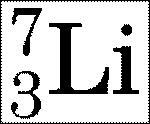
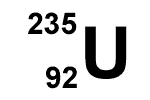
In the equation, 146C --> 147N + 0-1B, the _______ decay of radioactive carbon-14 results in the creation of a new nitrogen-14 atom.
Gamma
Beta
Alpha


The nucleus is held together by the ___________________________force.
The Strong Nuclear Force
The Weak Nuclear Force
Electromagnetism
Gravity
24094Pu —› ____ + 42He
23692U
24796Cm
24493Np
24295Am
Gamma rays have
no mass
a huge mass
a small mass
an average mass
The half-life of Zn-71 is 2.4 minutes. Starting with 100.0 g, how many grams would remain after 7.2 minutes?
100.0 g
50.0 g
12.5 g
8.5 g
The half-life of strontium-90 is 25 years. How much will remain after 100 years if the initial amount is 4.0 g?
3.0 g
0.25 mg
0.3 g
6.25 g
The % of the parent isotope remaining after 1 Half Life.
50%
25%
12.5%
6.25%
141-150.
Answer the questions below after watching the video
What is the primary material used in electrical circuits for the flow of electrons?
Copper
Silicon
Aluminum
Gold
What does a higher voltage in a circuit imply?
Lower electron flow
Higher resistance
Higher electron flow
Decreased current
What is the unit used to measure electrical current?
Volt
Ampere
Ohm
Watt
What type of current is used primarily in household wiring?
Direct Current (DC)
Alternating Current (AC)
Static Current
Conductive Current
Which type of current flows in one direction only?
DC
Multi-directional Current
Bidirectional Current
AC
What device is commonly used to measure the flow of current in a circuit?
Voltmeter
Oscilloscope
Multimeter
Capacitor
What does an ammeter measure?
Voltage
Current
Resistance
Power
What happens when the current exceeds the capacity of a circuit?
The circuit becomes more efficient
The circuit breaks or burns out
The circuit cools down
The circuit expands
What is the purpose of a fuse in an electrical circuit?
Store electrical energy
Break the circuit when overloaded
Decrease voltage
Increase current flow
How does a circuit breaker protect an electrical circuit?
By reducing electron flow
By adding resistance
By increasing voltage
By breaking the circuit when overloaded

