
 Worksheets
Final Review
Total questions: 62
Worksheet time: 1hrs 11mins
What is potential energy?
moving energy
stored energy
renewable energy
non renewable energy
What is kinetic energy?
moving energy
potential energy
stored energy
renewable energy
Two factors that determine work are
force
acceleration
mass
distance
velocity

At which point of the roller coaster is potential energy the greatest?
W
X
Y
Z
The faster an object moves, the ________ kinetic energy it has.
more
less

At what position does the pendulum have the greatest kinetic energy?
Position D
Position C
Position B

What type of heat transfer is shown?
convection
conduction
radiation
bonfire

What type of heat transfer is shown here?
convection
conduction
radiation
boiling water


The energy of moving particles is called _____.
sound energy
heat or thermal energy
light energy
mechanical energy
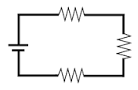

What voltage is needed to cause a 50A current flow through a 10Ω resistor?
15V
500V
500 kV
0.2V
What is power?
The number of repetitions of squats a body-builder can perform
The number of cylinders in a car
The rate at which energy is absorbed
The rate at which energy is transferred


Which type of waves do the particles vibrate perpendicular to the energy?
surface
transverse
mechanical
longitudinal
What is the amplitude of a wave?
the amount of time that occurs in one cycle
the amount of cycles that occur in a given time
the distance traveled by the wave during one full cycle
the size of the disturbance
What is the wavelength of a wave?
the size of the disturbance
the distance between two crests of a wave
the amount of time that occurs in one full cyle
the amount of cycles that occur in a given time
The number of wavelengths that pass a point in a given amount of time is:
frequency
longitudinal
period
transverse
When the frequency of a wave increases, what happens to the wavelength?
the wavelength is not directly affected by the frequency
the wavelength increases
the wavelength decreases
not enough information is given

Which wave in the diagram has the greatest wavelength?
1
2
3
4
Amplitude reflects the amount of _______________ in a wave.
energy
speed
number of cycles
number of troughs
What is the relationship between frequency and wavelength (if wave speed remains constant)?
When frequency increases, wavelength increases
When frequency decreases, wavelength decreases
When frequency increases, wavelength decreases

Choose the wave behavior shown.
reflection
refraction
diffraction
constructive interference
destructive interference

Choose the wave behavior shown.
reflection
refraction
diffraction
constructive interference
destructive interference

Choose the wave behavior shown.
reflection
refraction
diffraction
constructive interference
destructive interference

The Doppler effect will cause a perceived change in the
loudness of a sound.
pitch of a sound.
wave speed.
What is buoyancy?
The force exerted by gravity on a submerged object
The force exerted by an object on a fluid
Upward force exerted by a fluid on a submerged object
The force exerted by a fluid on a floating object
What is the formula to calculate buoyant force?
Buoyant force = Weight of the fluid displaced
Buoyant force = Mass of the object
Buoyant force = Volume of the object
Buoyant force = Density of the fluid
How does a hydraulic lift work based on Pascal's principle?
The pressure applied to the fluid is only transmitted vertically
The pressure applied to the fluid is transmitted faster than the speed of light
The pressure applied to the fluid is transmitted in a random direction
The pressure applied to the fluid is transmitted equally in all directions
In amorphous solids, the atoms or molecules are held together in a completely random formation.
true
false
What does malleable mean?
ductile
shiny
elastic
can be hammered into different shapes
Ductility means
breaks easily
process of turning to liquid when heated
stretchable
able to be drawn out into a long thin wire without breaking
Which of the following is an example of COHESION?
water sticking to water
water sticking to glass
oil sticking to plastic
hydrogen sticking to oxygen
Water sticks well to many materials. What term relates to this property of water?
cohesion
adhesion
density
surface tension
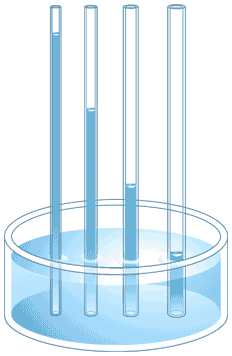
What is the term for water's ability to defy gravity and climb up a tube?
Capillary Action
Specific Heat
Universal Solvent
Magic
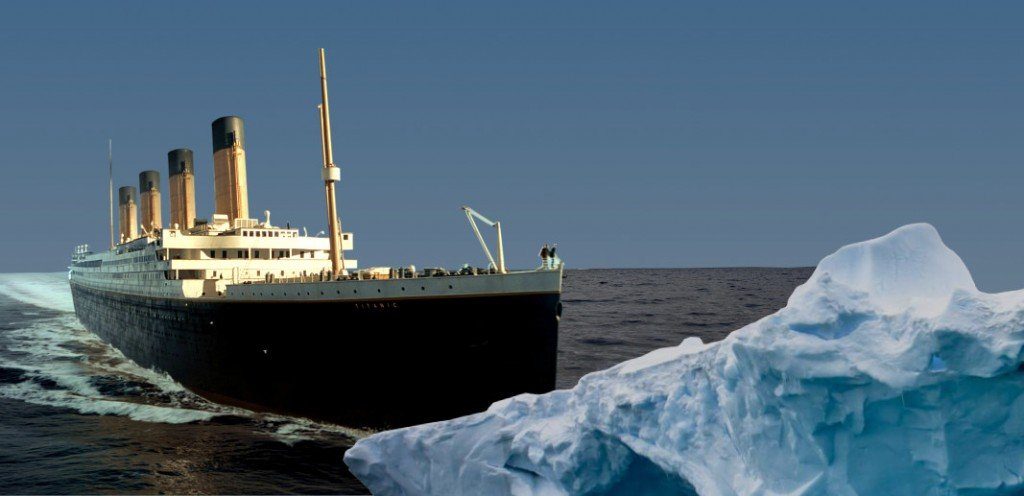
Why does ice float?
water expands when it freezes, making ice less dense than water
water compacts when it freezes, making ice more dense than water
hydrogen bonds in water push the ice to the surface
ice is afraid of water, and avoids it

Which part holds the engine in so that it doesn't fall out?
Parachute
Engine Block (Mount)
Trailing Edge
Shock Cord
Top of the rocket. Aerodynamic design allows the rocket to cut through the air.
Trailing Edge
Root Edge
Nose Cone
Body Tube
Provides aerodynamic stability so the rocket flies straight
Engine Block (Mount)
Fins
Nose Cone
Shock Cord Mount
Parachute
Glued inside the rocket
Gives the rocket stability
Holds the engine inside the body tube.
Creates Drag to slow the rocket's return to the ground
Provides thrust to propel the rocket into the air.
Fins
Engine
Shock Cord
Fuselage

