wayground logo

Free Printable Worksheets

Font size

S
M
L
XL
Worksheets

Finals Review 2021

Total questions: 110

Worksheet time: 1hrs 14mins

Name
Class
Date
1.

An electron is

a)

positively charged

b)

neutral

c)

negatively charged

2.

atomic number is

a)

the number of protons

b)

the number of electrons

c)

the number of neutrons

d)

the location of an atom on the periodic table

3.

Atomic Mass is the number of

a)

protons and neutrons in the nucleus of an atom

b)

protons and electrons in the nucleus of an atom

c)

neutrons and electrons in the nucleus of an atom

4.

Conservation of mass means

a)

all the atoms present before a chemical reaction are not present after

b)

atoms present before chemical reactions are present after

c)

new substances and new elements are formed in a chemical reaction

5.

A molecule is

a)

a singular particle of a particular element

b)

another name for an element

c)

2 or more atoms that are combined

6.

Water is the product of the reactants:

a)

oxygen and water

b)

oxygen and carbon

c)

hydrogen and oxygen

7.

The type of reaction that releases energy as heat is called

a)

endothermic

b)

exothermic

c)

respiration

d)

photosynthesis

8.

What does c represent?

a)

Proton

b)

Neutron

c)

Electron

9.

What does b represent?

a)

Proton

b)

Neutron

c)

Electron

10.

What does a represent?

a)

Proton

b)

Neutron

c)

Electron

11.

What is the atomic mass of this element?

a)

20

b)

60

c)

40

d)

41

12.

What is the symbol of this element?

a)

Calcium

b)

P

c)

Ca

d)

C

13.
What type of mixture contains visible parts (like a salad or a pizza or granite)
a)
homogenous
b)
heterogenous
14.
What is matter
a)
Anything which is solid
b)
Anything that takes up space and has mass
c)
when something is wrong
15.
In a family or column, the elements have similar properties because they all have the same number of
a)
protons
b)
neutrons
c)
valence electrons
d)
electrons
16.
What is the octet rule?  How many valence electrons can the first three periods hold?
a)
8
b)
2
c)
2 8 8
d)
2 8 16
17.

What happens when two forces act in the same direction?

a)

They cancel each other out.

b)

The stronger one prevails.

c)

Their strengths are added.

d)

Their sum divided by two is the total force.

18.

The greater the mass of an object,

a)

the easier the object starts moving.

b)

the greater its inertia.

c)

the more balanced it is.

d)

the more space it takes up.

19.

The force that one surface exerts on another when the two rub against each other is called

a. c.

b.. d. .

a)

friction.

b)

inertia.

c)

acceleration

d)

gravity

20.

Any force that causes an object to move in a circle is called a(n)

a)

balanced force

b)

gravitational force.

c)

unbalanced force

d)

centripetal force

21.

The momentum of an object is in the same direction as its

a)

force.

b)

velocity.

c)

acceleration.

d)

inertia.

22.

The overall force on an object after all the forces are added together is called the

a)

balanced force

b)

unbalanced force

c)

net force

d)

centripetal force

23.

According to Newton’s third law of motion, the strength of a reaction force is ____________________ the strength of the action force.

a)

equal to

b)

negative to

c)

positive to

d)

greater than

24.

A skydiver with a mass of 70 kg accelerates to Earth at a rate of 9.8 m/s2 due to gravity. What is the force on the skydiver?

a)

79.8 Newtons

b)

7.14 Newtons

c)

0.14 Newtons

d)

68.60 Newtons

25.

Compare the acceleration of the 1-kg object with that of the 2-kg object.

a)

1kg object has more acceleration because it has less mass

b)

1kg object has less acceleration because it has less mass

c)

2kg object has more acceleration because it has more mass

d)

2kg object has less inertia because it has more mass

26.

Define the term inertia.

a)

the amount of matter in an object

b)

the amount of space an object takes up

c)

the tendency of an object to resist a change in motion, determined by mass

d)

The force that one surface exerts on another when the two rub against each other

27.
A greyhound dog can run about 40 mph.
a)
Speed
b)
Velocity
c)
Acceleration
28.
A car increases speed from 30 mph to 65 mph.
a)
Speed
b)
Velocity
c)
Acceleration
29.
Monarch butterflies fly 12 mph south as they migrate.
a)
Speed
b)
Velocity 
c)
Acceleration
30.
A car slows down from 60 mph to 25 mph.
a)
Speed
b)
Velocity
c)
Acceleration
31.
Canadian geese can fly approximately 75 miles in 3 hours.
a)
Speed
b)
Velocity
c)
Acceleration
32.
Speed with direction.
a)
Speed
b)
Velocity
c)
Acceleration
33.
An object speeding up, slowing down, and/or changing directions.
a)
Speed
b)
Velocity
c)
Acceleration
34.
Which of the following is a sign that a chemical reaction has occurred?
a)
change in shape
b)
melting
c)
formation of a gas
d)
dissolving
35.
Which of the following is NOT an example of a physical change?
a)
crumpled paper
b)
pencil sharpening
c)
shrunken clothing
d)
rust
36.
When you break a cracker into pieces it is a...
a)
Chemical change
b)
Physical change
37.
Which of these is a result of a chemical change?
a)
A mixture
b)
A solution
c)
A new substance
d)
Melting or freezing
38.
Ice melting
a)
Chemical Change
b)
Physical Change
39.
Wood burned in a fireplace
a)
Chemical Change
b)
Physical Change
40.
Shredding a piece of paper
a)
Chemical Change
b)
Physical Change
41.

When your food energy is made into energy that you use to run, energy is changing from...

a)

Thermal to chemical

b)

Chemical to electrical

c)

Mechanical to electrical

d)

Chemical to mechanical

42.

When you shiver because you are cold, you are transforming...

a)

Mechanical energy into thermal energy

b)

Chemical energy into radiant (light) energy

c)

Electrical energy into chemical energy

d)

Thermal energy into chemical energy

43.

Which of the following is a sign that a physical change has occurred?

a)

Bubbles forming

b)

The object being broken into smaller pieces

c)

Heat being produced

d)

Light being produced

44.

What kind of energy is food?

a)

Thermal energy

b)

Mechanical energy

c)

Solar energy

d)

Chemical energy

45.
What does every food chain start with? (Even if it's not drawn or written there!)
a)
producers
b)
sun
c)
consumer
d)
decomposers
46.
An organism that needs to eat other organisms to obtain energy is known as a:
a)
Autotroph
b)
Producer
c)
Consumer
d)
Mutualist
47.
Consumer that eats plants
a)
heterotroph
b)
herbivore
c)
producer
d)
community
48.
What does a food web represent?
a)
All connections of energy flow throughout all organisms in a habitat.
b)
The specific ways that mutualism is carried out.
c)
A single pathway or energy flow between organisms. 
d)
How carnivores get their food. 
49.
The rabbit in this food web would be considered a:
a)
Decomposer
b)
Producer
c)
Secondary Consumer
d)
Primary Consumer
50.
The nonliving aspects of an ecosystem.
a)
Abiotic factors
b)
Biotic factors
51.
The living portions of the ecosystem.
a)
Biotic factors
b)
Abiotic factors
52.
Stars can take different paths due to having different _____________
a)
temperature
b)
mass
c)
brightness
d)
color
53.
All stars start as gas and dust in a(n)
a)
nebula
b)
black hole
c)
red giant
d)
black dwarf
54.
After a supergiant, a high mass star explodes and forms a
a)
supernova
b)
red giant
c)
black hole
d)
planetary nebula
55.
A high mass star can end as this stage, which is so dense that not even light can escape!
a)
black dwarf
b)
white dwarf
c)
supernova
d)
black hole
56.
What stage fills in the blank. Nebula --> Main sequence --> red giant --> ______________ --> white dwarf --> black dwaft
a)
supergiant
b)
planetary nebula
c)
black hole
d)
supernova
57.
______ is a force that causes dust particles to stick together in a nebula.
a)
nuclear fusion
b)
gravity
c)
hydrogen
d)
iron
58.
What determines the color of a star? 
a)
It's size
b)
It's temperature
c)
It's composition
d)
They are all the same color 
59.
a)
Warm Front
b)
High Air Pressure
c)
Cold Front
d)
High Temperatures
60.
a)
Low Clouds
b)
Low Temperatures
c)
Light Wind
d)
Low Air Pressure
61.
High Pressure is associated with this type of weather...
a)
Cloudy/Overcast Weather
b)
Cold Weather
c)
Warm Weather
d)
Fair Weather
62.
Our weather generally moves in this direction...
a)
West to East
b)
East to West
c)
North to South
d)
South to North
63.
What is the name of the single landmass that began to break apart 200 million years ago?
a)
Panthalassa
b)
Laurasia
c)
Gondwanna
d)
Pangaea
64.
The movement of fluid, caused by differences in temperature, that transfers heat from one part of the fluid to another is _____________.
a)
Convection current
b)
Seismic waves
c)
Sea-floor spreading
d)
Conduction current
65.
What is an undersea mountain chain where new ocean floor is produced?
a)
Rift valley
b)
Deep-ocean trench
c)
Mid-ocean ridge
d)
Transform bounda
66.
A __________ is a deep valley along the ocean floor beneath which oceanic crust slowly sinks toward the mantle.
a)
deep-ocean trench
b)
rift valley
c)
sea-floor spreading
d)
mid-ocean ridge
67.
What is the process by which oceanic crust sinks beneath a deep-ocean trench and back into the mantle at a convergent plate boundary?
a)
Subduction
b)
Induction
c)
Abduction 
d)
Reduction
68.
_____________ is a plate boundary where two plates move away from each other.
a)
Convergent boundary
b)
Transform boundary
c)
Divergent boundary
d)
Insurgent boundary
69.
_____________ is when two plates move toward each other.
a)
Convergent boundary
b)
Allegiant boundary
c)
Transform boundary
d)
Sliding boundary
70.
A _____________ is when two plates move past each other in opposite directions.
a)
emergent boundary
b)
divergent boundary
c)
transform boundary
d)
convergent boundary
71.

Why does ice float?

a)

Due to convection currents

b)

It is more dense than water.

c)

It is less dense than water.

72.

What causes convection current in the Earth?

a)

The uneven heating on each layer inside the Earth.

b)

The crusts outer layer.

c)

The temperatures we feel outside.

73.

energy of motion

a)

kinetic energy

b)

potential energy

c)

movement

d)

work

74.

energy cannot be created or destroyed, only transferred

a)

Law of conservation of matter

b)

Law of conservation of energy

c)

Law of energy transfer

d)

Law of the universe

75.
Stored energy.
a)
Potential Energy
b)
Kinetic Energy
76.

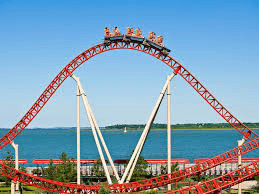
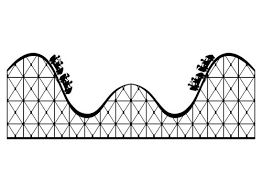
When a roller coaster is at the top of a hill it has

a)

high potential energy

b)

high kinetic energy

c)

low potential energy

d)

equal amounts of kinetic and potential energy
77.

When a roller coaster is at the bottom of a hill it has

a)

high potential energy

b)

high kinetic energy

c)

low kinetic energy

d)

equal amounts of kinetic and potential energy

78.
Energy transformations occur when...
a)
energy is created through conduction
b)
energy changes from one form to another
c)
two forces slide together that are touching
d)
a chemical reaction takes place
79.
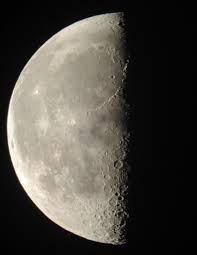
Name the moon phase
a)
First Quarter
b)
Last Quarter
c)
New Moon
d)
Full Moon
80.
How much of the moon is always lit?
a)
can't tell
b)
always changes
c)
half
d)
3/4
81.
What moon phase came right BEFORE this one?
a)
First Quarter
b)
Last Quarter
c)
New Moon
d)
Full Moon
82.
The cycle of the moon lasts about a _.
a)
day
b)
year
c)
week
d)
month
83.
The moon ____________ around the Earth.
a)
revoloves
b)
rotates
c)
up
d)
down
84.
Which of the following words describe the phases of the moon?
a)
none, quarter, half, three quarters, full
b)
new, crescent, quarter, gibbous, full
c)
dark, light, half, quarter, blue
d)
first quarter, second quarter, third quarter, fourth quarter
85.

What is the source of the moon's light?

a)

Earth

b)

the sun

c)

the moon

d)

Mars

86.
Name the moon phase
a)
First Quarter
b)
Last Quarter
c)
New Moon
d)
Full Moon
87.
Name the moon phase
a)
Waning Crescent
b)
Last Quarter or (third quarter)
c)
New Moon
d)
Full Moon
88.
The Moon orbits Earth in a ________________ direction
a)
clockwise
b)
counterclockwise
c)
upwards
d)
downwards
89.
Define Waxing
a)
Moon is increasing and light part appears to be growing
b)
Completely illuminated
c)
dark side is facing earth
d)
Moon is decreasing and light part appears to be shrinking
90.
Define Gibbous
a)
Less than half of moon visible
b)
More than half of moon visible
c)
All of moon visible
d)
None of moon visible
91.
Define Full Moon
a)
None of moon is visible
b)
Half moon phase is visible
c)
Complete moon face is visible
d)
Less Than half of moon is visible
92.
Define Quarter Moon
a)
None of moon visible
b)
Less than Half the moon is visible
c)
More than half of moon is visible
d)
Half of the moon is visible
93.
What is the profile view to Topographic Map #1? 
a)
A
b)
B
c)
C
d)
D
94.
What is the profile view to Topographic Map #2?
a)
B
b)
C
c)
D
d)
E
95.
What feature is formed at B?
a)
river
b)
rift valley
c)
sink hole
d)
mountain
96.
What do close contour lines represent on a map?
a)
waterfall
b)
steep area
c)
gradual area
d)
river
97.
What do contour lines that are farther apart represent?
a)
waterfall
b)
steep area
c)
gentle slope
d)
river
98.
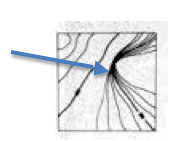
What feature is at the arrow?
a)
volcano
b)
mountain
c)
cliff
d)
river
99.
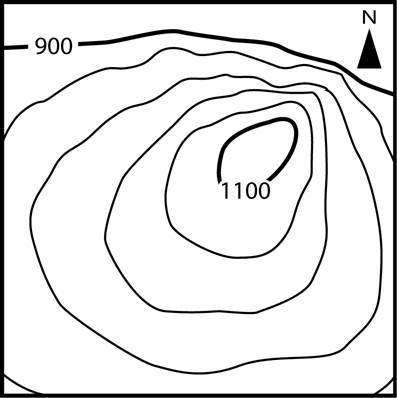
Provided is a topographic map of a hill with contour lines drawn showing elevation in meters.
The steepest slope on this hill can be found on the side that is facing which direction?
a)
Southwest
b)
Northeast
c)
Northwest
d)
Southeast
100.
Determine the contour interval
a)
10 m
b)
20 m
c)
50 m
d)
100 m
101.
Which cell structure is found in plant and animals cells and controls what can come into or leave a cell?
a)
cell membrane
b)
cytoplasm
c)
nucleus
d)
vacuole
102.
What is the function of the cell nucleus found in both plant and animal cells?
a)
to produce energy
b)
to control cell activity
c)
to remove waste products
d)
to allow molecules to enter the cell
103.

The Electromagnetic Spectrum is made up of different wavelengths of:

a)

wave

b)

sound

c)

light

d)

surfboards

104.

This is the portion of the Electromagnetic spectrum that has the longest wavelength.

a)

Gamma Rays

b)

Visible Light

c)

Microwaves

d)

Radio Waves

105.

White light is a combination of

a)

All of the colors of the rainbow

b)

All of the different portions of the EM Spectrum

c)

Nothing, just white light.

d)

Red and green light only

106.
In winter, the axis of the earth is pointed away or toward the sun?
a)
towards
b)
up
c)
down
d)
away
107.
In summer, the axis of the earth is pointed away or toward the sun?
a)
towards
b)
up
c)
down
d)
away
108.
What are the reasons for the season?
a)
Earth's tilt & rotation
b)
Earth's tilt & revolution
c)
Earth's rotation & size
d)
Earth's tilt & resolution
109.
The Earth's axis is tilted _____ degrees.
a)
23.5
b)
25.3
c)
30.2
d)
24
110.
The Earth's _______ is an imaginary line that goes from the North Pole to the South Pole.
a)
vernal equinox
b)
axis
c)
solar eclipse
d)
solar flare