wayground logo

Free Printable Worksheets

Font size

S
M
L
XL
Worksheets

Final Exam Semester 2 Review

Total questions: 60

Worksheet time: 3600secs

Name
Class
Date
1.
Cells use energy to move materials across a membrane (low to high concentration).
a)
Active transport
b)
Passive transport
c)
Diffusion
d)
Osmosis
2.
Particles are removed from a cell (pushed out).
a)
Endocytosis
b)
Exocytosis
c)
Permeable
d)
In high concentration
3.
The cell membrane of the red blood cell will allow water, oxygen, and carbon dioxide to pass through. Because other substances are blocked from entering, this membrane is called
a)
perforated
b)
semi-permeable
c)
non-conducive
d)
permeable
4.
Look at the cross section of a cell membrane of a eukaryotic cell. H+ ions are being pumped from a low concentration to a high concentration. How do you describe this type of transport across the cell membrane?
a)
active transport
b)
passive transport
c)
facilitated diffusion
d)
co-transport
5.
 Look at the diagram of a cross-section of a cell membrane below. The cell membrane controls movement of materials into and out of the cell. The following particles are moving from high concentration to low concentration and are using a carrier protein. How would you describe this type of movement across the membrane? 
a)
simple osmosis
b)
active transport
c)
simple diffusion
d)
facilitated diffusion
6.
During osmosis
a)
water moves from high to low concentration
b)
large or oddly shaped molecules move across a cell membrane
c)
water moves when energy is used
d)
proteins are built
7.
Compare the concentrations of the sugar in the cell and the solution.  Which is HYPOTONIC?
a)
Cell
b)
Solution
8.
Which direction will the dots (solute) move without the use of energy?
a)
into the cell
b)
out of the cell
9.
In this situation, where the solute is illustrated by red dots, predict if will WATER move into or out of the cell, and how that will affect the cell.
a)
Water will move into the cell and the cell will expand.
b)
Water will move into the cell and the cell will shrink.
c)
Water will move out of the cell and the cell will expand.
d)
Water will move out of the cell and the cell will shrink.
10.

Name this structure

a)

double helix

b)

nucelotide

c)

twisted ladder

d)

hydrogen bond

11.

Which of the following are differences in the structure between RNA and DNA

a)

DNA uses deoxyribose sugar, RNA uses sugar ribose

b)

DNA pairs Adenine with Uracil, RNA pairs Adenine with Thymine

c)

DNA is a double helix, RNA is a single helix

d)

DNA pairs Adenine with Thymine, RNA pairs Adenine with Uracil

12.

Which organelle is the location where protein is made?

a)

Ribosome

b)

Nucleus

c)

Cytoplasm

d)

Nucleotide

13.

A string of nucleotides that contain the information to make a specific protein

a)

Ribose

b)

Amino Acids

c)

tRNA

d)

Gene

14.

During translation, this type of ribonucleic acid is responsible for delivering amino acids to help make a protein.

a)

mRNA

b)

rRNA

c)

tRNA

d)

dRNA

15.

Which of the following is the complementary mRNA sequence to this DNA strand: AACTGAA

a)

UUGACUU

b)

TTGACTT

c)

AACTGAA

d)

AACUGAA

16.
What do we call DNA replication since new DNA has 1 parent strand and 1 new strand?
a)
Conservative 
b)
Semiconservative 
c)
Dispersive
17.
Which sequence of DNA bases would pair with this partial strand
CAT TCA CTG
a)
ATG TGA CAG
b)
TAC ACT GTC
c)
GTA AGT GAC
d)
CAT TCA CTG
18.
Which phase of which process does this picture show?
a)
Transcription
b)
Translation
c)
Replication
19.
What mutation has occurred here? 
T-G-A-C-C-A
T-G-A-G-C-A
a)
Substitution
b)
Deletion
c)
Insertion
d)
Frameshift 
20.
Are all mutations bad?
a)
Yes
b)
No
21.
What are the building blocks of proteins called?
a)
DNA
b)
RNA
c)
Ribosomes
d)
Amino Acids
22.
a)
Cytokinesis
b)
Interphase
c)
Anaphase
d)
Metaphase
23.
In mitosis, the two resulting cells are
a)
different from the starting cell and identical to each other.
b)
different from the starting cell and different from each other.
c)
identical to the starting cell and different from each other.
d)
identical to the starting cell and identical to each other.
24.
What is the name of the structure labeled X?
a)
Centriole
b)
Centrosome
c)
Chromatid
d)
Chromosome 
25.

Name the phase in the image.

a)

Prophase

b)

Metaphase

c)

Anaphase

d)

Telophase

26.

In which stage of the cell cycle does the cell duplicate its DNA?

a)

G1

b)

S

c)

G2

d)

Mitosis

27.
The cells produced via meiosis are called:
a)
sex cells
b)
somatic cells
c)
body cells
d)
skin cells
28.
Meiosis makes sperm and egg cells. In humans, sperm and egg cells each have _____ chromosomes. Therefore a fertilized human egg cell (sperm and egg cell combined) would create a cell with _____ chromosomes.
a)
23, 46
b)
46, 23
c)
2, 4
d)
50, 100
29.
What kind of cells are made in MEIOSIS?
a)
Haploid Gametes
b)
Diploid Somatic Cells
c)
Skin Cells
d)
Liver Cells
30.
Crossing over helps promote 
a)
male genotype
b)
genetic variation
c)
DNA replication
d)
mitosis
31.
Which sex chromosomes would indicate a typical human male?
a)
XX
b)
X
c)
XY
d)
XXY
32.
What makes this individual's karyotype not normal?
a)
An extra sex chromosome
b)
An extra autosome
c)
A missing sex chromosome
d)
A missing autosome
33.
What is the name of the step found above?
a)
Interphase
b)
Prophase I
c)
Metaphase I
d)
Anaphase I
34.

Mitosis produces ________cells, but meiosis produces _______ cells

a)

Haploid, diploid

b)

Diploid, haploid

35.

Which of the following shows the recessive trait?

a)

rr

b)

AA

c)

TT

d)

Ff

36.
The physical appearance of a trait is known as the-
a)
genotype
b)
phenotype
c)
characteristics
d)
intelligence
37.
How many letters does a genotype contain?
a)
1
b)
2
c)
3
d)
4
38.
Mark is heterozygous. If B is for brown hair, and b is for blonde hair, what is Mark's genotype?
a)
BB
b)
bb
c)
Bb
d)
bB
39.

In fruit flies, eye color is a sex linked trait. Red (R) is dominant to white (r). What is the sex and eye color of flies with the following genotype: X R X r ?

a)

male with white eyes

b)

female with red eyes

c)

male with red eyes

d)

female with white eyes

40.
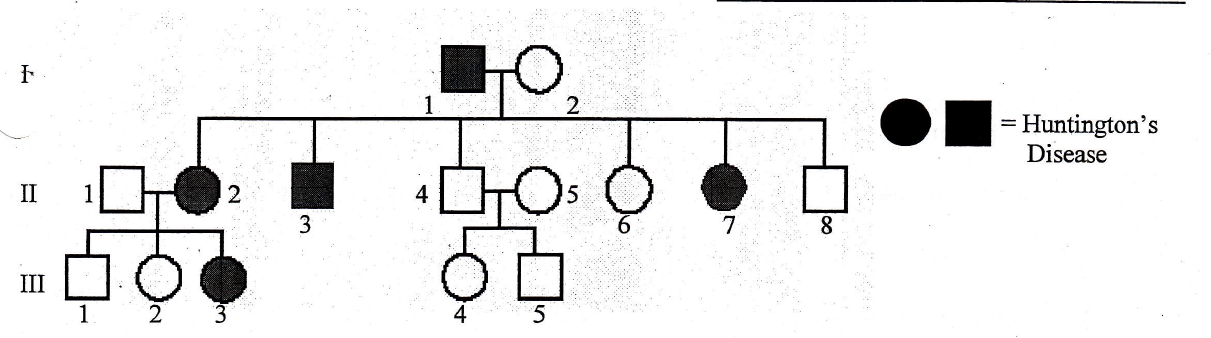
How many affected females are present? 
a)
1
b)
2
c)
3
d)
4
41.

What is the mode of inheritance shown here?

a)

Autosomal Recessive

b)

Autosomal Dominant

42.

Jim has type AB blood. His dad could be type O.

a)

True

b)

False

43.

Males are more likely to suffer from a sex-linked disease or disorder because...

a)

males are the weaker sex

b)

males have less DNA

c)

males have 1 X chromosome, so the disorder is more likely to be expressed

d)

females are the stronger sex

44.
If the affected female in Generation 3 mates with an affected male. What will be their offspring's genotype? 
a)
50% Hybrid/50% Purebred
b)
100% Homozygous Dominant 
c)
100% Homozygous Recessive 
d)
100% Heterozygous 
45.
There are no carriers for Huntington's Disease - you either have it or you don't. Is Huntington's disease caused by a dominant or recessive trait?
a)
Dominant
b)
Recessive
c)
Co-dominant
d)
Incompletely dominant
46.

If black and white are incompletely dominant in a chicken, then what is the phenotype of the offspring of a black chicken with a white chicken?

a)

black

b)

white

c)

grey

d)

black with white spots.

47.
Survival of the Fittest and Evolution were proposed by what scientist?
a)
Charles Darwin
b)
Albert Einstein
c)
Steven Hawking
d)
Isaac Newton
48.

What word describes a trait that helps an organism survive in its environment?

a)

natural selection

b)

mutation

c)

camouflage

d)

adaptation

49.
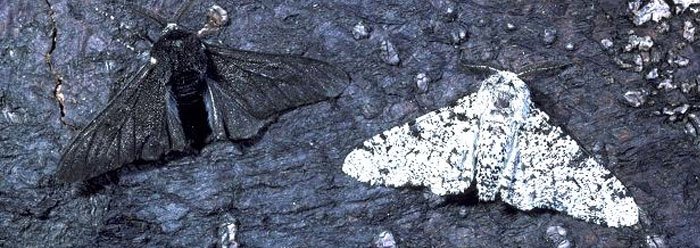
The trees these moths used to live on were white, but have been covered in soot from coal factories. Which moth will be more successful in this environment?
a)
Dark moth
b)
Light moth
c)
Both will be equally successful
d)
Neither will be successful
50.
Change over time
a)
Natural Selection
b)
Selective Breeding
c)
Homeostasis
d)
Evolution
51.
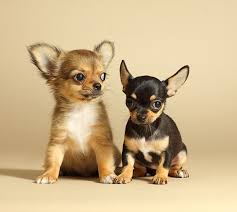
Dogs such as Chihuahuas are examples of....
a)
Artificial Selection 
b)
Natural Selection 
c)
Mutations 
52.
What type of evolution where there is a sudden, rapid change then no change for a long time?
a)
Co-Evolution
b)
Punctuated Equilibrium
c)
Divergent Evolution
d)
Convergent Evolution
53.
Humans, birds, whales, and lizards all have similar arm bones. What is the reason for this?
a)
The function of these bones is the same in all animals
b)
They live in similar environments
c)
They have a common ancestor
d)
All organisms resemble humans
54.
Bird wings and butterfly wings are an example of
a)
Homologous structure
b)
Analogous structure
c)
Mimicry
d)
Camoflague
55.
What trait separates sharks from ray-finned fish?
a)
Vertebrae
b)
Bony skeleton
c)
Four limbs
d)
None
56.

the selection pressure favors the extreme phenotypes, dividing the population into 2 distinct groups

a)

directional selection

b)

stabilizing selection

c)

geographic selection

d)

disruptive selection

57.

Tall kelp have a distinct advantage over shorter kelp in receiving needed sunlight in their ocean environment

a)

directional selection

b)

disruptive selection

c)

stabilizing selection

d)

sexual selection

e)

artificial selection

58.
A bird that can easily outcompete other birds for food and that can produce many eggs has a high ___________.
a)
IQ
b)
mutation rate
c)
fitness
d)
adaptability
59.

The picture shows a male and female pheasant. What type of selection occurred for them to have these adaptations?

a)

Natural Selection

b)

Sexual Selection - Female Choice

c)

Sexual Selection - Male Competition

d)

Random Selection

60.
Which of the following RIMs depends on either songs or courtship dances of birds, or signaling between insects, or any other kind of learned or instinctual compatibility between mates?
a)
Mechanical
b)
Temporal
c)
Gametic
d)
Behaviroal