
 Worksheets
Science 5 Semester 2 Revision
Total questions: 160
Worksheet time: 2hrs 0mins

Earth is the (a) planet from the sun.

Mercury is the ____________ planet from the sun.
first
second
third
fourth
_____________ is the hottest planet and _____________ is the coldest planet in our solar system.
Mercury; Jupiter
Saturn; Mars
Venus; Neptune
Neptune; Uranus

_____________ might have supported life 3.7 billion years ago.
Jupiter
Mercury
Mars
Venus

Which two planets are closest to Earth?
Mercury and Venus
Venus and Mars
Mars and Jupiter
Venus and Jupiter

It is a_____________ that are made up ice, dust and rocks.
asteroid
comet
meteor
meteorite

A large irregular-shape rocks that are found in Asteroid belt between Mars and Jupiter. It is ______________
asteroid
comet
planet
meteor
What do Jupiter, Saturn, Uranus, and Neptune have in common?
They have rings system
They all have rocky surfaces.
Their sizes are smaller
They are called terrestrial planets

(A)n _____ is a meteoroid that is heated up (and often destroyed) as it falls through Earth's atmosphere (a.k.a. a "shooting star").
asteroid
comet
meteor
meteorite

Which of the following does not describe the terrestrial planets?
Smaller than the Jovian planets
They have solid surface from rocks
Mostly made of gas and ice
No or few moons
Place the following objects in order from largest to smallest.? (galaxy, planet, solar system, star, universe)
universe, galaxy, solar system, star, planet
planet, star, solar system, galaxy, universe
galaxy, universe, solar system, star, planet
universe, solar system, galaxy, star, planet
A star that is the center of our solar system
Orbit
Gas giant
Sun
None of the above

Uranus is famous because it ______________.
is the farthest planet from the sun
rotates on its side
doesn't have rings system
is the coldest planet
_________________ is considered as the edge of solar system.
Asteroid Belt
Oort Cloud
Orion Spur
Kuiper Belt

______________ is the home for the dwarf planet - pluto.
Asteroid Belt
Inner Oort Cloud
Outer Oort Cloud
Kuiper Belt
Which of the following lists the correct order of the planets from the sun?
Mercury, Venus, Mars, Earth, Jupiter, Saturn, Uranus, Neptune
Mercury, Venus, Earth, Mars, Saturn, Jupiter, Uranus, Pluto
Mercury, Venus, Earth, Mars, Jupiter, Saturn, Uranus, Neptune
Mars, Venus, Earth, Mercury, Jupiter, Saturn, Uranus, Neptune
A teacher wears protective gloves to lift a metal pan filled with boiling water from a hot plate. Why are the protective gloves necessary?
The metal pan creates thermal energy.
the metal pan insulates thermal energy.
The metal pan conducts thermal energy.
The metal pan reduces thermal energy.
If purple drink mix is added to water, what change will occur to the water?
The drink mix will cause the water to freeze
The water will totally disappear
The drink mix will heat the water
The water will change color
Which process will separate the sugar from mixture of sugar and water?
Stirring the mixture
Evaporating the water
Adding more water
Adding more sugar

In an activity, 20 grams of salt are dissolved in 70 grams of pure water. The water is then heated on a hot plate. When the water evaporates completely, how much salt will be left?
0 grams
18 grams
20 grams
22 grams
Which of the following is a good conductor of electricity?
glass rod
cotton string
plastic tubing
copper penny

A student has puts 4 objects in a bucket filled with water. The objects are listed above. Which two objects are most likely less dense than water?
Wood block and metal paper clip
plastic ball and glass marble
metal paper clip and glass marble
wood block and plastic ball
Which of these is NOT soluble in water?
oil
salt
honey
sugar

What is the BEST tool to separate gravel from sand?
use a magnet
use tweezers
pour the mixture through filter paper
use a strainer or sieve
A combination of two or more substances where each keeps its own properties and both can be easily separated is called-
a mixture
a solution
a solute
a solvent
If you have iron nails in a bucket of sand, how could you separate them?
magnet
strainer
evaporation

Sugar dissolved in water is an example of a
Solution
Mixture
Which mixture below is also a solution?
Water and hot chocolate mix
Soil and rocks
Trail mix
Tossed salad (no dressing)


What comes after evaporation during the water cycle?
Water evaporates into water vapor
Water vapor condenses and forms a cloud
Water precipitates to the ground
Water runs down into the hydrosphere

Which of the following is an example of precipitation?
sleet
hail
snow
all of the above

What is it called when plants release water vapor through their leaves?
sublimation
respiration
transpiration
precipitation

Which letter shows condensation?
W
X
Y
Z

What part of the water cycle does this picture show?
condensation
precipitation
evaporation
collection
How does light travel?
In a curve
In a straight line
It bounces between objects
An object that produces light is ....
luminous
non luminous
artificial
Fireworks are .....
an artificial light source
a natural light source
non-luminous
A material that allows ALL light to pass through is ...
transparent
translucent
opaque
When a light ray bounces back when it hits a surface it is ...
refracted
reflected
absorbed
A material that allows SOME light to pass through is ...
transparent
translucent
opaque
When a light ray looks bent when it enters a material it is ...
refracted
reflected
absorbed
When white light hits an object and we only see red the other colours of the rainbow have been ...
refracted
reflected
absorbed
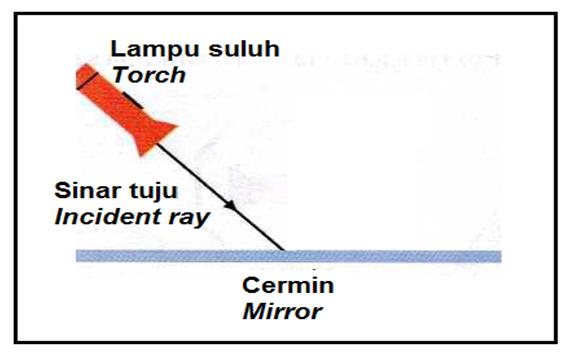
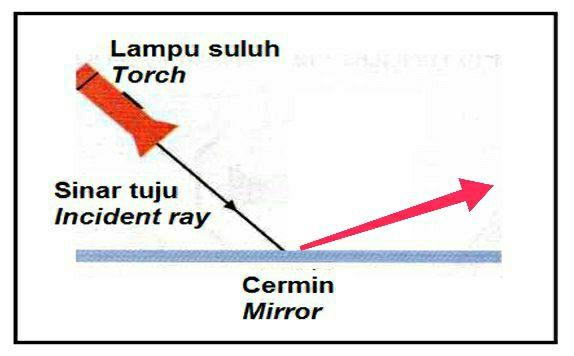
A torch light is torched towards a mirror.
Which of the following is the correct reflected ray?
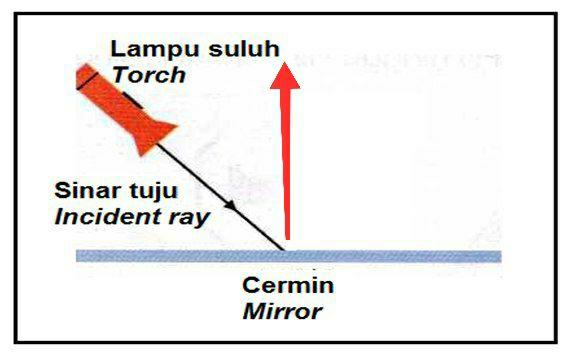
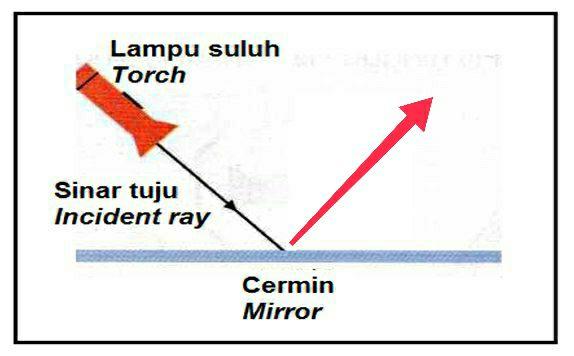
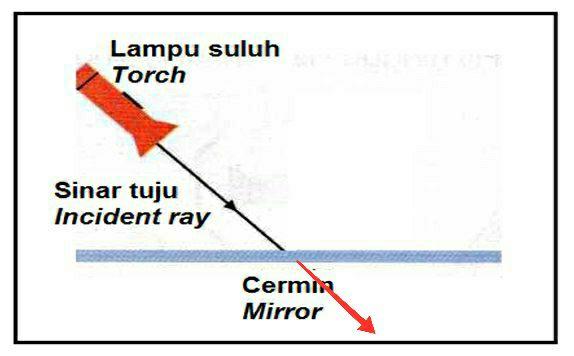
The light bounces off or ___________ off the object into the eyes.
reflects
absorbs
refracts
adsorbs
Miss Eko wants to investigate the reflection of light. Which objects can be used to reflect light?


Which of the following materials would reflect the most light?
a piece of silver spoon
a smooth, black-topped table
a dark brown carpet square
a piece of red construction paper
Which one of these object uses light reflection in our daily lives?


Why can’t you see your face on the pages of your your notebook? When light goes to paper __________________.
the light is reflected inone direction
the light is reflected in all directions
the light is refracted
the light is dispersed
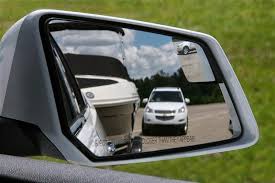
This rear-view mirror is used to _______________.
helps the driver view traffic around the corner
enables the driver see things behing the car
as a reflector of light
form magnified image during make up
Which one shows reflection of light?


Why does the cat form a shadow?
It reflects light
It blocks light
It follows light
It bounces light
Which will make the darkest shadow?
Light shines on a ____________
sheet of thin tissue paper
glass window
wooden chopping board
frosted glass

What is the best explanation for Mickey seeing himself in the mirror?
refraction
absorbed
reflection
shadow

How does a ring have a different shape of shadow than its original?
We put more than one light source
We put the ring on the open book
We turn off the lamp
We use larger flashlight

The picture below shows a toy house with its shadow.
How many light sources is/are there?
1
2
3
4

A torch is shining on a metal container.The shadow of the metal container was formed on the white screen.
Which one is correct shadow of container?


Shadow puppet is a show that use shadow to perform.
Which one is corrrect about shadow?
It is only dark color
It is colorful
It happens with mirror
It gives the detail of object

Choose the correct shadow!


None are correct
________________ doesn't create any shadow.
Opaque objects
Transparent objects
Translucent objects
Transporter objects
A dark shape formed when an opaque object is placed in the way of light is called _________.
glass
transparent
shadow
heat
The centre part of the shadow from which all light is blocked is called the . . . .
umbra
penumbra
rays
reflection
The outer part of the shadow from which only some light is blocked is the . . .
umbra
penumbra
rays
reflection
A band of different colours produced when a mixture of different light colours is dispersed is called . . . .
refraction
reflection
spectrum
rainbow
Telescopes and cameras are . . . instruments.
mirror
lens
optical
musical
The closer the source of light, the _________ is the shadow.
same size
bigger
smaller
clearer
Shadows do not depend on the ________ of the object.
size
colour
shape
light

What happens to the size of a shadow as you move the object closer to the light source.
it gets larger
it gets smaller
nothing
it turns into a different shape shadow

Picture shows that ______________ also can affect the shape of the shadow.
part of the object get the light
position of the light source
distance between the light source and object
color of object
Shadows are shortest at this time of day:
morning
noon
afternoon
evening
Why does your shadow change during the day?
The sun is moving.
The directions (N, S, E, W) change throughout the day.
The sun's position in the sky changes.
The moon rises.
When the Sun is behind you, your shadow is ...
behind you
in front of you
at the side of you
not there
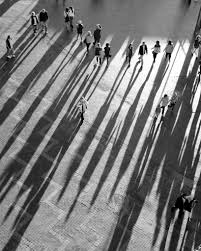
When was this picture most likely taken?
(Hint: think about the shadow's length)
morning
night
noon
none of them
Less dense warm air rises and more dense cool air sinks in this kind of heat transfer...
Radiation
Conducation
Convection
Most pots and pans are metal or glass because...
These materials are conductors that speed up heat transfer.
These materials expand and contract a lot when heated and cooled.
These materials are insulators that slow down heat transfer.
These materials have very low mass so they can hold a lot of thermal energy.
The sun's rays heating the earth is an example of...
radiation
convection
conduction
Touching a hot pot and burning your hand is an example of what kind of heat transfer?
Radiation
Conduction
Convection
Touching a hot pot and burning your hand is an example of what kind of heat transfer?
Radiation
Conduction
Convection
Heat always travels...
alone
by air
with a partner
from hot to cold
When particles are heated, they
expand
contract
conduct
insulate
When particles are cooled they,
expand and move apart
expand and move together
contract and move apart
contract and move together
Light always travels in a ____________ line.
straight
curved
elliptical
none
The intensity of the light can be measured using a _______________.
intensity
volt meter
stop watch
light meter
Which place will have the highest light intesity during sunny clear daytime?
in the attic
in the storage room
in the classroom
at the school yard
The unit of light intensity.
Meter
lamp
lux
volt
6. Our eyes has to receive light in order for us to ...
hear
listen
see
taste
7. A profession or a worker who uses a light meter to take a good photo is ....
Fisherman
Doctor
Farmer
Photographer
10. A mirror can ..... light
reflect
make
give
have
11. We can see mirror and the other objects that do not give off light because ...
They don't reflect light into our eyes
They reflect light into our eyes
They have light sources
They have measurement
12. We can see the moon shines because it reflects light from ...
The Sun
The Earth
The Star
Animals
What is the correct word for where to measure liquid in a graduated cylinder?
grams
millilitres
meniscus
tare

What is the measure of this liquid?
6.6
6
6.06
6.5
What does a thermometer measure?
temperature
weight
mass
volume
What is the standard measure for temperature in science?
Fahrenheit
Kelvin
Celsius

This is an example of a
liquid
solid
gas

This is an example of a
liquid
solid
gas

This prove that
Key can sink
Key has mass and occupies space
Key has mass and did not occupies space
Key did not has mass but occupies space
What is the substance that exists in all three states naturally?
Air
Water
Fire
Sound
Particles move randomly and collide with one another.
Solid
Liquid
Gas
Take the shape of the container but fixed volume.
Solid
Liquid
Gas
During condensation,
heat is absorbed
heat is released
heat is trapped
heat is gone

Mothball/ naphthalene will undergo the process of _________.
boiling
sublimation
melting
freezing


What kind of mixture is shown in the picture?
Homogeneous
Heterogeneous

What kind of mixture is shown in the picture?
Homogeneous
Heterogeneous

What kind of mixture is shown in the picture?
Homogeneous
Heterogeneous

What kind of mixture is shown in the picture?
Homogeneous
Heterogeneous

___________ are the smallest unit of an element that maintains the properties of that element.
Atoms
Elements
Compounds
Mixtures
A _____________ contains a variety of elements and compounds that are not chemically combined with each other.
compound
element
molecule
mixture
Which of these is a compound?
Aluminium (Al)
Carbon Dioxide (CO2)
Nitrogen (N)
Sand
Which of these is a mixture?
Laundry Detergent
Salt (NaCl)
Oxygen (O)
Fluorine (Fl)
Air is:
An element
A compound
A mixture
None of these
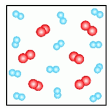

Element
Compound
Homogeneous Mixture
Heterogeneous MIxture
Elements are broadly classified as metals, nonmetals, and _________________.
compounds
organic
metalloids
Metallica
What is this?
lithium (Li)
element
compound
mixture
What is this?
aluminum (Al)
element
compound
mixture

Students created a model of the water cycle. Which part represents precipitation in the atmosphere?
droplets forming on the glass cover of melting ice cubes
water drops falling from the glass cover of melting ice cubes
water vapor rising from the beaker of water that is melting the ice cubes
water heating inside the beaker

What is it called when water vapor evaporates from the plants?
transpiration
evaporation
sublimination
condensation

Alan has two samples of matter as shown in the picture.
Which statement is a measurement of what is shown in the picture?
Sample X is a different color than sample Y.
Sample X and sample Y are liquids.
Sample X fills more of the container than sample Y.
Sample Y has a volume of 50 milliliters.


Select the term that best describes the picture
Transparent
Translucent
Opaque
Prism
A shiny piece of metal will __________ light.
reflect
refract
absorb
destroy

Which description most accurately describes how the person sees the apple?
Light travels from the lamp, reflects off the apple, and goes into the eye.
Light travels from the lamp to the eye.
Light travels from the eye, reflects off the apple, and goes into the lamp.
Light travels from the apple, reflects off the lamp, and goes into the eye.

Which month has the most daylight hours?
August because it's a summer month.
August because it's a winter month.
April because it's a spring month.
January because it's a summer month.

How would the shadow be different if it was the middle of the day and the sun was at the top of the sky?
Shadow would be longer.
Shadow would be the same.
Shadow would be shorter.
Shadow would disappea.

Which letter shows the shadow created in the middle of the day?
A
B
C
Which season would 15 hours of daylight most likely occur?
winter
spring
summer
fall
a set path a body in space takes as it moves
orbit
fall
reflect
moon phases
A large sphere made of rock that orbits the Earth.
orbit
fixed object
design
moon
Shadows are longest in...
Mornings
Late afternoons
Mornings and Late afternoons
Noon

What statement is NOT true about our sun.
Our sun is the largest star.
Our sun is at the center of the universe.
Other stars are much bigger than our Sun.
Our sun looks bigger because it's closer.

