wayground logo

Free Printable Worksheets

NEW

Font size

S
M
L
XL
Worksheets

Chemistry Final

Total questions: 57

Worksheet time: 1hrs 21mins

Name
Class
Date
1.

LiBr is called

a)

lithium bromine

b)

lithium (I) bromine

c)

lithium bromide

d)

lithuim (I) bromide

2.

Which of these combinations is an ionic compound?

a)

Metal and Metal

b)

Nonmetal and Nonmetal

c)

Metal and Nonmetal

d)

Cation and Cation

3.
What is the name of N2O3
a)
Nitrogen trioxide
b)
Dinitrogen oxide
c)
Dinitrogen trioxide
d)
Nitrogen oxide
4.
What is the chemical formula for Tetrasulfur pentoxide?
a)
SO
b)
S4O
c)
S4O5
d)
S5O4
5.

A(an) __________ bond exists between two nonmetals.

a)

ionic

b)

covalent

6.
What is a positivly charge atom called?
a)
cation
b)
anion
7.

What is a negatively charged atom called?

a)

Anion

b)

Cation

c)

Ion

8.

What is a valence electron?

a)

an electron that is found in the outermost shell of an atom.

b)

an electron found in the innermost shell of an atom.

c)

an electron found in the middle shell.

9.

What type of reaction involves 2 substances combining to form 1 new compound?

a)

Decomposition Reaction

b)

Single Displacement Reaction

c)

Double Displacement Reaction

d)

Synthesis Reaction

10.

What are the reactants in the chemical equation pictured?

a)

CH4 and CO2

b)

CH4 and O2

c)

CO2 and H2O

d)

O2 and H2O

11.

What are the products of the chemical reaction pictured?

a)

CH4 and CO2

b)

CH4 and O2

c)

CO2 and H2O

d)

O2 and H2O

12.

2Na +S → Na2S

a)

Double Replacement

b)

Decomposition

c)

Combustion

d)

Synthesis

13.
What is a coefficient?
a)
The small number on the right of the chemical symbol.
b)
The large number to the left of a formula.
14.
Which problem is balanced?
a)
PbO2 + 2H2
b)
SO2 + H20 --> H2SO4
c)
2Na + 2H2O --> 2NaOH + H2
15.
Balance this equation.
_Mg + _Cl--> _MgCl2
a)
1, 2,1
b)
already balanced
c)
2,1,1
d)
1,1,2
16.
Balance this equation
_Zn+_HCl-->_ZnCl+_H2
a)
1,1,2,1
b)
1,1,1,2
c)
1,2,1,1
d)
2,1,1,1
17.
What does the Law of Conservation of Mass state?
a)
Matter cannot be gained or lost in a chemical reaction.
b)
Matter can only be lost in a chemical reaction.
c)
Matter can only be gained in a chemical reaction.
d)
Matter can be gained and lost in a chemical reaction. 
18.
Number of H in 3(NH₄)₂CrO₄
a)
4
b)
6
c)
8
d)
24
19.
What are the smaller numbers that you CANNOT change in a chemical equation? 
a)
Coefficient
b)
Products
c)
Reactants
d)
Subscript
20.
What is the molar mass of table salt (NaCl)?
a)
116.886 g/mol
b)
35.453 g/mol
c)
22.990 g/mol
d)
58.443 g/mol
21.

Determine the number of moles of AlNO3 that are in 264 g of the compound.

a)

2.97 mol

b)

3.45 mol

c)

2.73 mol

d)

1.86 mol

22.

A baker needs 6 g of baking soda for a recipe. The chemical formula for baking soda is NaHCO3. How many moles of baking soda is needed?

a)

0.071 mol

b)

0.167 mol

c)

0.273 mol

d)

0.214 mol

23.
2Na + 2H2O → 2NaOH+ H2
How many grams of hydrogen are produced if 120 g of Na are available?
a)
5.2 g
b)
2.6 g
c)
690 g
d)
45 g
24.
B2H6 + 3O2 -->2 HBO2 + 2 H2O
 What mass of O2 will be needed to burn 36.1 g of B2H6?
a)
13.8 g O2
b)
3.86 mol of O2
c)
124 g O2
25.

How many valence electron does Beryllium have?

a)

1

b)

2

c)

0

d)

4

26.

Which subatomic particle has NO CHARGE?

a)

Protons

b)

Neutrons

c)

Electrons

d)

Nucleus

27.

Which subatomic particle has a POSITIVE charge?

a)

Protons

b)

Neutrons

c)

Electrons

d)

Nucleus

28.

Which subatomic particle has a NEGATIVE charge?

a)

Protons

b)

Neutrons

c)

Electrons

d)

Nucleus

29.

Which subatomic particle tells you the identity of the Element?

a)

Protons

b)

Neutrons

c)

Electrons

d)

Nucleus

30.

Which Element has 21 protons?

a)

Carbon

b)

Zinc

c)

Titanium

d)

Scandium

31.

If an element has 11 protons and 12 Neutrons, what is it's atomic mass?

a)

12

b)

11

c)

23

d)

1

32.

A FULL OUTER SHELL has how many electrons? (Not including the first level)

a)

8

b)

7

c)

4

d)

10

33.

What is the name for this group of elements?

a)

Alkali

b)

Halogens

c)

Noble Gases

d)

Alkali-Earth

34.

In the formula 2C6H12O6, what is the Coefficient?

a)

5

b)

6

c)

2

d)

12

35.

What are isotopes?

a)

different element with the same number of electrons

b)

same element with a different number of electrons

c)

same element with a different number of neutrons

d)

different element with the same number of neutrons

36.

What are the yellow elements in the following picture?

a)

metals

b)

nonmetals

c)

metalloids

37.

Anything that has mass and takes up space.

a)

atom

b)

colloid

c)

compound

d)

matter

38.

Which element will have a higher electronegativity than Arsenic (As) ?

a)

Carbon

b)

Antimony

c)

Germanium

d)

Neon

39.

You need 2 pieces of bread, 1 tablespoon of peanut butter and 2 tablespoons of jelly to make a sandwich. If you have 10 pieces of bread, 4 tablespoons of peanut butter and 20 tablespoons of jelly, what is the limiting reactant?

a)

bread

b)

jelly

c)

peanut butter

d)

sandwhich

40.
When is the law of conservation of matter true?
a)
all the time
b)
under some conditions, but not others
c)
when energy is given off
d)
only in February
41.
This could be the dot diagram of
a)
Mg, group 2.
b)
Cl, group 17.
c)
C, group 14.
d)
O, group 16.
42.
Signs that a chemical change has occurred include
a)
a change in color
b)
the release of bubbles
c)
the production of an odor
d)
all of the above
43.
The density of water is 
a)
.1 g/cubic cm
b)
10g/cubic cm
c)
1.0 g/cubic cm
d)
0 g/cubic cm
44.
In a liquid, the molecules have a definite shape and a definite volume
a)
True 
b)
False
45.
Mixing salt and water 
a)
Chemical Change 
b)
Physical Change 
46.
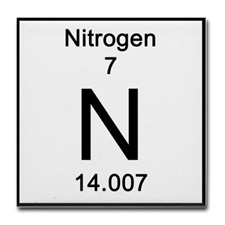
What is the number of protons that the element in this image contain?
a)
14
b)
7
c)
15
d)
18
47.
What is the atomic mass of "F"
a)
9
b)
18
c)
17
d)
19
48.
the central region of an atom where its neutrons and protons are is its 
a)
nucleus 
b)
electron cloud
c)
core 
d)
center 
49.
Something that is made up of only one kind of atom is known as _________________.
a)
a molecule
b)
a compound
c)
an element
d)
a proton
50.
Which is a chemical change?
a)
freezing fruit juice
b)
slicing a potato
c)
boiling water
d)
copper metal turning green
51.
a)
This is an ionic bond with electrons shared
b)
This is an ionic bond with electrons transferred
c)
This is a covalent bond with electrons shared
d)
This is a covalent bond with electrons transferred
52.
What is the density of an object having a mass of 8.0 g and a volume of 25 cm3?
a)
0.32 g/cm3
b)
3.1 g/cm3
c)
200 g/cm3
d)
2.0 g/cm3
53.

The picture shows a piece of paper being cut in half with scissors. Which of the following statements is true of this process?

a)

It is a chemical change because the paper particles were broken and rearranged.

b)

It is a chemical change because the substance was changed to something new.

c)

It is a physical change because the substance remained the same.

d)

It is a physical change because the paper only changed its state of matter.

54.

What is the molecular geometry of this boron trifluoride (BF3)?

a)

linear

b)

bent

c)

trigonal planar

d)

tetrahedral

55.

One mole is equal to the number of atoms in exactly 12 grams of carbon-12. The number (6.02 × 1023 particles per mole) is known as

a)

Planck's constant.

b)

Avogadro's number.

c)

Coulomb's constant.

d)

Faraday's number.

56.
What two types of measurements make up DENSITY
a)
Mass and Volume
b)
Temperature and Mass
c)
Grams and Centimeters
d)
Volume and Weight
57.
Electronegativity is...
a)
how good an atom is at attracting electrons
b)
the ability of an atom to lose electrons
c)
the energy required to remove an electron from a specific atom
d)
how easy it is to make friends.